







You may feel it before you see it: a slight movement through the steering wheel, followed by the trailer pushing the rear of the tow vehicle left and right. Your hands tighten, and the combination begins taking up more of the lane. If the motion continues to build, regaining control can become difficult very quickly.
Trailer sway can contribute to loss-of-control crashes, rollovers, and collisions. Proper loading, adequate tongue weight, correctly matched tires and running gear, sensible speed, and compatible hitch equipment can substantially reduce the risk. No sway-control device, however, can compensate for an overloaded trailer, an undersized tow vehicle, excessive speed, worn components, or poor weight distribution.
Your truck’s electronic safety systems may help after sway begins, but they do not automatically correct an unsafe towing setup. Here is what the available equipment actually does, when it may be appropriate, and where its limits are.
Why Trailers Sway in the First Place
Sway is a side-to-side yaw oscillation of the trailer. A disturbance turns the trailer slightly away from its direction of travel. If the towing combination lacks adequate stability, the trailer swings back in the opposite direction, and each cycle may become larger.
The most common setup-related cause is insufficient tongue weight caused by rear-heavy loading. Excessive speed, abrupt steering, crosswinds, bow waves from passing trucks, uneven pavement, low or mismatched tire pressures, worn suspension or hitch components, and an improperly sized tow vehicle can initiate or worsen the motion.
Excessive tongue weight creates a different problem. It can overload the tow vehicle’s receiver, hitch, rear axle, suspension, or tires and may remove too much weight from the steering axle. A weight-distribution hitch can restore some of that front-axle load on compatible bumper-pull combinations, but it cannot increase any component’s legal or engineered rating.
For many conventional bumper-pull trailers, loaded tongue weight is commonly targeted at approximately 10% to 15% of the trailer’s actual loaded weight. A 7,000-lb loaded bumper-pull trailer would therefore commonly carry about 700 to 1,050 lbs at the coupler. The correct target can vary with the trailer design and manufacturer, so the trailer and tow-vehicle manuals control. Gooseneck and fifth-wheel trailers generally place a higher percentage of their loaded weight on the truck and should not be evaluated using a bumper-pull rule alone.
Always calculate tongue weight from the trailer’s actual loaded condition. Fuel, attachments, toolboxes, spare tires, and equipment placement can all change it. Also remember that tongue weight becomes payload carried by the tow vehicle and counts against its payload, rear gross axle weight rating, tire ratings, receiver rating, and gross combined weight rating.
Weight-Distribution Hitches
A weight-distribution (WD) hitch uses spring bars to apply leverage between the tow vehicle and a compatible trailer frame. When properly selected and adjusted, it transfers part of the load removed from the tow vehicle’s front axle back toward that axle and also distributes part of the hitch load toward the trailer axles. This can reduce rear suspension squat and improve steering, braking balance, and headlight aim.
A WD hitch is not automatically required at one universal trailer- or tongue-weight threshold. Requirements and limits vary by tow vehicle, receiver, coupler, trailer frame, and hitch manufacturer. The tow vehicle’s receiver label may list separate weight-carrying and weight-distributing ratings, while the owner’s manual may require, recommend, permit, or prohibit weight distribution under specific conditions.
Do not assume that every heavy equipment trailer should use a WD hitch. Some commercial bumper-pull, pintle, surge-brake, aluminum-frame, pole-tongue, hydraulic-dump, and specialty trailers require particular hardware or may not be approved for conventional spring-bar systems. Gooseneck and fifth-wheel trailers use different hitch geometry and do not use a conventional bumper-pull WD hitch. Confirm compatibility with the tow vehicle, receiver, trailer, coupler, and WD-hitch manufacturers before installation.
The Equal-i-zer 4-Point Sway Control Hitch is a well-established integrated weight-distribution and sway-control system. The product line includes several matched capacities, with its largest conventional model rated for up to 14,000 lbs maximum gross trailer weight and 1,400 lbs maximum tongue weight. Buyers must select the model whose tongue-weight range fits the trailer’s actual loaded tongue weight, including cargo carried behind the tow vehicle’s rear axle when the hitch manufacturer instructs that it be included.
The Equal-i-zer system uses rigid spring arms, sockets in the hitch head, and L-brackets on the trailer frame. It does not use the hanging chains found on many traditional WD systems. It can remain connected while backing and turning when installed and operated according to the manufacturer’s instructions. Its ratings still cannot override a lower-rated receiver, shank, hitch ball, coupler, vehicle, trailer, axle, or tire.
Traditional round-bar and trunnion-bar WD systems are also available from established towing-equipment manufacturers, including Reese. Some kits provide weight distribution only, while others incorporate sway control or accept a separately purchased friction-control device. Product ratings and included components vary, so shop by the exact current part number and loaded tongue-weight range rather than relying on a brand-level capacity claim.
Friction Sway Control Bars
A conventional friction sway-control bar mounts between a small ball on the trailer’s A-frame and another ball on the hitch assembly. As the trailer moves sideways relative to the tow vehicle, the telescoping device creates friction that resists the motion. It is a relatively simple way to add damping to an otherwise compatible conventional bumper-pull setup.
Reliable friction-control products are available from manufacturers such as Reese and Husky Towing. Adjustment and operating procedures are specific to each model. Follow the supplied instructions instead of choosing an arbitrary amount of knob tension. Too little adjustment may provide inadequate damping, while incorrect installation or excessive adjustment may impair articulation or damage components.
A friction bar is a damping device, not a cure for an unstable trailer. It does not correct insufficient tongue weight, rear-heavy loading, excessive speed, overloaded tires, worn suspension, an unlevel trailer, or a mismatched tow vehicle. A strong crosswind, abrupt maneuver, or passing truck can still initiate sway.
Many traditional friction bars must be removed before backing, especially when tight angles are possible, because the device can bind or be damaged. Some manufacturers also instruct users to loosen or remove the unit in wet, icy, or otherwise slippery conditions. Follow the manual for the exact product rather than assuming every friction device has the same restrictions.
One friction bar may be appropriate only within the manufacturer’s stated trailer-length and weight limits. Longer or heavier compatible trailers may call for two bars or an integrated system. Never improvise mounting locations, weld brackets to a trailer without manufacturer approval, or install a friction device where it can interfere with a breakaway cable, jack, battery box, propane equipment, or coupler operation.
Dual-Cam and 4-Point Systems
The Equal-i-zer 4-Point Sway Control system integrates sway resistance into the WD hitch. Its four friction areas are located at the two spring-arm sockets in the hitch head and where the two spring arms contact the trailer-frame brackets. This arrangement provides continuous resistance during normal forward towing while distributing hitch load.
An integrated system can be more convenient than a removable friction bar because the sway-control function is part of the normal hitch connection. It may also permit backing without removing a separate control device. Correct setup remains essential: hitch-head angle, bracket location, spring-arm loading, ball height, fastener torque, and front-axle load restoration must be adjusted according to the current installation manual.
Reese dual-cam systems use shaped cams and spring-bar ends to help hold the trailer in line while still allowing the combination to turn. They operate differently from friction-bar and four-point systems and require the correct spring bars, cam placement, frame clearance, and adjustment. They should not be mixed with incompatible hitch components.
Integrated WD and sway-control equipment often costs more than a basic weight-distribution kit, and current retail prices vary considerably by capacity, shank, hitch ball, included hardware, freight, and installation. The better comparison is not a single advertised price. Compare the complete, properly rated system needed for your particular receiver and trailer, including professional installation when required.
Husky and other manufacturers also offer integrated weight-distribution and sway-control designs. Product availability and specifications change, so verify the exact current model, rating, replacement-parts support, and backing instructions before purchase.
Electronic Trailer Brake Controllers and Stability Systems
A proportional electric-brake controller does not make an improperly loaded trailer stable, but it is an important part of a properly equipped electric-brake towing combination. It applies the trailer’s electric brakes in proportion to the tow vehicle’s braking input or measured deceleration, depending on the controller design.
Most electric-brake controllers include a manual control that can apply the trailer brakes independently. If sway begins, a careful manual trailer-brake application may help pull the trailer back into line. The driver should keep the steering wheel steady, ease off the accelerator, avoid abrupt steering, and avoid suddenly applying the tow vehicle brakes unless required to prevent a collision. Do not accelerate in an attempt to pull out of sway.
The manual control is not useful unless the controller gain is properly adjusted and the trailer brakes, magnets, wiring, battery, connectors, hubs, and tires are in serviceable condition. Excessive gain can lock the trailer wheels, while insufficient gain may provide little corrective force. Hydraulic surge-brake trailers operate differently and are not controlled by a standard in-cab electric-brake controller.
Many newer tow vehicles include trailer-sway mitigation as part of their electronic stability-control programming. Depending on the manufacturer and model, the system may reduce engine torque and selectively apply individual vehicle brakes after sensors detect oscillation. Names and operating strategies differ among Ford, Chevrolet/GMC, Ram, and other manufacturers.
Electronic intervention is a backup layer, not permission to tow with poor loading or incompatible equipment. Follow the tow vehicle’s instructions regarding stability control, tow/haul mode, integrated brake-controller settings, and any situations in which a feature must temporarily be disabled. Do not defeat a safety system during ordinary towing merely because mechanical sway control is installed.
When Do You Actually Need All This?
Trailer weight alone cannot determine the correct hitch equipment. The receiver label, tow-vehicle manual, trailer design, coupler type, loaded tongue weight, brake system, and hitch manufacturer’s limits must all agree. The following table is a practical screening guide, not a substitute for those ratings:
| Loaded Trailer Condition | What to Check |
|---|---|
| Light conventional bumper-pull trailer | Use the correct ball size and rated ball mount, keep the trailer level, maintain adequate tongue weight, secure the load, and stay within every vehicle and component rating. WD or separate sway control may not be necessary if the manufacturers do not require it. |
| Moderate conventional bumper-pull trailer | Check the tow-vehicle manual and receiver label for WD requirements. Measure loaded tongue weight and consider compatible sway-control equipment, particularly for a tall, long, enclosed, or wind-sensitive trailer. |
| Heavy conventional bumper-pull trailer | Use WD only when approved and properly rated for the entire combination. Integrated sway control may improve stability, but the receiver, hitch, shank, ball, coupler, frame, axles, tires, and tow vehicle must all have adequate ratings. |
| Gooseneck, fifth-wheel, pintle, or specialty trailer | Use the hitch type and hardware specified for that design. Do not apply conventional bumper-pull WD recommendations automatically. Verify braking, hitch, truck payload, axle, tire, and gross combined ratings. |
Indiana Code 9-19-3-3 requires a trailer or semitrailer with a gross weight of at least 3,000 lbs to be equipped with brakes adequate to control the trailer, stop it, and hold it stationary. That threshold is based on gross weight, not merely whether the trailer happens to be labeled or advertised as a particular class. Working brakes must be installed and maintained correctly; a brake controller is needed when the trailer uses driver-controlled electric brakes.
Brake law and hitch selection are separate issues. A braked trailer can still sway, and a sway-control hitch does not satisfy a brake requirement. Indiana’s 3,000-lb brake threshold is a legal minimum, while the tow vehicle or trailer manufacturer may impose additional equipment requirements.
Hitch Ball Height Matters More Than People Think
Weight-distribution and sway-control equipment works best when the combination begins with the correct geometry. For most conventional trailers, the trailer should sit level when loaded and hitched, unless the trailer or hitch manufacturer specifies a slight nose-down attitude. A visibly nose-high trailer can reduce stability and produce uneven axle loading.
Measure on firm, level pavement. Record the coupler height with the loaded trailer level, then compare it with the installed ball height and follow the hitch manufacturer’s allowance for suspension settlement. For a WD system, also measure the tow vehicle’s front and rear wheel-opening heights before hitching, after placing tongue weight on the ball, and after engaging the spring bars. Use the vehicle manufacturer’s specified front-axle load restoration procedure rather than trying to make the truck look level by eye.
A properly rated adjustable ball mount or WD shank can provide the required drop or rise. The hitch ball must match the coupler size and have a rating at least as high as the applicable load. Ball-mount, shank, receiver, pin, coupler, and fastener ratings all matter. Never use an adapter or excessive drop that is not approved for the required capacity.
A Few Questions to Ask Before You Buy
- What is the trailer’s actual loaded weight, and what is its measured loaded tongue weight at the coupler? Use a suitable scale or a verified weighing method rather than an estimate.
- What do the tow vehicle’s owner’s manual and receiver label say about weight-carrying and weight-distributing operation?
- Will the loaded tongue weight keep the truck within its payload, rear axle, tire, hitch, and gross combined ratings?
- Does the tow vehicle include factory trailer-sway mitigation and an integrated electric-brake controller?
- Is the trailer a conventional A-frame bumper-pull design, or does it use a gooseneck, fifth-wheel, pintle, pole tongue, surge-brake, or other specialty configuration?
- How much highway travel, crosswind exposure, and passing-truck traffic will the combination encounter?
- Do you back or turn sharply frequently? If so, verify whether the selected sway-control system can remain connected.
- What are the exact receiver opening size, class, and ratings? Receiver class does not by itself establish capacity; read the label on the installed receiver.
- Are the hitch ball, shank, coupler, spring bars, brackets, safety chains, breakaway system, tires, wheels, and brakes all rated and adjusted for the loaded combination?
What We See at Spencer Trailers
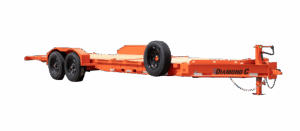
Many trailers sold by Spencer Trailers, including Diamond C, H&H, and Liberty units, can place substantial weight on the tow vehicle when loaded. That does not mean every one should receive the same hitch. Trailer type, pull configuration, actual loaded weight, tongue weight, coupler, brake system, receiver rating, and tow-vehicle instructions determine the correct setup.
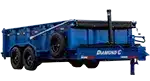
For example, the current Diamond C LPX is a low-profile extreme-duty bumper-pull equipment trailer available in multiple lengths and GVWR packages. A 22-foot LPX may be configured from 15,500 to 24,000 lbs GVWR, depending on the package. Current premium LPX configurations use Lippert axles, with axle quantity, axle rating, brakes, tires, frame construction, and other equipment varying by package. GVWR is the manufacturer’s maximum loaded rating; it does not increase or decrease according to what is placed on the deck.
Payload is not the same as GVWR. The available payload is generally the trailer’s GVWR minus its actual empty weight and any permanently installed equipment, subject to axle, tire, wheel, coupler, and component limits. The loaded trailer weight and measured tongue weight must then be compared with the truck’s ratings. A trailer rated for 15,500 lbs or more can exceed the capabilities of many consumer bumper-pull receivers even when the trailer itself is operating below GVWR.
A loaded dump trailer can also produce substantial tongue weight, but material density and placement matter. Soil, gravel, demolition debris, mulch, and equipment do not weigh the same. A level-looking load can still overload the trailer, an axle, a tire, the hitch, or the truck. Use scale weights and rated capacities instead of estimating from bed volume.
Diamond C builds its trailers in Mt. Pleasant, Texas, and has manufactured trailers in the United States since 1985. Current specifications and options can change by model year and production availability, so the VIN certification label, current build sheet, owner’s information, and dealer-confirmed configuration should be used for the individual trailer.
We discuss hitch height, loading, brakes, truck capacity, and compatible towing equipment whenever a heavier trailer leaves the dealership. This is not simply an accessory decision. The correct system may be a properly rated ball mount, an approved WD hitch with integrated sway control, a pintle arrangement, or a gooseneck hitch, depending on the trailer and tow vehicle.
Complete hitch-system prices vary by rating, design, shank, ball, mounting hardware, availability, and installation. Budget for the entire safe towing combination rather than relying on a generic price range. A lower-priced hitch that is incorrectly rated or incompatible with the trailer is not a bargain.
If you are not sure what your setup needs, bring your tow vehicle and trailer information to us. We can review the combination, check the coupler and ball height, discuss loaded-weight and tongue-weight measurements, and help identify equipment that fits the manufacturers’ requirements. Reach out to the Spencer Trailers team before buying equipment that may not be compatible or leaving out equipment your combination requires.
If you are still shopping for a trailer, browse current inventory and include the towing system, brake controller where applicable, registration, maintenance, and load-securement equipment in your total budget. The trailer’s purchase price is only one part of building a safe, legal towing combination.
What is your tow setup, and has sway ever caught you off guard? Correcting loading, tongue weight, tire condition, ball height, brake adjustment, or hitch selection can make a meaningful difference, but recurring sway should always be treated as a warning to stop and inspect the entire combination before continuing.


