


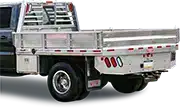
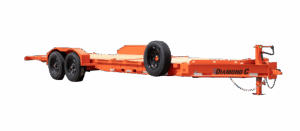





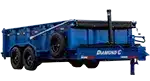

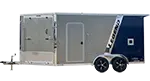

A lot of people buy a trailer to move something once, then park it beside the garage and forget about it. That is a missed opportunity, because a well-maintained trailer can be useful income-producing equipment instead of a one-time tool. If you already own a capable trailer, paid hauling may help offset registration, maintenance, insurance, storage, and financing costs. If you are considering buying one for side work, the trailer should be selected around the loads you can legally and safely carry rather than around deck size alone.
The demand is real. Homeowners need furniture delivered, renovation debris removed, landscaping materials hauled, and equipment transported. Small contractors sometimes need an extra trailer or a reliable delivery partner. However, accepting payment changes the nature of the trip. You are no longer simply helping a neighbor with a personal errand; you may be operating as a for-hire motor carrier, mover, waste hauler, or other commercial service. You do not necessarily need a fleet or a large company, but you do need the right truck-and-trailer combination, appropriate insurance, accurate load calculations, dependable equipment, and an understanding of the regulations that apply to the work.
What Kind of Work Actually Pays
Not all trailer side gigs are equal. Some jobs generate frequent calls but involve substantial labor, disposal expense, and cleanup. Others are less frequent but require heavier equipment, stronger insurance, better securement gear, and more regulatory compliance. The most profitable work is usually the work you can complete efficiently without exceeding the ratings of the trailer, tow vehicle, hitch, tires, brakes, ramps, or tiedowns.
Junk Removal
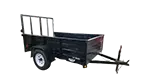
Junk removal is one of the most accessible trailer services in metro-adjacent and rural markets. Customers may need a garage, basement, rental property, construction area, or yard cleaned out. A current Diamond C GTU is a practical example of a premium tandem-axle utility trailer for this kind of work. It has a 7,000-pound GVWR, dual 3,500-pound LIPPERT brake axles, an 83-inch-wide bed, a 4-inch channel frame, and available lengths from 14 to 20 feet. Its actual carrying capacity is not 7,000 pounds, however. Payload is determined by subtracting the trailer’s as-equipped empty weight from its GVWR and then checking every other applicable rating. Lighter single-axle utility trailers can handle brush, boxed household items, and small cleanouts, while a tandem-axle trailer offers more deck area, braking capacity, and stability for properly distributed loads. :contentReference[oaicite:0]{index=0}
The economics depend on more than the price quoted to the customer. A proper estimate should account for travel time, loading labor, helpers, disposal charges, fuel, truck and trailer wear, cleanup, payment-processing costs, and the possibility that the material weighs more than it appears. Transfer stations and landfills may charge by weight, material type, vehicle, or minimum load, and acceptance rules can change. Confirm the destination and disposal cost before giving a firm quote, especially for tires, appliances, mattresses, electronics, paint, chemicals, batteries, refrigerant-containing equipment, and construction materials. Open loads must also be contained. Owen County requires commercial garbage and debris loads carried on public roads in an open vehicle to be completely and securely covered, and lightweight waste must be packaged or secured so it cannot escape during transport. :contentReference[oaicite:1]{index=1}
Hauling and Delivery
Facebook Marketplace, local classified groups, estate sales, furniture stores, and private sellers regularly generate delivery requests from people who own an item but have no practical way to move it. A trailer can be useful for couches, cabinets, lawn equipment, building supplies, boxed merchandise, and other property. Instead of advertising one flat rate for every trip, establish a minimum service charge and then account for mileage, loading difficulty, stairs, additional stops, waiting time, helper labor, and any special equipment. A curb-to-curb delivery should not be priced the same as a job that requires two people to carry a large cabinet through a narrow staircase.
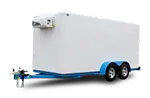
An enclosed trailer expands the range of items you can carry because it provides weather protection and enclosed storage during stops. Wells Cargo and Darkhorse Cargo offer enclosed configurations suited to general delivery and moving work. A 7-by-16-foot enclosed trailer should not be assumed to be single axle; current 7-by-16 Darkhorse units commonly use tandem 3,500-pound axles and electric brakes for a 7,000-pound GVWR. The data plate and build specifications of the exact trailer remain the authority. Ramp-door capacity, interior height, wheel-box spacing, floor rating, tiedown locations, door opening, empty weight, and actual payload all matter when deciding whether a particular item fits safely. Furniture must still be padded and secured inside the trailer because enclosure alone does not prevent it from sliding, tipping, or striking the walls. :contentReference[oaicite:2]{index=2}
Moving Assistance
Local moving work can generate worthwhile revenue, but it carries more legal responsibility than an informal furniture delivery. A customer may need loading help, transportation between homes, unloading, or all three. Quote the work according to the number of workers, estimated hours, travel distance, stairs, elevators, heavy items, packing requirements, and the customer’s responsibility for disassembling or preparing furniture. A written estimate and service agreement should explain what is included, how additional time is billed, what items you will not transport, and how pre-existing damage will be documented.
An enclosed Darkhorse Cargo, Wells Cargo, or Legend trailer with a properly rated ramp door can make furniture loading cleaner and provide protection from rain and road debris. Before advertising yourself as a mover, though, determine which authority applies. Indiana treats compensated transportation of household goods between points in the state as regulated for-hire transportation that may require intrastate operating authority, insurance filings, and other credentials. Interstate household-goods moving is regulated federally and generally requires the appropriate FMCSA operating authority. Providing labor while the customer supplies and drives the vehicle may be classified differently from transporting the customer’s property in your own truck and trailer, but that distinction should be confirmed before accepting work. :contentReference[oaicite:3]{index=3}
Equipment Rental and Transport
Contractors, landscapers, farmers, property owners, and weekend equipment users may need skid steers, compact track loaders, mini excavators, zero-turn mowers, tractors, or ATV and UTV units transported. This work requires a trailer selected for the machine’s complete operating weight, not simply its general category. Diamond C’s current LPX low-profile extreme-duty equipment trailer and HDT hydraulically dampened tilt trailer are offered in configurations ranging from approximately 15,500 to 24,000 pounds GVWR. Current lower-capacity configurations use LIPPERT axles as standard, with axle packages varying by GVWR. H&H also offers Industrial Equipment Trailer configurations in approximately 14,000- to 16,000-pound GVWR classes. A generic 20-foot car hauler is not automatically suitable for a skid steer. Verify the machine’s operating weight with fuel, bucket, forks, tracks, counterweights, and other attachments, then compare it with the trailer’s actual payload, deck width, concentrated-load capacity, ramp rating, tire capacity, axle ratings, coupler rating, and the tow vehicle’s limits. :contentReference[oaicite:4]{index=4}
Equipment transport can command higher rates than light delivery because it requires more capable equipment, more securement gear, and greater liability exposure. Charge for loading time, route mileage, deadhead travel, tolls, waiting, permit requirements, and additional stops rather than relying on a universal per-trip price. Obtain the customer’s written machine description and weight before dispatching. Federal cargo-securement rules contain specific requirements for heavy vehicles, equipment, and machinery weighing 10,000 pounds or more, including a minimum of four tiedowns in many applications and securement of accessories and articulated components. Even when a smaller machine falls below that threshold, every chain, strap, binder, anchor point, and attachment method must be rated and appropriate for the load. :contentReference[oaicite:5]{index=5}
What You Need Before Taking Your First Job
Insurance
This is where many new operators skip an important step. A personal auto policy may exclude, restrict, or inadequately cover paid hauling, delivery, moving, or other business use. Coverage language differs by insurer, so do not assume that attaching a personally owned trailer to an insured pickup automatically covers a commercial trip. Tell the agent exactly what you plan to haul, whether the property belongs to customers, how often you expect to work, where you will operate, the truck and trailer GVWRs, and whether you will cross state lines. Ask for written confirmation of the coverage rather than relying only on a verbal description.
Options worth knowing include the following:
- Commercial auto or approved business-use coverage: This may provide liability coverage for paid operations and, when specifically purchased, physical-damage coverage for the tow vehicle and scheduled trailer. Confirm whether the trailer must be listed separately, whether coverage applies while it is detached, and whether there are restrictions on moving household goods, hauling waste, delivering equipment, or operating beyond a stated radius.
- Motor truck cargo or inland marine coverage: This may cover customer-owned property while it is in your custody or being transported, subject to limits, deductibles, exclusions, valuation terms, and securement requirements. It is not a substitute for automobile liability coverage, and policies may treat household goods, electronics, antiques, machinery, or property being installed differently.
- General liability and hired/non-owned auto coverage: General liability can address certain non-auto business exposures, such as damage caused while loading or working at a customer’s property. Hired and non-owned auto coverage generally protects the business from specified liability arising from rented, borrowed, or employee-owned vehicles; it normally does not replace the primary insurance on your personally owned truck or pay for physical damage to that truck and trailer.
Talk to an independent commercial insurance agent who understands motor carriers, delivery operations, junk removal, and household-goods risks. Premiums cannot be accurately estimated from a generic annual range because they depend on the operation, vehicle values, territory, driving history, claims history, radius, cargo, limits, deductibles, number of drivers, and required filings. Indiana and federal motor-carrier rules may impose minimum liability limits or proof-of-insurance filings based on the type of property transported, whether the work is for hire, the vehicle or combination weight, and whether the operation is interstate. Confirm those requirements before accepting a job, not after an accident or roadside inspection. :contentReference[oaicite:6]{index=6}
Licensing and Registration
Indiana does not require a Class A commercial driver’s license merely because the trailer itself is rated over 10,000 pounds. The standard Class A CDL threshold is a combination gross vehicle weight rating or qualifying combination weight of 26,001 pounds or more when the towed unit has a GVWR or qualifying weight over 10,000 pounds. Both parts of that threshold matter. For example, a trailer over 10,000 pounds does not by itself create a federal Class A CDL requirement when the qualifying combination remains below 26,001 pounds. Hazmat, passenger, school-bus, and other specialized operations have separate rules, and being below the CDL threshold does not exempt a paid hauler from other commercial motor-vehicle, insurance, registration, medical, inspection, logging, or operating-authority requirements. :contentReference[oaicite:7]{index=7}
What you do need includes the following:
- The correct driver’s license or endorsement: The driver must hold a valid license appropriate for the vehicle and operation. Indiana’s for-hire endorsement rules can apply when a motor vehicle rated from 16,000 through 26,000 pounds is used to transport property for compensation. That endorsement is separate from a CDL and does not replace any motor-carrier authority, medical qualification, registration, or insurance filing that the business may need. :contentReference[oaicite:8]{index=8}
- Proper truck and trailer registration: Indiana trailers must be titled and registered as applicable and must display the correct plate. A newly acquired vehicle generally must be titled and registered within Indiana’s 45-day penalty-free window. Trailers with a declared gross weight of 3,000 pounds or less may qualify for permanent registration, while heavier trailers use the applicable registration class and renewal schedule. Keep the registration and proof of insurance available in the tow vehicle. :contentReference[oaicite:9]{index=9}
- Required brakes and road equipment: Indiana law requires adequate brakes on a trailer or semitrailer with a gross weight of at least 3,000 pounds. The braking system must be controllable from the towing vehicle and must provide automatic application if the trailer separates, which is why an operable brake controller and charged breakaway system matter. Lights, reflectors, safety chains, coupler components, tires, and other required equipment must also be present and functional. :contentReference[oaicite:10]{index=10}
If you are operating as a business, a sole proprietorship or LLC may help organize banking, taxes, contracts, and recordkeeping. An LLC can separate certain business obligations when it is properly maintained, but it does not protect a driver from personal responsibility for the driver’s own negligence and it does not replace insurance. Registering an LLC is also not the same thing as obtaining motor-carrier authority. Depending on the truck-and-trailer combination, operating territory, and property carried, a paid hauler may need a USDOT number, Indiana identification, Form E insurance filing, intrastate authority, federal operating authority, or household-goods credentials. Interstate for-hire hauling can trigger federal requirements at weights well below the CDL threshold, so classify the operation before advertising services across state lines. :contentReference[oaicite:11]{index=11}
Your Trailer’s Condition
Customers will notice the condition of the equipment, and mechanical defects can also lead to breakdowns, citations, cargo damage, or crashes. Before every paid trip, inspect the truck and trailer as a complete combination. Check cold tire pressure, tread, sidewalls, valve stems, lug nuts, hubs, visible suspension components, brakes, breakaway battery, lights, plug, coupler, hitch ball or gooseneck connection, latch, jack, crossed safety chains, ramps, gates, doors, floor, tiedown points, hydraulic system, tarp, license plate, and load-security equipment. Confirm that the ball, mount, receiver, coupler, chains, tires, wheels, axles, ramps, tiedowns, and hitch are individually rated for the planned load. Carry spare fuses, compatible bulbs or lights, wheel chocks, warning devices, a usable spare tire, and tools appropriate for the trailer. Keep maintenance and inspection records so you can identify recurring tire, brake, bearing, wiring, or hydraulic problems before they interrupt a customer job.
Matching the Trailer to the Work
| Type of Work | Trailer That Fits | Key Spec to Check |
|---|---|---|
| Junk removal / debris | Diamond C GTU utility, Diamond C MDT or LPT dump, H&H dump trailer | Actual payload, side height, tarp system, floor rating, brakes, and permitted material |
| Furniture / moving | Wells Cargo or Darkhorse Cargo enclosed | Actual payload, interior and door dimensions, ramp rating, floor strength, and tiedowns |
| Equipment transport | Diamond C LPX or HDT, H&H Industrial Equipment Trailer | Machine operating weight, payload, deck and ramp ratings, tiedowns, width, and tow-vehicle capacity |
| General hauling / delivery | Diamond C GTU, Liberty or Delco utility | GVWR, as-equipped empty weight, axle and tire ratings, brakes, deck size, and load security |
If you are buying a trailer specifically to generate income, do not underspecify it, but do not buy solely by the largest GVWR printed in an advertisement either. A 5-by-8-foot single-axle trailer may be efficient for boxed deliveries, brush, or light landscaping work, but it limits load volume and carrying capacity. A Diamond C GTU with dual 3,500-pound LIPPERT brake axles and a 7,000-pound GVWR opens more job types, yet 7,000 pounds is the trailer’s maximum rated total weight, not its payload. Subtract the exact trailer’s as-equipped empty weight, including installed options, from GVWR to estimate available payload. Then verify the tow vehicle’s tow rating, hitch rating, gross combined weight rating, gross vehicle weight rating, rear-axle rating, tire ratings, and available payload. Tongue weight becomes load on the tow vehicle, so a truck can exceed its own payload or rear-axle rating even when the advertised tow rating appears sufficient. For dump or equipment work, compare the Diamond C MDT, LPT, LPX, and HDT according to the material or machine, loading method, deck dimensions, hoist or tilt system, ramps, axle package, and exact VIN-specific ratings rather than treating all tandem-axle trailers as interchangeable. :contentReference[oaicite:12]{index=12}
Finding Customers
Word of mouth moves quickly in small communities, and Spencer and Owen County are exactly the kind of places where a reputation travels. Tell neighbors and local businesses what services you actually provide, but be specific about your limits. Post clear photographs of the truck, trailer, straps, tarps, pads, dollies, and other equipment. Ask satisfied customers for an honest review rather than offering a misleadingly low introductory price that will be impossible to sustain. Reliability, careful communication, legal disposal, and arriving with clean, maintained equipment are stronger long-term selling points than simply advertising the lowest rate.
For equipment transport and contractor work, introduce yourself to local equipment dealers, landscape companies, repair shops, auction companies, storage facilities, and rental yards. Ask what insurance certificate, USDOT information, operating authority, driver qualification, securement equipment, or vendor documentation they require before accepting referrals. Rental businesses may need delivery support, but they will also expect the hauler to know the machine’s weight, approved lifting or tiedown locations, attachment requirements, and delivery-site limitations. A dependable operator who communicates arrival times and submits complete paperwork can earn repeat business without relying entirely on public advertisements.
Facebook Marketplace, community groups, local classifieds, and a simple business profile can still generate junk-removal, delivery, and moving leads. A useful listing should identify the service area, trailer type and dimensions, types of work accepted, materials or items you will not transport, whether loading help is included, and how estimates are prepared. Avoid promising a fixed price from one photograph. Ask for the pickup and delivery addresses, stair or access details, item dimensions, estimated weight, photographs, disposal category, number of workers needed, and desired timing. Confirm the final scope in writing and keep records of estimates, customer approvals, receipts, scale tickets, disposal locations, mileage, and payments.
A Quick Reality Check
This is not passive income. You are driving, scheduling, communicating with customers, loading, securing, unloading, cleaning, maintaining equipment, and managing legal and financial risk. Gross receipts are not profit. Fuel, disposal, helper wages, insurance, registration, tires, brakes, bearings, straps, chains, tarps, repairs, depreciation, advertising, taxes, and unpaid travel all reduce the amount you keep. A few properly priced jobs may help cover ownership costs, while regular work can develop into a real business. A trailer used genuinely and predominantly for qualifying business purposes may also be eligible for business depreciation. Federal law restored 100% bonus depreciation for eligible property acquired and placed in service after January 19, 2025, but eligibility, business-use percentages, basis, financing, Section 179 interaction, and recapture rules depend on the taxpayer’s circumstances. Discuss the purchase with a qualified tax professional instead of treating the entire trailer price as an automatic deduction. :contentReference[oaicite:13]{index=13}
The biggest mistake is treating insurance, weight ratings, and operating authority as optional because the work is described as a side hustle. One serious crash, unsecured load, damaged machine, illegal disposal incident, or denied claim can cost far more than the income from many jobs. Set up the operation before job one: identify the service you are legally providing, verify the truck and trailer ratings, obtain written insurance confirmation, complete required registrations and filings, use written estimates and agreements, inspect the equipment, and document every load. Decline any job when the weight, material, route, securement method, disposal site, customer instructions, or legal status is uncertain.
If you are still deciding whether to buy a trailer or which model makes sense for the work you have in mind, browse the current inventory at Spencer Trailers. Or reach out directly and talk through which trailer specification fits what you are planning. The right trailer for light delivery is different from the right trailer for junk removal, dump work, or equipment transport. Spencer Trailers can help you compare the exact unit’s GVWR, as-equipped empty weight, calculated payload, bed dimensions, LIPPERT axle package, brakes, tires, ramps, hoist or tilt system, tiedown provisions, and compatibility with your tow vehicle before you commit.


