








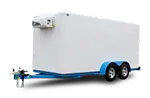


You’ve picked out a Diamond C LPT dump trailer or a 7×16 Wells Cargo enclosed trailer, and now comes the part buyers do not always examine closely enough: how you’re paying for it. The trailer may be the straightforward part. Financing is where buyers can leave money on the table, accept unnecessary add-ons, or choose a longer term that makes the monthly payment look attractive while adding thousands of dollars to the total cost.
There is no universal winner between bank financing, credit-union financing, and dealer-arranged financing. The best option depends on the trailer’s price, whether it will be used personally or for business, the collateral requirements, your credit profile, the available promotions, and how quickly you need to complete the purchase. There are, however, smart ways to compare the choices and costly mistakes you can avoid.
What Dealer Financing Actually Is
When a trailer dealer offers financing, the dealer generally is not lending its own money. Instead, it submits your application to a third-party lender that finances trailers, equipment, recreational products, or commercial assets. Sheffield Financial is one example of a lender that offers trailer and truck-bed financing through participating dealers. Depending on the dealership, there may also be relationships with regional banks, credit unions, equipment-finance companies, or lenders serving specific credit profiles. The lender, not the dealer, normally makes the credit decision and establishes the final loan conditions.
Dealer compensation is not identical across every lender or program. In some indirect-financing arrangements, a lender establishes a wholesale or “buy” rate and permits dealer participation in the customer-facing rate. Other programs use a flat lender-paid incentive, a volume-based incentive, or a dealer-paid subsidy that supports a promotional customer rate. The presence of dealer compensation does not automatically make an offer unfair, but it is one reason to compare the dealer’s offer with an independent quote. The Consumer Financial Protection Bureau notes that the rate offered through a dealer can be higher than the lender’s underlying buy rate when dealer participation is permitted. Sheffield’s current dealer materials also describe possible incentives and dealer-paid promotional subsidies, depending on the applicable program. :contentReference[oaicite:0]{index=0}
Consider a $15,000 trailer loan with no additional financed fees. At 8.9% APR for 60 months, the payment is approximately $310.65 and total interest is about $3,638.87. At 6.9% APR for the same amount and term, the payment is approximately $296.31 and total interest is about $2,778.65. The two-percentage-point difference costs roughly $860.22 over the loan, or about $14.34 per month. That may not determine the entire purchase, but it is real money that could otherwise cover registration, insurance, tie-down equipment, maintenance, or part of the trailer’s options.
APR is more useful than the stated interest rate alone because APR is designed to reflect the interest rate together with certain finance charges. For a consumer-purpose closed-end loan, also review the amount financed, finance charge, total of payments, payment schedule, and any required down payment. A low advertised rate is less impressive if the transaction includes expensive optional products, an extended term, or fees that substantially increase the amount financed. :contentReference[oaicite:2]{index=2}
What a Bank or Credit Union Loan Looks Like
A direct loan from your bank or credit union means you apply independently rather than relying only on the dealership’s lender network. The lender may offer a secured trailer or equipment loan, an unsecured personal loan, a vehicle-style loan if the trailer qualifies under its policies, or a commercial equipment loan for a business purchase. If approved, you may receive a draft, cashier’s check, electronic funding instructions, or a loan commitment that remains subject to the lender approving the specific trailer and purchase documents.
Credit unions can be competitive, but it is not accurate to assume that every credit union will automatically beat every dealer offer by a fixed number of percentage points. Rates depend on credit tier, loan amount, term, collateral age, secured versus unsecured status, automatic-payment discounts, membership requirements, and the lender’s current pricing. As of July 2026, Centra Credit Union specifically lists utility and horse trailers among the property it finances and publishes different rate ranges based on model year, term, and collateral structure. Hoosier Hills Credit Union publishes separate rates for secured collateral and unsecured personal loans, with unsecured rates generally higher than its best secured rates. Published “as low as” rates are not promises that every applicant or trailer will receive that rate. :contentReference[oaicite:3]{index=3}
The timing also varies. An existing customer with complete documentation may receive a decision the same day, while a secured or commercial application can take several business days if the lender needs a title review, purchase order, proof of income, business documents, insurance information, or a valuation of a used trailer. A pre-approval may also be conditional rather than final. The lender can still decline the collateral, adjust the approved amount, or change the terms if the trailer’s age, price, title status, or intended use falls outside its program.
Direct financing gives you an independent benchmark before you arrive, but it does not literally turn every financed buyer into a cash buyer. The dealership still may need to coordinate the lender’s draft, lien information, title paperwork, proof of insurance, and funding requirements. Its main advantage is transparency: you know the terms available from at least one outside source and can compare them with the dealer-arranged offer instead of evaluating the dealer’s proposal in isolation.
Pros and Cons, Laid Out Plainly
Dealer Financing
- Pro: The application, purchase paperwork, and lender coordination can often be completed in one location, sometimes during the same dealership visit.
- Pro: Participating dealers may have access to time-limited promotional programs for eligible applicants, trailer categories, purchase amounts, or terms. Promotions change, so confirm the expiration date, required credit tier, standard rate after any introductory period, and whether the dealer must contribute a subsidy.
- Pro: A dealer familiar with trailer financing can help supply the lender with the purchase order, vehicle identification number, title information, lienholder details, and specifications required for funding.
- Pro: A dealership working with more than one lender may be able to submit the application to a program that better matches the buyer’s credit history, business status, requested term, or trailer type.
- Con: The offered APR may not be the lowest rate available to you, particularly when you have not obtained an independent quote.
- Con: Access to several lenders can improve the number of options, but it does not guarantee approval or favorable terms. Each lender applies its own underwriting standards.
- Con: A lower payment can result from a longer term rather than a better deal. Extending the repayment period usually increases total interest and may keep the balance above the trailer’s resale or insurance value for longer.
- Con: Optional products such as service contracts, payment-protection products, GAP or debt-cancellation coverage, and other add-ons can increase the amount financed. Sheffield’s current dealer guidelines require applicable optional products to be disclosed, separately accepted, and cancelable under the product terms, but buyers still need to review the price and coverage carefully. :contentReference[oaicite:4]{index=4}
Bank or Credit Union Loan
- Pro: You can establish a rate and payment benchmark before discussing dealership financing.
- Pro: Applying separately helps you negotiate the trailer’s selling price without allowing the monthly payment to dominate the conversation.
- Pro: Your existing bank or credit union may already have your deposit history, identity documents, and automatic-payment setup, which can make the application easier.
- Pro: You may be able to compare secured and unsecured options. A secured loan may offer a better rate, while an unsecured loan can avoid a lien on the trailer but often carries a higher APR.
- Con: Funding may require an additional trip, electronic coordination, a purchase agreement, proof of insurance, title documentation, or a lender-approved valuation.
- Con: Some lenders impose minimum loan amounts, maximum trailer ages, term limits, collateral-value limits, or restrictions on privately sold and rebuilt-title units.
- Con: A direct lender may not offer a trailer-specific product. The available alternative could be an unsecured personal loan with a higher rate or a shorter term.
- Con: A pre-approval does not guarantee a lower purchase price. Negotiate the trailer on its total selling price and compare the complete financing terms rather than assuming outside financing automatically creates extra price leverage.
Rate Shopping: Do It Before You Step on the Lot
A strong position when buying a trailer is to have an independent financing quote before signing the purchase documents. Think of that quote as a benchmark rather than a commitment. If the dealer provides a lower APR with comparable fees, term, down payment, and amount financed, the dealer offer may be better. If the dealer’s proposal is more expensive, you can use the outside lender, renegotiate the terms, or reconsider the purchase.
Start with lenders that offer prequalification through a soft credit inquiry when possible. Sheffield, for example, offers a prequalification process described as having no impact on the applicant’s credit score, while a completed credit application can involve a hard inquiry. Confirm the type of inquiry before submitting personal information because lender terminology and procedures can differ. :contentReference[oaicite:5]{index=5}
Do not assume that every trailer-financing inquiry will be combined into one credit-scoring event. FICO’s published rate-shopping treatment specifically addresses mortgage, automobile, and student-loan inquiries. Depending on the scoring model, eligible inquiries may be grouped within a 14-day or 45-day shopping period. A trailer application coded as an unsecured personal loan, general installment loan, or commercial equipment loan may be treated differently. Ask whether the lender can provide a soft-pull prequalification and limit unnecessary full applications until you know which offers are competitive. :contentReference[oaicite:6]{index=6}
When the written offers arrive, compare the same figures on each one: trailer selling price, taxes and government charges, down payment, amount financed, APR, payment amount, number of payments, finance charge, total of payments, origination or filing fees, optional products, prepayment terms, and any balloon payment. The Federal Trade Commission recommends negotiating the purchase price and comparing APR, loan length, and total cost rather than concentrating only on the monthly payment. :contentReference[oaicite:7]{index=7}
A pre-approval or written rate quote changes the dealership conversation. You are not waiting for one finance offer to tell you what the purchase might cost. You already have a documented benchmark against which the complete dealer proposal can be measured.
How Trailer Type Affects Your Financing Options
Lenders may classify trailers differently based on their intended use, purchase price, title status, age, borrower type, and available collateral. A Wells Cargo enclosed trailer or an H&H steel car hauler may qualify for a consumer secured loan when purchased for personal use. Current H&H 82×18 steel car-hauler configurations, for example, can be ordered with a 7,000-pound GVWR or a 9,900-pound GVWR package, so the lender should evaluate the specific VIN and build rather than relying only on the advertised dimensions. :contentReference[oaicite:8]{index=8}
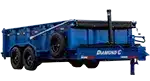
A Diamond C LPT is a heavy-duty telescopic dump trailer offered in current configurations ranging from approximately 15,500 to 24,000 pounds GVWR. Current LPT builds use a telescopic hoist and Lippert axles, with the exact axle package, payload, empty weight, dimensions, coupling, tires, brakes, and options determined by the ordered configuration. A higher-GVWR trailer is not automatically a commercial loan merely because of its rating, but its price, intended work use, and collateral value may make commercial equipment financing the more appropriate lender product. :contentReference[oaicite:9]{index=9}
For a business purchase, the lender may request the company’s formation documents, tax identification number, financial statements, bank statements, time-in-business information, personal guaranty, down payment, and proof of insurance. It may perfect its security interest through the title, a UCC filing, or both, depending on the transaction and state requirements. Commercial loan terms are individually underwritten, so buyers should not assume that every business loan requires a fixed 10% or 20% down payment or that it will always carry a shorter term than a consumer loan.
Ask the lender whether the credit is being treated as consumer-purpose or business-purpose financing. That distinction affects disclosures and borrower protections. Federal Regulation Z generally exempts credit extended primarily for business, commercial, or agricultural purposes from its consumer-credit requirements, even when an individual signs a personal guaranty. The trailer’s GVWR by itself does not decide whether the loan is consumer or commercial; the primary purpose of the credit is a central factor. :contentReference[oaicite:10]{index=10}
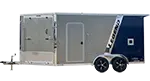
For a personal-use Legend aluminum enclosed trailer, a Delco utility trailer, or another moderately priced unit, a credit union may offer a trailer-secured loan or an unsecured personal loan. An unsecured loan can simplify collateral and title coordination, but convenience should be compared against the APR and total interest. A properly structured secured loan may cost less, although the lender will have a lien and may require physical-damage insurance for the duration of the loan.
Business buyers should also discuss tax treatment with a qualified tax professional rather than allowing a financing salesperson to determine the answer. The financing source does not by itself decide whether the trailer qualifies for depreciation. Current federal law restored 100% additional first-year bonus depreciation for eligible qualified property acquired after January 19, 2025, subject to the placed-in-service, business-use, basis, and other eligibility rules. The deduction can be valuable, but it is not a reason to overpay for a trailer, accept an unsuitable loan, or assume every purchase receives the same treatment. :contentReference[oaicite:11]{index=11}
Negotiating With Financing in Play
One of the most useful things a buyer can do is negotiate the trailer and the financing as related but separate parts of the transaction. Start with the trailer’s actual selling price and the complete out-the-door amount. Then evaluate the down payment, amount financed, APR, term, and add-ons. Dealers and lenders can structure offers in different ways: one proposal may have a lower rate but less price flexibility, while another may provide a lower selling price with a higher finance cost. Comparing only the payment hides those differences.
If you have an outside quote, first confirm the exact unit and equipment being purchased. A 6×12 Wells Cargo enclosed trailer is a size, not one universal specification; the series, interior height, axle package, brakes, payload, doors, lining, and options affect the price and collateral value. Likewise, an H&H 82×18 steel car hauler may be built at 7,000 or 9,900 pounds GVWR. Get the best written selling price for the particular VIN and build, and then compare the dealer’s financing with your outside offer using the same down payment and loan term. :contentReference[oaicite:12]{index=12}
Ask whether the quoted trailer price is available regardless of the financing source, whether a rebate or promotional rate requires dealer-arranged financing, and whether paying off a promotional loan early changes any discount. Do not assume that a dealer-services or documentation fee is created by financing or can automatically be removed when you bring your own lender.
Indiana’s current dealer-services-fee enforcement threshold is $261.72, effective July 1, 2026. The Indiana Attorney General’s guidance also addresses how the fee must be included in the advertised sale price and disclosed in the transaction documents. Review the buyer’s order to make sure the advertised price, dealer-services fee, taxes, title and registration charges, lender fees, optional products, and total amount due are presented consistently. :contentReference[oaicite:13]{index=13}
A Quick Comparison Table
| Factor | Dealer Financing | Bank / Credit Union |
|---|---|---|
| Speed | Often can be completed during the purchase visit, subject to lender hours, approval, and documentation | May be same day for a simple application or several business days for secured and commercial loans |
| Rate competitiveness | Varies by lender, credit tier, dealer program, term, and any current promotion | Can be competitive, especially for established members and well-qualified secured borrowers |
| Price negotiation | Convenient, but the buyer must keep the trailer price, payment, and finance terms separate | Provides an independent benchmark but does not guarantee a lower trailer price |
| Credit options | A participating dealer may have access to more than one lender or credit program | Each application is evaluated under that institution’s own policies; other lenders remain available if one declines |
| Credit inquiries | May involve a hard inquiry or multiple submissions; ask how and when applications will be sent | Soft-pull prequalification may be available before a full application; inquiry treatment varies by loan type |
| Collateral and paperwork | Dealer often coordinates the purchase order, VIN, title, lienholder, and funding documents | Buyer may need to deliver the purchase agreement, title details, insurance, valuation, and lender draft |
| Prepayment | Depends on the lender; Sheffield currently states that its loans do not have a prepayment penalty | Depends on the specific loan agreement and state law; never assume all banks or credit unions use the same policy |
| Best for | Buyers prioritizing convenience, dealership coordination, or an eligible promotional program | Buyers who want an independent quote, have time to arrange funding, or already have a competitive lender relationship |
What to Watch in the Fine Print
Whether you use dealer-arranged financing, a bank, or a credit union, read the complete loan agreement and buyer’s order before signing. Pay particular attention to the following:
- Prepayment terms: Confirm whether you can pay additional principal or satisfy the loan early without a fee. Sheffield currently states that its loans have no prepayment penalty and use simple-interest calculations, but that policy should not be assumed for every lender or every type of commercial financing. Also ask how an extra payment must be submitted or designated for it to reduce principal. :contentReference[oaicite:14]{index=14}
- Balloon payments: A balloon requires a substantial remaining balance to be paid or refinanced at the end of the scheduled term. Balloon structures are less common in ordinary consumer trailer financing but may appear in commercial equipment transactions. Compare a balloon proposal with a fully amortizing loan rather than judging it by the lower monthly payment alone.
- GAP or debt-cancellation coverage: If offered, this product may cover some or all of the difference between the loan balance and the insurance settlement after a covered total loss. It is not automatically worthwhile above an arbitrary purchase-price threshold. Its value depends on the down payment, depreciation, loan term, insurance settlement method, deductible, exclusions, maximum benefit, cancellation provisions, and whether financed premiums are refundable after early payoff. Confirm that the product is optional and read the actual agreement before accepting it.
- Simple interest and payment timing: On a daily simple-interest loan, interest accrues based on the outstanding principal and the number of days between payments. Paying late can increase interest and slow principal reduction, while paying early or making properly applied additional principal payments can reduce the total cost. Ask the lender how partial payments, extra payments, and automatic payments are applied.
- Optional products and financed fees: Review the price of every service contract, protection plan, credit product, filing fee, origination fee, and insurance-related item. A product can appear inexpensive when expressed as a few dollars per month but cost considerably more when added to a five- or six-year loan with interest.
- Collateral, liens, and insurance: Determine whether the lender will be listed as lienholder on the title, file a UCC financing statement, require comprehensive and collision coverage, restrict commercial use, or require the trailer to remain registered and insured in a particular name. Confirm the procedure and any fee for releasing the lien after payoff.
- Late charges and default provisions: Read when a late fee begins, how returned payments are handled, whether the lender can accelerate the balance, and what events constitute default. Business-purpose agreements can contain different remedies and fewer standardized consumer disclosures.
- Conditional promotions: Confirm whether a promotional APR applies for the full term or only an introductory period, whether deferred interest can be charged, and whether the promotion requires a minimum purchase amount, specific term, automatic payments, or completion by a stated deadline.
So Which One Should You Use?
If you have good credit and enough time to compare offers, begin with a soft-pull prequalification or written quote from a bank or credit union. Then let the dealer show you the financing programs available for the specific trailer. Use the option with the strongest complete terms, not automatically the one with the lowest payment or the most familiar lender name.
Dealer financing can be a practical option when you want coordinated same-day processing, when a current promotion genuinely reduces the total cost, or when the dealership has access to a lender that fits your application better than your primary bank. Sheffield Financial, for example, is an established trailer-financing source and currently states that its loans have fixed rates, flexible terms, and no prepayment penalties. Approval, APR, term, and available programs still depend on the applicant and transaction. :contentReference[oaicite:15]{index=15}
If your credit is still building, avoid assuming that a longer term or a larger down payment automatically makes an offer affordable. Compare the total of payments, keep enough cash for insurance and operating expenses, and make sure the monthly obligation remains manageable during slower work periods. A co-borrower, less expensive configuration, larger down payment, or additional time to improve the credit profile may produce a safer result than accepting the first approval.
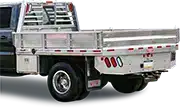
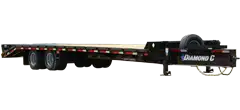
If you’re buying a working trailer for a business, speak with a commercial lender and tax professional before finalizing the transaction. Whether the purchase is a Zimmerman truck bed, Diamond C LPT dump trailer, LPX equipment trailer, HDT tilt trailer, or FMAX gooseneck flatbed, the lender and adviser should evaluate the exact asset, business use, titled owner, cash flow, insurance, tax treatment, and appropriate loan structure. Do not select a consumer loan merely because its application looks easier if the stated use or ownership information would be inaccurate.
Ready to look at what’s available right now? Check out our current trailer inventory or reach out to us at (812) 829-0226 and we can walk through what financing options typically look like on the units you’re considering. The right trailer at the wrong rate is still the wrong deal.


