


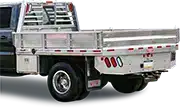
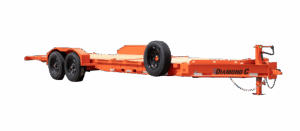







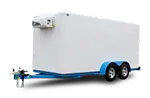


You’ve seen the ads: “Government surplus auction, trailers starting at $500!” Or you’re scrolling an online bidding site at midnight and find a 16-foot trailer that looks decent in three blurry photos. The current bid is $1,200, while a similarly sized new trailer appears to cost several times more. Your brain starts doing math before you have checked the buyer’s premium, title paperwork, tire dates, axle condition, pickup deadline, or whether your truck can legally and safely tow it home.
Slow down. Trailer auctions can absolutely produce real savings, but the gap between a bargain and a money pit is narrower than the listing makes it look. The winning bid is only one part of the acquisition cost. This post breaks down where auction trailers actually come from, what the legitimate risks are, and how to decide whether the math still works after you account for everything the seller, auctioneer, or photographs may not tell you.
The Main Auction Sources
Government and Municipal Auctions
Federal, state, and local governments regularly sell surplus equipment. The U.S. General Services Administration operates gsaauctions.gov, where registered members of the public can bid electronically on federal surplus property. State agencies, counties, cities, school systems, and public utilities may use their own surplus websites or commercial platforms such as GovDeals and Public Surplus. The agency named as the seller matters because its inspection rules, payment deadline, ownership documents, pickup requirements, and tax treatment can differ from those of another agency using the same platform. :contentReference[oaicite:0]{index=0}
What you’re typically buying here includes open utility trailers, equipment haulers, dump trailers, enclosed cargo units, generator trailers, specialty fleet equipment, and older trailers that have reached an agency’s replacement cycle. Some government fleets maintain useful service records, work orders, or asset histories, but those records are not guaranteed to exist, be complete, or be included with the sale. A maintenance log showing regular service is valuable evidence. The absence of a log is not proof of neglect, but it leaves you with another unknown that belongs in your bid calculation.
Do not assume government ownership automatically means clean condition or simple title paperwork. Federal property may be transferred with a Standard Form 97 when the item requires a title, while an Indiana city, town, or county auction may produce different ownership documents depending on why and how the trailer was sold. Indiana accepts a bill of sale as primary ownership evidence only in limited circumstances, including certain abandoned vehicles sold by a city, town, or county; a trailer purchased from the federal government must use the applicable federal ownership certificate. Read the individual lot terms before bidding, and confirm with the Indiana BMV that the documents offered will support an Indiana title. :contentReference[oaicite:1]{index=1}
Online Auction Platforms
Ritchie Bros., IronPlanet, GovPlanet, Purple Wave, GovDeals, and Public Surplus account for a large share of the online listings buyers encounter. Their business models and inspection practices are not identical. GovPlanet listings commonly include a platform inspection report backed by IronClad Assurance, while Purple Wave expressly tells bidders that its listings are not substitutes for an independent inspection. Ritchie Bros. also advises buyers that auction items are sold as-is, where-is and should be inspected before bidding. A report can improve your information, but it does not turn a used trailer into a dealer-inspected retail unit. :contentReference[oaicite:2]{index=2}
A major problem with online auctions is incomplete condition representation. A seller may accurately identify a used Diamond C LPX and show that its deck and fenders look respectable from ten feet away. The photographs may still fail to reveal a twisted tongue, abnormal tire wear, deteriorated brake wiring, loose spring hangers, contaminated wheel bearings, an unauthorized frame repair, or damage hidden beneath the deck. If the trailer has optional powered equipment, photographs may not establish whether the hydraulic jack, battery, pump, remote, or associated wiring works correctly. Dump and tilt trailers add additional components that must be cycled and inspected rather than judged from still images.
Look closely at what the platform’s inspection protection actually covers. Some reports describe visible condition and limited functional tests but do not disassemble hubs, remove brake drums, load-test a deck, verify frame alignment on a fixture, or guarantee that the trailer will pass your home state’s registration process. If an auction allows an in-person or third-party inspection, use the opportunity. If it does not, identify exactly what the platform has inspected, what remedy is available for a material reporting error, and how quickly a complaint must be submitted. GovPlanet, for example, generally relies on its own posted inspection rather than allowing an onsite pre-auction inspection, so the report and its limitations become especially important. :contentReference[oaicite:3]{index=3}
Dealer Liquidation and Repo Auctions
Financing companies sell repossessed trailers, and dealers sometimes auction aged inventory, wholesale trades, damaged units, or trailers they do not plan to recondition for retail sale. These can be worthwhile opportunities because the seller may have a clearer VIN, repossession file, payoff record, service invoice, or prior-owner paperwork than a casual private seller. None of that should be assumed. Ask which ownership document will be delivered, when it will be delivered, whether any title brand is known, and whether all recorded liens will be released.
The catch is competition and transaction cost. Dealers, exporters, repair shops, and wholesalers attend these sales and generally know how to estimate tires, decking, brakes, axle work, transport, and resale value. If experienced commercial bidders keep pushing the price, the discount may already be disappearing. Add the buyer’s premium, applicable sales or use tax, loading charges, transportation, temporary-permit costs, title and registration fees, immediate service, and the value of your own time before deciding that the hammer price is a deal.
The Inspection Problem
Buying a trailer at auction without a physical inspection means accepting a larger range of unknowns. Every used trailer has some wear, but the important distinction is between expected maintenance and damage that affects safe operation, legal use, payload, or remaining service life.
Here’s what a proper pre-purchase inspection covers:
- Frame and welds: Inspect the tongue, main rails, cross-members, spring-hanger areas, coupler mount, ramp supports, dump pivots, tilt pivots, and high-stress transitions. Look for cracks, elongated holes, buckling, ripples, non-factory fish plates, porous welds, heat discoloration, and evidence that the trailer has been pulled back into shape. Measure diagonally when practical and check whether the coupler, axles, deck, and rear edge appear square with one another. Localized fresh coating is not proof of a bad repair, but it deserves an explanation. Diamond C trailers use the DM Difference Maker multi-stage coating system, so a sharp change in texture, gloss, primer, or overspray can help identify an area that was refinished after leaving the factory. :contentReference[oaicite:4]{index=4}
- Axles and suspension: Read the trailer’s certification label and the identification tag on each axle. Do not rely on what the auction title or seller typed into the listing. Check hub temperature after movement, bearing play, seal leakage, spindle damage, spring leaves, equalizers, shackles, wet bolts, hangers, U-bolts, torsion arms, and uneven tire wear. Current Diamond C premium lines such as the LPX, HDT, LPT, FMAX, WDT, and DEC use Lippert axles as their standard axle source; the actual axle tags and VIN plate should still be checked because capacity and configuration vary by model and GVWR package. Internal torsion-axle condition cannot be fully established from exterior photographs, so arm position, sag, alignment, tire wear, and service history become important clues. :contentReference[oaicite:5]{index=5}
- Floor decking: Probe wood planks at the ends, around fasteners, above cross-members, and wherever equipment tires normally sit. Surface color alone will not tell you whether wood is soft underneath. On steel decks and dump bodies, inspect seams, corners, underside supports, trapped-debris areas, and repairs for thinning or perforation. Confirm that replacement boards or steel are properly supported and fastened. The trailer’s published GVWR does not make a deteriorated deck safe; payload must be carried through the deck, cross-members, frame, suspension, axles, tires, coupler, and tow vehicle as one system.
- Brakes: Indiana requires a trailer or semitrailer with a gross weight of at least 3,000 pounds, when operated on a highway, to have brakes adequate to control, stop, and hold the trailer. The brakes must be controllable from the tow-vehicle cab and arranged for automatic application if the trailer separates. Inspect the system actually installed: electric drum brakes require a controller test plus examination of magnets, shoes, drums, adjusters, grounds, and wiring; hydraulic or electric-over-hydraulic systems require inspection of the actuator, fluid, lines, calipers or wheel cylinders, controller compatibility, and leaks. Test the breakaway switch and battery rather than merely confirming that they are present. :contentReference[oaicite:6]{index=6}
- Lights and wiring: Connect a compatible tow vehicle or test box and verify running lights, turn signals, brake lights, clearance lights, license-plate light, reverse or work lights when fitted, electric-brake output, breakaway charging, and any warning circuit associated with the installed brake system. Inspect the seven-way cord, junction box, frame grounds, loom protection, grommets, and every visible splice. Household wire nuts, unsealed crimp connectors, unsupported wires, and copper exposed to road spray usually mean more repair is waiting elsewhere.
- Tires: Check all DOT Tire Identification Numbers, including the inside sidewalls when the full number is not visible outside. Compare load range, size, speed rating, construction, cold-inflation requirement, and capacity with the trailer’s certification label and axle package. Look for sidewall cracking, weather checking, bulges, repairs, flat spotting, irregular wear, damaged beads, and mismatched tires. There is no universal federal rule making every tire unusable on its sixth birthday; NHTSA notes that some vehicle and tire manufacturers recommend age-based replacement between six and ten years regardless of tread. Condition, service history, manufacturer guidance, heat exposure, loading, and age all belong in the decision. :contentReference[oaicite:7]{index=7}
- Coupler, jack, chains, ramps, and powered systems: Verify that the coupler or gooseneck hardware, safety chains, breakaway attachment, jack, winch mount, D-rings, ramps, latches, and stabilizers are present, correctly rated, and not bent or cracked. On Diamond C equipment trailers, identify the installed loading system accurately, including MAX Ramps, XDR Ramps, or an X-Ramp where applicable, and inspect hinges, springs, latches, support points, and traction surfaces. For a Diamond C LPT dump trailer, inspect and fully cycle the three-stage telescopic cylinder, pump, hoses, reservoir, battery, pivots, gate, and controls under safe conditions. For an HDT, verify that the gravity-fed hydraulically dampened tilt operates smoothly, controls descent, locks correctly, and shows no cylinder or hose leakage. :contentReference[oaicite:8]{index=8}
If the auction format does not allow a physical inspection, price that limitation into your maximum bid. Do not merely subtract what you think one tire or one light might cost. Assume that every untested safety or structural system may require diagnosis before the trailer can be placed into service, and make sure the potential discount is large enough to justify that uncertainty.
No Warranty Means No Recourse
Most auction trailers are sold “as-is, where-is,” with the bidder responsible for inspection, payment, removal, transport, and repair. That generally means the auctioneer or consigning seller is not promising that the trailer is roadworthy, suitable for your job, or free from defects. If a wheel bearing fails, a brake locks, a hydraulic hose bursts, or a rotten deck reveals itself after pickup, the repair normally belongs to the buyer unless the platform’s written terms provide a specific remedy for a material reporting error.
Auction-sale terms and manufacturer warranty coverage are separate questions. A used trailer may still have limited manufacturer coverage, but you must verify it by VIN, model year, original warranty date, ownership requirements, prior use, and the manufacturer’s exclusions before bidding. For 2026 and later Diamond C models, Warranty 2.0 provides a six-year limited structural warranty and two-year limited comprehensive coverage from the original warranty start date. Pre-2026 Diamond C models follow the earlier warranty program, which generally provides three-year structural and one-year comprehensive coverage, with separate component-warranty terms. Accident damage, overloading, misuse, and unauthorized modifications or repairs can eliminate coverage, so the presence of time remaining on paper does not guarantee that an auction trailer qualifies for a claim. :contentReference[oaicite:9]{index=9}
A new trailer purchased through an authorized dealer gives you a documented sale date, manufacturer paperwork, a delivery inspection, an opportunity to review operation and maintenance, and dealer support if a covered defect appears. Diamond C’s current warranty process directs owners to an authorized dealer, which submits the claim and supporting documentation for review. Warranty coverage still has limits and does not replace maintenance or cover normal wear, but it provides a defined process that an as-is auction seller usually does not. :contentReference[oaicite:10]{index=10}
This isn’t an argument against buying used. It’s an argument for separating three different things: the auctioneer’s sale terms, any remaining manufacturer coverage, and the trailer’s actual condition. Price all three correctly.
Title Checks: Non-Negotiable
Before bidding on any trailer with a VIN, compare the VIN in the listing with clear photographs of the certification label, stamped identification, and ownership document. Trailer-history research is not as simple as running a passenger-car report. NMVTIS is a federal motor-vehicle title information system, but trailers and semitrailers are generally excluded from the vehicles that states are required to report. A commercial vehicle-history website may return little or no useful trailer information even when the VIN is valid, so a blank result should never be treated as proof of clean ownership or accident-free history. :contentReference[oaicite:11]{index=11}
For a trailer, your strongest checks are the actual title or permitted ownership document, the issuing state’s motor-vehicle agency, the VIN plate, the seller’s identity, and a written lien release when a lien appears. Ask the auctioneer for a readable copy of the front and back of the title before bidding when its rules permit. Verify the titled owner’s name, VIN, year, make, title brand, lien section, reassignment space, and whether the document has already been altered or assigned to someone else. If the trailer comes from another state, confirm what Indiana will require for title transfer and physical VIN inspection.
A salvage, rebuilt, flood, non-highway, or other branded ownership record does not automatically establish that a trailer is unsafe, but it changes the due-diligence burden. Registration requirements, inspection procedures, insurance availability, financing, and resale value can all be affected. Do not rely solely on an auction description saying “title present.” Find out exactly what brand is printed on the document and whether Indiana will issue the type of title and registration you need.
Also verify that any lien has been properly released. Indiana states that all lienholders must release their interest before a vehicle is sold, either through the title, a compliant lien-release letter, or the electronic-lien system when applicable. A legitimate repossession auction may use repossession documents instead of a normal owner-to-owner assignment, but the auctioneer should be able to explain the paperwork that will establish your ownership. Do not assume that winning the bid by itself clears an undisclosed lien. :contentReference[oaicite:12]{index=12}
Indiana residents generally must apply for a certificate of title and register a newly acquired, unregistered vehicle within 45 days of purchase or acquisition. Late title applications can trigger an administrative penalty. Out-of-state purchases commonly require proof of ownership, a purchase document, and a completed physical inspection, and trailers are exempt from federal odometer-disclosure requirements. Confirm the exact BMV packet before you travel to retrieve an auction trailer, especially when the seller is offering only a bill of sale. :contentReference[oaicite:13]{index=13}
Auction vs. Buying New: The Real Math
| Factor | Auction / Used | New from Dealer |
|---|---|---|
| Purchase price | The winning bid may be lower, but the real acquisition cost also includes the buyer’s premium, tax, loading, transport, title work, registration, immediate service, and repairs. | Dealer quote reflects the selected in-stock or ordered configuration; taxes, title, registration, optional equipment, and other disclosed charges still apply. |
| Warranty | Usually no auction-seller warranty or return right. Remaining manufacturer coverage may exist only if the VIN, dates, ownership terms, condition, and exclusions qualify. | Current manufacturer warranty is included under its written terms, with an authorized dealer available to explain coverage and initiate eligible claims. |
| Inspection | Ranges from a few photographs to a platform report or scheduled in-person inspection. Internal brake, bearing, frame, deck, and hydraulic condition may remain unknown. | Pre-delivery inspection and customer walk-through are available, and the buyer can examine the exact unit before accepting it. |
| Title clarity | Buyer must verify the VIN, ownership document, title brand, seller authority, lien release, and whether the paperwork is acceptable in the buyer’s state. | New-unit paperwork normally begins with the manufacturer’s certificate of origin plus dealer documents used to obtain the first title and registration. |
| Unknown repair costs | Potentially significant. Tires, brakes, bearings, suspension, decking, wiring, hydraulics, ramps, coupler hardware, and structural repairs may all be due at once. | Lower initial repair uncertainty, although normal maintenance, wear items, misuse, and damage are not automatically covered by warranty. |
| Financing options | Platform-dependent and often subject to a short payment deadline. The buyer may need pre-arranged cash, an equipment loan, or another approved funding source. | Structured financing may be available to qualified buyers, allowing the trailer and approved options to be included in one purchase. |
| Customization | You receive the year, dimensions, GVWR, axle package, ramps, brakes, coupler, deck, and options already installed, including any prior-owner modifications. | Choose from in-stock configurations or order the appropriate length, GVWR package, loading system, tires, accessories, and work-specific options. |
The current Diamond C LPX is a low-profile, extreme-duty bumper-pull equipment trailer offered in GVWR configurations from 15,500 to 24,000 pounds and lengths from 16 to 30 feet. The base axle configuration uses two 7,000-pound Lippert axles, with triple-7K, dual-8K, and dual-10K configurations available for higher packages. An older auction unit may have specifications that differ from the current lineup, so its certification label, axle tags, actual dimensions, and original build must control your evaluation. Do not calculate value from a shortened auction nickname or from the specifications of a different model year. :contentReference[oaicite:14]{index=14}
If an LPX appears at auction for substantially less than a current dealer quote, compare the discount against the cost of a complete tire set, brake and bearing service, deck work, suspension or Lippert axle repairs, ramp repairs, wiring, coupler hardware, transport, title work, and any structural correction. Also compare capacity, not just deck length. A lower-GVWR older unit is not equivalent to a current higher-GVWR configuration merely because both are called LPX trailers.
Pricing also changes with axle package, length, tires, ramps, winch provisions, hydraulic options, freight, region, and dealer-installed equipment. Diamond C’s posted MSRP is a starting reference rather than a guaranteed final selling price. A fair comparison uses a current written quote for the new trailer configured to perform the same job as the auction unit. :contentReference[oaicite:15]{index=15}
The math generally works best on straightforward open trailers with accessible frames, common service parts, and enough inspection access to identify required work. Even a basic single-axle utility trailer still has hubs, bearings, tires, lights, wiring, a coupler, safety chains, a jack, and a deck. Do not assume that every single-axle trailer is brake-free or mechanically simple. The Diamond C GST, for example, is a 6,000-pound-GVWR single-axle telescopic dump trailer with a 6,000-pound Lippert axle, electric brakes, a hydraulic pump, and a three-stage telescopic cylinder. :contentReference[oaicite:16]{index=16}
A tandem utility can be easier to evaluate than a dump or enclosed trailer, but it is not maintenance-free. The current Diamond C GTU is a 7,000-pound-GVWR premium tandem utility with two 3,500-pound Lippert electric-brake axles and a 4-inch channel frame. That gives a buyer a clear factory baseline against which to compare an auction unit, but the actual payload still depends on the trailer’s empty weight and condition. :contentReference[oaicite:17]{index=17}
The math gets harder on enclosed cargo trailers because water intrusion may damage roof seams, wall framing, door openings, wiring, and flooring without appearing in exterior photographs. Dump trailers add pumps, batteries, chargers, cylinders, hoses, pivots, gates, tarps, and controls. Tilt trailers add latches, pivots, dampening or powered-tilt components, and deck-alignment concerns. Heavy equipment and gooseneck trailers increase the cost of tires, brakes, hubs, couplers, and transport while raising the consequences of a structural mistake.
Also separate trailer GVWR from CDL requirements. A trailer rated above 10,000 pounds does not by itself create a federal Class A CDL requirement. For a combination subject to CDL rules, Class A applies when the combination’s GCWR or actual gross combination weight is at least 26,001 pounds and the towed unit’s GVWR or actual gross weight is more than 10,000 pounds. Use the greater applicable ratings or weights and consider commercial use, hazardous materials, passenger use, and any exemption that may apply. Confirm your tow vehicle’s ratings and your licensing obligations before bidding on an LPX, HDT, LPT, FMAX, DEC, or another heavy trailer. :contentReference[oaicite:18]{index=18}
A Quick Q&A
Can I finance an auction purchase? Sometimes, but do not assume the auctioneer will provide consumer trailer financing. Payment rules vary by platform and event, and full payment may be due within one or two business days. Purple Wave, for example, generally requires payment within two business days and adds a buyer’s premium to the winning bid. Buyers who need financing should obtain approval before bidding and confirm that the lender will finance an auction trailer with the title status, age, condition, and seller documents being offered. A dealer purchase is usually the cleaner path when you need financing tied directly to the trailer transaction. :contentReference[oaicite:19]{index=19}
What’s a realistic budget for post-auction repairs? There is no reliable universal percentage. A 10-percent reserve may be excessive for a properly inspected, recently serviced utility trailer and completely inadequate for a dump trailer needing tires, brakes, decking, and hydraulic work. Build the reserve from line items: every tire and spare, brake service on each equipped wheel, bearings and seals, suspension hardware, deck material and labor, electrical diagnosis, battery and charger, hydraulic service, coupler or jack repairs, transport, buyer’s premium, tax, title, registration, and a contingency for faults that cannot be tested before pickup. Obtain local parts and labor estimates before setting your maximum bid.
Are there categories where auctions consistently make sense? No category produces a bargain consistently, but open utility and flatbed trailers with visible frames, common running gear, complete ownership documents, and meaningful inspection access are often easier to evaluate. Government or commercial-fleet units accompanied by credible service records can be good candidates. Enclosed trailers, specialty trailers, severely modified equipment, dump trailers that cannot be cycled, and heavy trailers with unclear title or axle information carry more uncertainty and therefore require a larger discount.
When to Skip the Auction
If you need the trailer for a specific job starting soon, do not gamble on an auction timeline unless you have a backup plan. The auction may require payment within days, but pickup appointments, title delivery, temporary operating authority, transport, parts ordering, and post-purchase repairs can take much longer. An in-stock dealer trailer may often be inspected, financed, documented, and placed into service much faster, although availability and delivery timing should still be confirmed before purchase.
Skip the auction when the seller cannot produce ownership documents acceptable to your state, the VIN is missing or inconsistent, a lien release is unresolved, the frame has unexplained repairs, the certification label is unreadable, the axle or tire capacities do not match the claimed GVWR, the trailer cannot be inspected closely enough for the amount of money at risk, or the pickup requires towing a trailer that is not presently roadworthy. Paying for professional transport is better than risking a bearing failure, tire separation, brake problem, or registration violation on the trip home.
If you’re financing the purchase, a dealer gives you structured options that most auction platforms do not. Spencer Trailers works with qualified buyers on financing and can help match the trailer’s payload, deck configuration, GVWR, axle package, loading system, and hitch type to the tow vehicle and intended work. Check the current inventory for in-stock units, or reach out to talk through what fits your budget and use case.
And if you’re set on the auction route, use it for what it is actually good for: finding a workable trailer at a real discount when you have the time, inspection access, mechanical knowledge, transport plan, correct tow vehicle, acceptable ownership documents, and cash reserves to handle what you find. Read every term before bidding. Inspect everything the auction permits. Match the VIN in every location. Verify the title and lien status. Calculate the buyer’s premium and tax. Set a walk-away number based on total cost rather than emotion, and do not increase it merely because another bidder is still active.
The discipline to walk away from a bad deal is what separates successful auction buyers from people who end up with a trailer-shaped problem in their driveway. A low bid does not compensate for a bent frame, missing title, overloaded axle package, deteriorated deck, or trailer that cannot legally be towed home.
What’s the trailer actually for? That question drives the right answer more than the price tag does. Write down the equipment weight, load dimensions, required payload, tow vehicle ratings, hitch type, loading angle, brake requirements, expected mileage, and how soon the trailer must begin earning its keep. Browse what’s available new and compare the correct new configuration against the auction unit’s full acquisition and repair cost. Sometimes the auction discount is real. Sometimes the new trailer is the better deal once the complete cost, warranty, paperwork, downtime, and usable service life land on the same page.


