









You need five trailers. Maybe ten. You have been running landscaping crews, construction sites, property-maintenance teams, or an equipment rental business with mismatched units accumulated over several years, and you are finally ready to standardize. The question is not simply whether buying multiple trailers can save money. The real question is whether you are comparing the complete fleet cost, choosing specifications that can be supported for years, and structuring the purchase so that a low advertised unit price does not turn into higher financing, maintenance, delivery, or compliance costs later.
Fleet purchasing is genuinely different from buying one trailer at a time, and many buyers treat it like a larger version of the same retail transaction. It is not. Volume pricing, commercial financing, factory-order coordination, build standardization, title paperwork, driver requirements, replacement parts, and dealer support all matter more when several units are being placed into service together. Understanding each part before requesting quotes changes both the deal you receive and how well the trailers perform after delivery.
What “Volume Pricing” Actually Means at a Trailer Dealership
Volume pricing is not a universal discount schedule that automatically applies when you order a certain number of trailers. It is a negotiated fleet quote based on the models being purchased, the amount of dealer preparation required, whether the units are already in inventory or must be ordered, how closely the builds match, current factory availability, freight, delivery timing, and how firmly the buyer is prepared to commit. A multi-unit order can be easier for a dealer to quote, receive, inspect, and deliver, but the size of any price adjustment depends on the actual order rather than a fixed percentage.
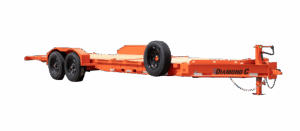
A current Diamond C LPX Low Profile Extreme Duty Equipment Trailer can be configured from 15,500 to 24,000 lb. GVWR, depending on the selected package. The standard 15,500 lb. configuration uses two 7,000 lb. Lippert axles, while higher-capacity configurations are available with other Lippert axle packages. If you order four LPX trailers with the same length, GVWR package, axle and brake configuration, tires, coupler, floor, loading system, DM Difference Maker coating color, and accessories, the dealer has a much cleaner fleet order than four unrelated custom builds. That consistency reduces quoting mistakes, simplifies receiving inspections, and makes it easier to confirm that each trailer was delivered as ordered.
Do not assume, however, that every trailer carrying the same model name is identical. An LPX with the 15,500 lb. package is not the same working asset as an LPX configured for 18,000, 20,000, or 24,000 lb. GVWR. Length, empty weight, payload capacity, axle type, tire package, coupler rating, frame construction, ramp system, and options can all affect the final price and the truck required to tow it. A meaningful fleet quote must identify the complete build, not merely say “four LPX trailers.”
The same logic applies to enclosed cargo trailers. A fleet of matching Wells Cargo or Darkhorse Cargo units can be easier to operate and maintain when every trailer has the same width, length, interior height, GVWR, axle package, brake configuration, side door, rear ramp door, floor construction, wall spacing, tie-down arrangement, roof venting, electrical package, spare tire, and interior accessories. A typical tandem-axle 7-by-14-foot commercial cargo configuration may be rated at 7,000 lb. GVWR with two 3,500 lb. axles and electric brakes, but specifications vary by model and option package. The written quote and manufacturer certification label must control, not assumptions based on another trailer that looks similar.
What matters on pricing:
- Identical specifications across units, including the same model, size, GVWR package, options, tires, loading equipment, and color
- A firm quantity and written commitment supported by the required deposit rather than an informal estimate of what you may purchase
- Whether the trailers are in stock, being transferred from another location, or being placed into a factory production schedule
- Flexibility on delivery timing when several units must be produced, transported, inspected, and prepared
- Whether all units can be delivered together or must be received in stages
- Whether financing, cash payment, trades, accessories, and delivery are being priced separately enough to compare competing quotes fairly
- Buying through one dealer that can support the fleet after delivery rather than dividing identical units among several sellers solely to chase small differences in advertised price
Measure the discount against the complete transaction. A lower per-unit figure can be offset by separate freight, dealer preparation, documentation, title work, delivery, financing fees, mandatory accessory packages, or missing equipment such as spare tires and loading ramps. Ask for the normal single-unit price and the fleet price using the exact same build so you can see the real volume adjustment rather than comparing two trailers with different specifications.
Also clarify what happens if the factory changes a component before the order is completed. Manufacturers may revise tires, couplers, lights, jacks, hydraulic components, or other supplier-sourced parts during a model year. Your purchase agreement should state whether substitutions are permitted, how material changes will be disclosed, and whether you can approve a change that affects capacity, maintenance, compatibility, or resale value.
Fleet Financing: Not Just Multiplying One Payment by Five
Financing five trailers through five unrelated retail contracts is not automatically the most expensive approach, but it can create unnecessary paperwork, multiple payment dates, separate liens, and inconsistent terms. A commercial buyer should compare the available structures rather than assuming that one type of loan is always best. Depending on the business and lender, the trailers may be financed through a commercial term loan, an equipment finance agreement, a line of credit, a lease, or a master facility under which each trailer is added on a separate schedule.
Commercial equipment financing through a bank, credit union, independent equipment lender, or dealer-arranged lending partner evaluates the business, the owners, the equipment, and the proposed use. Rates and terms can differ from consumer trailer financing, but commercial financing is not automatically cheaper. The lender may require a down payment, personal guarantee, blanket business lien, automatic payments, proof of insurance, or restrictions on selling or transferring individual trailers before the loan is paid. Compare the interest rate or finance charge, origination fees, documentation fees, prepayment terms, collateral language, total payments, and required cash at closing rather than focusing only on the monthly payment.
Tax treatment is another reason to plan the purchase with an accountant before signing. For federal tax years beginning in 2026, the maximum Section 179 deduction is $2,560,000, with the deduction beginning to phase out when total qualifying property placed in service exceeds $4,090,000. The deduction remains subject to eligibility rules, business-use requirements, taxable-income limitations, basis adjustments, and elections made on the tax return. A trailer must generally be purchased for qualifying business use and placed in service during the applicable tax year; ordering or paying a deposit by itself is not necessarily enough.
Federal bonus depreciation was restored to 100% for qualifying property acquired and placed in service after January 19, 2025. That does not mean every fleet purchase automatically produces an immediate deduction equal to the invoice total, and it does not make Section 179 and bonus depreciation interchangeable. The order in which deductions are calculated, business-use percentage, trade-ins, financing, basis, ownership structure, and future depreciation recapture can all matter.
Indiana businesses must also distinguish federal treatment from Indiana income-tax treatment. Indiana generally requires an adjustment for federal bonus depreciation and limits the ordinary Indiana Section 179 allowance to a much smaller amount than the current federal limit, subject to specific exceptions and recovery adjustments. A statement that a fleet is “fully deductible” may therefore be incomplete even when a substantial federal first-year deduction is available. Have a qualified tax professional model both the federal and Indiana consequences before using an expected tax benefit to justify the purchase.
What lenders commonly want to see for fleet trailer financing:
| Document | Why It Matters |
|---|---|
| Business tax returns and current financial statements | One or two years of returns, plus a current profit-and-loss statement or balance sheet, can help establish revenue history, profitability, existing debt, and repayment capacity |
| Business bank statements, often covering 3-6 months | Shows operating cash flow, average balances, deposit activity, and whether the proposed payment fits the company’s normal cash cycle |
| Detailed dealer quote and equipment schedule | Identifies each trailer, its price, intended use, specifications, accessories, delivery date, and whether the equipment is expected to generate or support business revenue |
| Business formation documents and tax identification | Confirms the borrowing entity, ownership, legal name, address, EIN, and the individuals authorized to sign |
| Owner or guarantor information | Many small-business equipment lenders require a personal guarantee and may review the owners’ credit, income, liquidity, and existing obligations |
If your business is newer or its commercial credit file is thin, some lenders may still consider the application based on the owners’ credit, current contracts, bank activity, down payment, industry experience, and the strength of the equipment collateral. Approval may come with a higher rate, a larger down payment, a shorter term, or a personal guarantee. It is worth asking for the actual structure rather than assuming that a new business will be declined or accepting an expensive payment without seeing the total financing cost.
Decide whether the trailers should all secure one obligation. A single loan may be administratively simple, but it can make it harder to sell or replace one unit because the lender may control the release of every title. Separate schedules under a master equipment agreement may provide more flexibility, but they can carry separate fees or different payoff amounts. Ask the lender to explain how partial releases, early payoffs, insurance proceeds, total-loss claims, and replacement units will be handled.
The Standardization Argument (Which Most Buyers Underestimate)
Here is the operational case for fleet standardization that goes well beyond the initial purchase price. Standardization can reduce training time, simplify inspections, improve parts stocking, make preventive maintenance more predictable, and allow managers to move trailers between crews without introducing an entirely different loading or towing procedure. It does not mean every job should use the same trailer. It means trailers performing the same job should be specified consistently whenever that consistency is practical.
If every equipment trailer in a group uses the same coupler type, deck length, loading system, brake configuration, tire size, electrical connection, tie-down layout, and target loading procedure, drivers have fewer variables to manage. A heavy tandem-axle dump trailer and a 7,000 lb. utility trailer are not interchangeable merely because both attach to a pickup. They differ in empty weight, payload, center of gravity, tongue weight, braking response, visibility, turning clearance, loading technique, and the truck capacity required to tow them safely.
Even identical trailers will not have identical tongue weight under every load. Equipment position, attachments, fuel, loose materials, toolboxes, spare tires, and cargo distribution can change hitch load substantially. Fleet standardization should therefore include a written loading plan, scale verification when appropriate, compatible hitch equipment, brake-controller setup, inspection checklists, and clear limits for each tow vehicle. It should never be treated as permission to connect any trailer to any truck without checking ratings.
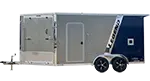
Maintenance is one of the largest benefits. A standardized fleet can share commonly replaced bearings, seals, brake parts, tires, wheels, lights, breakaway components, jacks, door hardware, hydraulic controls, and loading-system parts. For example, current Legend enclosed cargo lines include tandem-axle configurations at 7,000 and 9,990 lb. GVWR, but the correct replacement parts still depend on the exact series, axle package, dimensions, model year, and VIN. Stocking parts based only on brand or GVWR can result in the wrong components being installed.
Keep the final build sheet, purchase invoice, warranty documents, axle information, tire specifications, component manuals, VIN, and certification-label photographs for every unit. Even when six trailers were ordered together, supplier changes or production revisions can create small differences. A VIN-based fleet record lets your maintenance provider verify what was installed instead of assuming that every unit uses the same part.
Standardization can also improve inventory control. Instead of keeping several incompatible tire sizes, grease seals, hub assemblies, ramp springs, and electrical connectors, a fleet manager can maintain a focused list of high-use service parts. The savings are not only in the part cost. They come from less diagnostic time, fewer emergency orders, fewer incorrect parts, shorter downtime, and a maintenance team that becomes familiar with the same inspection points.
Insurance carriers may find a well-documented fleet easier to schedule on a commercial policy because the business can provide consistent VIN lists, values, uses, storage locations, drivers, and loss-control procedures. That does not guarantee a fleet discount. Premiums and eligibility depend on the carrier, business type, radius of operation, towing vehicles, drivers, claims history, trailer values, cargo, and coverage selected. The practical advantage is cleaner underwriting and fewer mistakes when trailers are added, replaced, or removed.
Compliance must be part of the standardization decision. Indiana requires brakes on trailers above the applicable 3,000 lb. threshold, so commercial tandem-axle and heavy-duty fleet units must be quoted with compliant braking equipment and maintained in working condition. Driver licensing is based on the complete combination rather than the trailer alone. A Class A CDL is generally required when the combination has a GCWR or GCW of at least 26,001 lb. and the towed unit has a GVWR or actual weight above 10,000 lb., subject to the vehicle’s use and any applicable exemptions. A trailer rated above 10,000 lb. does not by itself create a Class A CDL requirement when the complete combination remains below 26,001 lb.
This matters when considering a current Diamond C LPX or HDT rated at 15,500 lb. or more. The trailer’s capacity may be appropriate for the equipment, but the truck’s GVWR, GCWR, hitch rating, rear-axle capacity, tires, brakes, payload, and the driver’s licensing status must also support the combination. Buying several trailers before reviewing the tow vehicles can leave a business with a standardized fleet that only one truck or one driver can legally and safely operate.
Building the Dealer Relationship Before You Need It
The buyers who receive the strongest fleet support are not necessarily the ones who push hardest for the lowest number on the first order. They are often the buyers who provide clear specifications, communicate honestly, pay as agreed, maintain their equipment, and return when they need replacements, parts, or additional units. A repeat commercial account has value to a dealer, but that relationship should produce more than a discount. It should also provide better build records, faster answers, informed parts support, realistic lead-time information, and help resolving warranty or component questions.
Be transparent about your plans upfront. If you are buying three trailers now and expect to add two more in 18 months, explain that. If you are evaluating whether to standardize on Diamond C equipment trailers or another commercial line, ask the dealer to compare the actual configurations required for your work. A knowledgeable dealer should ask what you haul, the weight and dimensions of the equipment, which trucks will tow the trailers, how the equipment loads, how far the crews travel, where the trailers are stored, and what has failed or caused downtime in your existing fleet.
Do not make a future order sound more certain than it is solely to obtain a discount. Instead, ask the dealer to price the committed quantity and separately explain how repeat orders are handled. That creates a realistic basis for the current transaction while giving both sides a framework for future units. Prices, freight, interest rates, steel costs, supplier components, incentives, and manufacturer specifications can change, so no responsible dealer can guarantee that an order placed 18 months later will carry the same price.
Spencer Trailers carries multiple commercial trailer lines, including Diamond C, H&H, Liberty, Legend, Darkhorse Cargo, Wells Cargo, Delco, United, and other specialized products. That inventory breadth matters when you are specifying a fleet because you can compare equipment trailers, dump trailers, utility trailers, and enclosed cargo trailers based on the actual work they must perform. Diamond C, which was founded in 1985 and builds trailers in Mt. Pleasant, Texas, offers current heavy-duty lines such as LPX, HDT, LPT, FMAX, WDT, and DEC with configurations that extend well beyond ordinary light-duty utility use.
Side-by-side comparison should involve more than looking at paint and advertised GVWR. Review the manufacturer label, empty weight, usable payload, axle ratings, suspension, brakes, tire load range, coupler, jack, frame and tongue construction, cross-member spacing, deck or floor material, ramp capacity, tie-down design, wiring protection, corrosion-control system, hydraulic components, warranty, and replacement-parts availability. Steel thickness is only one part of the structure, and the heaviest-looking trailer is not automatically the most suitable or efficient fleet choice.
Ask the dealer to keep a fleet specification on file. That record should include the exact model and package, dimensions, options, color, loading equipment, spare tire, accessory installation, preferred tie-down locations, company asset number, and any delivery inspection requirements. When the next unit is ordered, the previous build can be used as the starting point and every proposed change can be identified before production.
What a Fleet Quote Should Include
A serious fleet quote is not simply a per-unit price multiplied by quantity. It should be detailed enough that another dealer, lender, accountant, insurance agent, maintenance manager, or company owner can understand exactly what is being purchased and what is not included. At minimum, it should break down:
- Per-unit price at volume with the exact manufacturer, model, package, dimensions, GVWR, axle quantity and rating, suspension, brake type, tires, coupler, jack, floor or deck material, frame configuration, loading system, coating or exterior color, spare tire, and installed options. Empty weight and payload should be listed as estimates until the completed trailer’s certification information is available.
- Total purchase price with each unit, accessory, freight charge, dealer preparation charge, documentation fee, title or registration item, delivery cost, trade allowance, deposit, and sales tax shown separately. Ordinary business ownership does not automatically make a trailer purchase sales-tax exempt. Any exemption should be supported by a valid legal basis and the required exemption documentation.
- Financing terms available including the amount financed, down payment, interest rate or other finance charge, term, estimated payment, lender fees, personal-guarantee requirements, collateral terms, prepayment provisions, and whether the quote is an estimate or an approved credit offer. Final financing terms commonly remain conditional until the lender completes underwriting.
- Delivery timeline for each unit, identifying which trailers are physically in stock, which are inbound, which require factory orders, whether completion dates are estimates, and whether the customer must accept partial deliveries. The quote should also explain who pays for delivery if the units cannot be collected together.
- Warranty coverage for the applicable brand and model year, separating the trailer manufacturer’s coverage from warranties supplied by axle, tire, hydraulic, battery, coupler, jack, or other component manufacturers. Diamond C’s Warranty 2.0 for 2026 and later models includes a six-year limited structural warranty and two-year comprehensive coverage, subject to its written terms, exclusions, maintenance requirements, and claim procedures.
- Any volume incentives on accessories or fleet setup, including spare tires, tarps, toolboxes, winches, batteries, chargers, ramps, tie-down equipment, GPS hardware, safety decals, company asset numbers, matching locks, and delivery inspection packages. The quote should state whether an accessory is factory-installed, dealer-installed, or supplied loose.
The quote should also identify the required deposit, whether it is refundable, when the balance is due, what constitutes customer acceptance, how damaged or incorrectly built units will be handled, and whether cancellation charges apply after a factory order enters production. For a phased delivery, confirm whether the fleet price depends on accepting every unit and what happens if the lender approves fewer units than requested.
Ask how titles and registration documents will be delivered for each trailer, especially when several units are financed. Indiana residents generally must apply for title and register newly acquired, unregistered vehicles within 45 days of purchase or acquisition to avoid administrative penalties. Do not assume that the financing company, dealer, fleet manager, or accounting department is handling the process unless the responsibility and required documents are stated clearly.
Before accepting delivery, compare each trailer’s VIN, certification label, GVWR, GAWR, tires, coupler, and installed options against the purchase order. Payload is not simply the advertised GVWR or the sum of the axle ratings. It is affected by the completed trailer’s actual empty weight, hitch load, installed accessories, and manufacturer ratings. The label and final documentation for that individual trailer control.
If a quote does not include at least items one through four, push back. Vague fleet quotes create disputes at delivery because the buyer and dealer may be using different assumptions about axle packages, ramps, spares, freight, taxes, financing, or completion dates. A detailed quote protects both sides and gives you a reliable baseline for future orders.
A Practical Question to Ask Before You Buy
Before committing to a fleet specification, ask the dealer this: “If I need to add two more of these in 18 months, can you keep this complete build on file, identify any model-year or supplier changes, and quote the closest current configuration before I order?” That is a more useful question than asking for a guaranteed future price. It tests whether the dealer is prepared to document the fleet and communicate changes rather than relying on a general model description.
If a model is scheduled for replacement, a major frame or axle package is changing, an option is being discontinued, or a commonly used component is difficult to source, you want to know before committing the entire operation to that specification. Changes are not automatically bad. A newer component may improve performance or serviceability. The important point is that your maintenance staff, drivers, insurance agent, and purchasing team should know whether the next unit will truly match the existing fleet.
Mainstream H&H and Liberty utility or equipment-trailer categories may provide practical fleet configurations, while Diamond C’s LPX, HDT, LPT, and FMAX lines cover heavier equipment, dump, and gooseneck applications. The correct choice depends on the job rather than which model has the largest rating. A landscaping business may need uniform utility trailers for mowers, a paving contractor may need dump trailers, and an excavation company may need LPX or HDT equipment trailers in more than one length or GVWR package. Standardize within each job category instead of forcing one trailer design to handle every task.
For a large first order, consider whether one or two pilot units should be placed into service before the remaining trailers are finalized. A pilot can reveal problems with deck length, ramp angle, equipment clearance, tie-down placement, toolbox access, tongue weight, truck compatibility, parking space, or crew workflow. The tradeoff is that splitting the order may affect pricing or factory timing, so discuss the pilot strategy before signing rather than attempting to change the specification after production begins.
Finally, identify the person inside your business who owns the fleet standard. Someone should approve specification changes, maintain VIN records, track warranty coverage, coordinate title and registration work, and prevent individual crews from adding incompatible parts or accessories. The best dealer relationship cannot compensate for an internal fleet process that loses the build sheets and treats every replacement as a new purchase.
Ready to Talk Fleet Pricing?
Spencer Trailers works with commercial buyers across Indiana and beyond. Whether you need three matching dump trailers for a construction company, a group of equipment trailers for excavation crews, standardized utility trailers for landscaping teams, or ten enclosed cargo units for a distribution operation, the conversation starts with understanding what each trailer will carry, which trucks will tow it, who will operate it, and when the units must be placed into service.
Contact Spencer Trailers directly at (812) 829-0226 or stop by 291 West State Hwy 46 in Spencer to discuss specifications, current inventory, factory-order availability, financing considerations, delivery sequencing, and long-term fleet support. You can also browse current inventory to see which trailers may be available for immediate delivery and which fleet configurations may require ordering.
The right fleet deal does not happen by accident. It happens because you came in knowing what the trailers must do, how the complete purchase should be priced, and what information must be documented before the first unit leaves the lot.


