







You’ve got cattle, hogs, sheep, or goats to move and a trip to make. The question is not simply whether you need a trailer. It is whether the trailer is purpose-built for livestock, properly rated for the loaded weight, and safe for both the animals and the tow vehicle. Livestock hauling puts demands on a trailer that an open utility trailer, equipment trailer, or flatbed is not designed to handle: continuous ventilation, secure interior gates, dependable footing, smooth interior surfaces, and enough structural strength to withstand animals shifting, kicking, crowding, and leaning against the walls while the trailer is moving.
Indiana farmers know that the details matter. Whether you’re hauling through Owen County, Morgan County, Monroe County, or anywhere else in south-central Indiana, the trailer, truck, hitch, brakes, animal paperwork, and loading plan all need to be right before you load a single animal.
Why Ventilation Is Non-Negotiable
Heat stress can become life-threatening quickly during livestock transport. A trailer that is moving may receive substantial airflow, but airflow can fall sharply when the rig slows in traffic, stops at a fuel station, or sits in a sale-barn line. Indiana’s combination of summer heat and humidity can make those stationary periods especially hard on cattle and hogs.
A properly designed stock trailer uses open-bar sections, ventilated side panels, roof openings, or a combination of these features to allow air to move through the animal compartment. The correct amount and type of ventilation cannot be reduced to one universal vent measurement. Air movement depends on the trailer’s complete design, the species being transported, stocking density, outside temperature, humidity, wind, road speed, and whether the trailer is moving or stopped.
Inspect the entire ventilation system rather than looking only at the upper sidewalls. Openings should be distributed through the animal area, free of sharp edges, and unobstructed by equipment, accumulated bedding, or improvised coverings. During cold rain or winter weather, manufacturer-designed winter panels or boarding systems may be appropriate, but completely sealing a loaded livestock compartment can allow moisture, heat, and respiratory gases to build up.
In warm weather, schedule trips for early morning, evening, or another cooler period whenever practical. Minimize unnecessary stops, avoid leaving a loaded trailer parked in direct sun, and watch for signs of distress such as open-mouth breathing, excessive salivation, weakness, crowding around openings, or animals that are unable to remain standing. A well-ventilated trailer provides an important safety margin, but it does not compensate for overcrowding, excessive delays, or hauling during unsafe weather.
Flooring That Holds Up Under Hooves
Livestock floors take a beating. Urine, manure, wash water, bedding, hoof impact, and the constant transfer of weight during braking and cornering can damage a floor and the structure underneath it. The best floor is one that is strong, provides dependable traction, drains and cleans properly, and can be inspected without hidden deterioration.
- Treated wood planking is common in steel livestock trailers because it offers useful grip and some cushioning underfoot. The species of wood, plank thickness, fastening method, and spacing vary by manufacturer and trailer model, so the trailer’s build sheet should be used instead of assuming every stock trailer has the same floor. Wood must be checked for softness, splitting, loose fasteners, chemical damage, and rot around the edges and above crossmembers.
- Aluminum flooring resists wood rot and can reduce trailer weight, but a smooth aluminum surface may become slippery when wet or covered with manure. Livestock-grade aluminum floors normally rely on ribs, tread patterns, welded cleats, coatings, mats, or other traction features. Corrosion, cracked welds, and worn traction surfaces still require inspection even though the floor does not rot like wood.
- Rubber mats can improve traction, reduce hoof noise, and provide cushioning during longer trips. Mats also add weight and can trap moisture, manure, and corrosive material underneath them. They should be removed periodically so the floor, seams, fasteners, and drainage areas can be cleaned and inspected. A mat must never be used to hide soft wood, damaged aluminum, or a weakened support structure.
Bedding decisions should be based on the animals, weather, distance, and advice from your veterinarian or livestock professional. Bedding may improve footing and absorb moisture, but excessive bedding can hold heat, block drainage, and conceal floor damage. Hot-weather swine hauling, cold-weather cattle transport, and a short trip to a nearby farm may require different management.
Whatever material the floor uses, inspect the crossmembers, frame rails, welds, fasteners, and lower sidewall structure from underneath whenever possible. Look for corrosion, bent supports, cracked welds, missing hardware, and areas where the floor has pulled away from its supports. Some movement and vibration are normal in any trailer, but visible sagging, localized flex, loose planks, or movement around a structural connection requires professional evaluation before animals are loaded.
The interior should also be free of protruding bolts, torn sheet metal, broken welds, exposed wire, and sharp gate hardware. Clean and disinfect the trailer between loads as appropriate for the species and disease risk. Removing manure promptly also protects the floor and steel structure from avoidable corrosion.
Indiana Animal Transport Rules: The Basics
Livestock movement in Indiana is regulated by the Indiana State Board of Animal Health, commonly called BOAH. Requirements depend on the species, age, sex, identification status, reason for movement, point of origin, destination, and whether the animals are being sold, exhibited, moved to slaughter, or transported across state lines. A rule that applies to cattle entering Indiana may not apply to cattle moving between two Indiana premises, and an exhibition may impose additional requirements beyond ordinary farm-to-farm movement.
Some important points for Indiana livestock owners include:
- For many livestock transactions within Indiana, BOAH requires the buyer and seller to maintain movement and transaction records for five years. Records generally need to identify the parties, transaction date, animals involved, official identification when required, and reason for movement. A Certificate of Veterinary Inspection is not automatically required for every private in-state livestock sale, but recordkeeping and identification requirements still apply.
- Indiana premises associated with the sale, purchase, or exhibition of cattle, swine, sheep, goats, and certain other livestock may be required to have a registered premises identification number. Producers should verify premises-registration requirements before a sale, show, or movement.
- Cattle entering Indiana generally need a Certificate of Veterinary Inspection issued within 30 days before entry unless a specific exemption applies, such as certain direct-to-slaughter, approved-market, veterinary-treatment, or through-transit movements. A paper CVI generally requires an Indiana pre-entry permit, while an approved electronic CVI filed before movement may satisfy the filing requirement without a separate permit.
- Official identification is required for specified classes of cattle, including sexually intact cattle 18 months of age or older, dairy cattle and dairy crosses, and cattle used for rodeo, exhibition, recreational, or show purposes. Identification requirements also apply to qualifying cattle changing ownership within Indiana. Current federal rules require newly applied official cattle tags to be both visually and electronically readable, subject to program-specific exceptions.
- Swine entering Indiana generally require a CVI, official identification, and compliance with Indiana’s movement rules unless a documented exemption applies. Requirements can differ for breeding swine, feeder pigs, slaughter swine, approved markets, group-lot identification, and movements between recognized production-system premises. Do not assume that paperwork used for one swine movement will cover every later trip.
- Sheep and goats entering Indiana generally require a CVI and official identification unless a specific exemption applies. For in-state changes of ownership, official identification is required for sexually intact sheep and goats and for certain older wethers. A traditional scrapie tag is one accepted form of identification, but other approved official identification methods may be allowed when used according to BOAH and federal rules.
- For animals leaving Indiana, the destination state’s rules control entry. A CVI issued within 30 days is common for interstate livestock movement, but it is not a universal rule without exceptions. Some states require entry permits, testing, vaccination statements, additional identification, or shorter validity periods. The destination veterinarian or animal-health authority should be consulted before departure.
Long interstate hauls may also be subject to the federal 28-Hour Law. In general, covered animals transported in interstate commerce may not remain confined in a vehicle for more than 28 consecutive hours without being unloaded humanely for at least five consecutive hours for feed, water, and rest, unless a statutory exception applies. Long-distance trips should be planned with appropriate unloading facilities rather than treating the federal limit as a target.
This is not legal advice, and livestock movement requirements can change. Always verify the current rules directly with the Indiana State Board of Animal Health at boah.in.gov, the destination state’s animal-health agency, the event organizer when attending a show or sale, and your accredited veterinarian. Ask about identification, testing, CVI, permit, premises-registration, and recordkeeping requirements for the exact animals and route involved.
The trailer must also comply with Indiana highway-equipment requirements. Under Indiana law, a trailer operated at a gross weight of at least 3,000 pounds must have brakes capable of controlling, stopping, and holding the trailer. The braking system must be operable by the driver from the towing vehicle, and an automatic breakaway system must apply the trailer brakes if the trailer separates from the tow vehicle. Working lights, properly rated safety chains where applicable, a charged breakaway battery, roadworthy tires, and a correctly adjusted brake controller are essential parts of the same inspection.
Animal welfare and liability are equally important. Broken floor planks, sharp interior metal, unsecured divider gates, damaged side panels, and faulty rear latches can injure animals even when the paperwork is correct. Before every haul, walk through the empty compartment, operate every gate, and inspect the floor at hoof level instead of judging the trailer only by how it looks from outside.
Gooseneck vs. Bumper Pull for Livestock
The right hitch configuration depends on the loaded trailer weight, trailer length, number and size of animals, trip frequency, maneuvering space, and the ratings of the tow vehicle. A gooseneck is often a better fit for frequent or heavier livestock hauling, but a properly matched bumper-pull stock trailer can be practical for smaller loads and shorter trailers.
| Feature | Bumper Pull | Gooseneck |
|---|---|---|
| Typical stock-trailer GVWR range | Often approximately 7,000 to 12,000 lb on current steel livestock models, depending on length, axles, and configuration | Often approximately 14,000 to 25,000 lb or more, depending on model, axles, length, and options |
| Hitch location | Frame-mounted rear receiver with a ball and coupler specifically rated and sized for the trailer | Bed-mounted gooseneck ball positioned near or slightly ahead of the truck’s rear axle, with a matching rated coupler |
| Road manners | Compact and convenient, but more sensitive to tongue weight, load distribution, trailer length, and sway | Generally steadier with heavier loads when correctly loaded and matched, but still dependent on proper pin weight, tires, brakes, and truck ratings |
| Best for | Smaller groups, shorter trailers, local trips, and operations that do not need the capacity of a large gooseneck | Frequent hauling, longer trailers, heavier loads, and operators who need more livestock and cargo capacity |
A gooseneck transfers its vertical hitch load into the truck bed near the rear axle instead of applying it behind the rear bumper. That placement generally improves stability and reduces the leverage that can contribute to sway. It does not make an overloaded or poorly balanced combination safe. Several thousand pounds of livestock can shift during a lane change, turn, or hard stop, so correct loading, properly placed divider gates, adequate truck payload, and functioning trailer brakes remain critical.
For smaller operations moving a few animals at a time, a shorter bumper-pull stock trailer may provide enough floor area and payload while remaining easier to maneuver through narrow gates and crowded farm lots. Larger groups may call for a 20- or 24-foot gooseneck, but trailer length does not determine GVWR. A 24-foot livestock trailer may be available with several different axle and GVWR packages. Always use the manufacturer’s data plate and build sheet for the individual trailer.
Do not choose a trailer by head count alone. Start with the trailer’s GVWR, subtract its actual empty weight and the weight of installed options, then account for gates, mats, bedding, feed, tools, and any cargo stored in the nose. The remaining capacity is the maximum available payload, not an automatic recommendation for how many animals should be loaded. Animal size, horn status, species, weather, trip length, compartment dimensions, and accepted livestock-handling guidance also determine a safe stocking plan.
The truck must remain within its own GVWR, gross combined weight rating, rear gross axle weight rating, payload rating, tire ratings, and hitch ratings. A gooseneck’s vertical load can consume pickup payload quickly, especially after passengers, fuel, tools, and an auxiliary tank are included. Many half-ton pickups are not suitable for heavy gooseneck livestock trailers, and even a three-quarter-ton or one-ton truck must be checked against its specific door-jamb and manufacturer ratings.
Commercial driver’s license requirements are based on the rated combination, not on the trailer’s GVWR by itself. A Class A CDL is generally triggered when the combination GCWR is 26,001 pounds or more and the trailer has a GVWR greater than 10,000 pounds. Agricultural and covered-farm-vehicle exemptions may apply in limited circumstances, but they depend on ownership, use, distance, cargo, state boundaries, and other conditions. Do not assume that every trip involving farm animals is automatically exempt.
Stock and Utility Trailers at Spencer Trailers
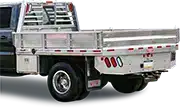
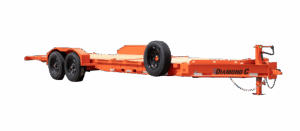
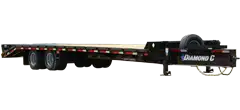
Spencer Trailers carries working trailers from manufacturers including Diamond C, H&H, Liberty, and Delco. These manufacturers serve different hauling needs, so it is important to separate a dedicated livestock trailer from a utility, dump, equipment, or flatbed trailer. A trailer designed for tractors, pallets, landscape equipment, or building materials should not be improvised into an animal enclosure.
A few things worth knowing about the lineup:
- Delco is the relevant dedicated livestock-trailer manufacturer in the lineup. Delco produces steel bumper-pull and gooseneck stock trailers in multiple lengths, widths, gate layouts, axle packages, and GVWR classes. Depending on the series and configuration, current bumper-pull models commonly fall in the approximately 7,100- to 12,000-pound GVWR range, while gooseneck livestock models can extend from approximately 14,000 pounds into heavier commercial configurations. The data plate and factory build sheet for the exact unit control every specification.
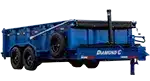
- Diamond C builds premium steel utility, equipment, dump, tilt, and gooseneck work trailers in Mt. Pleasant, Texas. The company was founded in 1985, and its premium heavy-duty lines use Lippert axles as standard along with the DM Difference Maker multi-stage coating system. Diamond C is an excellent choice for hauling equipment, hay, implements, and farm materials, but livestock should be transported in a purpose-built stock trailer.
- H&H and Liberty offer practical work-trailer choices for equipment, utility, dump, flatbed, landscape, car-hauler, and related hauling applications. Those trailers can support the rest of a farm’s workload, but their open decks and utility bodies are not substitutes for a ventilated livestock compartment with livestock gates, smooth interior surfaces, and secure animal containment.
Trailer inventory changes as units are sold and new trailers arrive. A manufacturer may offer a livestock configuration even when that exact size, gate layout, or axle package is not sitting on the lot that day. Check the live inventory and call Spencer Trailers to confirm whether a livestock trailer is currently available, already incoming, or needs to be ordered.
Spencer Trailers is focused primarily on working trailers rather than horse-specific living-quarters, slant-load, or dressing-room configurations. A basic stock trailer may be used for some equine transport only when its dimensions, interior layout, ventilation, floor, gate design, and manufacturer guidance are appropriate, but horse hauling should not be treated as identical to moving cattle or hogs. Discuss the intended animals with the dealer before choosing a configuration.
Before You Buy: A Short Checklist
- Know your load. Identify the species, number of animals, approximate individual weights, horn status, size differences, and expected trip length. This determines the floor area, compartment layout, divider-gate needs, ventilation, and payload required.
- Calculate payload instead of relying on trailer length. Find the GVWR and empty weight for the exact trailer, then include mats, gates, bedding, tools, and other cargo. Never exceed the trailer GVWR, axle ratings, wheel ratings, or tire capacities.
- Check your truck and hitch. Confirm tow rating, GCWR, truck GVWR, available payload, rear axle rating, tire ratings, receiver or gooseneck-ball rating, coupler size, and electrical-brake compatibility. The lowest-rated component limits the entire combination.
- Inspect the floor and structure. On a used trailer, lift removable mats and examine the floor from above and below. Look at planks, welds, crossmembers, frame rails, drainage areas, sidewalls, roof supports, and gate attachments. Soft wood, cracked welds, severe corrosion, or loose structural connections require repair before use.
- Check every gate and latch. Rear gates, escape gates, center dividers, slam latches, pins, hinges, and safety retainers should operate smoothly and secure positively. Make sure an animal cannot lift, push, rub, or crowd a latch open.
- Test the running gear. Inspect tire age and condition, wheel fasteners, hubs, bearings, suspension, coupler, jack, safety chains, lights, electric or hydraulic brakes, breakaway switch, battery, and brake controller. Indiana requires trailer brakes when the trailer is operated at a gross weight of at least 3,000 pounds.
- Verify the paperwork before the first haul. Contact BOAH, the destination state when crossing state lines, the sale or exhibition organizer, and your accredited veterinarian. Confirm identification, CVI, testing, permit, premises-registration, and record-retention requirements for that specific movement.
- Check licensing and registration. Indiana generally gives a purchaser 45 days to title and register a newly acquired vehicle or trailer before an administrative penalty applies. Also determine whether the truck-and-trailer ratings cross the 26,001-pound combination threshold and whether a CDL, farm exemption, USDOT registration, motor-carrier authority, or other commercial requirement applies to the operation.
Making the Haul Work
Livestock hauling in Indiana is a practical reality for many Owen County and south-central Indiana farms. The equipment does not need decorative features that add no value to the job. It does need sound construction, suitable ventilation, reliable footing, secure gates, dependable brakes, and ratings that match the truck and loaded animals.
Before loading, park the trailer on stable, reasonably level ground and connect it completely to the tow vehicle. Confirm the coupler is locked, the jack is raised, safety chains and electrical connections are secure, and the breakaway cable is attached independently of the chains. Test the lights and trailer brakes before animals enter. Position the loading area so there are no open gaps between the chute and trailer that could catch a leg or allow an animal to escape.
Load calmly and avoid creating excessive noise, shadows, sharp turns, or slick transitions that cause animals to balk. Use interior dividers to prevent the entire group from crowding one end of a long trailer, but do not create compartments so tight that animals cannot maintain balance. Avoid mixing animals with major differences in size, horn status, temperament, or unfamiliar social groups unless an experienced livestock professional has determined that it is safe.
During the trip, accelerate, turn, change lanes, and brake gradually. Allow extra following distance because the trailer’s stopping distance increases as weight rises. Stop only in safe locations, and do not open an exterior livestock gate on the roadside. When checking animals, observe ventilation, animal posture, gate security, tire condition, hubs, and any signs that the load has shifted.
After unloading, inspect the trailer for damage and remove manure, bedding, and debris. Wash and disinfect when appropriate, allow the compartment to dry, and lift mats periodically so the floor can be examined. Small problems such as a loose hinge, damaged plank, cracked weld, or failing latch are easier and less expensive to correct before the next load.
A trailer that is undersized, poorly ventilated, overloaded, or structurally compromised can cost far more than buying the right configuration. The safest choice is based on the actual animals, actual loaded weight, actual tow-vehicle ratings, and the exact specifications shown on the trailer’s certification label rather than a guess based on appearance or length.
Ready to look at what’s in stock? Browse the current trailer inventory at SpencerTrailers.com, or stop by 291 West State Hwy 46 in Spencer. If you’ve got a specific haul in mind and want to talk through the right size and configuration, give us a call at (812) 829-0226. And if you’re not sure about the documentation requirements for your animals, start with boah.in.gov and your accredited vet before you load up.
What’s your typical load? A few head of cattle, a group of feeder pigs, or livestock moving to sales and exhibitions throughout the year? The answer changes the length, gate layout, GVWR, ventilation, and hitch configuration that make the most sense, and Spencer Trailers can help you compare those details before you commit.
See what’s currently available: view our trailer inventory or contact us with questions.


