








Every spring in Owen County, the pattern is familiar. Several rounds of rain move through, a creek or drainage ditch rises, and low areas in driveways, back lots, fields, and storage yards begin holding water. If your trailer is parked in one of those depressions, the best time to address the problem is before water reaches the tires, hubs, wiring, or frame.
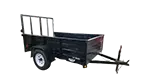
Indiana spring weather can put a storage site to the test. At Indianapolis, normal precipitation is approximately 3.69 inches in March, 4.34 inches in April, and 4.75 inches in May. Local totals can be much higher during individual storms. On May 18, 2026, the National Weather Service documented widespread 2- to 3-inch rainfall from the Spencer area eastward, with flooding especially noticeable in Owen and neighboring counties. Flatbed trailers, enclosed cargo trailers, utility trailers, dump trailers, and car haulers can all suffer avoidable damage when they are stored where runoff collects.
Where You Park Matters More Than What You Park
The biggest spring-storage mistake is leaving a trailer in the same spot year-round without checking how that location drains. A parking area that stays hard and dry in August can turn soft, rutted, and waterlogged after several April storms. Walk the property during or immediately after a moderate rain. Look for ponding water, soft tire tracks, runoff paths, eroded gravel, saturated soil, and water flowing toward the trailer rather than away from it.
A properly constructed gravel pad generally performs better than bare dirt or compacted clay, but simply spreading a thin layer of stone over mud is not a permanent solution. The pad should have a stable, compacted base, enough depth for the trailer’s weight, and positive drainage. Soft sites may also need geotextile fabric beneath the aggregate to keep the stone from disappearing into the soil. The surface can be slightly crowned or sloped for drainage, provided the parked trailer remains stable, securely chocked, and adequately supported.
If long-term storage requires taking some weight off the tires, use purpose-built trailer stands or properly designed cribbing on firm, level footing and at frame locations approved by the manufacturer. Chock the wheels before lifting. Never use loose concrete blocks, unstable stacks of lumber, or a hydraulic jack as the trailer’s only long-term support. Raising a trailer four inches with whatever material happens to be nearby may create a greater safety hazard than leaving it on the ground.
What Standing Water Actually Does to a Trailer
Standing water is damaging, but repeated wet-dry cycles, trapped mud, road salt residue, fertilizer, and contaminated floodwater can be even harder on a trailer. Moisture remains in seams and around hardware long after the visible puddle is gone. Here is what deserves attention after a wet spring:
- Frame and cross-members: Powder coat, paint, galvanizing, and other finishes slow corrosion, but no coating makes damaged steel maintenance-free. The current Diamond C LPX is a 15,500- to 24,000-pound-GVWR equipment-trailer line. Frame construction changes with the selected GVWR package and length, with Engineered Beam construction used on applicable higher-rated configurations. Diamond C protects its steel with the multi-stage DM Difference Maker coating system, including surface preparation, zinc-rich epoxy primer, and a powder-coated topcoat. Chips, scratches, neglected seams, and exposed edges still need prompt attention.
- Wheel bearings and hubs: Grease seals and dust caps are intended to retain lubricant and limit contamination, but standard wheel ends should not be treated as permanently waterproof. If water reaches the hub or there is reason to believe a hub was submerged, inspect the bearings, races, seals, grease, and brake components before returning the trailer to highway service. Milky, rusty, gritty, or water-contaminated grease requires service rather than simply adding more grease through a fitting.
- Electrical connections: Seven-way connectors, junction boxes, brake wiring, breakaway-switch wiring, ground connections, light sockets, and exposed splices are common trouble points. Water intrusion can produce intermittent lights, weak brake response, blown fuses, or a complete loss of the trailer-brake circuit. Corroded terminals should be cleaned or replaced and then protected according to the component manufacturer’s instructions.
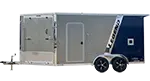
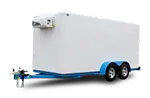
- Flooring in enclosed trailers: Construction varies among Wells Cargo, Darkhorse Cargo, Legend, United, and other enclosed-trailer models. Many use wood flooring, wood wall liners, or wood-backed components that can swell, delaminate, soften, or develop mold after prolonged water exposure. Aluminum framing does not protect a wood floor from moisture entering through a door opening, fastener hole, roof seam, damaged seal, or floor-to-wall joint.
Tire Flat-Spotting in Cold, Wet Storage
Flat-spotting can develop when a loaded trailer remains in one position for an extended period, especially when temperatures are low, inflation is inadequate, or the tires are aging. The tire temporarily takes a set where the tread meets the ground. When the trailer begins moving again, the driver may notice vibration or a repeating thump.
A mild temporary set may diminish after the tires reach normal operating temperature, but persistent vibration should not be dismissed. It can also indicate tire separation, an out-of-round tire, a bent wheel, a damaged belt, a bearing problem, or another wheel-end defect. Stop and inspect the trailer if the vibration is severe, continues after the tires warm, or is accompanied by visible bulging, cracking, wobble, heat, noise, or uneven tread movement.
The correct prevention steps are straightforward:
- Check every tire when it is cold, including the spare. Use the inflation pressure specified on the trailer certification label and the applicable tire load-and-inflation information. Trailer-tire pressure is not universally 65 or 80 PSI. Depending on tire size, load range, wheel rating, axle package, and trailer configuration, the required pressure may be lower or substantially higher. Never exceed the wheel’s pressure rating.
- If the trailer manufacturer permits frame-supported storage, use rated stands at approved support points so the suspension and frame are not damaged. Tire cradles or a firm, level parking surface can also help distribute contact and prevent a tire from settling into mud or soft gravel.
- For trailers stored for an extended period, inspect inflation regularly and reposition the trailer periodically when practical. Do not move it merely a few inches and assume every tire has been unloaded; rotate each wheel enough to change the primary contact patch.
Many current trailer configurations from H&H, Liberty, and other manufacturers are equipped with radial trailer tires, but tires and load ranges vary by model, GVWR package, and customer order. Verify the actual tire designation, size, load range, speed rating, and cold inflation requirement on the trailer in front of you. Radial construction does not eliminate damage from underinflation, overloading, age, waterlogged parking surfaces, or months of static loading.
Covers: Helpful or a Trap?
Trailer covers can be useful, but only when they fit correctly and allow the trailer to dry. A fitted cover can reduce UV exposure, bird droppings, tree sap, leaf buildup, and debris around roof seams. A loose tarp or non-breathable cover can trap condensation, rub against painted surfaces, collect gallons of water in low spots, and hold damp material against the trailer for weeks.
A few guidelines that actually work:
- Use a cover designed for the trailer’s dimensions and shape. Secure it according to the cover manufacturer’s instructions so wind cannot whip the fabric against corners, trim, roof edges, fenders, or painted panels.
- Choose a breathable, water-resistant material rather than relying on an ordinary polyethylene tarp. Breathability does not mean waterproof, so the cover still needs proper pitch and drainage.
- Never cover a wet trailer and assume the trapped moisture will disappear. Dry the roof, floor, walls, door seals, ramp door, and storage compartments first. Use factory vents as intended, but do not leave an opening that allows rain, insects, or rodents to enter.
- For open flatbeds, equipment trailers, utility trailers, and car haulers, a full cover often creates more work than protection. Good drainage, regular washing, prompt coating repair, and correct wheel-end maintenance are usually more valuable.
For an enclosed Legend, United, Wells Cargo, Darkhorse Cargo, or similar unit, a properly fitted cover may be worthwhile when the trailer will remain outdoors for months. For a steel flatbed or equipment trailer, put the maintenance budget first toward keeping drains and seams clean, servicing hubs as required, protecting electrical connections, and repairing coating damage before exposed steel begins to corrode.
A Rust Inspection Checklist for Spring
Before hooking up for the first trip after a wet spring, walk around the trailer with a bright flashlight. Inspect above, below, inside, and around each wheel. Do not limit the check to visible frame surfaces; many serious problems first appear around seals, wiring grounds, brake backing plates, spring hangers, coupler hardware, and overlapping steel seams.
| Area | What to Look For | Action |
|---|---|---|
| Frame rails and crossmembers | Coating chips, bubbling, deep rust, cracked welds, pitting, trapped mud, or orange moisture from seams | Clean and photograph the area, then use the manufacturer-approved repair process. Contact the dealer before altering an area that may qualify for coating or structural warranty review. |
| Coupler and ball socket | Rust, deformation, a loose or seized latch, worn hardware, or incomplete engagement on the correct-size ball | Clean, inspect, and lubricate only where directed by the coupler manufacturer. Replace worn or damaged components rather than forcing the latch. |
| Jack and foot | Binding, corrosion, damaged mounting hardware, bent tubing, hydraulic leaks, or unstable footing | Operate the jack through its normal travel without overextending it. Lubricate approved points and repair leaks or structural damage before loading the jack. |
| Hubs, seals, and dust caps | Grease leakage, missing caps, rust-colored residue, loose wheels, noise, heat, water contamination, or brake-fluid leakage on hydraulic systems | Inspect and service the wheel end. If the hub was submerged or contamination is suspected, remove and inspect the bearings, races, seals, and brakes rather than relying only on a grease fitting. |
| Electrical plug and pigtail | Green or white corrosion, bent pins, loose terminals, cracked insulation, damaged strain relief, or intermittent operation | Use appropriate electrical-contact cleaning and repair methods. Replace damaged connectors and protect the completed connection as recommended by the manufacturer. |
| Safety chains and attachment points | Deep pitting, elongated links, cracked welds, damaged hooks, bent retainers, or unauthorized repairs | Replace any chain, hook, fastener, or attachment showing structural deterioration. Do not weld or heat-treat rated chain unless specifically authorized. |
| Ramp hinges and latch pins | Binding, corrosion, bent pins, cracked hinge welds, weak springs, or latches that do not fully secure | Clean and lubricate approved points, then test the complete ramp and latch system without standing in its path. |
| Trailer brakes and breakaway system | Weak braking, damaged wiring, discharged breakaway battery, seized components, worn magnets or shoes, or contaminated drums | Test the brakes and breakaway system before entering traffic. Repair any fault before towing the trailer on a public road. |
This is not overthinking it. A hot hub, failed bearing, disconnected brake circuit, or unsecured ramp at highway speed on State Road 46 can damage the trailer, tow vehicle, cargo, and surrounding traffic. A careful inspection in the storage lot is far easier than a roadside recovery.
What About Trailers Already in a Flood-Prone Spot?
If you rent storage on low ground or your property has limited high areas, make a plan before a flood watch is issued. The goal is not merely to keep the tire tread dry. Hubs, brake components, electrical junctions, floor edges, battery boxes, hydraulic components, and low frame sections may be damaged even when the deck remains above water.
Temporary trailer parking ramps and rated leveling blocks can help with minor puddling or keep tires from sinking into soft ground, but they are not flood-protection structures. Confirm that every block is rated for the load, fully supported, wide enough for the tire, and positioned on stable material. A few inches of elevation will not protect a trailer from rapidly rising water, saturated soil, erosion, or moving debris.
Hydraulic jacks and cribbing should be treated as lifting and support equipment, not an improvised last-minute flood response. A jack may be used to raise a trailer, but the trailer must then be supported with rated stands or properly designed cribbing on firm footing. Never leave it supported only by hydraulic pressure, and never crawl under, lift, reposition, or block a trailer after floodwater has begun rising around it.
Move it. A trailer is safest on high, stable ground before the storm arrives. Relocate it while roads are open, visibility is good, and the storage area is still firm enough for the tow vehicle. Do not attempt to tow through floodwater or around a barricade. Water can conceal washouts, debris, soft shoulders, and damaged pavement, and moving water can sweep away vehicles and trailers.
Delco and Diamond C: Built for Work, Not for Sitting in Water
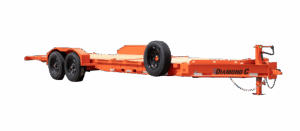
Heavy-duty construction does not make a trailer immune to neglected storage. Delco’s current lineup includes the C5, an 83-inch-wide bumper-pull equipment and car-hauler platform with a 14,000-pound GVWR. Diamond C’s current LPX is offered from 15,500 to 24,000 pounds GVWR; the 207 package uses two 7,000-pound Lippert axles, with heavier axle, suspension, tire, frame, and coupler packages available as the GVWR increases. Those ratings describe engineered carrying capacity. They do not mean wheel bearings, electrical connections, brakes, tires, or exposed steel can remain submerged without inspection and service.
Diamond C trailers are built in Mt. Pleasant, Texas, where the company traces its history to 1985. Its premium trailer lines use Lippert axles and the DM Difference Maker multi-stage powder-coating process. That finish is designed for adhesion, corrosion resistance, chip resistance, and color retention, but Diamond C’s own coating guidance still calls for routine cleaning, keeping affected seams dry, and promptly addressing chips and scratches. No premium finish replaces maintenance after prolonged moisture exposure.
If wet storage is a known concern when shopping for a trailer, ask what the frame is actually made from and how it is protected. A powder-coated steel frame, a hot-dip galvanized frame, and an all-aluminum frame are three different constructions with different maintenance needs. Availability varies by manufacturer, model, and configuration, so verify the build sheet rather than assuming a particular finish is standard. Also compare sealed wiring, drainage details, hub type, brake access, floor material, and the availability of manufacturer-approved touch-up products.
One More Thing Before You Hook Up
Spring is when trailers that sat through winter return to work, but indoor storage does not eliminate the inspection. Condensation can form in an unheated barn or enclosed building. Rodents can damage wiring, insulation, air lines, and breakaway-switch cables. Tires lose pressure over time. Brake surfaces can rust, batteries can discharge, and lubricants can separate or become contaminated.
Check the certification label, tire condition and cold pressure, wheel-lug torque, coupler engagement, hitch rating, safety chains, breakaway cable, breakaway battery, lights, brakes, ramps, doors, tie-down points, and cargo-control equipment. Indiana law requires a trailer or semitrailer with a gross weight of at least 3,000 pounds, when operated on a highway, to have brakes adequate to control, stop, and hold the trailer. The brakes must be controllable from the towing vehicle and arranged to apply automatically in an accidental breakaway. A corroded connector or dead breakaway battery is therefore more than a storage inconvenience.
Check the inventory at Spencer Trailers if your current trailer is past the point of a spring tune-up. And if you have questions about what storage conditions, coating care, tire pressure, wheel-end service, or brake maintenance are appropriate for a specific model, give us a call at (812) 829-0226 or stop by 291 West State Hwy 46 in Spencer. We have seen what Indiana springs can do to trailers that were left in low ground without a plan.
What does your storage situation look like this year: high ground or low, gravel or dirt, covered or open? The answer determines whether you need a better parking pad, a maintenance visit, an early move to higher ground, or all three before the next round of rain arrives.


