


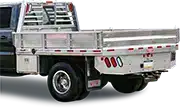
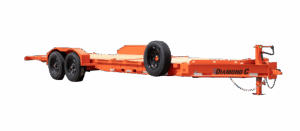





You’ve got a trip to an Indiana state park on the calendar, and you’re bringing a trailer. Maybe it’s an enclosed cargo trailer loaded with camping gear, a utility trailer carrying kayaks and bicycles, a boat trailer headed to a launch ramp, or a purpose-built travel trailer pulled by your truck. Before you roll through the entrance gate, it pays to understand how Indiana’s state properties handle trailers. The entrance route, campground driveway, day-use parking area, and boat-ramp staging lane can each create a different limitation, and discovering that your combination is too long, too tall, or directed to the wrong gate makes for a rough start to any trip.
As of 2026, the Indiana State Parks system manages 24 state parks, seven smaller satellite locations, eight reservoir properties, two state forest recreation areas, and two off-road riding areas. Collectively, those properties include approximately 8,000 campsites and more than 75 launching ramps, but the facilities are far from uniform. What’s true at McCormick’s Creek might not apply at Shakamak, Monroe Lake, Brown County, or Tippecanoe River State Park. Each property has its own road layout, campground loops, ramp access, parking configuration, advisories, and campsite dimensions. The guidance below will help you plan, but always verify current information through Indiana DNR, the official reservation listing, and the individual property before leaving home.
Campsite Size: The Real Bottleneck for Trailer Rigs
The most common headache for trailer owners at Indiana state park campgrounds isn’t necessarily the entrance gate. It’s matching the trailer or camping unit to a particular campsite. Indiana does not publish one statewide maximum trailer length that applies to every campground. Within the same park, one back-in driveway may be listed for 20 feet of equipment while another may accommodate 40, 45, 50 feet, or more. The official reservation system identifies an equipment length and driveway type for individual sites, so a campground’s general reputation for accommodating RVs does not guarantee that every site in every loop will fit your trailer.
Pull-through sites can make arrival and departure easier, especially when the approach road is narrow or the driver has limited room to straighten the combination. They are not automatically the only workable choice for a longer trailer, however. Some back-in sites have substantial equipment-length ratings and good approaches, while some pull-throughs have trees, curves, slopes, utility posts, or parking arrangements that reduce usable space. Look at the listed equipment length, driveway type, campground map, site photo when available, and the position of nearby roads and campsites. A spotter is valuable whenever visibility is limited, regardless of whether the trailer is 12 feet or 30 feet long.
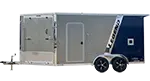
If you’re towing an enclosed trailer with a 16-foot body, such as a current Wells Cargo Road Force or a comparable Wells Cargo configuration, do not assume the full combination is only about 35 feet long. A trailer advertised as “16 feet” is usually being described by its body, box, or deck length. The coupler, A-frame, rear ramp structure, spare tire, ladder, or cargo extending beyond the deck can add several feet. Add a full-size pickup that may itself be roughly 18 to 23 feet long, and the complete bumper-to-rearmost-point measurement can approach or exceed 40 feet. A 20-foot Diamond C GTU, a 24-foot equipment trailer, or a larger H&H enclosed trailer can produce a combination well into the mid-40-foot range or longer, depending on the tow vehicle and trailer configuration.
Indiana state park camping reservations are handled through the official Indiana DNR reservation service. Site listings commonly show an “Equip length/Driveway” field, such as a maximum equipment length paired with “Back-In” or “Pull-Through.” Treat that as site-specific planning information, not a universal promise that the tow vehicle, trailer, slide-outs, awning, and every other item will fit exactly as you intend. Open the individual site details, study the campground map, and call the property when your dimensions are close to the published limit. Be ready to provide the trailer’s actual overall length, the tow vehicle’s length, the full connected length, the overall height, and whether the trailer is a camping unit or a separate cargo, utility, equipment, or boat trailer.
Utility Trailers at State Parks: Day Use and Overnight
Bringing a utility trailer for day use is different from arriving with a travel trailer that will occupy a campsite. Day-use visitors must park in designated areas, and the amount of trailer-friendly parking varies by property and activity. Reservoir boat ramps and off-road riding properties may have spaces designed around tow combinations, while a picnic area, nature center, trailhead, beach, or small paddling access may have an ordinary passenger-vehicle lot. Do not assume that parking across several spaces, stopping along a campground road, or placing trailer tires on the grass is permitted. Follow posted signs and ask gate or property staff where a trailer combination should be parked.
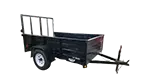
Open utility trailers carrying kayaks, canoes, bicycles, coolers, or camping equipment are practical for many Indiana trips. A compact H&H rail-side utility trailer may be easier to place than a full-width tandem-axle trailer, but its tongue, ramp gate, spare tire, and tow vehicle still count toward the space you need. Even when the trailer deck fits within the length of a normal parking row, the connected combination usually does not. Arriving early can help during peak summer weekends, but the correct approach is to identify designated trailer parking on the property map or ask staff where the combination can be left without blocking traffic, accessible spaces, fire lanes, or launch-ramp circulation.
For an overnight stay, do not automatically assume that a separate utility or cargo trailer can remain beside any reserved campsite. Indiana DNR’s general camping restrictions allow a maximum of six people per campsite and generally permit two tents or one camper plus one small tent. The number of vehicles allowed at the site may be one or two depending on the property, with additional vehicles directed to designated campground parking. A non-camping trailer may be treated as additional equipment, and whether it can remain on the campsite depends on the site’s dimensions and property management. If you’re hauling camping equipment, bicycles, or paddlecraft to Raccoon State Recreation Area or Monroe Lake, call before arrival and explain exactly what will be parked on the site. If the trailer carries ATVs or side-by-sides, remember that transporting an ORV into a park does not authorize its operation there. Public ORV riding is limited to designated properties such as Interlake and Redbird, where registration, permits, trail rules, and separate fees apply.
Boat Trailers and Ramp Access
Boat-trailer access at Indiana DNR properties varies significantly by location. Large reservoir properties such as Monroe Lake, Patoka Lake, Brookville Lake, Mississinewa Lake, Salamonie Lake, and Cecil M. Harden Lake have multiple launch facilities or substantial boating activity. Where a ramp complex includes dedicated truck-and-trailer spaces, use those spaces rather than ordinary day-use parking. Smaller lake accesses may have narrower ramps, shorter staging lanes, fewer parking spaces, electric-motor restrictions, or limited turning room. Review the property’s current map and advisories before leaving, because high water, low water, construction, damaged docks, seasonal operations, or temporary closures can affect access.
Tandem-axle boat trailers carrying pontoons, bass boats, runabouts, and larger fishing boats are routine at Indiana’s reservoir ramps, but the trailer must be selected by actual loaded weight rather than boat length alone. Include the boat, motor, fuel, batteries, equipment, water retained in livewells, and trailer weight when checking GVWR and payload. For parking and maneuvering, measure from the tow vehicle’s front bumper to the farthest rearward point, which may be the outboard motor, transom saver, boarding ladder, or other equipment rather than the nominal end of the trailer frame. A boat described as 20 or 24 feet long can occupy considerably more total space once it is on the trailer. At properties with smaller lakes, also confirm horsepower or motor restrictions; for example, Chain O’Lakes State Park’s connected lakes are limited to electric motors.
For 2026, the standard daily entrance fee at most Indiana state parks and state-managed lakes is generally charged to the noncommercial tow vehicle and admits its driver and passengers. The listed rate is $7 for a vehicle with Indiana plates and $15 for a vehicle with out-of-state plates, with separate rates or arrangements at properties such as Indiana Dunes and Prophetstown. Campers also pay a one-time entrance fee upon arrival unless covered by an eligible pass or campground credential. At specified state-managed lakes, a separate annual DNR lake permit is required for privately owned watercraft: $25 for motorized watercraft and $5 for non-motorized watercraft. The permit requirement can apply to motorboats, personal watercraft, kayaks, canoes, paddleboats, and rowboats, depending on the lake. It is a permit for the watercraft, not a substitute for state boat registration or a fee based on the boat trailer. Natural lakes, rivers, and other waters may be treated differently, so check the current DNR lake-permit list for the exact water you plan to use.
What Size Trailer Actually Works Best?
If you’re shopping for a trailer that will regularly visit Indiana state parks, smaller dimensions generally provide more campsite and parking choices, but there is no trailer length that is guaranteed to fit every property. A 6-by-10 or 6-by-12 enclosed cargo trailer, or a 10- to 14-foot single-axle utility trailer, is usually easier to maneuver than a 20- or 24-foot tandem-axle model. Even these compact trailers can create a connected length in the low-to-upper 30-foot range once the tongue and tow vehicle are included. The deciding number is your measured overall combination, not the advertised box or deck length.
An 18- or 20-foot Darkhorse Cargo enclosed trailer offers substantially more room for bicycles, camping equipment, tools, or recreational gear, but it also requires a longer campsite driveway and more room at trailheads and day-use lots. An enclosed cargo trailer is not automatically a recreational vehicle or approved sleeping unit. Anyone considering a camper conversion must account for applicable construction, electrical, ventilation, fire-safety, insurance, registration, and occupancy requirements. Never operate a generator, fuel-burning heater, grill, or other combustion device inside an enclosed trailer or near doors, windows, or vents where carbon monoxide could enter.
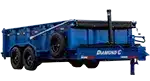
For open-deck recreational hauling, a Diamond C GTU is a current premium tandem-axle utility model available in 14- to 20-foot lengths with an 83-inch bed, a 7,000-pound GVWR, dual 3,500-pound Lippert brake axles, and a 4-inch channel frame. It can be a practical choice for substantial gear or an ORV being transported to a location where operation is authorized. Heavier Diamond C equipment trailers serve a different purpose. The LPX, for example, is a low-profile extreme-duty equipment trailer offered in 16- to 30-foot lengths and GVWR packages from 15,500 to 24,000 pounds with Lippert axles. A trailer in that class should be selected because the load requires its capacity, not because it is convenient for a campsite. It demands a properly rated tow vehicle, hitch, tires, brake controller, driver qualifications, and a site or parking area confirmed to accommodate the combination.
A Quick Size Reference
| Trailer Length | Combined Rig Length (est.) | State Park Compatibility |
|---|---|---|
| Up to 16 ft | ~30 to 44 ft | Many sites may work, but verify the individual equipment-length listing |
| 16 to 20 ft | ~39 to 48 ft | Site-specific; longer back-ins or pull-throughs may be needed |
| 20 to 24 ft | ~43 to 52 ft | Fewer suitable sites; confirm driveway length, approach, and tow-vehicle parking |
| Over 24 ft | Usually 47 ft+ | Most restrictive; contact the property before booking or arrival |
These ranges are planning estimates for bumper-pull trailers whose advertised length describes the body or deck, paired with a full-size pickup. A compact SUV or regular-cab truck may shorten the combination, while a crew-cab long-bed truck may add several feet. Rear cargo, a spare tire, ramp extensions, an outboard motor, or equipment extending beyond the deck can add more. Gooseneck combinations overlap part of the trailer with the truck bed, so they must be measured separately rather than estimated by simply adding truck length and deck length. Before booking, connect the actual trailer and measure from the front bumper of the tow vehicle to the rearmost fixed point or load.
Reserving the Right Site
Indiana DNR’s reservation system at camp.IN.gov connects visitors to the official campground reservation service. It allows searches for RV or trailer sites by equipment length and offers filters for features such as electric service, water, sewer, and pull-through driveways where available. Enter the actual overall length of the camping unit or trailer rather than relying only on its model description. Then open the individual site record and review the equipment-length rating, driveway type, amenities, map position, and site photo. The published equipment length may not account for a separate tow vehicle remaining on the same driveway, so verify the parking arrangement whenever the combined setup is close to the available space.
A few practical habits that help:
- Call the park office before the trip and provide specific measurements: trailer body or deck length, trailer coupler-to-rear length, connected bumper-to-rear length, overall height, width, and the type of trailer. Ask which entrance to use, whether the tow vehicle can remain at the site, and whether a separate cargo, utility, equipment, or boat trailer must be placed in designated parking. This is especially important at Brown County State Park, where all RVs and vehicles towing trailers must use the west entrance on State Road 46. The north entrance has a historic covered bridge with a 9-foot height clearance and a 3-ton weight limit.
- Arrive during daylight, especially on your first visit to a property. Use the entrance and campground route shown by Indiana DNR rather than trusting a general GPS route without checking it. Daylight makes it easier to identify campground signs, low-clearance warnings, narrow turns, parked vehicles, pedestrians, campsite numbers, utility posts, and the safest backing approach.
- Know the trailer’s true overall height and width. The interior height or box height of an enclosed trailer is not its road height; roof vents, air conditioners, racks, antennas, and other equipment may be higher. Also account for awnings, fenders, mirrors, slide-outs, rear ramps, and cargo extending past the deck. Obey all posted height, weight, width, speed, and route restrictions, even when the reservation system shows that the campsite itself is long enough.
Before You Go: Verify with Indiana DNR
Everything here is a general framework based on current Indiana DNR information and the way state park, reservoir, campground, and boating facilities are organized in 2026. Specific site dimensions, campground openings, ramp conditions, parking rules, entrance routes, water levels, lake restrictions, and fees can change. Check the property’s official page and campground map, review the statewide advisories and closings page, and call the individual property when your trip depends on a particular ramp, entrance, campsite, or parking area. Indiana DNR’s website at in.gov/dnr, the reservation system, and directions from property staff are the authoritative sources for access within the park.
Indiana road requirements still apply while traveling to and driving within DNR properties. Trailers over 3,000 pounds GVWR must have brakes as required by Indiana law. Before every trip, inspect the coupler, hitch ball or gooseneck connection, safety chains, breakaway equipment, brake controller, required lights, tires, tire pressures, wheel fasteners, bearings, ramps, doors, and cargo securement. Stay within the tow vehicle’s tow rating, payload rating, axle ratings, tire ratings, hitch rating, and gross combination weight rating, as well as the trailer’s GVWR and available payload. For commercial operation, the Class A CDL weight test is based on a combination GCWR of 26,001 pounds or more when the towed unit has a GVWR over 10,000 pounds; a trailer rating over 10,000 pounds by itself does not automatically meet that combined threshold. Private recreational use, commercial use, exemptions, and the actual vehicle configuration can affect licensing obligations, so confirm the requirements with Indiana BMV and FMCSA. After purchasing a trailer, complete the required Indiana title and registration process within the 45-day penalty-free window, and do not operate it without valid registration or appropriate temporary authority.
If you’re in the market for a trailer to use at Indiana state parks, reservoir properties, campgrounds, boat ramps, or designated off-road areas, or you want to talk through what size makes sense for your tow vehicle and the trips you’re planning, stop by Spencer Trailers at 291 West State Hwy 46 in Spencer. We carry Diamond C, Liberty, H&H, Wells Cargo, Darkhorse Cargo, and more. Our team can compare actual overall dimensions, empty weight, payload, GVWR, axle and brake packages, hitch requirements, and tow-vehicle compatibility instead of recommending a trailer by deck length alone. Call us at (812) 829-0226 or reach out online.
The right trailer for a state park trip isn’t necessarily the biggest one your truck can pull. It’s the one that safely carries the load, stays within every vehicle and trailer rating, fits the entrances and parking areas you use, and gives you realistic campsite choices without turning every trip into a logistics puzzle. What does your typical state park setup look like, and what’s the one piece of gear you always wish you had more room for?


