





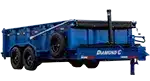

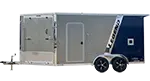
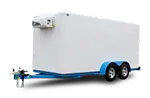
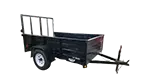

You’ve got the machine. You’ve got a weekend free. Southern Indiana’s legal off-road riding areas are waiting. The only thing standing between you and a full day of riding is getting your ATV or UTV there safely, without squeezing it into a pickup bed that is too short, overloading the truck, or relying on improvised securement.
That’s where a properly matched utility trailer changes everything. It gives you a full-width loading surface, rated tie-down locations, room for riding gear, and a trailer weight rating you can compare against the actual machines you own. But before we get to the equipment, here is where southern Indiana riders can legally go, along with one large public-land area that is commonly misunderstood.
Hoosier National Forest: The Big One
Hoosier National Forest covers roughly 200,000 acres across nine southern Indiana counties: Brown, Crawford, Dubois, Jackson, Lawrence, Martin, Monroe, Orange, and Perry. It is a major destination for camping, hiking, horseback riding, hunting, fishing, scenic drives, and other outdoor recreation. It is not, however, an ATV or UTV riding destination. The USDA Forest Service prohibits off-highway vehicles on National Forest System land, roads, trails, and campground roads in the Hoosier, and off-road travel is prohibited even for licensed motor vehicles.
The important distinction is between Forest Service roads and county or state roads that pass through or near the forest. The current Motor Vehicle Use Map shows Forest Service routes open to street-legal vehicles, but it does not create ATV or UTV trail access. A county may separately authorize ORV travel on specified county roads by local ordinance, but that permission does not extend onto Hoosier National Forest roads or trails. Before planning a mixed camping and riding weekend, check the Hoosier National Forest website, the current Motor Vehicle Use Map, posted alerts, and the applicable county ordinance rather than assuming that land inside the forest boundary is open to motorized recreation.
Hoosier is still worth knowing because it is one of southern Indiana’s biggest outdoor destinations, but the ATV or UTV should remain secured on the trailer while you are on National Forest System property. Use the forest for camping, hiking, scenery, and other permitted activities, then take the machine to a legal ORV property such as Interlake or Redbird for the riding portion of the trip. That separation protects the land and helps riders avoid citations, impoundment, and a wasted weekend.
Interlake OHV Area (Interlake State Recreation Area)
Interlake Off-Road State Recreation Area is an Indiana DNR property near Lynnville that straddles Pike and Warrick counties. The approximately 3,550-acre former mine property has nearly 100 miles of trails and 17 lakes. Its reclaimed terrain includes rolling grassland, wooded routes, steep spoil banks, strip pits, and man-made lakes, so riders can find routes suited to ATVs, UTVs, dirt bikes, and full-size off-road vehicles. DNR’s interactive map lets visitors filter trails by vehicle type and review general difficulty ratings, although difficulty can change after rain, seasonal weather, and repeated use.
Interlake’s trails are normally open from sunrise to sunset, seven days a week, but hazardous conditions can close part or all of the trail system. A daily ORV trail-use pass or annual ORV trail-use permit is required for motorized trail access; an annual park entrance pass by itself does not authorize ORV trail use. Indiana ORVs must be registered or street legal, while qualifying non-registered out-of-state machines can use the DNR’s out-of-state trail-use permit at Interlake and Redbird. Check current conditions, fees, registration rules, helmet requirements, and property alerts with Indiana DNR before leaving home, especially after heavy rain or when hauling a long truck-and-trailer combination.
Redbird State Recreation Area
Redbird Off-Road State Recreation Area is another Indiana DNR riding property, located near Dugger in Greene and Sullivan counties. The approximately 1,400-acre site is named for the historic Redbird Coal Mine, and its mining history shaped the hills, ravines, wooded sections, and technically demanding terrain riders use today. Trails range from gentler routes to challenging climbs and obstacles, and the property welcomes ATVs, UTVs, dirt bikes, and full-size off-road vehicles on designated routes.
Redbird is open from sunrise to sunset, seven days a week when trail conditions are safe. The same basic trail-use permit and ORV registration rules that apply at Interlake apply here, and every visitor must follow the posted property rules. DOT-approved helmets are required under DNR’s rules except in specified protected vehicle configurations, riders younger than 18 must wear helmets in side-by-sides and UTVs, seat belts must be used where provided, and machines must have functioning mufflers and spark arrestors. Access and staging are generally designed for trail users, but conditions and open routes can change, so call the property or check current Indiana DNR guidance at in.gov/dnr before towing to the gate.
What You’re Actually Hauling
Most current recreational and utility ATVs are lighter than a full-size side-by-side, but the range is wider than many buyers expect. A 2026 Honda FourTrax Rancher is about 580 to 686 pounds curb weight depending on trim, while a Yamaha Grizzly EPS is about 701 pounds wet. A 2026 Polaris Sportsman 850 starts around 792 pounds estimated dry weight, and accessory-heavy trims can be substantially heavier. Manufacturer weight definitions are not identical, so use the exact specification for your model and then add fuel, a winch, skid plates, storage boxes, larger tires, and anything carried on the racks.
UTVs are a different category. A current three-seat Polaris Ranger 1000 is roughly 1,500 to 1,700 pounds estimated dry weight depending on configuration, and crew-cab, enclosed-cab, six-seat, or heavily accessorized models can approach or exceed 2,000 pounds before passengers or cargo. A Can-Am Defender HD10 configuration can also fall in the mid-1,500-pound range before cargo, with cab and accessory packages changing the number. Put two full-size machines on one trailer and the cargo can easily total 3,200 to more than 4,000 pounds after fuel, windshields, roofs, winches, spare tires, tools, helmets, and coolers are included.
That’s why GVWR and payload both matter. Gross Vehicle Weight Rating is the maximum permitted weight of the trailer and everything on it. Usable payload is not the GVWR by itself; it is the GVWR minus the trailer’s actual empty weight and any permanently installed options. Axle ratings are also not a substitute for the trailer certification label, because the trailer manufacturer determines the completed trailer’s GVWR. Before buying, total the real ready-to-ride weight of every machine and accessory, compare it with the trailer’s listed payload, and leave practical margin rather than loading to the final pound.
Picking the Right Utility Trailer for ATV and UTV Hauling
Open utility trailers are the workhorses of ATV and UTV hauling for good reason. They are usually lighter and less affected by crosswinds than enclosed trailers, loading is straightforward, and the machines are easy to inspect and secure from every side. An enclosed trailer adds weather protection, security, and storage, but it also adds empty weight, frontal area, cost, and tow-vehicle demand. The right choice depends on payload, machine dimensions, storage needs, and the tow vehicle’s ratings rather than on one trailer style being universally better.
Here is what actually matters when you are spec’ing one out:
- Deck width and length: Many modern ATVs are about 47 to 50 inches wide, so a 60-inch deck can carry one standard machine, but 77- or 83-inch decks provide easier loading and more tie-down clearance. Full-size UTVs commonly measure around 60 to 65 inches wide, while some performance and specialty models are wider. Measure the machine at its widest fixed point, including offset wheels, fender flares, doors, mirrors, and accessories. For two machines, deck length and loading arrangement are often more important than width; they are normally loaded end-to-end, not side-by-side.
- GVWR, payload, axles, and brakes: A trailer may use a 3,500-pound axle yet be certified at 2,990 pounds GVWR, so shop by the completed trailer’s label and published payload, not the axle number alone. One ATV often fits a properly configured 2,990-pound single-axle trailer. A heavy ATV, one UTV, or two machines may justify a 5,000- or 6,000-pound single-axle model or a 7,000-pound tandem. Indiana requires adequate trailer brakes at a gross trailer weight of at least 3,000 pounds, controlled from the tow vehicle and arranged to apply automatically in a breakaway, so verify brake equipment, controller compatibility, and breakaway operation.
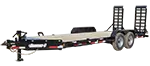
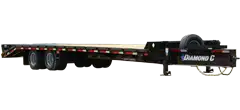
- Ramp system: An integrated ramp gate is convenient only when its rated capacity, usable width, approach angle, and support points match the machine. Low-clearance sport UTVs may need a longer transition or dovetail to prevent the center of the machine from dragging. The Diamond C GTU, for example, uses an EZ Bi-Fold Gate intended for ATV and utility loading. On heavier equipment trailers, Diamond C offers purpose-built systems such as MAX Ramps, XDR Ramps, and the X-Ramp. Whatever the design, confirm the rating for the way the machine’s tire load is applied.
- Tie-down points: Use four independent securement points per machine as a practical minimum, with straps, wheel nets, axle straps, or chains that have clearly marked working-load limits. Stake pockets, integrated uprights, D-rings, or a rated track system can all work, but a decorative top rail is not automatically a cargo anchor. Keep straps away from sharp edges, suspension movement, hot exhaust parts, and brake lines, and secure loose strap tails so they cannot contact a tire.
- Floor material: Properly supported treated lumber is common because it is durable, replaceable, and offers useful tire grip. Traction-textured aluminum flooring can reduce weight and resist rot. Smooth or worn steel can become slick when wet or muddy, so do not assume metal automatically provides better traction. Check floor condition, crossmember spacing, fasteners, drainage, and whether the selected surface is approved for the machine’s concentrated tire loads.
Diamond C and H&H Options Worth Looking At
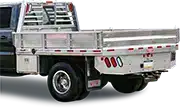
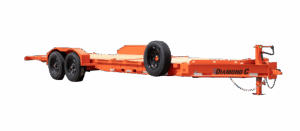
At Spencer Trailers, we carry brands built for real working loads and recreational use. Diamond C has manufactured trailers in Mt. Pleasant, Texas since 1985. For ATV and UTV hauling, the current PSA premium single-axle utility trailer is offered in 2,990- to 6,000-pound GVWR configurations with 77- or 83-inch bed widths and 10- to 14-foot lengths. The GTU is the step-up tandem utility: 7,000 pounds GVWR, an 83-inch bed, 14- to 20-foot lengths, a 4-inch channel frame, and two 3,500-pound Lippert electric-brake axles. Current GTU flooring includes 2-inch treated lumber as standard with AlumaTrax available, and the steel receives Diamond C’s DM Difference Maker multi-stage coating system.
H&H Trailers are another solid option because the current landscape, utility, and ATV utility ranges cover several useful sizes instead of forcing every rider into the same configuration. H&H offers 2,990-pound single-axle steel utility models, 7,000-pound tandem versions, heavier 9,900- and 14,000-pound utility choices, and ATV-oriented layouts with side-loading capability on applicable builds. Compare the exact unit’s bed dimensions, curb weight, payload, gate design, frame, brakes, and tie-down layout; model-to-model specifications matter more than broad claims about one brand or material.
For lighter loads, Liberty Trailers offers current utility models at 2,990 and 5,000 pounds GVWR on single axles, plus 7,000-, 9,990-, and 14,000-pound tandem-axle choices with 83-inch beds in multiple lengths. One ATV may fit a 2,990-pound model, while a single full-size UTV is often better matched to a 5,000- to 7,000-pound trailer after payload is verified. Two UTVs usually require a longer deck and may call for a 9,990- or 14,000-pound trailer, but the correct answer depends on actual loaded machine weights and wheelbase-to-wheelbase space. A trailer above 10,000 pounds GVWR does not by itself create the general Class A CDL threshold; that threshold involves a combination GCWR of at least 26,001 pounds and a towed unit over 10,000 pounds, with licensing obligations also depending on how the combination is used. Use the table below as a starting point, then verify every rating and dimension on the specific trailer, machines, and tow vehicle.
| Scenario | Suggested GVWR | Axle Setup | Typical Deck Size |
|---|---|---|---|
| 1 recreational ATV | 2,990-3,500 lb | Single 3,500 lb axle; trailer GVWR may be 2,990 lb | 60-77 in wide, 10-12 ft long |
| 2 ATVs | 5,000-7,000 lb | Single 5,200/6,000 lb or tandem 3,500 lb axles | 77-83 in wide, usually 12-16 ft or a rated side-load layout |
| 1 full-size UTV | 5,000-7,000 lb | Heavy single axle or tandem 3,500 lb axles | 83 in wide, usually 12-16 ft long |
| 2 full-size UTVs | 9,990-14,000 lb | Tandem 5,200-7,000 lb axles, matched to certified GVWR | 83 in wide and commonly 20-28 ft long; 102-in deck only when dimensions require it |
Before You Go: A Short Checklist
A lot of ruined trips come down to skipping the basics. Go through this before you leave the driveway:
- Confirm that the destination legally allows your type of machine, then check current trail status, operating hours, required passes, ORV registration, and property rules. For Hoosier National Forest, remember that ATV and UTV use is prohibited on National Forest System land, roads, trails, and campground roads.
- Check the tow vehicle’s maximum trailer weight, payload, GCWR, receiver rating, ball mount, hitch ball, coupler, and tongue-weight limit. Compare those ratings with the trailer’s actual loaded weight, not just its advertised empty weight, and treat the lowest-rated component as the limit.
- Verify trailer lights, electric brakes, brake-controller operation, breakaway switch and battery, safety chains, coupler latch, wheel-bearing condition, cold tire pressure, tire age, and lug-nut torque. A trailer fitted with brakes should never be towed with the brake system disconnected.
- Load for stable tongue weight and balanced axle loading, keep heavy gear low and secured, and never exceed the trailer’s GVWR, payload, axle ratings, tire ratings, or the tow vehicle’s rear-axle and payload limits. A public scale is the best way to replace estimates with real numbers.
- Inspect every strap, hook, ratchet, wheel net, D-ring, and anchor for wear or damage. Secure each machine independently, remove or restrain loose cargo, stop after the first few miles to recheck the load, and inspect it again at fuel or rest stops.
Don’t Wait Until May
Trailer inventory usually tightens as spring riding, mowing, landscaping, and construction seasons arrive at the same time. If you know you have trips planned for Interlake, Redbird, or another legal riding property, choosing the correct trailer before peak season gives you a better chance of getting the deck length, GVWR, gate, brakes, and tie-down layout your machines actually need instead of settling for a trailer that is merely available.
Browse our current trailer inventory to see what is on the lot, or check our recently sold page to get a feel for the sizes and configurations other buyers have chosen. Recently sold units are useful examples, but specifications, options, prices, and availability can change, so confirm the certification label and current build details on the exact trailer you are considering.
If you want to talk through the right GVWR, payload, deck dimensions, axle arrangement, and loading system for your specific machines, reach out to us directly at (812) 829-0226. We’re in Spencer, right on State Hwy 46, and we know this part of Indiana well enough to help you match the trailer to the machines, the tow vehicle, and the legal riding areas you are actually using.
What are you hauling this season?


