


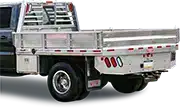
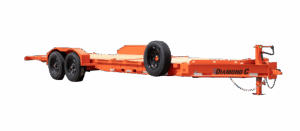


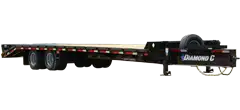

You’ve already decided on a Diamond C FMAX. Smart choice. The FMAX is Diamond C’s 102-inch-wide Fleetneck gooseneck flatbed platform, but it is not a single 14,000 lb trailer with one axle package. Current FMAX models cover several running-gear and GVWR classes, from the 15,500 lb FMAX207 through tandem-dual and triple-axle configurations rated as high as 40,000 lbs. Depending on the model, that can mean tandem or triple Lippert axles, single or dual wheels, different engineered-beam frame depths, and substantially different payload capacities.
Once you choose the correct FMAX model, length, GVWR, and axle package, the next decision is how equipment will get on and off the deck. Three commonly compared choices are MAX Ramps, Diamond C’s 12-foot Hydraulic Dovetail, and the Straight Deck with rear slide-in ramps. Diamond C also offers XDR Ramps on many FMAX models for concentrated equipment such as backhoes and excavators, but this guide focuses on the three configurations most buyers compare for general equipment and material hauling. They can perform the same basic hauling job, but they change the loading angle, usable rear-deck layout, trailer weight, hydraulic maintenance requirements, and purchase price. Pick the wrong one and you’ll notice it every time you load at a job site.
Here’s how to think through it.
What All Three Have in Common
All three loading styles are available within the FMAX gooseneck family and retain the platform’s full 102-inch bed width, curved engineered gooseneck, low-profile engineered-beam frame design, rub rail with stake pockets and pipe spools, and DM Difference Maker multi-stage coating system. Current FMAX configurations use Lippert axles as standard equipment. The exact axle count and rating depend on the model: for example, the FMAX207 uses two 7,000 lb Lippert axles at a 15,500 lb GVWR, while higher-capacity FMAX models use 8,000, 10,000, 12,000, or 16,000 lb axle packages, including tandem-dual and triple-axle arrangements.
That means there is no universal FMAX payload figure. Payload is calculated from the trailer’s certified GVWR minus its actual empty weight as equipped. Length, axle package, floor material, loading style, spare tire, toolboxes, hydraulic jacks, winches, suspension, and other options all change empty weight. A published base weight is useful for planning, but the VIN certification label and an actual scale weight are the better references before hauling near the limit. The truck’s tow rating, rear-axle rating, tire ratings, gooseneck hitch rating, loaded pin weight, and gross combined rating must also be respected.
Current FMAX configurators commonly show dual 20,000 lb two-speed drop-leg jacks, model-appropriate radial tire packages, sealed wiring, engineered-beam construction, and an under-frame spare mount as part of the platform. Tire size and load range are not identical across the lineup: some models use 16-inch 14-ply tires, while others use 17.5-inch commercial tires or offer them as an upgrade. A spare tire itself may still be an added option, so verify the actual build sheet rather than assuming every stock trailer is equipped the same way.
The loading style does not change what the FMAX fundamentally is, but it does change the rear of the trailer, approach angle, empty weight, operating procedure, and amount of equipment you must maintain. That is not a small distinction when you’re loading a compact track loader, tractor, mini excavator, or attachment at the end of a long day.
FMAX with MAX Ramps
The MAX Ramps configuration is one of the most versatile FMAX builds. Diamond C uses two 44-inch-wide ramps, with four 50 ksi steel frames in each ramp. The ramps are heavy-duty spring assisted, making them easier to raise and lower from the deck or ground than their size would suggest. They work with a 60-inch dovetail that typically uses aggressive steel angle cleats for traction.
When folded forward into the transport position, the MAX Ramps create a broad, usable loading surface instead of standing permanently upright behind the load. That matters when hauling long material, implements with rear overhang, or equipment that needs to occupy the dovetail area. Depending on the load, the ramps can also be secured upright, but the load, overhang, lighting visibility, and securement arrangement must still comply with applicable requirements.
This setup is well suited to skid steers, compact track loaders, tractors, telehandlers, mini excavators, and similar machines whose track or tire placement works comfortably with the wide ramp surfaces. It provides an integrated loading solution without adding a hydraulic pump, battery-dependent tail mechanism, cylinder, or powered latch sequence. Lower the ramps, verify that both are fully supported and correctly positioned, load the machine, return the ramps to their secured position, and complete the required load securement.
The practical advantage is repeatability. You do not have to remove narrow ramps from storage channels and line them up every time, and you are not waiting on a hydraulic system to cycle. For contractors who load several times per week and want a wide, mechanically simple loading system, MAX Ramps are often the best balance of convenience, durability, and cost.
The main limitation is the breakover transition created by the ramp, dovetail, and main deck. There is no universal ground-clearance number that guarantees a machine will or will not drag. Wheelbase or track-base length, belly clearance, counterweight position, attachment position, approach angle, departure angle, and the shape of the machine’s undercarriage all matter. A long, low machine can contact the trailer even when its stated ground clearance sounds adequate, while a shorter machine with less clearance may load without a problem.
Before ordering, measure the lowest point on the actual machine and consider the full loading path, not just the first contact with the ramp. If the machine has steel tracks, confirm whether a wood-filled ramp or dovetail surface is preferable for traction and to reduce metal-on-metal sliding. If you regularly haul concentrated equipment such as a backhoe or excavator and need open space between the ramps for knuckle or undercarriage clearance, ask Spencer Trailers whether XDR Ramps are the better FMAX loading style.
Pricing depends much more on the FMAX model, length, GVWR, brake package, suspension, flooring, and accessories than on the ramp name alone. Current Spencer Trailers inventory demonstrates that properly equipped 2026 FMAX MAX Ramps units generally occupy the low-$20,000s through upper-$20,000s for commonly stocked FMAX210 and FMAX212 builds, with higher-capacity, longer, or extensively optioned trailers costing more. Because inventory and manufacturer pricing change, use the live listing or a written build quote rather than an old generic price range.
FMAX with 12-Foot Hydraulic Dovetail
Diamond C’s powered FMAX loading option is the 12-foot Hydraulic Dovetail. It is a tail configuration on the FMAX gooseneck flatbed, not a full tilting main deck. The dovetail lowers hydraulically to create a published 12.5-degree approach angle, then returns to its transport position after the equipment is loaded. Diamond C equips it with rubber-infused Blackwood runners for traction, an automatic latch, and a wireless remote control.
The hydraulic dovetail is especially useful for equipment that benefits from a longer and shallower approach, including low-clearance machines, compact tractors with attached implements, wheeled equipment with limited approach or departure angles, and mixed fleets in which one trailer must accommodate several machine types. It also removes the need to manually raise and lower the two large MAX Ramps.
The system uses a self-contained electric-over-hydraulic power-up and power-down pump. The trailer battery supplies the hydraulic power, while the tow vehicle’s charge circuit, onboard charger, solar charging option, or external charger replenishes the battery depending on the trailer’s equipment. The system does not depend on engine hydraulic pressure from the truck, but it does depend on a healthy battery, clean electrical connections, adequate charging, correct hydraulic-fluid level, and a properly maintained cylinder and latch assembly.
The 12-foot dovetail is rated to lift and carry up to 10,000 lbs distributed across the length of the dovetail, subject to the trailer’s GVWR and correct load distribution. That is not permission to place a 10,000 lb concentrated point load anywhere on the tail. Equipment position, axle loading, pin weight, tire capacity, and the ratings of every component still control what can be transported safely.
Loading is straightforward, but it is not automatic safety. Park on firm, reasonably level ground, keep bystanders clear, verify that the tail is fully lowered and stable, approach squarely, and watch attachment and undercarriage clearance. After loading, raise the dovetail completely, confirm that the automatic latch is engaged, inspect the hydraulic system, and secure the equipment independently of the tail mechanism. The hydraulic dovetail should never be treated as a substitute for chains, binders, straps, parking brakes, or other required cargo securement.
The weight penalty is real but smaller than the draft’s original estimate suggested. Diamond C’s model-specific FMAX weight references show that, on similarly sized FMAX212 trailers, the 12-foot Hydraulic Dovetail is commonly about 300 lbs heavier than the MAX Ramps configuration. The exact difference changes by model, length, floor, battery, hydraulic-jack package, and other equipment, so always use the estimated weight for the specific build being quoted.
The hydraulic system also increases purchase price and long-term maintenance compared with a mechanical ramp system. There is no reliable flat surcharge that applies to every FMAX. In current 2026 Spencer Trailers inventory, hydraulic-dovetail FMAX units range from the low-$20,000s for a lower-GVWR FMAX207 build to more than $40,000 for longer, higher-GVWR FMAX212 trailers with premium flooring, Pacesetter equipment, hydraulic jacks, upgraded brakes, or other options. Compare two written quotes with the same model, length, GVWR, axle package, flooring, tires, brakes, and accessories before deciding what the hydraulic dovetail itself costs.
Buyers who want the entire equipment bed to tilt should also look at Diamond C’s separate HDT and HDT-GN equipment-trailer lines. HDT means Hydraulically Dampened Tilt. Those are low-profile, between-fender equipment trailers with approximately 80- to 82-inch bed widths, available in bumper-pull and gooseneck forms, with GVWR packages from 15,500 to 24,000 lbs. Their standard tilt operation is gravity fed with hydraulic dampening, while the available Pro Tilt system can switch between gravity and powered tilt. That is a different trailer layout and loading experience from the FMAX’s 102-inch-wide deck-over platform and 12-foot powered dovetail.
If your equipment mix includes machines that struggle with a shorter ramp-and-dovetail transition, the hydraulic option may justify its price. If you primarily haul skid steers and compact track loaders that load comfortably on MAX Ramps, the mechanical system may provide everything you need with less hydraulic equipment to maintain.
FMAX Straight Deck
The Straight Deck FMAX is not an incomplete trailer with no ground-level loading solution. Diamond C’s current Straight Deck configuration includes 96-inch rear slide-in ramps built from 3-inch channel, along with a single-piece rear bumper that protects the lights. The main deck remains flat to the rear rather than ending in a fixed dovetail.
This configuration makes sense for several types of buyers. It works well for dock loading, loading from a raised pad or suitable hillside, transporting pallets or bundled material, side-loading with a forklift, hauling hay, carrying long building products, and moving equipment only occasionally. The level rear deck can also simplify load placement when the rear portion of the trailer must support material rather than serve as a permanent dovetail.
Ground-level equipment loading is still possible with the included slide-in ramps. The difference is that the ramps must be removed, positioned at the correct spacing, fully seated and supported, and returned to their storage location after use. They are narrower than the broad MAX Ramp surfaces and do not create the same long, powered approach as the 12-foot Hydraulic Dovetail. Track width, tire width, ramp spacing, ramp capacity, machine wheelbase, and rear-deck height must all be checked before loading.
The Straight Deck is generally the lightest of these three tail configurations. Current FMAX212 estimated-weight data shows that a Straight Deck can weigh several hundred pounds less than a same-length MAX Ramps or Hydraulic Dovetail build. That difference may improve available payload, but only after the actual trailer weight and every other component rating are considered.
It is also generally the least expensive tail style when compared on the same FMAX model and length, but a realistic new FMAX Straight Deck should not be priced like a light-duty utility trailer. The final amount still reflects the engineered-beam FMAX chassis, Lippert running gear, full-width deck, gooseneck structure, brakes, tires, jacks, flooring, and selected options. Spencer Trailers may not always have a directly comparable Straight Deck, MAX Ramps, and Hydraulic Dovetail unit in stock at the same time, so request matched quotes rather than relying on a broad internet price range.
Some buyers use specialized detachable ramps for an unusual machine or loading location, but the FMAX Straight Deck already includes its standard rear slide-in ramps. Any substitute ramp must have a documented rating suitable for the load imposed on each ramp, appropriate length and attachment geometry, adequate traction, and a secure connection to the trailer. A rating stated only as a total “per pair” capacity can be misleading when a machine’s weight is not divided equally among its tires or tracks.
Side-by-Side: Which Loading Style Fits What
| Configuration | Best For | Pricing Guidance (Spencer) | Main Trade-off |
|---|---|---|---|
| MAX Ramps | Skid steers, compact track loaders, tractors, mini excavators, and frequent equipment loading | Request a current matched quote; commonly stocked 2026 builds range from the low-$20,000s into the upper-$20,000s before larger-model and premium-option increases | Mechanical ramp and deck-transition angle may not suit every low-clearance or long-wheelbase machine |
| 12-Foot Hydraulic Dovetail | Lower-clearance equipment, mixed fleets, frequent loading, and operators wanting a powered 12.5-degree approach | Request a current matched quote; present inventory ranges from the low-$20,000s to $40,000-plus because model, length, GVWR, brakes, flooring, and options vary widely | Higher price, additional empty weight, and battery, electrical, hydraulic, cylinder, and latch maintenance |
| Straight Deck | Dock or forklift loading, material hauling, hay, long loads, and occasional equipment loading with the included slide-in ramps | Request a current quote; normally less than an otherwise comparable integrated MAX Ramps or Hydraulic Dovetail build | Slide-in ramps must be positioned manually and provide a different loading angle and ramp width |
A Few Questions Worth Asking Before You Decide
What’s the most difficult machine you’ll ever load on this trailer? Do not look only at the machine’s listed ground clearance. Measure the wheelbase or track base, lowest undercarriage point, counterweight, steps, mower deck, backhoe frame, loader attachment, and any component that could contact the ramp or deck transition. A 12-foot Hydraulic Dovetail provides a published 12.5-degree approach, but it does not make every clearance issue disappear. When possible, compare the actual machine dimensions with the trailer drawing or arrange a controlled loading demonstration.
How often are you loading and unloading per week? Frequent loading can make the wide, spring-assisted MAX Ramps or powered Hydraulic Dovetail worthwhile. MAX Ramps avoid hydraulic maintenance and battery dependence, while the Hydraulic Dovetail reduces manual ramp handling and offers a longer approach. For occasional loading, the Straight Deck’s included slide-in ramps may be entirely adequate.
Are you hauling equipment or material? If the answer is mostly lumber, pipe, pallets, hay, building products, or other cargo loaded by forklift, the Straight Deck is attractive because the main deck remains flat through the rear. MAX Ramps also fold into a usable loading surface, however, so material hauling does not automatically rule them out. Choose based on the actual loading method, rear overhang, deck space, and securement plan.
Do you haul concentrated equipment? A backhoe, excavator, or other machine can place much more weight on one ramp or a small part of the tail than its total machine weight suggests. Confirm ramp and dovetail ratings, tire or track placement, and the manufacturer’s load-distribution requirements. For machines that need open space between heavy-duty ramps, Diamond C’s XDR Ramps may deserve consideration even though they are outside this three-way comparison.
Can your truck legally and mechanically handle the combination? Trailer GVWR alone does not determine whether a Class A CDL is required. The usual Class A threshold is a combination GCWR or actual gross combination weight of 26,001 lbs or more when the towed unit has a GVWR or actual weight over 10,000 lbs, subject to the operation and any applicable exemptions. Because every FMAX has a trailer rating above 10,000 lbs, the truck-and-trailer combination rating deserves careful attention before purchase. The tow vehicle must also have sufficient gooseneck towing capacity, rear-axle capacity, tire capacity, hitch capacity, and payload for the loaded pin weight.
Is the truck equipped for the trailer’s brake system? Indiana requires brakes on trailers over 3,000 lbs GVWR, and FMAX trailers are equipped with braking systems appropriate to their running gear. The truck still needs a compatible and correctly adjusted brake controller. Electric-over-hydraulic disc-brake packages may require a controller specifically capable of operating hydraulic trailer brakes.
Are you prepared for the paperwork after purchase? Indiana residents generally have 45 days after acquiring a vehicle or trailer to complete the required title and registration process without the late administrative penalty. Commercial buyers should also verify USDOT, operating-authority, inspection, logbook, apportioned-registration, tax, and insurance requirements applicable to their specific business rather than assuming that a non-CDL combination is exempt from every commercial rule.
Options That Matter Regardless of Configuration
Whichever FMAX you choose, review the complete build sheet rather than concentrating only on the tail. Confirm that a matching spare tire is included, because the current under-frame winch-style spare mount does not automatically mean the spare itself is part of every build. Consider full-length slide track and appropriately placed ratchets if you haul changing loads, additional 5/8-inch D-rings where your securement plan requires them, a properly sized winch package, extra rear retractable steps, bolt-on work lights, additional clearance lights, upgraded flooring, and a tire package suited to your mileage and operating weight. The FMAX already incorporates stake pockets, pipe spools, front retractable steps, and a mid-deck access step in current configurations, so distinguish standard equipment from genuine add-ons.
For a Hydraulic Dovetail build, battery capacity and charging equipment matter. Operators who cycle the dovetail repeatedly should discuss the standard battery, charger, solar-maintenance option, hydraulic-jack integration, and available battery upgrades. For higher-capacity FMAX models, also compare electric drum brakes with compatible electric-over-hydraulic disc brakes, standard suspension with heavy-duty adjustable suspension, and 16-inch tires with available 17.5-inch commercial packages. Do not assign a working-load limit to a D-ring, stake pocket, strap, chain, binder, or ratchet based only on its physical size; use the marked or documented rating of the complete securement assembly.
The FMAX is built in Mt. Pleasant, Texas, by Diamond C, a family-founded manufacturer operating since 1985. Its current value proposition includes model-specific engineered-beam construction, Fleetneck 2.0 frame and neck developments, Lippert running gear, a sealed wiring system, practical deck-access features, and the DM Difference Maker coating process. Those features do not eliminate inspections or maintenance: wheel bearings, suspension hardware, brakes, tires, wiring, coupler components, ramps, hydraulic equipment, welds, and load-securement points still need to be checked on a regular schedule.
The final choice comes down to the hardest load you expect to move. MAX Ramps provide wide, spring-assisted loading with mechanical simplicity. The 12-foot Hydraulic Dovetail provides a shallower powered approach and less manual ramp handling. The Straight Deck provides a level rear platform and included slide-in ramps for buyers who prioritize material, dock, forklift, or occasional equipment loading. If a full tilting equipment deck is the real objective, compare those FMAX choices with the separate HDT or HDT-GN line before ordering.
Check the current FMAX inventory at Spencer Trailers to see which models, lengths, GVWR packages, loading styles, and options are in stock, or reach out to the Spencer team to spec a custom order. If you’re local to Owen County or central Indiana, it is worth driving in to walk the lot. Standing on a MAX Ramps trailer, operating a 12-foot Hydraulic Dovetail, pulling out the Straight Deck ramps, and comparing them with an HDT or HDT-GN tilt trailer will tell you things that a price sheet alone cannot.


