





You’ve got a trailer to pull and a truck with an empty bed. Then someone at the parts counter hands you a catalog with three brand names on the cover, CURT, B&W, and Demco, and expects you to know which hardware belongs under your truck. It is tempting to compare the price tags and choose the least expensive box. That can become an expensive mistake if the hitch does not match the truck’s factory preparation, the trailer’s connection type, the required vertical-load capacity, or the way you plan to use the truck bed.
These three brands are prominent in the aftermarket gooseneck and fifth-wheel market, but they do not offer identical products. B&W and CURT both sell vehicle-specific underbed gooseneck systems, along with several fifth-wheel options. Demco approaches the comparison primarily through fifth-wheel hitches, including models that mount over an existing gooseneck ball and automatic sliding hitches designed for short-bed pickups. Those differences matter when you’re pulling a heavily loaded gooseneck trailer down a two-lane road in southern Indiana.
What You’re Actually Choosing Between
A gooseneck hitch places a ball in or just above the pickup bed floor. The trailer’s gooseneck coupler lowers over that ball and is secured with the coupler’s locking mechanism. A fifth-wheel hitch uses a kingpin on the trailer and a hitch head with locking jaws in the truck bed. Both systems place substantial trailer weight over or near the rear axle, but the hardware, ratings, bed-space requirements, maintenance needs, and trailer compatibility are different.
B&W and CURT offer direct truck-side gooseneck systems that leave the bed largely unobstructed after the ball is removed or stored. Demco’s most relevant gooseball-mounted product is the Recon, which uses an existing 2-5/16-inch gooseneck ball as the mounting point for a fifth-wheel hitch. That means the Recon is useful when the truck already has a properly rated gooseneck hitch but the trailer has a fifth-wheel kingpin.
B&W Trailer Hitches
B&W is one of the best-known names in removable underbed gooseneck systems. The company was founded in 1987 and manufactures its hitches in Humboldt, Kansas. Its flagship Turnoverball Gooseneck Hitch uses a square-shank ball that drops into an underbed receiver. A spring-loaded locking pin secures the ball through the receiver. When the truck is not towing, the operator can pull the handle, remove the ball, turn it upside down, and store it in the same socket, leaving the working surface of the bed substantially flat.
Turnoverball kits are vehicle-specific, so the correct part number depends on the truck’s year, make, model, bed configuration, and factory towing preparation. For example, the current Turnoverball kit for many 2020-2026 Chevrolet and GMC 2500HD and 3500HD pickups with a conventional steel bed is the GNRK1020. CarbonPro-bed applications and trucks equipped with certain factory systems require different hardware or may not use that kit. Part numbers should always be verified against B&W’s current application guide rather than selected by truck brand alone.
The standard B&W 2-5/16-inch Turnoverball is rated for up to 30,000 lb of gross trailer weight and 7,500 lb of vertical trailer weight. B&W also offers a 3-inch ball rated for up to 40,000 lb of gross trailer weight and 10,000 lb of vertical trailer weight for compatible Turnoverball installations. Those are hitch-component ratings, not automatic permission to tow that much. The truck’s tow rating, payload capacity, rear gross axle weight rating, tire ratings, trailer rating, coupler rating, ball rating, safety-chain hardware, and loaded operating weight must all support the combination. The lowest applicable rating controls.
B&W’s installation design is another reason the system is popular. On many applications, the underbed structure attaches through existing holes in the truck frame, eliminating frame drilling and welding. The installer still has to locate and cut the required opening through the pickup-bed floor for the receiver and may need additional holes for safety-chain loops. Bedliners, spray-in coatings, auxiliary fuel tanks, exhaust components, corrosion, and previously installed hitch hardware can complicate the work.
B&W also offers the Companion fifth-wheel hitch for trucks equipped with a Turnoverball. The standard single-point Companion mounts into the Turnoverball receiver and is rated for 20,000 lb of gross trailer weight and 5,000 lb of vertical trailer weight. It is a complete fifth-wheel hitch, not merely a small coupler adapter. B&W also sells application-specific Companion models for factory puck systems, with ratings that vary by model, as well as a higher-capacity flatbed version. This product family is valuable for an owner who pulls a conventional gooseneck equipment trailer during the week and a compatible fifth-wheel trailer at other times.
The single-point Companion must still be matched to the trailer and truck. Some rotating pin boxes, sidewinder-style systems, wedge arrangements, and other specialty pin boxes have restrictions that can make them incompatible with a hitch mounted at one central attachment point. Bed length and cab clearance also matter. The trailer manufacturer, pin-box manufacturer, hitch manufacturer, and truck manufacturer should all be consulted before combining specialty components.
Curt Manufacturing
CURT offers one of the broadest selections of towing products in the market, including receiver hitches, underbed gooseneck systems, factory-prep accessories, fifth-wheel hitches, mounting rails, sliders, wiring products, and weight-distribution equipment. That broad application coverage often makes CURT a practical choice when a buyer needs hardware for a particular truck configuration or wants components that work together within the same product family.
The current CURT Double Lock and Double Lock EZr underbed gooseneck systems are rated for up to 30,000 lb of gross trailer weight and 7,500 lb of vertical load when installed with the correct vehicle-specific components. That places them in the same standard-capacity class as a B&W Turnoverball equipped with its 2-5/16-inch ball. The Double Lock design uses two locking pins to retain the removable ball, and the ball can be inverted for storage so the bed remains usable when the trailer is disconnected.
A complete CURT installation normally requires more than a center section selected by appearance. The buyer may need the correct vehicle-specific mounting brackets, ball and safety-chain hardware, installation fasteners, and other application-dependent pieces. Some listings package these parts together, while others sell the center section and brackets separately. A low advertised price can therefore be misleading unless it includes every component required for the particular truck.
CURT’s fifth-wheel lineup also extends well beyond a single 20,000-lb model. Current offerings include several weight classes and mounting formats, including rail-mounted hitches, sliders, factory-puck models, and the PowerRide. The PowerRide is rated for up to 30,000 lb of gross trailer weight and 7,500 lb of vertical load and is tested to the applicable SAE J2638 standard. It uses an articulating head and interlocking jaws designed to provide secure kingpin engagement and controlled movement between the truck and trailer.
A 20,000-lb fifth-wheel hitch should not automatically be described as a half-ton solution. Most half-ton pickups have payload, rear-axle, tire, frame, bed, and towing limits far below the hitch’s maximum rating, especially after passengers, cargo, fuel, accessories, and the trailer’s pin weight are counted. The number stamped on the hitch is only one part of the towing calculation. A hitch with a 20,000-lb rating can be installed in a truck that is legally and mechanically capable of towing far less.
CURT can therefore be a strong option for both moderate and heavy towing when the proper model is selected. The decision should not be based on the old assumption that CURT gooseneck products stop at 20,000 lb or that its fifth-wheel line is limited to lighter trailers. The more useful comparison is between specific, current products that fit the same truck and provide the required rating, mounting method, bed clearance, service availability, and future flexibility.
Demco Products
Demco has manufactured agricultural and towing equipment since 1950 in Iowa. Its current pickup-towing lineup is especially well known for fifth-wheel products, including the Recon and Autoslide families. This makes Demco an important brand in the comparison, but its most relevant products solve a somewhat different problem from a B&W Turnoverball or CURT Double Lock underbed gooseneck system.
The Demco Recon for Gooseneck Ball Mount is a 21,000-lb-rated fifth-wheel hitch that installs over an existing standard-height 2-5/16-inch gooseneck ball. Its maximum pin-weight rating is 5,250 lb. The hitch uses a wraparound jaw with an additional locking bar, an articulating head, and a two-piece design that makes removal more manageable than lifting the complete assembly as one unit. Height adjustment helps the installer level the fifth-wheel trailer and obtain appropriate bed-rail clearance.
This arrangement can be attractive to a truck owner who already has a properly installed, adequately rated gooseneck system but also needs to pull a trailer equipped with a fifth-wheel kingpin. The rating of the final combination is limited by its lowest-rated component. A Recon rated for 21,000 lb does not raise the rating of a 20,000-lb ball, an underbed structure with a lower limit, a truck with insufficient payload, or a trailer whose gross vehicle weight rating is lower.
Demco also offers a lower-profile Recon configuration intended for certain flatbed or recessed-ball applications. Ball height, bed design, hitch-head height, trailer pin-box position, and clearance around the ball must be checked carefully. A recessed ball that works well with a conventional gooseneck coupler may not automatically provide the geometry required by a gooseball-mounted fifth-wheel hitch.
For short-bed pickups, Demco’s Autoslide hitches are designed to move the trailer connection rearward as the truck turns, reducing the need for the driver to stop and manually release a sliding mechanism. Current Autoslide models are available in several capacities, including 13,000-lb, 18,000-lb, and 21,000-lb versions. Travel distance and mounting options vary by model. Demco also offers a 21,000-lb Recon manual slider with approximately 14 inches of travel for compatible installations.
An automatic or manual slider improves clearance, but it does not guarantee that every truck and trailer can safely make a 90-degree turn. Cab shape, bed length, kingpin location, pin-box design, trailer nose profile, hitch position, suspension movement, uneven ground, and accessories mounted in the bed can all change the available clearance. Short-bed owners should measure the actual combination and follow the hitch and trailer manufacturers’ instructions rather than relying on a general claim about turning radius.
Demco’s agricultural background remains relevant to its engineering and dealer presence, but pickup fifth-wheel hardware should not be confused with the commercial fifth-wheel systems used by highway tractors and large semitrailers. For a construction contractor, farmer, RV owner, or equipment operator using a properly rated pickup, Demco is most compelling when the requirement is a fifth-wheel hitch that mounts over an existing gooseneck ball or a sliding fifth-wheel system for a short bed.
A Quick Side-by-Side
| Brand | Top Relevant Rating | Vertical-Load Rating | Bed / Mounting Style | Pricing and Buying Reality |
|---|---|---|---|---|
| B&W Turnoverball | 30,000 lb with standard 2-5/16-inch ball; up to 40,000 lb with compatible 3-inch ball | 7,500 lb standard; up to 10,000 lb with compatible 3-inch ball | Square-shank ball removes, flips, and stores in the underbed receiver | Vehicle-specific kit; current hardware pricing varies by application and installation labor is additional |
| CURT Double Lock / EZr | Up to 30,000 lb gross trailer weight | Up to 7,500 lb vertical load | Removable 2-5/16-inch ball with dual locking pins and inverted in-bed storage | Confirm that the quote includes the center section, vehicle-specific brackets, ball, safety-chain hardware, and labor |
| Demco Recon Gooseball Mount | 21,000 lb fifth-wheel gross trailer weight | 5,250 lb maximum fifth-wheel pin weight | Fifth-wheel hitch mounts over an existing, properly rated 2-5/16-inch gooseneck ball | Requires an existing compatible gooseneck installation; it serves a different purpose from a direct underbed ball system |
Install: What Actually Matters
Factory puck and gooseneck-prep systems are common on late-model Ford Super Duty, Ram Heavy Duty, Chevrolet Silverado HD, and GMC Sierra HD pickups, but they are optional equipment rather than a feature found on every truck. Two pickups of the same year and trim can have different bed structures and towing preparation. Before ordering anything, look inside the bed, inspect underneath it, check the truck’s build information, and verify the exact factory-prep code or configuration.
A truck equipped with the correct factory fifth-wheel/gooseneck prep package may accept a drop-in ball and safety-chain kit or a puck-mounted fifth-wheel hitch without the same underbed installation required on an unprepared truck. An unprepared truck may instead need a complete vehicle-specific underbed hitch. Although many aftermarket brackets attach through existing frame holes, installers generally still have to measure and cut the bed-floor opening for the ball receiver and install safety-chain attachment points.
Installation instructions must be followed for the exact hitch part number and truck application. Torque values are not universal across B&W, CURT, Demco, truck years, bracket designs, fastener diameters, or mounting systems. Reusing a torque figure from another truck or from a different hitch model can leave the hardware dangerously loose or damage the fasteners and brackets. A calibrated torque wrench with the required range should be used, and every fastener should be tightened in the sequence specified by the current manual.
The installer should also confirm that wiring, brake lines, fuel lines, fuel tanks, emissions components, spare-tire hardware, heat shields, and the pickup bed will not be damaged during drilling or assembly. Spray-in liners can hide measurement marks, drop-in liners may need trimming, and auxiliary fuel tanks or toolboxes can interfere with the hitch or trailer neck. Trucks with aluminum beds, composite bed structures, service bodies, flatbeds, or previous collision repairs may require special components or a different installation approach.
A used work or farm truck deserves a careful frame and bed inspection before hitch installation. Look for cracks, elongated bolt holes, bent crossmembers, poor weld repairs, severe corrosion, damage from an earlier hitch, and evidence that the truck was overloaded. Installing a new high-capacity hitch does not restore the strength of a compromised frame or bed structure.
Professional installation cost varies too much by truck and hitch type to use one dependable national figure. Labor can change based on factory preparation, rust, bedliner work, tank or exhaust interference, removal of old hardware, electrical work, and local shop rates. Ask for a complete installed quote that identifies the exact hitch model, brackets, ball or fifth-wheel head, safety-chain hardware, wiring work, taxes, and labor. Comparing complete systems is more useful than comparing one center-section price from an online listing.
After installation, cycle every latch and handle before connecting a trailer. Confirm that the ball or fifth-wheel head is fully locked, safety-chain anchors are accessible, the breakaway cable has a suitable attachment point, and the trailer wiring and brake controller function correctly. Reinspect the mounting hardware according to the manufacturer’s schedule, especially after the first towing trips, and keep the ball, receiver, jaws, pivot points, and locking mechanisms maintained as directed.
5th Wheel vs. Gooseneck: The Other Choice You’re Making
Before picking a brand, confirm which connection style is actually installed on the trailer. Gooseneck equipment trailers, flatbeds, dump trailers, and many livestock trailers use a ball-and-coupler connection. A 2-5/16-inch ball is common, while some higher-capacity commercial gooseneck applications use a 3-inch ball. The ball size, coupler size, hitch structure, and safety-chain system must all match.
A fifth-wheel trailer uses a kingpin extending from its pin box. When the truck backs under the trailer, the kingpin enters the hitch throat and the jaws close around it. The hitch head may articulate to accommodate changes in road angle, and some systems include cushioning or other features intended to reduce shock. Ride quality still depends on the truck suspension, hitch design, pin box, trailer suspension, load distribution, road surface, and maintenance; the connection style alone does not guarantee a smoother ride.
A removable gooseneck ball generally occupies less bed space when the truck is not towing. A fifth-wheel hitch has a larger head and support structure in the bed and can be heavy to remove, although many models separate into two or more pieces. Factory-puck fifth-wheel hitches can usually be removed without leaving above-bed rails, while traditional rail-mounted hitches leave the mounting rails attached to the bed floor.
Gooseneck and fifth-wheel connections are not directly interchangeable. A properly rated conversion system may allow one type of truck-side hardware to tow a trailer with the other connection, but compatibility must be confirmed. Trailer-frame and pin-box manufacturers may restrict certain adapters because the adapter can change leverage and stress at the trailer structure. Specialty rotating pin boxes, capture plates, wedges, cushioned couplers, and single-point fifth-wheel mounts can also have specific compatibility rules.
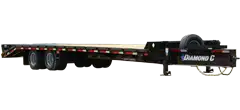
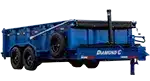
If you’re towing a trailer from our inventory, double-check the coupler type, ball size, gross vehicle weight rating, expected loaded weight, and estimated vertical load before ordering a hitch. A trailer with a gooseneck coupler will not attach directly to an ordinary fifth-wheel hitch, and a trailer with a kingpin will not attach directly to a bare gooseneck ball. It sounds obvious, but identifying the trailer by appearance instead of inspecting the actual coupler can lead to the wrong purchase.
The loaded weight matters more than the trailer’s empty shipping weight. Equipment, attachments, pallets, livestock, liquid, tools, fuel, and other cargo can move the combination much closer to its gross vehicle weight rating. Vertical load also uses part of the truck’s payload capacity and is carried by the rear axle and tires. The weight of the hitch itself, passengers, a toolbox, an auxiliary tank, and cargo in the cab or bed must be counted in the payload calculation.
Before towing, compare the actual or realistically estimated loaded trailer weight with the truck manufacturer’s towing guide and certification labels. Check gross combined weight rating, gross vehicle weight rating, rear gross axle weight rating, tire load capacity, payload, hitch rating, ball or jaw rating, coupler or pin-box rating, and trailer rating. No single aftermarket hitch rating overrides any of those limits.
So Which One?
For a direct underbed gooseneck installation, both B&W and CURT deserve consideration. The B&W Turnoverball and CURT Double Lock families are available with standard ratings up to 30,000 lb of gross trailer weight and 7,500 lb of vertical load. The best choice depends on the exact truck application, available dealer support, installation design, complete-system price, replacement-parts availability, and whether you plan to use related fifth-wheel equipment later.
B&W has a strong advantage for buyers who value the Turnoverball’s square-shank flip-over design and the option of mounting a compatible Companion fifth-wheel hitch in the same receiver. Its compatible 3-inch ball also provides a higher component rating for properly matched heavy-duty applications. That additional rating is meaningful only when the truck, underbed hitch, trailer coupler, trailer, tires, and every other component are approved for the same load.
CURT makes sense for far more than lighter or budget-oriented towing. Its Double Lock and EZr gooseneck systems compete directly in the 30,000-lb class, and its PowerRide provides a 30,000-lb fifth-wheel option for appropriately rated trucks and trailers. CURT’s broad application range can also make it easier to source factory-puck accessories, rails, sliders, wiring components, and other towing hardware from one manufacturer. Compare the price of the complete vehicle-specific system rather than one individual component.
Demco earns the nod when the job is fifth-wheel towing and its mounting format solves a specific problem. The 21,000-lb Recon Gooseball Mount can convert an existing compatible 2-5/16-inch gooseneck-ball installation into a removable fifth-wheel hitch without permanent above-bed rails. The Recon Slider and Autoslide products are worth considering for short-bed trucks where trailer-to-cab clearance is a concern. The actual truck, trailer nose, pin box, hitch position, and turning geometry still need to be checked before purchase.
There is no responsible way to select a hitch from trailer weight alone. Start with the truck’s year, make, model, bed length, cab style, factory towing preparation, payload label, axle ratings, and published towing limits. Then identify the trailer’s connection type, ball size or kingpin arrangement, gross vehicle weight rating, loaded weight, vertical load, and any specialty coupler or pin-box equipment. Finally, choose a complete hitch system whose installation instructions specifically cover that truck.
The hitch under a heavy trailer is not a place to wing it. If you’re not sure which system fits your truck and trailer combination, give us a call at (812) 829-0226 or stop by 291 West State Hwy 46 in Spencer. We can verify your truck’s factory-prep configuration, review the trailer’s coupler, and point you toward properly rated hardware before you spend money on incompatible components. And if you’re still shopping for the trailer itself, browse what’s in stock. Knowing the trailer’s actual coupler type, loaded weight, and vertical-load requirements makes the hitch decision much easier.


