





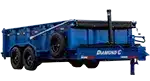



You’ve narrowed it down to a Diamond C FMAX207. Smart choice. The FMAX207 is the 15,500-pound-GVWR, single-wheel tandem-axle member of Diamond C’s Flatbed Max gooseneck lineup. It combines a low-profile engineered frame, a full-width 102-inch deck, multiple loading-system choices, and enough configuration flexibility to serve contractors, equipment owners, landscapers, farmers, and other buyers who regularly move machinery.
But now comes the question every serious buyer faces: do you buy a new trailer from an authorized dealer, or do you track down a used FMAX207 and keep some money in your pocket? Both paths can make sense. Neither is automatically the right call. The better choice depends on how often you will use the trailer, how much weight you will carry, which loading system you need, what condition and documentation are available, and how much repair and warranty risk you are comfortable accepting.
The important part is making an apples-to-apples comparison. Two trailers wearing the same FMAX207 model designation can have different lengths, loading systems, brake packages, suspension choices, tires, jacks, flooring, curb weights, payload capacities, and original build dates. A used trailer that initially appears several thousand dollars cheaper may not be comparable to the new trailer you priced.
A Quick Primer on the FMAX207
The Diamond C FMAX207 is a heavy-duty gooseneck flatbed equipment trailer rated at 15,500 pounds GVWR. It uses two 7,000-pound Lippert axles and is available in deck lengths from 20 to 35 feet, depending on the selected loading style. Current straight-deck configurations may be offered in 20-, 22-, 25-, 28-, 30-, 32-, and 35-foot lengths, while MAX Ramp and XDR Ramp configurations generally begin at 25 feet. Hydraulic-dovetail configurations are offered in selected longer lengths.
The frame is not simply a generic piece of structural I-beam. Current production uses Diamond C’s low-profile 14-inch Engineered Beam main-frame design, including the updated Engineered Beam 2.0 construction on current builds. The engineered main beams use high-strength steel and are designed with an intentional unloaded camber so the frame can work under its rated load. The gooseneck is also a curved engineered structure rather than a basic straight-channel neck.
The FMAX207’s 15,500-pound GVWR is higher than the combined 14,000-pound rating of its two trailer axles because part of the loaded trailer weight is carried through the gooseneck connection by the tow vehicle. That does not create permission to overload the axles, tires, hitch, truck, or trailer. The complete combination must remain within the trailer GVWR, individual axle ratings, tire capacities, hitch rating, truck payload rating, rear-axle rating, tow rating, and gross combined weight rating.
Key specifications to verify when comparing a used FMAX207 with a new one include:
- GVWR: 15,500 pounds
- Axles: two 7,000-pound Lippert axles
- Standard brakes: forward self-adjusting electric drum brakes at all four trailer wheel positions
- Optional brake equipment: electric drum brakes with ABS or electric-over-hydraulic disc brakes may be available on current builds
- Deck width: 102 inches
- Available deck lengths: approximately 20 to 35 feet, depending on loading configuration
- Main frame: low-profile 14-inch Diamond C Engineered Beam construction
- Crossmembers: 3-inch I-beam crossmembers on 16-inch centers as the standard current arrangement, with closer spacing available on some builds
- Coupler: gooseneck connection for a properly rated 2-5/16-inch ball; current trailers commonly use a 30,000-pound-rated CURT cushion coupler
- Standard flooring: 2-inch treated lumber, with other floor materials available by configuration
- Loading systems: straight deck with rear slide-in ramps, MAX Ramps, XDR Ramps, or a hydraulic dovetail, depending on length and build
- Finish: Diamond C’s DM Difference Maker multi-stage coating system
Payload is not simply the GVWR minus an estimated generic trailer weight. It must be calculated from the actual empty weight shown for that specific trailer. Length, ramps, hydraulic equipment, flooring, spare tires, jacks, toolboxes, winches, suspension, and other options all affect curb weight. For example, a current 25-foot FMAX207 with MAX Ramps may weigh in the mid-5,000-pound range and provide approximately 10,000 pounds of payload, while a longer hydraulic-dovetail trailer can be considerably heavier and therefore carry less cargo at the same 15,500-pound GVWR.
When evaluating a machine for transport, include its complete operating weight, not just the base manufacturer’s dry weight. Fuel, buckets, forks, attachments, tracks or tires, cab equipment, tools, chains, binders, spare parts, and anything stored on the trailer count against payload. You must also distribute the load correctly so the trailer axles, gooseneck, truck rear axle, tires, and hitch remain within their individual ratings.
The Price Gap: What It Actually Looks Like
There is no single accurate price for every new FMAX207 because the model covers a wide range of lengths and equipment packages. As of mid-2026, Diamond C’s published starting MSRP for the FMAX207 is in the upper-$17,000 range before taxes, title, registration, dealer-installed equipment, freight-related charges, and optional upgrades. Actual dealer asking prices can be lower or higher than published MSRP depending on configuration, inventory programs, regional freight, and promotions.
Real-world new inventory illustrates the range more clearly. A 25-foot FMAX207 with MAX Ramps, standard electric drum brakes, treated-wood flooring, dual drop-leg jacks, and conventional single-wheel tandem running gear can be advertised in the mid-$15,000s. A 30-foot model equipped with the 12-foot hydraulic dovetail, additional hydraulic components, and other upgrades can move into the low-$20,000s. Longer trailers or builds with ABS, electric-over-hydraulic disc brakes, upgraded tires, hydraulic jacks, specialty flooring, suspension upgrades, winches, storage, or other options can cost more.
Used FMAX207 asking prices are equally variable. Recent examples from the 2021-2022 model years have appeared from roughly the low-$10,000 range into the mid- or upper-$teens, depending on length, ramps, hydraulic equipment, condition, location, and seller expectations. Those figures are useful market references, but they are not an appraisal of a specific trailer. A clean, correctly maintained, well-optioned trailer with complete paperwork may command substantially more than an abused trailer of the same year.
The price gap should therefore be calculated between genuinely comparable trailers. Compare the same deck length, loading system, brake type, axle package, suspension, tires, flooring, jacks, spare-tire equipment, winch provisions, hydraulic equipment, and overall condition. A used 25-foot straight-deck trailer with slide-in ramps should not be treated as the equivalent of a new 30-foot hydraulic-dovetail model simply because both data plates say FMAX207.
Also compare out-the-door costs rather than advertised prices alone. A dealer buyer’s order should separate the trailer price, applicable sales tax, title and registration charges, document-preparation fee, financing charges, optional service products, and added equipment. Indiana regulates dealer document-preparation fees, and the allowable maximum is adjusted periodically, so review the current line item instead of relying on an old advertised cap. A private-party purchase may avoid a dealer document fee, but it does not automatically eliminate applicable tax, title, registration, lien-release, inspection, or repair expenses.
The true savings on a used unit might be several thousand dollars, or the difference may shrink considerably after correcting worn brakes, old tires, damaged wiring, neglected bearings, weak batteries, leaking hydraulic components, deteriorated decking, or missing ramps and accessories. Used savings are real only after the trailer’s condition, legal paperwork, and immediate maintenance needs are accounted for.
Depreciation: Where Does It Actually Hit?
Work trailers do not follow one universal depreciation curve. There is no reliable rule that every FMAX207 loses a fixed percentage during its first year or first two years. Market value is affected by the original purchase price, current replacement cost, length, loading system, regional demand, condition, maintenance records, title status, modifications, tire age, and the amount of useful service life remaining.
A desirable loading system can materially affect resale value. MAX Ramps, XDR Ramps, and hydraulic dovetails serve different buyers and have different original costs. Brake upgrades, hydraulic jacks, premium tires, winch equipment, additional storage, specialty flooring, and other documented factory options may also support value. Conversely, homemade modifications, missing components, poor welding repairs, damaged data plates, mismatched tires, unresolved electrical problems, and unclear ownership records can reduce value even when the paint still looks presentable.
Age alone does not tell you how much work a trailer has performed. Most trailers do not have a dependable lifetime mileage or operating-hour record. Ask what equipment was carried, how frequently it was moved, how far the trailer usually traveled, whether it operated commercially, and whether loads were weighed. Request maintenance receipts, axle-service records, tire invoices, brake work, hydraulic repairs, and any warranty documentation.
Operating environment matters too. Rough job sites, potholes, washboard gravel, curb strikes, mud, road salt, standing water, and repeated off-pavement loading can accelerate wear. Highway use is generally smoother, but it still creates sustained heat in tires and hubs and can expose neglected bearings, underinflated tires, poor alignment, or brake drag. No mileage category is automatically harmless.
A four-year-old FMAX207 used occasionally by a careful private owner may be a better purchase than a two-year-old trailer that ran daily under heavy commercial loads. The reverse can also be true when the commercial owner followed a documented inspection and maintenance program. Judge the individual trailer, not a stereotype about its age or previous owner.
Warranty: What You Keep and What You Lose
Warranty coverage depends heavily on the trailer’s model year, original warranty start date, ownership history, and the specific component involved. Diamond C’s current Warranty 2.0 program for qualifying 2026-and-newer trailers provides a six-year limited structural warranty and a two-year limited comprehensive warranty, subject to the written terms, exclusions, maintenance requirements, claim procedures, and original warranty-start date.
The structural portion applies to designated structural elements such as the main frame, crossmembers, railings, and subframe when a covered defect exists. The comprehensive portion addresses qualifying defects in covered trailer components during its shorter term. Wear, misuse, overloading, collision damage, improper maintenance, unauthorized alterations, and repairs performed without required approval are not the same as a manufacturing defect. Transportation costs and downtime should not be assumed to be covered.
Pre-2026 trailers were sold under earlier warranty terms. Those units generally carried a three-year structural warranty measured from the date of manufacture and shorter comprehensive coverage. Some structural protection may continue regardless of a change in ownership during the applicable term, while component-manufacturer warranties and other coverage may be limited to the original purchaser or governed by separate conditions.
For that reason, do not accept a blanket statement that a used trailer has a “full transferable warranty.” Before assigning value to remaining coverage, give the complete VIN to an authorized Diamond C dealer and ask for written confirmation of the manufacture date, original warranty start, applicable warranty version, open campaigns, previous claims, and any coverage still available to the next owner. Also confirm whether an axle, brake, tire, coupler, jack, battery, hydraulic-pump, or other component claim must be handled through its original manufacturer.
Buying new from an authorized dealer gives you the clearest starting point: the current warranty terms, a documented sale date, the original buyer’s paperwork, and a dealer that can assist with registration and claim procedures. A used trailer can still be a sound purchase, but any remaining warranty should be verified rather than assumed.
This is not an argument against used equipment. It is a risk and budgeting issue. If a frame problem, axle issue, hydraulic leak, brake failure, damaged ramp, or wiring fault is outside warranty, the repair responsibility belongs to the owner. Heavy-trailer repair pricing varies too much by damage, labor market, parts availability, and required fabrication to rely on a generic estimate. Obtain a written inspection and repair quote before closing the purchase.
Inspection Points Before Buying Used
If you’re considering a used FMAX207, inspect it thoroughly or hire a qualified trailer shop to inspect it. Begin with the VIN plate, title, and seller’s identification. The VIN on the frame or manufacturer’s plate should match the title exactly. Confirm the listed year, model, GVWR, tire information, axle ratings, and ownership. Require a lien release when a lender is shown, and be cautious with altered data plates, missing VIN information, salvage history, or paperwork that does not match the trailer.
Ask for the original build sheet when available. It can identify factory length, ramps, brake system, suspension, flooring, tires, jacks, hydraulic equipment, and other options. It also helps distinguish legitimate factory equipment from later modifications.
Frame and Welds
Use a bright flashlight and visually inspect both main beams, the engineered gooseneck, crossmembers, suspension hangers, jack structure, ramp mounts, coupler area, tie-down points, and the underside of the deck. Do not slide an unprotected hand along welds or damaged steel because sharp edges can cause injury.
Look for open cracks, displaced steel, buckling, rippling, torn mounting holes, separated weld toes, heavy impact damage, and rust that has reduced the metal’s thickness. Paint cracking directly along a structural weld can justify a closer professional examination, but superficial coating damage by itself is not proof of a failed weld. Also inspect for fresh paint or undercoating that may be concealing a repair.
Current FMAX engineered frames are designed with a visible unloaded camber. A gentle upward crown when the empty trailer is viewed from the side can be normal and should not automatically be interpreted as a bent frame. An uneven profile, abrupt kink, permanent twist, side-to-side mismatch, or signs that the deck no longer aligns with the gooseneck deserve professional evaluation.
Any previous structural welding should be explained and documented. Determine what failed, why it failed, who performed the repair, whether Diamond C authorized it, and whether the repair affected warranty coverage. Do not use a cosmetic discount as a substitute for knowing whether a structural repair is safe.
Axles and Hubs
Verify that the trailer has the correct Lippert axle tags and that axle capacities match the VIN plate and title information. Look for bent tubes, leaking seals, damaged brake wiring, loose suspension hardware, broken or shifted components, cracked hangers, and evidence that an axle has been replaced with a mismatched unit.
Safely lift and support the trailer using equipment rated for its weight. Rotate each wheel and feel for roughness, grinding, binding, or excessive bearing play. A drum-brake wheel may have light, consistent shoe drag and may not spin indefinitely like an unbraked wheel. What matters is smooth rotation without harsh noise, wobble, severe drag, or looseness.
Do not assume every hub uses the same lubrication system. Identify whether that specific trailer has grease-lubricated hubs or an oil-bath arrangement. On grease systems, inspect for contaminated lubricant, failed seals, improper servicing, and grease migration into the brake assembly. On oil-bath hubs, check the specified oil level and condition, sight components, caps, seals, and evidence of leakage. Follow the applicable Lippert service procedure rather than mixing maintenance methods.
Inspect tire size, load range, date codes, inflation, tread depth, sidewalls, bead areas, and wear patterns. Uneven wear can indicate alignment, suspension, bearing, inflation, or loading problems. Matching tread is helpful, but every tire must independently meet the required load capacity and condition standard. A tire can have deep tread and still require replacement because of age, cracking, impact damage, or internal separation.
Check wheel condition and lug hardware. After any wheel removal, bearing service, or tire replacement, lug nuts must be tightened and rechecked according to the wheel, axle, and trailer manufacturer’s procedure. Do not rely on impact-tool tightness as proof of correct torque.
Electric Brakes
Most FMAX207 trailers use forward self-adjusting electric drum brakes on both 7,000-pound axles. Current builds may also be equipped with electric drum brakes with ABS or electric-over-hydraulic disc brakes, so identify the actual system before testing or ordering parts.
For a standard electric-drum setup, connect the trailer to a compatible truck and brake controller. Verify the seven-way connector, ground circuit, controller output, brake wiring, junctions, and each wheel-end brake. At a safe low speed in a controlled area, the manual controller command should produce smooth, noticeable trailer braking without one wheel locking far earlier than the others. A clamp-meter or wheel-by-wheel electrical test can help locate a weak magnet or wiring fault.
Test the breakaway system separately. The switch, cable, battery, charger, and brake circuit must function, and the cable must be attached to the tow vehicle independently of the safety chains. Do not leave the breakaway pin pulled longer than necessary for testing because prolonged activation can overheat electric brake magnets and drain the battery.
If the trailer has ABS or electric-over-hydraulic disc brakes, inspect the controller, warning indicators, hydraulic actuator, fluid, hoses, calipers, rotors, wiring, battery, and compatibility with the tow vehicle’s brake controller. A truck controller that works with ordinary electric drums is not automatically compatible with every electric-over-hydraulic actuator.
The FMAX207 is well above Indiana’s trailer-brake threshold. Indiana requires a trailer or semitrailer with a gross weight of at least 3,000 pounds to have adequate brakes controllable by the driver and an automatic breakaway function. A defective brake or breakaway system is therefore more than a bargaining point; it must be corrected before loaded highway use.
Deck and Ramps
Determine which floor the trailer actually has. Standard current flooring is 2-inch treated lumber, but factory options and later replacements can differ. Inspect wood planks from above and below for softness, splitting, crushing, severe warping, chemical damage, missing fasteners, and rot around the outer edges and attachment points. Surface discoloration alone is less important than loss of structural strength.
Confirm the loading system instead of assuming every FMAX207 has MAX Ramps. Straight-deck trailers may use 96-inch rear slide-in ramps. Other units may have MAX Ramps, XDR Ramps, or a 12-foot hydraulic dovetail. The selected system affects trailer length, weight, approach angle, maintenance needs, and market value.
On MAX Ramps or XDR Ramps, inspect ramp structure, welds, spring-assist components, pivot points, pins, locks, support feet, and travel position. The ramps should deploy and stow without dangerous binding, uncontrolled movement, or excessive side play. Bent components can result from impact, poor loading alignment, unsupported loading, or overloading, but the cause should be professionally evaluated rather than guessed from appearance alone.
On a hydraulic-dovetail trailer, cycle the dovetail through its full range with the trailer safely positioned and unloaded. Inspect the pump, reservoir, battery, charger, wiring, remote controls, hydraulic cylinder, pins, hoses, fittings, deck structure, mechanical locks, and any leakage. Slow operation can result from battery condition, electrical resistance, low fluid, cold fluid, adjustment, pump wear, or excessive mechanical drag.
Inspect every tie-down point you expect to use. Confirm that chains, binders, straps, and anchor points are individually rated for the intended cargo and arranged to satisfy applicable cargo-securement rules. A heavy trailer does not compensate for undersized or poorly positioned securement equipment.
Coupler and Safety Chains
Inspect the gooseneck coupler for wear, deformation, cracks, missing hardware, incorrect adjustment, and positive locking around a properly sized 2-5/16-inch ball. Current FMAX207 builds commonly use a 30,000-pound CURT cushion coupler, but older units or modified trailers may differ. Read the installed coupler label and verify its capacity rather than assuming the current specification applies to every used model year.
Examine the safety chains, hooks, latches, mounting points, and welds. Each chain must be properly rated, attached to the tow vehicle’s approved chain points, and free of severe wear, stretching, unauthorized repairs, or damaged hooks. Chains should not be attached to a removable ball or any point not designed for trailer safety-chain loads.
Inspect the landing jacks and the frame supporting them. Current trailers may use dual two-speed drop-leg jacks, hydraulic jacks, or another factory-specified arrangement. Both sides should operate correctly, remain stable under the empty trailer, and secure positively for travel. Check gearboxes, handles, pins, feet, hydraulic hoses, switches, and mounting welds as applicable.
Finally, inspect the seven-way plug, breakaway cable, lighting harness, junction box, marker lights, stop and turn lamps, license-plate light, reflective material, spare-tire mount, and any winch wiring. Electrical repairs that look small from the outside can involve corrosion or poor grounding throughout the harness.
The Case for New
Buying a new FMAX207 from an authorized dealer gives you a known build specification, current warranty coverage, dealer pre-delivery inspection, proper sales documentation, and the opportunity to choose a configuration that matches your work. You can select the deck length, loading system, brake package, suspension, flooring, tires, jacks, storage, winch equipment, finish, and other available options instead of adapting your operation to whatever appears on the used market.
Current-build features also matter. A new FMAX207 can incorporate Diamond C’s latest Engineered Beam 2.0 frame construction, current DM Difference Maker coating process, current coupler and jack equipment, and available upgrades such as ABS-equipped electric drum brakes, electric-over-hydraulic discs, premium tires, closer crossmember spacing, hydraulic loading equipment, or specialty flooring. Exact availability can change, so the dealer’s order sheet and VIN-specific build record remain the controlling documents.
New does not literally mean that a trailer has never moved. It may have delivery, yard, demonstration, or pre-delivery-inspection mileage. It does mean you are not inheriting years of undocumented loads, repairs, bearing service, tire aging, or hydraulic maintenance from a previous owner.
Financing is another advantage. Authorized dealers commonly offer lending options for qualified buyers, while private-party trailer financing can be more limited. Compare the amount financed, interest rate, term, down payment, total finance charge, early-payoff rules, and any optional products. A lower monthly payment achieved through a longer term does not necessarily create a lower total cost.
Business buyers should also discuss federal tax treatment with their tax professional. Under current federal law, qualifying depreciable business property acquired and placed in service after January 19, 2025 may be eligible for 100 percent bonus depreciation. Both qualifying new and qualifying used property can potentially receive that treatment, subject to ownership, use, acquisition, placed-in-service, income-tax, and other requirements. Tax treatment should not be assumed from the purchase date or trailer type alone.
The Case for Used
A clean used FMAX207 can be an excellent value when its configuration matches your needs and its condition is verified. The model is engineered for demanding service within its ratings, and a properly maintained trailer can provide many more years of useful work. The key is purchasing the remaining service life, not merely purchasing a lower asking price.
Used can make particular sense for lighter, seasonal, or backup duty. A buyer who transports a tractor several times per year may reasonably accept more age than a contractor whose revenue depends on moving equipment every morning. The commercial buyer may place greater value on current warranty coverage, immediate parts support, predictable uptime, and a loading system ordered specifically for the equipment fleet.
Mechanical knowledge helps, but familiarity should not replace measurement and documentation. Even an experienced buyer should confirm the VIN, title, GVWR, axle tags, tire ratings, actual empty weight, payload, brake type, coupler rating, and tow-vehicle compatibility. An independent trailer-shop inspection can still be worthwhile when the trailer will carry valuable machinery on public roads.
A used trailer may also qualify for financing and business depreciation, but neither is automatic. Private-party lenders may impose vehicle-age, title, valuation, down-payment, or seller-document requirements. Federal bonus-depreciation rules can apply to qualifying used property, but transactions between related parties and property previously used by the same taxpayer can be treated differently. Obtain financing and tax answers before treating either benefit as part of the deal.
Side-by-Side Summary
| Factor | New FMAX207 | Used FMAX207 |
|---|---|---|
| Typical price range | Current examples commonly fall from the mid-$15,000s into the low-$20,000s, with longer and heavily optioned builds potentially higher; published starting MSRP is in the upper-$17,000 range before taxes and options | Recent examples have ranged from roughly the low-$10,000s into the mid- or upper-$teens, but year, length, loading system, options, title status, and condition control value |
| Warranty | Qualifying 2026-and-newer trailers receive current Warranty 2.0 protection, including six-year limited structural and two-year limited comprehensive coverage, subject to written terms | Coverage depends on model year, manufacture date, original warranty start, ownership, component, and previous claims; verify the VIN with an authorized dealer |
| Known condition | Known build sheet, current components, dealer inspection, and no previous owner’s maintenance history to reconstruct | Requires title verification, physical inspection, system testing, maintenance review, and an allowance for immediate repairs |
| Depreciation risk | Buyer absorbs the initial transition from new inventory to used equipment, but there is no universal first-year percentage | Some initial depreciation may already be reflected, although abuse, poor repairs, obsolete options, or weak documentation can reduce value further |
| Financing options | Dealer financing is commonly available to qualified buyers, with rates and terms depending on lender approval | Dealer-owned used inventory may be financeable; private-party financing can require more cash, documentation, or a specialized lender |
| Customization | Order or select the correct length, loading system, brakes, flooring, tires, jacks, suspension, storage, and other available equipment | You purchase the configuration already built and must decide whether its compromises are acceptable |
What Most Buyers Get Wrong
The most common mistake is treating the sticker-price difference as pure savings. It is not. A fair used-trailer calculation should include inspection, title verification, immediate maintenance, tire replacement when needed, brake and bearing service, hydraulic repairs, missing equipment, travel to collect the trailer, lost working time, and the value of warranty coverage that has expired or cannot be confirmed.
The second mistake is comparing model names without comparing build specifications. A 20-foot straight-deck FMAX207 and a 35-foot FMAX207 with a hydraulic dovetail are materially different trailers. The same is true of a standard electric-drum build versus one equipped with ABS or electric-over-hydraulic disc brakes. Ask for the VIN-specific build sheet and calculate payload from the actual empty weight.
The third mistake is buying based on cosmetics. A clean deck or fresh coating does not confirm frame alignment, axle condition, wheel-bearing health, brake performance, hydraulic reliability, or legal ownership. Conversely, ordinary surface wear does not automatically make a structurally sound and well-maintained work trailer a poor purchase. Prioritize measurements, documentation, and mechanical condition over appearance.
Buyers also underestimate the tow vehicle. A 15,500-pound-GVWR gooseneck must be matched to the specific truck using the truck’s certification labels, owner’s manual, towing guide, rear-axle rating, tire capacities, payload rating, hitch rating, and GCWR. Published maximum tow ratings usually apply only to particular cab, drivetrain, wheelbase, axle-ratio, and equipment combinations. The trailer’s 15,500-pound rating does not mean every three-quarter-ton or one-ton truck can legally and safely carry its pin weight and tow it at maximum load.
The FMAX207’s trailer GVWR also does not, by itself, answer the CDL question. Under the federal Class A threshold used by Indiana, a Class A CDL is generally implicated when the combination has a GCWR of 26,001 pounds or more and the towed vehicle has a GVWR greater than 10,000 pounds. Because the FMAX207 is rated above 10,000 pounds, the truck’s rating and the resulting combination rating are critical. Commercial use, vehicle configuration, intrastate or interstate operation, farm or recreational exemptions, medical qualification, registration, and other rules can affect the final answer. Verify your exact combination and use with the appropriate licensing and enforcement authorities.
Do not overlook Indiana title and registration timing either. A purchaser generally has 45 days after acquisition to complete the required title and registration process without the applicable administrative penalty. Secure the signed title, purchase document, lien release, VIN information, and other required records promptly rather than waiting until the trailer is needed for a job.
Finally, do not assume a new trailer automatically creates a better tax deduction than a used one. Current federal rules can allow 100 percent bonus depreciation for qualifying property acquired and placed in service after January 19, 2025, and qualifying used equipment may be eligible along with new equipment. Business-use percentage, ownership history, related-party rules, financing, entity structure, placed-in-service date, state tax conformity, and other facts matter. Get advice based on your actual business rather than relying on a sales claim.
If you want to see what’s currently available, check the Spencer Trailers inventory for current Diamond C stock, or browse the recently sold trailers to get a real-world sense of the lengths, loading systems, equipment packages, and advertised prices that have been moving through this market. Inventory and pricing change, so use the VIN-specific listing and buyer’s order for the final comparison.
Still weighing your options or want to talk through what configuration makes sense for your equipment and tow vehicle? Reach the Spencer Trailers team directly at (812) 829-0226. They work out of Spencer, Indiana and can help you compare a new FMAX207 with an available used trailer based on actual build specifications, payload, loading method, warranty status, and out-the-door cost.


