







You back a bumper-pull trailer into a tight gate and something clicks. Not the coupler. The realization that you have outgrown the setup. The sway when a semi passes at highway speed, the load you had to split into two trips because the ratings did not leave enough payload, and the constant concern about how much weight is sitting behind the truck’s rear axle all point in the same direction. A properly matched gooseneck trailer can provide more capacity, a longer working deck, and more predictable handling than a comparable bumper-pull. Once you have hauled serious equipment with the trailer’s coupler positioned over the truck’s rear axle, going back can feel like a step backward.
That does not mean every gooseneck is automatically safer or that every heavy-duty pickup can pull every gooseneck on the market. The truck, hitch, coupler, trailer, tires, brakes, load placement, driver qualifications, and actual scale weights all have to work together. This post breaks down how gooseneck trailers work, where they beat bumper-pull rigs, what specifications actually matter, and how to choose the right Diamond C FMAX configuration for the job.
Gooseneck vs. Bumper Pull: What Actually Changes
The difference is not simply where the coupler sits. It changes the leverage applied to the tow vehicle. A bumper-pull trailer connects to a receiver behind the truck’s rear axle. Its tongue weight therefore acts behind the axle and creates leverage on the rear suspension. A gooseneck hitch places the coupling point in the bed, generally over or slightly ahead of the rear axle. That location transfers vertical hitch load into the strongest working area of the truck chassis and reduces the rearward leverage created by a receiver-mounted trailer.
Receiver-hitch ratings vary widely by truck, hitch class, ball mount, and whether a weight-distribution system is used, so there is no universal tongue-weight limit for every Class IV or Class V hitch. A standard B&W Turnoverball setup commonly uses a 2-5/16-inch ball rated for up to 30,000 pounds of gross trailer weight and 7,500 pounds of vertical trailer weight. Certain higher-rated combinations use a 3-inch ball and compatible hitch components. Those hitch ratings do not increase the truck’s factory towing capacity, payload rating, rear gross axle weight rating, or gross combination weight rating. The lowest-rated component in the entire combination remains the limit.
Stability is another major advantage. Positioning the pivot point over the axle generally allows a properly loaded gooseneck to track more predictably and react less dramatically to crosswinds, passing trucks, and steering corrections than a similarly sized bumper-pull. The longer trailer and different pivot geometry also change how the rig turns and backs. A gooseneck can cut inside the truck’s path sharply, which is useful in some yards but can surprise a driver who is accustomed to a bumper-pull. Better geometry does not eliminate sway caused by low tire pressure, excessive speed, worn suspension components, poor load placement, inadequate hitch weight, or an overloaded tow vehicle.
The trade-off is the in-bed hitch installation. The installed price of a B&W Turnoverball Gooseneck Hitch depends on the truck, bed configuration, factory towing preparation, bed liner, required safety-chain anchors, local labor, and the ball rating needed for the trailer. B&W’s truck-specific underbed systems generally bolt to existing frame mounting points without welding or removing the bed, although a four-inch opening is made through the bed floor. The ball can be removed, turned over, and stored in the receiver, leaving a level and largely unobstructed bed when the trailer is disconnected.
Payload: The Numbers That Matter
Most half-ton pickups are not appropriate tow vehicles for an FMAX-class trailer. Some half-ton trucks can accept an in-bed hitch and may be rated for a relatively light gooseneck, but available payload and rear-axle capacity usually become the limiting factors long before the largest advertised tow number. Most Diamond C FMAX applications call for a properly equipped three-quarter-ton or one-ton pickup. The heavier 25,000- to 40,000-pound configurations commonly require a one-ton dual-rear-wheel truck or an even heavier tow vehicle, depending on the trailer’s loaded weight and hitch load.
Headline towing numbers must also be read carefully. Properly equipped 2026 Ford Super Duty combinations can reach a maximum gooseneck rating of 40,000 pounds, but that maximum belongs to a specific truck, powertrain, axle ratio, body, and towing-package configuration. The 2026 Ram 3500 advertises up to 36,610 pounds of diesel towing capacity, again only in the qualifying configuration. A crew-cab four-wheel-drive truck with passengers, tools, an auxiliary fuel tank, a toolbox, a replacement bumper, and an in-bed hitch may have substantially less usable payload than the headline advertisement suggests. Use the truck’s VIN-specific towing guide, certification labels, payload label, rear GAWR, GCWR, tire ratings, and hitch instructions rather than relying on a model-wide maximum.
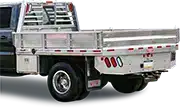
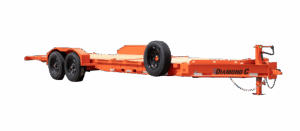
Now pair that truck with a trailer built for the work. The Diamond C FMAX, short for Flatbed Max, is Diamond C’s premium flatbed gooseneck family. The current core lineup covers a wide range of capacities. The FMAX207 carries a 15,500-pound GVWR with tandem 7,000-pound Lippert axles. The FMAX208 is rated at 18,000 pounds with tandem 8,000-pound Lippert axles. The FMAX307 uses three 7,000-pound Lippert axles and carries a 24,000-pound GVWR. Moving into the dual-wheel models, the FMAX210 is rated at 25,000 pounds with tandem 10,000-pound Lippert axles, while the FMAX212 is rated at 25,900 pounds with tandem 12,000-pound Lippert axles. The FMAX310 uses three 10,000-pound Lippert axles and is rated at 30,000 pounds. The FMAX312 uses three 12,000-pound Lippert axles and is offered in 30,000- and properly equipped 40,000-pound configurations. The FMAX216 uses tandem 16,000-pound Lippert axles with hydraulic disc brakes and is available in 25,900-, 30,000-, and properly equipped 40,000-pound configurations.
Every one of those ratings is model- and configuration-specific. Deck lengths begin at 20 feet on several tandem-axle models and extend to 44 feet on selected heavy configurations. The usable deck is 102 inches wide. Depending on the model, Diamond C uses a patented low-profile Engineered Beam frame approximately 14 to 18 inches tall, with the heavier FMAX models receiving the deeper frame structure. Current Fleetneck construction includes a curved engineered gooseneck, model-specific high-strength main beams, a channel-iron lace rail, stake pockets, pipe spools, retractable access steps, and an integrated chain-storage and winch-mount area. Diamond C builds its trailers in Mount Pleasant, Texas, and has manufactured trailers in the United States since 1985.
Brake, jack, suspension, tire, coupler, and loading packages vary by FMAX model and individual build. Many configurations use electric drum brakes, while electric-over-hydraulic disc brakes, ABS-equipped packages, and other upgrades are available on applicable models. The FMAX216’s 16,000-pound axle package uses hydraulic disc brakes. Current inventory may also include different drop-leg or hydraulic jack capacities, so the actual build sheet is more reliable than a generalized statement that every FMAX uses the same jack package. Loading choices include MAX Ramps, XDR Ramps, the X-Ramp system where offered, straight-deck configurations with slide-in ramps, and a 12-foot hydraulic dovetail on applicable builds. Steel preparation and finish use Diamond C’s DM Difference Maker multi-stage powder-coating process.
What Jobs Actually Call for a Gooseneck
The practical list includes equipment hauling, vehicle transport, hay and farm loads, landscaping machinery, construction materials, palletized freight, multiple-machine loads, and other jobs that require more deck length or capacity than the available truck-and-bumper-pull combination can safely provide. There is no universal weight at which a bumper-pull suddenly stops being useful. Heavy bumper-pull equipment trailers are available at substantial GVWRs, and a lighter gooseneck can still overload the wrong truck. The decision depends on actual payload, equipment dimensions, load distribution, frequency of use, maneuvering space, and the ratings of the complete combination.
Equipment weights explain why contractors move into goosenecks. Depending on the model, a skid steer may weigh roughly 6,000 to more than 10,000 pounds, and compact track loaders can be heavier. A five-metric-ton excavator commonly weighs about 11,000 to 13,000 pounds before accounting for the bucket, thumb, hydraulic attachments, additional tools, or material carried on the deck. Put one of those machines on a trailer, add the trailer’s empty weight, chains, binders, spare tire, fuel, attachments, and job-site supplies, and a nominal 14,000- or 15,500-pound trailer may run out of legal payload quickly. A higher-capacity FMAX can provide more operating margin, but only when the truck, hitch, driver, tires, brakes, and road-weight limits support the loaded combination.
Farmers and livestock haulers have related reasons for choosing an in-bed connection. Gooseneck stock and livestock trailers from specialty manufacturers such as Delco can offer long usable interiors, stable loaded handling, and storage or tack space in the nose area. Flatbed buyers use the same basic geometry for tractors, hay, fencing materials, seed, feed, and implements. Remember that the Diamond C FMAX is a flatbed equipment and cargo platform, not a livestock enclosure. The right trailer style still depends on what is being transported and how the load must be contained, ventilated, secured, and protected.
Key Specs Checklist Before You Buy
- GVWR versus payload: GVWR is the maximum rated weight of the loaded trailer, including the trailer itself. Payload is not simply a number printed across every trailer of the same model. Length, loading system, flooring, spare tires, toolboxes, winches, hydraulic equipment, suspension, and other options change empty weight. Start with the completed trailer’s stated empty weight, confirm it on a certified scale when accuracy matters, and subtract that figure from GVWR to estimate available cargo capacity.
- Tow-vehicle ratings: Confirm the truck’s GCWR, maximum loaded trailer rating, payload, GVWR, front and rear GAWR, wheel and tire ratings, and the rating of the factory or aftermarket hitch structure. Diesel power does not automatically mean the truck has enough payload. A heavier engine, four-wheel drive, large cab, accessories, passengers, tools, and fuel all consume payload before the trailer is attached.
- Hitch load: The gooseneck transfers part of the loaded trailer weight to the truck. Do not assume one universal percentage for every trailer. Follow the trailer and truck manufacturers’ loading guidance, then verify the completed combination on a scale. The loaded truck must remain within its GVWR, rear GAWR, tire capacity, and hitch rating while the trailer axles remain within their own ratings.
- Deck length: FMAX deck lengths range from 20 to 44 feet depending on model and loading style. Choose enough usable deck for correct weight placement rather than buying length solely for appearance. A machine may physically fit while still placing too much or too little load on the hitch. Also account for the total truck-and-trailer length, rear overhang, local access, parking space, and the trailer’s inside tracking during turns.
- Bed and cab clearance: Check coupler height, bed-rail clearance, tailgate clearance, toolbox placement, cab-to-trailer clearance, and turning clearance before towing. Lifted trucks, short beds, wide front trailer structures, and bed-mounted accessories can create contact points during tight turns or when crossing uneven ground. Adjusting the coupler is not a substitute for keeping the trailer deck level and maintaining adequate clearance.
- Floor material: Treated lumber is common on work trailers because it provides useful traction and can be replaced in sections. Oak is denser and durable but adds weight and cost. Aluminum flooring resists rot and reduces some maintenance concerns, but the surface and traction characteristics differ from wood. Diamond C configurations may offer treated lumber, oak, AlumaTrax knurled aluminum, Blackwood runners, or other model-specific floor and loading-surface choices. Confirm the option on the actual trailer rather than assuming every FMAX has the same deck.
- Axles, suspension, wheels, and tires: Verify the axle manufacturer, individual GAWR, hub type, suspension, brake system, wheel rating, tire size, tire load range, inflation pressure, and spare. Diamond C’s premium FMAX line uses Lippert axles as standard. Adding the axle ratings alone does not necessarily equal a gooseneck’s GVWR because the manufacturer’s certified rating accounts for designed hitch load as well as axle load. The trailer data plate and completed engineering package control; never create your own higher rating by adding component numbers.
- Brakes and breakaway equipment: Indiana requires a trailer or semitrailer with a gross weight of at least 3,000 pounds, when operated on a highway, to have brakes adequate to control, stop, and hold it. The driver must be able to apply those brakes from the tow vehicle, and the system must automatically apply the trailer brakes during an accidental breakaway. Inspect the breakaway battery, switch, cable, wiring, controller operation, brake adjustment, hydraulic fluid where applicable, and all wheel brakes before hauling.
- Ramps or hydraulic dovetail: Match the loading system to the machine. MAX Ramps provide a broad loading surface and stand upright when stored. XDR Ramps are narrower, extreme-duty knee ramps intended for concentrated equipment loads and clearance between the ramps. A hydraulic dovetail lowers the approach angle and removes much of the manual ramp handling, but adds hydraulic components, battery demand, weight, purchase cost, and maintenance. Straight-deck configurations with slide-in ramps may suit freight or loads that are commonly loaded by forklift.
- Approach angle and ground clearance: Low equipment, steel-tracked machines, long-wheelbase vehicles, and attachments that hang behind the rear axle can contact the ramp breakover point. Compare the machine’s ground clearance, wheelbase, track position, and departure angle with the trailer’s dovetail and ramp geometry. A loading system that is excellent for a skid steer may not be the best choice for a low car or a machine with a long undercarriage.
- Tie-down and securement provisions: Inspect the lace rail, stake pockets, pipe spools, chain tray, D-rings where equipped, winch mounting location, and working-load limits of chains, straps, binders, and attachment points. Cargo-securement requirements depend on the type and weight of the cargo. The trailer’s GVWR does not make an unrated anchor, worn chain, or damaged binder acceptable.
- CDL and commercial-operation rules: A trailer rated over 10,000 pounds does not automatically trigger a Class A CDL by itself.


