


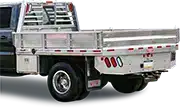
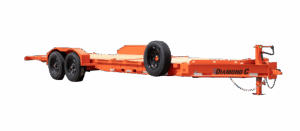





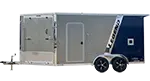
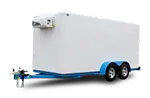
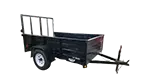

You hook up your trailer on a 95-degree afternoon, the tires look fine, and you pull onto the highway. Twenty miles later, a tire loses its tread or ruptures at highway speed. It happens fast, but heat by itself is rarely the whole explanation. Most summer tire failures involve an existing problem such as underinflation, overloading, impact damage, aging, improper tire selection, or a leaking valve or wheel assembly. Hot weather, sun-heated pavement, and sustained highway speed then add stress to a tire that was already operating without enough safety margin.
Summer hauling creates a demanding combination for trailer tires. High ambient temperatures reduce their ability to shed internally generated heat, while long highway runs repeatedly flex the tread, sidewalls, and belt package. A heavily loaded trailer, an underinflated tire, an axle-alignment problem, or speed beyond the tire’s rating increases that flex and produces even more heat. The important lesson is not that a properly inflated tire becomes unsafe simply because its pressure rises on a hot day. The real danger is allowing a compromised tire to build excessive internal temperature mile after mile.
Why Heat Raises PSI (and Why That Matters)
Tire pressure is not static. Under the ideal gas relationship, the pressure of the air inside a tire rises as its temperature rises. A trailer tire adjusted to the correct cold pressure on a cool morning will normally show a higher reading after it has been sitting in the sun or traveling at highway speed. The increase may be several PSI and can be greater when the tire is heavily loaded, underinflated, driven fast, or exposed to unusually high road temperatures. That normal increase is already considered in the tire’s design.
The inflation pressure molded onto a tire’s sidewall is a cold inflation value associated with the tire’s stated maximum load. It is not a hot-pressure ceiling that requires you to pull over and release air whenever the reading rises. In fact, bleeding a hot tire back to its cold specification can leave it dangerously underinflated when it cools. Higher-than-cold pressure after driving does not make the sidewall flex more; underinflation is what increases sidewall deflection, internal friction, and heat generation. Overloading, excessive speed, road damage, aging, and structural deterioration can compound that heat until the tire fails. :contentReference[oaicite:0]{index=0}
The word “cold” is key. Industry guidance generally defines a cold tire as one that has been parked for at least three hours or driven less than one mile at moderate speed. Checking in the shade is preferable because direct sunlight can warm one side of the trailer and create misleading differences between tires. Use the trailer manufacturer’s certification label, tire-information label, or owner’s manual for the required cold inflation pressure. The sidewall confirms the tire’s maximum cold pressure and load capacity, but the correct setting must also remain within the pressure ratings of the wheel, valve stem, and other wheel-end components. :contentReference[oaicite:1]{index=1}
What the Pavement Temperature Actually Does to Your Tires
Air temperature and pavement temperature are not the same. Dark pavement exposed to direct summer sun can become many degrees hotter than the surrounding air. A stationary tire absorbs some of that surface heat through its contact patch, while sunlight warms the exposed tread and sidewall. Once the trailer starts moving, however, the tire’s largest heat source is usually the repeated flexing of its structure under load. Hot pavement and hot air make the operating environment tougher because the tire cannot release that internally generated heat as efficiently.
This matters especially for trailers that sit loaded in an open lot or driveway before a long run. The tires, wheels, and hubs may already be heat-soaked before the first highway mile. Speed also matters, but the old blanket statement that every ST tire is limited to 65 mph is no longer accurate. Some older or basic trailer tires are rated for 65 mph, while many current ST products carry ratings of 75, 81, or even 87 mph, depending on the exact tire size and model. Read the speed symbol or manufacturer specifications for the tire actually installed, and never exceed the lowest applicable limit among the tires, trailer, tow vehicle, road, and hitch system. :contentReference[oaicite:2]{index=2}
Cargo and utility trailers from manufacturers such as Wells Cargo, Darkhorse Cargo, and H&H may use 14-inch, 15-inch, 16-inch, or commercial-grade 17.5-inch tires depending on the trailer’s model, axle package, GVWR, and ordered options. ST205/75R15 and ST235/80R16 are common examples, but tire size alone does not tell you the load range, maximum load, speed rating, or required inflation pressure. Read the complete sidewall description and compare it with the trailer’s VIN label instead of assuming that every tire of the same nominal size has identical capabilities.
Checking Cold Pressure: The Right Way
A dependable digital or dial tire-pressure gauge is inexpensive compared with the damage caused by a failed tire, bent fender, damaged wiring, torn trailer floor, or roadside service call. The useful part is not simply owning the gauge. It is building a repeatable pre-trip routine:
- Check every tire before every towing day, especially before a long trip or a heavily loaded run. Include the mounted spare, inner dual tires, and any tire that was recently repaired or has shown a slow pressure loss.
- Inflate to the cold pressure specified by the trailer manufacturer on the certification label or in the owner’s manual. Do not use the tow vehicle’s tire placard, guess from a previous trailer, or automatically exceed the trailer specification. Many ST applications are designed to operate at the tire’s listed maximum cold pressure, but that must be confirmed for the specific trailer, tire, wheel, and load.
- Check every tire on tandem- and triple-axle trailers. A pressure difference can change tire deflection, heat generation, ride height, and load sharing. Also investigate recurring pressure loss instead of simply adding air before every trip.
- Do not bleed air from a hot tire to return it to the cold baseline. Allow the tire to cool and check it again under cold conditions. A hot tire that reads at or below the specified cold pressure may be seriously underinflated and should be inspected before travel continues.
On a Diamond C LPX heavy equipment trailer, current configurations range from 15,500 to 24,000 lb GVWR and use Lippert axle packages, including tandem 7,000-, 8,000-, or 10,000-lb configurations and a triple 7,000-lb option. That can mean four or six tires to inspect, depending on the package. Diamond C FMAX gooseneck flatbeds cover an even wider range of single-wheel, dual-wheel, triple-axle, and super-single configurations. Every installed tire must meet the requirements of its wheel position, and the spare must be suitable for the same duty. A trailer is not ready for summer hauling because three tires are correct and the fourth is merely “close.” :contentReference[oaicite:3]{index=3}
Load Ratings, GVWR, and Heat: The Triangle You Can’t Ignore
Heat does not reduce a tire’s published load capacity by a simple percentage that an owner can estimate at the roadside. Tire load and inflation tables are based on specified cold inflation pressures and defined operating conditions. The practical problem is that underinflation, overloading, high speed, misalignment, and damage generate excessive heat and can prevent the tire from carrying its rated load safely. Always stay within the lowest rating in the system, including trailer GVWR, axle GAWR, tire capacity, wheel capacity, coupler rating, hitch rating, and the tow vehicle’s towing and payload limits.
Consider a common 7,000 lb tandem-axle cargo or utility trailer equipped with two 3,500 lb axles. Dividing the trailer’s GVWR by four tires does not tell you the actual load on each tire. Some trailer weight is transferred to the tow vehicle through the tongue, and the remaining axle load may not be distributed equally from side to side or from one axle to the other. Cargo placement, road crown, suspension condition, unequal inflation, and individual wheel-position loading all matter. Four ST205/75R15 Load Range D tires may each have a published maximum load around 2,150 lb at 65 PSI, but their combined theoretical capacity does not increase the trailer’s 7,000 lb GVWR or either axle’s 3,500 lb rating. The reliable way to know the load is to weigh the fully loaded combination and, when possible, obtain individual axle or wheel-position weights.
The summer rule is straightforward: use the correct cold pressure, stay below the trailer’s GVWR and each axle’s GAWR, maintain adequate tire capacity at every wheel position, and stay within the tire’s marked speed rating. Dump trailers from Delco and H&H are available in multiple axle and GVWR configurations, so the VIN label on the particular trailer is the authority. Gravel, soil, demolition material, roofing debris, and other dense loads can exceed a trailer’s capacity long before the dump box looks full. A properly configured tire-pressure monitoring system can provide useful pressure and temperature warnings during travel, but it does not replace cold-pressure checks, visual inspection, weighing, or correct loading.
Bearing Heat: The Other Summer Problem
Tires receive most of the attention, but wheel bearings, hubs, and brakes also deserve summer inspection. Ambient temperature alone normally does not cause a healthy bearing to fail. Excessive wheel-end heat is more commonly associated with insufficient or contaminated lubricant, improper bearing adjustment, damaged bearings or races, a failing seal, an overloaded component, or a dragging brake. Because brakes and bearings share the hub area, a hot wheel end should not automatically be diagnosed as a bearing problem without inspection.
During a long haul, check the wheel ends at the first safe stop and again during normal fuel or rest stops. An infrared thermometer is safer and more useful than touching a hub. Compare all hubs under similar conditions and look for one that is significantly hotter than the others. Recent braking, direct sunlight, and the side of the trailer facing the sun can affect readings, so focus on unusual differences rather than a single universal temperature number. A hub that continues getting hotter, produces a burning odor, leaks grease or oil, makes noise, or develops wheel play needs immediate attention. Do not keep towing until the cause is identified.
Bearing maintenance schedule for summer hauling:
- Follow the axle and trailer manufacturer’s inspection and lubrication schedule rather than relying on a universal seasonal rule. Time, mileage, heavy loading, frequent towing, water exposure, storage conditions, and contamination can all change the appropriate service interval. Diamond C provides separate suspension and axle maintenance information for its Lippert-equipped trailers.
- Inspect for grease or oil leakage, damaged hub caps, loose or missing hardware, abnormal wheel play, grinding noise, brake drag, and a burned-grease or overheated-brake odor. Lubrication fittings do not eliminate the need to inspect bearings, seals, brakes, and adjustment.
- Check every wheel end. Tandem-axle trailers from manufacturers such as United and Legend normally have four hubs, while triple-axle trailers have six. Confirm wheel-nut torque according to the trailer or axle manufacturer’s procedure, particularly after wheel removal or installation.
Lippert Super Lube hubs allow grease to be circulated through the bearing cavity without removing the hub, but the correct grease and procedure still matter. The hub should be rotated while grease is applied slowly. Pumping too quickly or overfilling can damage a seal and push grease into the brake assembly. Preventive wheel-end service costs far less than replacing a damaged spindle, hub, brake assembly, wheel, tire, fender, or axle after a highway failure. :contentReference[oaicite:4]{index=4}
A Quick Pressure Reference for Common Trailer Tires
| Tire Size | Example Maximum Cold PSI | Example Maximum Load (per tire) | Common Use |
|---|---|---|---|
| ST205/75R14 Load Range D | 65 PSI | 2,040 lbs | Utility, cargo, and lighter tandem trailers |
| ST205/75R15 Load Range D | 65 PSI | 2,150 lbs | Utility, cargo, landscape, and car-hauler applications |
| ST225/75R15 Load Range D | 65 PSI | 2,540 lbs | Enclosed cargo, equipment, and heavier utility trailers |
| ST235/80R16 Load Range E | 80 PSI | 3,520 lbs | Heavy equipment, dump, flatbed, and gooseneck applications |
These figures are published examples for common current trailer-tire configurations, not universal specifications for every brand carrying the same size designation. Always verify the complete sidewall, manufacturer data, trailer label, wheel rating, and valve-stem rating. Load Range E does not automatically carry more weight than Load Range D in every comparison because tire size is also part of the capacity calculation. Tires on the same axle should match in size, construction, load range, speed capability, and intended service. Mixing mismatched tires can create unequal deflection, ride height, heat, and load sharing. :contentReference[oaicite:5]{index=5}
What to Do When You Hear a Warning Sign
If you hear a rhythmic thump, see smoke or debris, feel the trailer pull, or notice it beginning to track abnormally, avoid sudden steering or hard braking. Hold the steering wheel firmly, remain in your lane, ease off the accelerator, and allow the combination to slow gradually while maintaining control. Signal and move to a safe location as conditions permit. A rapid overcorrection can turn a manageable tire failure into trailer sway, a jackknife, or a loss-of-control crash.
Once stopped, activate the hazard lights and move as far away from traffic as safely possible. Do not attempt a roadside tire change where you cannot work clear of moving vehicles. A tire with tread separation, exposed cords, a sidewall rupture, or impact damage must be replaced rather than reinflated. Carry a properly inflated mounted spare that matches the required size, load capacity, bolt pattern, and wheel rating, along with a suitable jack, wheel chocks, lug wrench, and safe support equipment. Never crawl under a trailer supported only by a jack, and call roadside assistance when the location, load, weather, or traffic makes changing the tire unsafe.
Before Your Next Summer Haul
Check cold pressure before you hook up. Inspect tread, sidewalls, valve stems, wheels, and the spare for cuts, punctures, cracking, bulges, exposed cords, irregular wear, and signs of impact damage. Read the DOT date code and follow the tire manufacturer’s age and replacement guidance because tread depth alone does not prove that an older trailer tire is serviceable. Confirm wheel-nut torque, secure the cargo, verify tongue weight, and stay within the GVWR and GAWR shown on the trailer’s certification label. At your first safe stop, compare the hubs and tires for abnormal heat. These short habits can prevent a minor maintenance issue from becoming a serious failure on a hot Indiana highway.
If you are not sure what tires your trailer should be running, or the installed tires show age, cracking, pressure loss, impact damage, or uneven wear, bring the trailer in for an inspection. Our inventory regularly includes trailers from Diamond C, H&H, Wells Cargo, Darkhorse Cargo, Liberty, Delco, United, and Legend. Tire requirements vary by model, axle package, GVWR, wheel position, and intended load, so the right replacement must be selected from the trailer’s actual specifications rather than appearance alone. Reach out to us here, or stop by 291 West State Hwy 46 in Spencer. :contentReference[oaicite:6]{index=6}
You can also browse our current inventory if you are in the market for a new trailer built and equipped for demanding summer work. Compare the trailer’s GVWR, axle package, tire size, load range, wheel rating, brake system, payload, and loading equipment rather than shopping by deck length alone. And if you want to see what has moved through our lot and which configurations are popular, the recently sold page gives a real-world look at the trailers customers are choosing for equipment, cargo, landscaping, construction, agricultural, and general hauling work.
What are you hauling this summer? When the load is heavy and the runs are long, correct inflation, verified capacity, reasonable speed, healthy bearings, properly adjusted brakes, and a ready-to-use spare deserve attention before the trailer ever leaves the driveway.


