







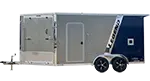
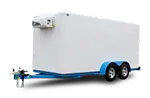
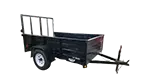

Your trailer sits idle for three months while you wait out winter. By spring, the tires may have temporary flat spots, exposed steel at chipped areas may show new surface rust, and exterior trim, decals, sealants, and tires may have weathered in the sun. That is not simply bad luck. It is the predictable result of moisture, ultraviolet exposure, temperature swings, contamination, and long periods without inspection.
The good news is that you do not necessarily need an expensive climate-controlled bay to protect a work trailer. You do need to make an honest choice about what you are protecting, how long the trailer will sit, and how much preventive maintenance you are willing to perform. Here is how to compare indoor, covered, and outdoor storage without relying on one-size-fits-all rules.
What Actually Damages a Trailer in Storage
Before you decide where to park it, understand what is working against you.
UV radiation gradually degrades exposed rubber, plastics, vinyl, decals, sealants, and some painted or coated surfaces. Tires can weather even when the trailer is not accumulating miles, particularly when one side remains exposed to direct sunlight. Aluminum does not rust like steel, but unfinished aluminum naturally oxidizes, while painted or coated aluminum can fade, chalk, or lose gloss over time. Enclosed trailers from brands like Wells Cargo and Legend use exterior materials intended for outdoor service, but no exterior finish, sealant, decal, or tire is immune to years of sunlight and weather.
Moisture and corrosion are major concerns for open utility, equipment, dump, and flatbed trailers. Steel frames, fasteners, couplers, jacks, safety-chain hardware, ramp pivots, and damaged coating areas are all vulnerable. Diamond C protects its steel trailers with the DM Difference Maker multi-stage powder-coating system, and current H&H steel models use powder-coat or model-specific protective finishes. Those finishes substantially improve corrosion resistance, but impact chips, worn edges, scratches, road salt, and trapped debris can expose steel. Standing water, wet leaves, fertilizer residue, road brine, and damp material left in a dump body can accelerate corrosion.
Tire flat spotting can occur when a trailer remains stationary under load, especially during cold weather when tire rubber is less flexible. Many storage-related flat spots are temporary and diminish after the tires warm during normal driving. Persistent vibration, visible distortion, cracking, bulges, exposed cords, or abnormal tread separation requires professional inspection rather than an assumption that the tire will recover. Tire age, condition, inflation, construction, load, and storage surface matter more than an arbitrary temperature or fixed number of idle days.
Batteries, brakes, hubs, and electrical connections also need attention. A breakaway battery slowly self-discharges, and its actual storage time depends on battery type, age, temperature, state of charge, and any connected loads. Lippert storage guidance calls for an emergency breakaway battery to be protected from weather and charged at least every 90 days when removed for storage. Wheel-bearing grease does not simply fall away from the bearings because a trailer is parked, but moisture intrusion, aged lubricant, damaged seals, improper adjustment, and neglected maintenance can still cause bearing failure. Electric-brake components and plugs can also corrode in damp conditions.
The Case for Indoor Storage
An enclosed or roofed storage space removes direct sunlight, precipitation, falling branches, and much of the wind-driven debris that ages a trailer. Climate control is helpful for specialized cargo and sensitive equipment, but it is not normally necessary for a properly prepared utility, dump, equipment, or cargo trailer. A dry, ventilated, unheated building is often the best balance. Indoor storage does not eliminate maintenance: a damp building, sweating metal roof, leaking structure, or bare earth floor can still expose the trailer to significant moisture.
Covered storage options in Owen County and surrounding areas vary widely in price and availability:
- Enclosed rental unit with vehicle access: Monthly rates depend on the facility, door height, door width, floor area, access hours, and whether vehicle or trailer storage is permitted. Measure the trailer’s complete tip-to-tail length, maximum width, and highest point rather than using only the advertised deck or box length. A 14-foot cargo box can produce a substantially longer overall trailer once the tongue, coupler, jack, rear hardware, and accessories are included.
- Agricultural pole barn or farm building: This can be an economical option if the owner permits trailer storage. A concrete or well-drained stone floor is preferable. If the building has a dirt floor, use a suitable ground-moisture barrier and load-rated pads under the tires and jack, maintain ventilation, and check for roof condensation and standing water.
- Heated commercial bay: Usually unnecessary for an empty work trailer, but potentially worthwhile when the trailer carries temperature-sensitive inventory, tools, electronics, mobile-business equipment, or valuable vehicles. Confirm that fuel, batteries, chemicals, and business equipment comply with the facility’s lease and insurance requirements.
For a current Diamond C LPX low-profile equipment trailer, indoor or roofed storage can be a sensible way to protect a substantial investment. The current bumper-pull LPX lineup spans approximately 15,500 to 24,000 pounds GVWR depending on its selected package, with two 7,000-pound Lippert axles standard on the 15,500-pound configuration and heavier axle packages available. Its actual value, dimensions, curb weight, and options vary, so storage should be selected from the VIN placard, purchase configuration, and physical measurements rather than a generic model estimate. For a lower-cost open utility trailer, disciplined outdoor storage may provide the better financial balance.
Making Outdoor Storage Work
Outdoor storage is not a failure. Many commercial and personal trailers spend their entire working lives outdoors. The difference between trailers that remain serviceable and trailers that deteriorate quickly usually comes down to cleaning, drainage, inspection, tire protection, and the correct use of covers.
Pre-Storage Prep
Before you park it for the season, do the following:
- Wash the trailer thoroughly, including accessible underframe areas. Remove road salt, mud, fertilizer, concrete residue, leaves, grass clippings, and other corrosive or moisture-holding material. Allow the trailer to dry completely before covering or closing it.
- Inspect the protective finish and repair chips according to the trailer manufacturer’s instructions. Apply a compatible corrosion inhibitor only where appropriate on exposed steel and moving hardware. Keep all oils, sprays, and rust inhibitors away from brake friction surfaces, tires, electrical contacts not intended for the product, wood decking, and walking surfaces where they could create a hazard.
- Check cold tire pressure and adjust it to the inflation requirement shown on the trailer certification/VIN label or specified by the trailer and tire manufacturer for the installed tire and load. Do not use a generic pressure based only on trailer size, and never exceed the tire or wheel’s applicable cold-pressure limit.
- Fully charge and test the breakaway battery. For extended storage, follow the battery and breakaway-system manufacturer’s instructions, which may call for removing the battery, storing it in a dry protected location, and maintaining its charge. Reinstall and test the complete breakaway system before towing. Never tow with the breakaway battery disconnected or inoperative.
- Inspect the hubs for seal leakage, looseness, noise, or contamination and service the wheel bearings at the interval specified for the installed axle and hub system. Do not add grease merely because the trailer is entering storage; overfilling can damage a seal and contaminate electric brakes. Lubricate the coupler, jack, hinges, and ramp pivots only as their manufacturers direct.
Positioning Matters
Park on a firm, level, well-drained surface. Concrete or asphalt provides a stable base, while compacted stone generally drains better than grass or bare soil. Avoid low spots and areas beneath dead limbs, roof runoff, sprinklers, or drifting snow. Place purpose-made, load-rated tire pads or sufficiently strong boards beneath the tires when needed to keep them out of mud and standing water. Thin or deteriorated plywood can crack, retain water, and create an unstable support, so it should not be treated as a cure for flat spotting.
Chock the wheels on both sides as appropriate, lower the jack onto a stable load-rated pad, and support the trailer according to its owner’s manual. Do not use stabilizer jacks as substitutes for axle support, and do not lift a trailer by an axle tube unless its manufacturer specifically authorizes that lifting point. If the manufacturer permits it, periodically moving the trailer enough to change the tire contact patch can reduce long-term localized loading. Never crawl beneath an elevated trailer supported only by a jack.
Wind exposure should be considered, but there is no universally correct direction for every trailer and site. Position an open trailer so water drains from the deck or body and wind does not load an upright ramp gate broadside. For an enclosed trailer, keep doors fully latched, inspect weather seals, and choose an orientation that limits wind-driven rain around known openings. Account for prevailing wind, nearby buildings, snow drifting, trees, and the trailer’s shape rather than relying only on whether its tongue or rear faces the wind.
Trailer Covers: What to Buy
A properly fitted cover can reduce UV exposure and keep debris off a trailer, but a poorly selected or loosely installed cover can trap moisture, abrade paint, damage trim, and act like a sail in strong wind. A freestanding roof or ventilated shelter is generally better than fabric resting directly on the trailer, but where that is not practical, choose a cover made for the trailer’s shape and storage conditions.
| Cover Type | Best For | Typical 2026 Retail Range | UV Protection |
|---|---|---|---|
| Basic polyester or polyethylene cover | Short-term use on simple open trailers when securely supported and ventilated | About $50 to $150 | Limited to moderate |
| Breathable, vented trailer cover | Properly matched enclosed cargo trailers | About $120 to $300 | Good, depending on fabric and fit |
| Custom-fit multi-layer cover | Higher-value enclosed, specialty, or vehicle-transport trailers | About $300 to $800+ | Very good when correctly installed |
| Reinforced waterproof tarp | Temporary budget protection with a supported slope and airflow | About $30 to $120 | Variable |
The key requirements on enclosed trailers are fit, ventilation, and compatibility. Even a product marketed as breathable can allow condensation when humid air meets cold metal. Keep vents unobstructed, avoid covering a wet trailer, pad sharp corners, and inspect the cover regularly for movement and abrasion. Follow the trailer manufacturer’s instructions because some coverings, cleaners, and trapped contaminants can stain aluminum, dull paint, or damage decals.
Tarps can provide temporary protection for a flatbed or open car hauler, but they are rarely a set-it-and-forget-it solution. Unsupported tarps sag and hold water, while loose edges whip against the finish and tear around grommets. Create a smooth, adequately supported crown so water and snow can shed, maintain airflow, pad contact points, and secure the tarp to suitable attachment points without loading lights, wiring, fenders, brake lines, or trim. Do not attach straps where they could distort the frame or create a trip hazard. Check the installation after wind, freezing rain, or heavy snow and remove accumulated snow before its weight overloads the support system.
A Quick Cost Comparison
Here is a practical way to compare the three paths over a five-month storage season from November through March. These are planning ranges rather than promises; trailer size, tire specification, facility rates, cover quality, and the amount of existing damage can change the figures considerably:
Option A: Unprotected outdoor storage. $0 in shelter cost, but not necessarily $0 in ownership cost. Possible expenses include premature tire replacement, finish repair, sealant work, corrosion treatment, battery replacement, and reduced resale appeal. A tandem-axle trailer normally has four road tires, so replacement can range from several hundred dollars to well over $1,000 depending on size, load range, wheel condition, mounting, balancing, and disposal fees. Outdoor storage alone does not prove that any particular repair will be required, but neglect raises the risk.
Option B: Prepared outdoor storage with a suitable cover or roof shelter. Common initial costs include a properly fitted cover or shelter, wheel chocks, tire pads, corrosion-control materials, touch-up coating, and battery maintenance equipment. A fabric-cover setup may cost roughly $150 to $500 or more, while a durable freestanding shelter can cost substantially more. Covers have finite lives and require inspection, cleaning, and occasional replacement.
Option C: Indoor rental storage. Monthly pricing varies by trailer dimensions, access, building type, security, electrical service, and local supply. Five months may cost several hundred to several thousand dollars. The trailer remains protected from direct sunlight and precipitation, but the owner must still control humidity, maintain the battery, inspect tires and seals, and verify insurance coverage.
For many owners, prepared outdoor storage under a ventilated roof offers the best balance. Indoor storage becomes more attractive when the trailer contains valuable business equipment, has an expensive finished exterior, is used to transport collectible vehicles, or would create costly downtime if water intrusion or corrosion took it out of service. Trailer value alone should not be the only cutoff; replacement lead time, cargo value, business interruption, insurance conditions, and local storage rates also matter.
Special Cases Worth Calling Out
Car haulers and equipment trailers can be difficult to cover because of their length, stake pockets, winches, fenders, ramps, and open decks. A Diamond C LPX is currently available in bumper-pull lengths from 16 to 30 feet, depending on configuration, so a generic cover selected only from nominal deck length may not fit. Measure overall length, width, height, attachments, and sharp contact points. Clean wood or steel decking, clear every drain path, touch up damaged coating, protect the tires from prolonged sunlight, and lubricate approved moving points. A weather-resistant coupler cover can help keep contamination off the ball socket, but it does not replace cleaning, inspection, or manufacturer-specified lubrication.
Darkhorse Cargo and enclosed cargo trailers need particular attention at roof edges, seams, vents, marker lights, front corners, door frames, and any roof-mounted accessory. Inspect sealant before storage and address cracking, lifting, gaps, or water staining with a sealant specifically approved for that trailer’s roof material and existing sealant system. Self-leveling products are intended only for appropriate horizontal surfaces; vertical seams may require a non-sag product. Mixing incompatible sealants can prevent adhesion and make future repairs harder, so confirm the correct product with the trailer manufacturer or an experienced service department. Repair cost depends on how far water has traveled into roof, wall, floor, insulation, and cargo materials, making early inspection far less expensive than waiting for visible interior damage.
Light utility trailers are commonly stored outdoors and can remain serviceable for years when maintained correctly. Do not assume that every small utility trailer is rated at 3,500 pounds: many current single-axle models are certified at 2,990 pounds or another manufacturer-selected GVWR even when fitted with a 3,500-pound axle. Read the certification/VIN label for the trailer’s actual GVWR and GAWR. In Indiana, a trailer with a gross weight of at least 3,000 pounds must be equipped with brakes adequate to control, stop, and hold it under IC 9-19-3-3. Storage does not change that requirement, and the brake system should be inspected and tested before the trailer returns to service.
The Right Answer Depends on What You’re Protecting
There is no universal right choice. A modest open utility trailer can handle outdoor storage with cleaning, drainage, tire protection, coating repair, and regular inspection. A premium enclosed trailer carrying business inventory or a valuable vehicle deserves stronger protection, often including a permanent roof or indoor space. The mistake is not choosing outdoor storage. The mistake is parking a dirty or wet trailer on soft ground, ignoring its battery and tires, and assuming a tarp will solve every problem until spring.
If you’re not sure what level of protection makes sense for your specific trailer, reach out to the Spencer Trailers team. We can walk you through what your trailer’s construction, axle and hub system, finish, battery, roof, and installed options actually require. Always use the VIN placard, component manuals, and manufacturer guidance for your exact unit because specifications and service procedures vary. And if it’s time to trade up to something that fits your workload better before next season, browse our current inventory to see what’s available.
What’s your setup: a dry barn stall, a ventilated shelter, or a well-drained gravel lot? Any of them can work when the site and preparation suit the trailer. Consistent maintenance is what separates a trailer that still presents well after years of service from one that develops avoidable tire, coating, electrical, and water-intrusion problems.


