











You back the truck up, lower the lunette ring into the pintle hook, close and secure the latch, connect the safety chains and electrical cable, and verify the trailer brakes and breakaway system. The process takes only a few minutes. But if you have not inspected the connection recently, a worn hook, damaged drawbar, loose mount, or incompletely secured latch can turn an ordinary trip into a dangerous trailer-separation event.
Pintle hitches are common on military, construction, agricultural, and heavy-equipment trailers because they tolerate substantial articulation and the shock loads created by rough terrain. Their capacities vary widely. Some receiver-mounted hooks are rated near 10,000 or 20,000 lb., while large commercial assemblies can carry much higher maximum gross trailer weight ratings. Always use the ratings marked on the pintle hook, lunette ring or drawbar, mounting plate, receiver, fasteners, trailer, and tow vehicle. The safe towing limit is determined by the lowest-rated component in the complete system, not by the hook alone.
This checklist covers five areas: the locking mechanism, visible wear and damage, lubrication, the trailer-side lunette ring or drawbar, and connection fit. Perform a connection inspection before every trip, regardless of load weight. Conduct a more detailed inspection at the interval specified by the component manufacturer and whenever the assembly has experienced overloading, jackknifing, binding, an impact, or articulation beyond its intended range.
1. The Locking Mechanism
The pintle hook latch retains the lunette ring within the hook. With the trailer disconnected and the assembly clean enough to inspect safely, operate the latch through its full range. It should move freely, close completely, and engage exactly as described in the hook manufacturer’s operating instructions. Do not judge condition by sound alone; different designs use different latch mechanisms and may not produce the same kind of click.
Next, inspect every required locking component. Depending on the model, the assembly may use a lock arm, safety pin, cotter pin, spring clip, air-operated plunger, or another manufacturer-specified retention device. Confirm that each component is present, correctly installed, undamaged, and fully engaged. Never replace a specified pin with wire, a nail, an undersized bolt, or another improvised part.
- Open and close the latch several times and confirm that its operation remains smooth and consistent.
- Verify that the primary latch and every secondary locking device are completely engaged.
- Inspect pivot pins, bushings, springs, retainers, and fasteners for looseness, corrosion, deformation, or visible wear.
- Measure latch clearance or play only by the procedure and limit published for the exact pintle-hook model.
Do not apply a universal side-play limit or assume that a spring alone determines whether an assembly is serviceable. For example, some SAF-HOLLAND models specify a measured hook-to-latch gap, while other products have different inspection points. Replace worn parts only when the manufacturer’s instructions permit component replacement; if the hook body is cracked, deformed, or worn beyond its limit, replace the complete assembly.
2. Wear Inspection
Wear develops gradually because the lunette ring moves against the hook during acceleration, braking, cornering, and travel over uneven ground. Dirt trapped between the components can accelerate abrasive wear. Inspect a cleaned assembly under good lighting so grease, road film, and rust do not conceal damage.
There is no single wear limit that applies to every pintle hook. Some Buyers Products instructions require replacement when 1/8 inch of wear is visible. Several SAF-HOLLAND rigid-hook manuals specify replacement when wear exceeds 0.188 inch from the original surface profile. The correct limit, measurement location, and approved gauge depend on the exact product. Identify the manufacturer and part number, obtain the corresponding manual, and use its wear gauge or measurement procedure. Do not estimate remaining capacity from throat width alone unless the manufacturer specifically instructs you to take that measurement.
Also inspect:
- Hook body. Look for cracks, deformation, gouges, severe corrosion, damaged contact surfaces, and evidence of heating or unauthorized repair. Any crack or deformation is cause to remove the assembly from service.
- Mounting hardware and support structure. Examine the bolts, nuts, washers, mounting plate, receiver, hitch pin, retaining clip, and truck-frame attachment. Check fastener torque using the hook or mount manufacturer’s specification and tightening sequence. A tight hook installed on an underrated or damaged mount is not a safe connection.
- Welded structures. If the mounting plate, receiver, or trailer drawbar structure includes welds, inspect them for cracking, separation, deformation, and rust emerging from a narrow line at the weld toe. Do not weld, heat, straighten, build up, or resurface a pintle hook or lunette ring unless the original manufacturer expressly authorizes a repair procedure.
- Identification and ratings. Make sure the product label, casting marks, or rating plate remains legible. Confirm that the hook, mount, receiver, drawbar, safety chains, and other towing components are suitable for the trailer’s GVWR and intended service.
A pintle-equipped equipment trailer or heavy dump trailer subjects the connection to repeated dynamic loading, particularly during braking, loading, and travel over rough surfaces. Inspection frequency should reflect actual duty cycle and operating conditions. Components exposed to severe service may need inspection more often than the normal schedule in the owner’s manual.
3. Lubrication
Lubrication requirements are model-specific. Many conventional pintle hooks require lubrication at the latch pivots and coupling contact area, but some products are expressly designed as low-maintenance or no-lube assemblies and use replaceable wear components. Applying grease where it is not specified can attract abrasive material or interfere with the intended design. Follow the manual for the exact hook and drawbar combination.
When the manufacturer calls for grease on the hook-to-ring contact area, first remove contaminated lubricant and inspect the underlying surfaces. Then apply the recommended product in the amount specified. A uniform coating is generally preferable to a heavy buildup that collects grit, but the manufacturer’s instructions take priority.
Cleaning before lubrication is part of the inspection. Fresh grease placed over dirt, rust, or metal particles can hide damage and create an abrasive paste. Wipe the contact surfaces clean enough to check for cracks, deformation, unusual polishing, and wear before servicing them.
Use the specified lubricant on latch pivots and other moving points. Some manuals call for light oil on latch pivots rather than penetrating fluid or chassis grease. Penetrating products intended to free corroded parts may not provide lasting lubrication and should not automatically be treated as the required service lubricant.
Service grease fittings only when they are part of the assembly and the manufacturer’s instructions call for it. Clean the fitting before attaching the grease gun, use the specified grease, and stop at the prescribed amount. Do not rely on a universal 50-hour interval: Buyers Products instructions for some conventional hooks call for inspection, cleaning, and lubrication at 60-day intervals, while SAF-HOLLAND schedules and procedures vary by model and severity of service. A pre-trip functional check is still necessary between scheduled maintenance services.
4. Lunette Ring Inspection
The lunette ring, also called a drawbar eye in many commercial applications, is the trailer-side half of the connection. Ring dimensions and capacities are not universal. Three-inch-inside-diameter eyes are common with many heavy pintle hooks, but compatible dimensions vary by product. The hook manufacturer’s approved drawbar-eye range, section diameter, maximum vertical load, and gross trailer weight rating must match the trailer-side component.
Inspect the ring and its attachment for:
- Cracks and deformation. Clean and inspect the full circumference of the eye, including its contact surfaces and the transition into the shank or mounting structure. Any crack, bend, elongation, or heat damage requires removal from service and evaluation under the manufacturer’s replacement criteria.
- Wear on the contact surface. Look for flat spots, grooves, necking, sharp edges, and loss of material where the ring bears against the hook. Use the drawbar manufacturer’s wear gauge or published measurement limit. A generic 1/8-inch rule should not replace the instructions for the specific drawbar.
- Shank, mounting plate, and fasteners. Determine whether the drawbar is bolt-on, adjustable, swiveling, or incorporated into another mounting system. Inspect all accessible hardware, retainers, adjustment holes, and supporting structure. Tighten fasteners only to the specified torque; do not simply tighten them until they feel secure.
- Attachment structure. Inspect the trailer tongue, drawbar bracket, adjustment channel, and permitted structural welds for cracks, elongation, looseness, corrosion, or distortion. The forged ring itself should not be welded or resurfaced unless the manufacturer provides an approved procedure.
- Compatibility. Confirm that the ring section fits within the hook and latch through the required range of articulation without binding. A ring can be highly rated yet still be incompatible with a particular hook geometry.
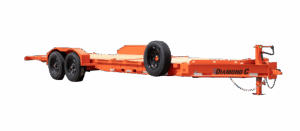
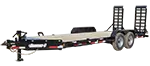
On a pintle-equipped equipment trailer or heavy deck-over, loading a skid steer, excavator, or other concentrated load can rock the trailer and impose additional forces on the tongue and connection. Stabilize and load the trailer according to its manufacturer’s instructions, keep the tow vehicle and trailer aligned where practical, and inspect the connection after any loading event that causes binding, impact, or unusual movement.
5. Connection Slack
A pintle-and-lunette connection requires clearance so the trailer can pitch and turn without binding. Some operating noise and movement may therefore be normal. Excessive clearance, however, can increase impact loading, while too little clearance or an incompatible ring can restrict articulation and damage the hook, drawbar, mount, or trailer structure.
There is no universal rule allowing 3/8 inch of vertical movement for every pintle connection. Acceptable clearance depends on the hook design, latch condition, drawbar dimensions, wear limits, and whether the assembly includes an adjustment or cushioning feature. With the tow vehicle and empty trailer secured against movement, inspect the fit according to the manufacturer’s procedure. Never place fingers between the hook and ring while another person moves the vehicle or trailer.
Side-to-side movement at the trailer tongue should not automatically be classified as harmless articulation. Normal turning occurs through rotation of the ring within the hook, but measurable looseness may also come from a worn ring, worn hook, loose receiver adapter, elongated hitch-pin hole, loose mounting plate, or damaged drawbar bracket. Locate the source of the movement before deciding that it is acceptable.
| Check Point | Acceptable Condition | Act If |
|---|---|---|
| Latch closure | Moves freely and fully locks as designed | Latch binds, fails to engage, or will not remain secured |
| Hook wear | Within the exact manufacturer’s measured limit | Wear reaches the published limit or cannot be reliably evaluated |
| Hook condition | No cracks, deformation, or unauthorized repair | Any crack, bend, heat damage, or structural defect is found |
| Lubrication | Serviced according to the model-specific instructions | Required lubrication is absent or lubricant is contaminated |
| Lunette ring | Compatible, correctly mounted, and within its wear limit | Cracking, deformation, excessive wear, looseness, or binding is present |
| Connection movement | Within the manufacturer’s clearance and articulation limits | Impacting, binding, or unexplained looseness is detected |
How Often Should You Do This?
Inspect the connection before every trip, not only when the load exceeds 10,000 lb. Verify that the hook is closed and locked, the lunette is fully seated, the mount and hitch pin are secure, the electrical connector is attached, and the crossed safety chains or cables have adequate rating and turning clearance. Test the trailer brakes and breakaway equipment as directed by their manufacturers. In Indiana, a trailer or semitrailer with a gross weight of at least 3,000 lb. must have brakes adequate to control, stop, and hold it; those brakes must be controllable from the tow-vehicle cab and apply automatically in an accidental breakaway.
Perform the detailed cleaning, measurement, lubrication, and fastener checks at the interval stated in the hook and drawbar manuals. Severe service may justify shorter intervals. Stop and inspect immediately after overloading, binding while backing, jackknifing, bottoming the articulation, a collision, or any event that may have exceeded the connection’s normal range of motion. Unusual banging deserves investigation, but it is not always caused by the ring alone; loose receiver components, suspension problems, cargo movement, or worn mounting hardware can produce similar noise.
If you are buying a used trailer with a lunette ring, inspect the complete towing system before the first trip. Confirm the component ratings and compatibility, look for unauthorized welding or heating, and obtain replacement manuals when identification is available. Surface appearance alone cannot establish that a previously abused component remains serviceable. When condition is uncertain, have the assembly evaluated by a qualified trailer or heavy-truck technician.
When to Replace Instead of Maintain
Lubrication and routine adjustment cannot restore metal lost through wear or correct a cracked or deformed casting or forging. Replace the complete hook when required by its manual because of wear, cracking, deformation, or damage. Replace a lunette ring or drawbar when it reaches its published wear limit, becomes bent or elongated, develops a crack, or has a damaged attachment that cannot be repaired under an approved procedure.
A defective latch does not always mean that a spring alone should be replaced. Some manufacturers offer approved latch kits for particular models, while others require replacement of the complete assembly under specified conditions. Use genuine or manufacturer-approved parts, follow the service instructions, and never weld a worn pintle hook to rebuild its contact surface. After replacement, confirm mounting-plate capacity, fastener grade, torque, receiver rating, vertical-load limit, and compatibility with the lunette ring.
Current prices vary substantially with capacity, mounting style, receiver size, brand, and whether the product is a hook alone, a combination ball-and-pintle unit, or a complete commercial mounting assembly. Instead of choosing by price or advertised hook capacity alone, match the replacement to the application and verify every published rating. The cost of a properly selected assembly is minor compared with the damage and liability that can follow a trailer separation.
If you are not sure whether your hook or ring has reached its service limit, bring the model information and the trailer in for inspection. At Spencer Trailers in Spencer, Indiana, we work with heavy equipment and cargo trailers regularly and can examine the connection, mounting structure, brakes, breakaway system, and other towing components. If the trailer has broader structural wear or no longer fits the work you need it to perform, review our current inventory and compare properly rated replacement options.
What’s your inspection schedule right now? If the honest answer is “whenever it looks bad,” use this checklist to establish a safer baseline: verify the connection before every trip, follow the manufacturer’s scheduled service interval, and stop using any component that is cracked, deformed, incompatible, loose, or worn beyond its published limit.


