







You’re buying a trailer expecting to use it for a long time. A decade, maybe two. Maybe longer if you take care of it. But “how long does a trailer last” does not have one honest, universal answer. Calendar age matters less than construction quality, annual mileage, load cycles, exposure to road salt and fertilizer, storage conditions, maintenance, and whether the trailer has repeatedly been overloaded or operated with the wrong tongue weight.
So here it is straight: a lightly built painted-steel utility trailer that lives outdoors, works in road salt, and never gets washed or touched up can develop serious deck and corrosion problems within its first decade. A properly engineered galvanized-steel, premium coated-steel, or all-aluminum trailer that stays within its ratings can remain useful for several decades. As a practical planning range, many quality working trailers deliver roughly 15 to 25 years of dependable service, while carefully maintained examples can go well beyond that. The gap between an early retirement and a long working life usually comes down to three things: trailer type, frame material and finish, and how the owner loads, stores, inspects, and services it.
Lifespan by Trailer Type
Not all trailers age the same way, even when they are built from similar materials. A trailer that runs 30,000 miles a year with near-capacity loads accumulates fatigue and component wear much faster than one used for a few weekend projects. Trailer type also determines where water, debris, impact loads, and repeated stress are most likely to cause trouble.
Utility and Landscape Trailers
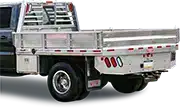
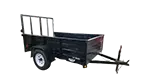
Open utility trailers take some of the hardest environmental abuse. They are frequently stored outdoors and loaded with wet mulch, grass clippings, gravel, soil, compact equipment, and materials containing fertilizer or deicing chemicals. Moist debris can sit against the floor, cross-members, side rails, and fasteners long after the trip is over. The rear gate, deck boards, spring hangers, tongue, fenders, and front corners of the frame commonly show wear first. A well-built galvanized or all-aluminum utility trailer that is rinsed after corrosive loads, kept within its GVWR, and maintained can remain serviceable for 20 years or longer. A painted-steel trailer can also reach that range when the steel was properly prepared and the owner repairs coating damage promptly. Without that attention, visible corrosion can begin much earlier, particularly in Indiana and other states where winter road treatments are common.
Enclosed Cargo Trailers
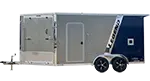
Enclosed trailers protect the cargo, but the enclosure does not automatically protect every structural component. Many enclosed trailers use a steel chassis and steel wall structure beneath aluminum or aluminum-composite exterior panels. Current Wells Cargo FastTrac and Road Force models, for example, use steel framing, and United commercial cargo trailers use steel uni-body construction. All-aluminum enclosed trailers are a separate construction category; Legend’s Thunder V-Nose line uses aluminum structural members and a one-piece aluminum roof. Buyers should therefore verify the actual frame material rather than assuming that an aluminum-looking exterior means an aluminum frame. The usual lifespan limiters are roof and corner leaks, failed door seals, damaged lower trim, wet plywood or engineered-wood flooring, corrosion around fasteners, and neglected underbody damage. A dry, well-sealed enclosed trailer with a sound frame can provide decades of service, but even a premium frame will not save a floor that has remained wet for years.
Car Haulers and Equipment Trailers
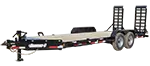
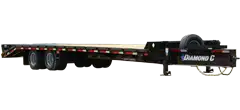
Car haulers and equipment trailers carry concentrated wheel and track loads, so loading technique matters as much as calendar age. Repeated overloads can affect the tongue or gooseneck, main rails, cross-members, spring hangers, ramp supports, fender structure, and deck long before normal corrosion would have ended the trailer’s life. Diamond C’s current LPX is a Low Profile Extreme Duty Equipment Trailer offered in 16- to 30-foot lengths with GVWR packages from 15,500 to 24,000 pounds. It uses two 7,000-pound Lippert axles as the standard running-gear configuration, with higher-capacity axle packages available, and higher-GVWR packages use Diamond C’s Engineered Beam Technology on qualifying 22-foot-and-longer configurations. A properly selected and maintained heavy equipment trailer can work for 20 years or longer, but the owner should expect tires, brakes, bearings, suspension parts, wiring, ramps, and wood decking to be serviced or replaced during that life. Deck-board life can range from only a few years under severe tracked-equipment use to well over a decade when the deck stays dry, clean, and undamaged.
Dump Trailers
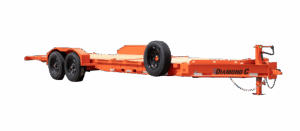
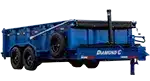
Dump trailers combine a road-going chassis with a hydraulic lifting system and an abrasion-prone body. Dirt, stone, broken concrete, demolition debris, and wet material can wear the floor, dent sidewalls, damage the rear gate, and collect around the hoist, hinges, battery box, and wiring. Hydraulic cylinders, hoses, fittings, pumps, solenoids, batteries, chargers, pivot pins, and gate hardware have their own maintenance lives separate from the main frame. Diamond C’s current LPT Heavy Duty Telescopic Dump, for example, is offered at 15,500 to 24,000 pounds GVWR in 12- to 16-foot lengths, uses a three-stage telescopic cylinder, and is built with Lippert axle packages appropriate to the selected rating. A quality dump trailer can remain productive for 15 to 20 years or longer when the body is not overloaded, the load is reasonably distributed, the hydraulic system is kept clean and charged, and the pivots and running gear receive regular service. Neglected batteries, leaking hoses, contaminated fluid, bent gates, overloaded hoists, and material packed around moving parts can create expensive problems much sooner.
The Material Breakdown: Galvanized vs. Painted Steel vs. Aluminum
This is where much of the lifespan difference begins, but material alone does not decide the outcome. Frame design, section thickness, weld quality, corrosion protection, drainage, fastener selection, axle alignment, loading history, and repair quality can matter as much as whether the structure is steel or aluminum. The ranges below are practical planning estimates for a complete working trailer, not guarantees for the frame material by itself.
| Material | Practical Working Lifespan | Best For | Main Risk |
|---|---|---|---|
| Hot-dip galvanized steel | 20–35+ years | Open trailers, wet service, outdoor storage | Coating damage, trapped chemicals, and corrosion at unprotected repairs |
| Properly prepared painted or powder-coated steel | 15–25+ years | General, commercial, equipment, and dump use | Chips, seam corrosion, poor surface preparation, and neglected touch-ups |
| All-aluminum frame | 20–30+ years | Enclosed cargo, car hauling, and weight-sensitive applications | Fatigue damage, improper welding, pitting, and galvanic corrosion |
Galvanized Steel
Hot-dip galvanizing immerses fabricated steel in molten zinc, producing a bonded zinc coating that protects the steel both as a barrier and through sacrificial protection. On qualifying structural steel covered by ASTM A123, minimum average coating thickness depends on the type and thickness of the steel; larger structural members commonly fall near the 3.9- to 5.0-mil range. Atmospheric time-to-first-maintenance calculations for stationary galvanized structures can extend for many decades. That number should not be treated as a promise that an entire road trailer will last equally long, because trailer frames encounter stone impacts, flexing, weld repairs, road spray, trapped debris, fastener wear, and mechanical components that stationary structures do not. For a trailer owner, the important takeaway is that true hot-dip galvanizing provides excellent long-term corrosion resistance, particularly for an open trailer stored outside or frequently used in wet conditions.
Galvanized steel still needs inspection. Cut edges, drilled holes, collision damage, aggressive grinding, and later welding can remove or damage the protective coating. Fertilizer, animal waste, road chemicals, and constantly wet debris should be washed away rather than left against the frame. When galvanized steel is assembled against aluminum, stainless steel, or other metals, moisture and salts can create a galvanic cell. Which component corrodes fastest depends on the exact alloys, coatings, electrical contact, exposed-area ratio, and environment, so the correct approach is to use compatible fasteners, sealants, isolating tape, washers, or barriers specified for the assembly. Owners should not assume that every silver-colored trailer component is hot-dip galvanized; zinc-plated hardware, galvannealed sheet, aluminum, and painted steel are different systems.
Painted Steel
Painted and powder-coated steel covers a wide range of quality. A finish applied over mill scale, oil, rust, or poorly cleaned steel can fail early, while a carefully controlled blast, wash, pretreatment, primer, topcoat, and cure process can provide substantially better adhesion and corrosion resistance. Diamond C’s current DM Difference Maker Coating System is a good example of a premium multi-stage process: the steel frame is shot-blasted, cleaned through a five-stage wash using reverse-osmosis water, force-dried, coated with a zinc-rich epoxy primer and high-gloss topcoat, and oven-cured. That is very different from treating every painted-steel trailer as though it has only a thin decorative finish.
Even an advanced coating cannot prevent damage from every stone strike, chain impact, attachment scrape, collision, or corrosive load. When a chip exposes steel, water and salts can begin corrosion at that point and may eventually travel beneath the surrounding finish. Owners should wash contaminants off promptly, inspect seams and lower surfaces, remove loose rust correctly, and use a compatible repair system rather than painting over moisture or scale. A quality coated-steel trailer that receives this attention can work for decades. A trailer that is continuously exposed to salt, fertilizer, wet soil, or standing water without cleaning may show serious corrosion much earlier, regardless of what the finish looked like on the dealer’s lot.
Aluminum
Aluminum does not produce the red iron-oxide rust associated with steel, but it is not immune to corrosion or structural damage. Its natural oxide film protects the surface in many ordinary environments, yet chlorides, highly alkaline cleaners, trapped moisture, incompatible fasteners, and dissimilar-metal contact can cause pitting or galvanic corrosion. White or powdery corrosion around hardware and joints should be investigated rather than dismissed as harmless discoloration. Aluminum should also be cleaned with products approved for the finish; aggressive acids, caustic cleaners, or abrasive methods can damage both bare and coated surfaces.
The main structural concern in a correctly built aluminum trailer is cumulative fatigue from repeated stress, especially when the trailer is overloaded, twisted on uneven terrain, driven with improper tongue weight, or repaired using the wrong alloy or welding procedure. A sound aluminum weld is not automatically a weak point, and cracks should not be expected at a particular age. Failure risk depends on design, material thickness, joint geometry, workmanship, loading, and the number and severity of stress cycles. Legend’s enclosed cargo range demonstrates the intended advantages of all-aluminum construction: lower empty weight, no steel-frame rust, aluminum structural members, and one-piece aluminum roof designs on applicable models. Those advantages can be significant in humid or coastal conditions, but buyers still need to inspect welds, suspension mounts, couplers, fasteners, floors, seals, axles, and brakes.
How Maintenance Changes the Math
The difference between a trailer that becomes unreliable early and one that works for decades is often consistent maintenance. That does not mean every trailer needs the same service schedule. Axle capacity, hub type, brake type, suspension, mileage, immersion in water, dust exposure, commercial use, and manufacturer instructions all matter. The data plate, owner’s manual, axle manual, coupler instructions, tire information, and hydraulic-component manuals should control the service plan.
What actually matters:
- Bearing inspection and lubrication: Follow the axle manufacturer’s schedule rather than assuming that a grease fitting eliminates normal service. Lippert maintenance guidance commonly uses 12 months or 12,000 miles as a bearing inspection and lubrication interval for applicable trailer axles, with more frequent attention appropriate after water exposure, contamination, high mileage, or severe service. Check seals for leakage, verify correct end play, inspect races and rollers, and use the specified grease. Overfilling through a lubrication fitting can push grease past a damaged or displaced seal and contaminate electric brake components.
- Brake adjustment and inspection: Manually adjusted electric drum brakes may require an initial adjustment after the break-in period and periodic adjustment afterward. Lippert guidance calls for manual adjustment after the first 200 miles and then approximately every 3,000 miles on applicable systems. Self-adjusting brakes still need inspection. Test brake operation before travel, inspect magnets, shoes, drums, wiring, connectors, breakaway switch, and breakaway battery, and confirm that the tow vehicle’s brake controller is set for the actual loaded trailer.
- Frame coating: Wash road salt, fertilizer, concrete residue, mud, and other corrosive material from painted or powder-coated steel. Inspect the underside, leading edges, seams, fender backs, tongue, spring hangers, ramp supports, and areas struck by chains or equipment. Repair chips before rust spreads, following the trailer or coating manufacturer’s preparation and touch-up guidance. Do not hide active rust beneath thick undercoating without first cleaning, drying, and treating the steel.
- Deck and floor inspection: Wood species, board dimensions, engineered panels, coatings, and fastener systems vary by manufacturer and model. Inspect open decks for splits, crushing, loose fasteners, rot at the ends, and damage beneath tracked equipment. Inspect enclosed floors from above and below for staining, swelling, delamination, softness, and leaks around doors, walls, roof penetrations, and front corners. Replace damaged material with the correct thickness and grade, and correct the moisture source before installing the new floor.
- Coupler and safety hardware: Inspect the coupler, latch, gooseneck ball connection, adjustable channel, bolts, safety chains, hooks, jack, breakaway cable, and mounting welds before every trip. Confirm the ball size and rating, clean the contact surfaces, and lubricate only as directed by the coupler manufacturer. Any deformation, cracking, repeated bolt loosening, abnormal movement, or difficulty latching deserves professional inspection before the trailer is towed again.
A Quick Q&A
Q: My trailer is 10 years old and the floor is soft in spots. Is it worth fixing?
A: Often yes, provided the main rails, cross-members, body supports, door structure, and running gear are still sound. First determine why the floor softened. An enclosed trailer may have a roof, trim, door, or corner leak, while an open trailer may have rot around fasteners or boards that stayed packed with wet debris. Replacing only the visibly soft area without correcting the water source usually leads to another repair. The cost depends on trailer size, floor material, fastener condition, access, labor, and whether structural supports also need work, so an inspection is more useful than a universal price estimate. A correctly installed replacement floor can extend the trailer’s working life substantially, but it should never be used to conceal rusted or cracked framing.Q: Should I store my trailer inside in winter?
A: Dry indoor storage is helpful, especially for painted steel, wood floors, hydraulic batteries, tires, seals, and enclosed-trailer roofs. It reduces ultraviolet exposure, standing snow, freeze-thaw cycles, and repeated wetting. It is not a substitute for washing off road salt or servicing the running gear. If indoor space is unavailable, park on a firm, well-drained surface, prevent vegetation from holding moisture against the underside, keep tires out of standing water, and use a ventilated cover arrangement that does not trap condensation. A tightly wrapped tarp resting directly on the trailer can hold moisture and abrade the finish in wind.Q: Does brand matter for longevity?
A: Yes, but the name alone is not enough. Longevity comes from engineering, steel or aluminum thickness, load-path design, weld quality, surface preparation, axle and brake selection, drainage, wiring protection, parts support, and quality control. Established builders such as Diamond C, H&H, Wells Cargo, United, and Legend publish model information that allows buyers to compare actual construction instead of relying on appearance. Diamond C, built in Mt. Pleasant, Texas, has manufactured trailers since 1985 and currently uses Lippert axles as standard across its trailer range. The exact model and option package still matter: two trailers from the same manufacturer may have different GVWRs, frames, axles, brakes, decks, ramps, and intended applications.
What to Look for When Buying Used
If you’re buying a trailer that’s already 5 to 10 years old, begin with its identity and ratings. Find the VIN and certification label, confirm the manufacturer and model, and read the GVWR and GAWR rather than estimating capacity from the number of axles. Compare the axle tags, tire sizes, tire load ranges, coupler rating, wheel ratings, and brake equipment with the trailer’s label and available manufacturer information. A replacement axle or wheel with a lower rating can reduce the safe capacity even when the frame looks heavy. Be cautious with missing or altered labels, unexplained frame modifications, home-built extensions, added ramps, and structural repairs that cannot be documented.
Get underneath the trailer with adequate lighting and inspect the tongue or gooseneck, main rails, cross-members, spring hangers, equalizers, suspension mounts, axle seats, rear sill, ramp supports, dump hinges, and hoist mounts where applicable. Light surface oxidation on exposed steel can often be cleaned and protected; deep scaling, swelling seams, perforation, distorted members, and cracks near weld toes are more serious. Look for fresh paint applied only over problem areas, irregular welds, plates added without explanation, elongated bolt holes, uneven tire wear, bent axles, grease on brake backing plates, and wiring hanging below the frame. Spin and rock each wheel while safely supported, but remember that a basic driveway check does not replace hub removal and brake inspection. Test all lights, electric brakes, breakaway equipment, hydraulic functions, gates, ramps, jacks, latches, roof seams, doors, and floor panels.
An older quality-built galvanized, premium coated-steel, or all-aluminum trailer with documented maintenance, sound structure, dry flooring, correctly rated tires, and serviced running gear can be a better purchase than a much newer trailer that was overloaded, parked in wet grass, exposed to salt, or neglected. Condition and configuration matter more than the model year printed on the title.
If you want to look at what’s currently available and get a feel for new versus used pricing, the full inventory at Spencer Trailers is a good starting point. You can also check the recently sold page to see what real trailers at real ages have been moving for locally.
What Counts Most in Trailer Lifespan
Hot-dip galvanized steel provides excellent corrosion protection for open trailers and outdoor service. All-aluminum construction reduces empty weight and eliminates steel-frame rust, but it still requires correct loading, compatible hardware, and inspection for fatigue or corrosion around joints. Properly prepared and coated steel remains an excellent choice for utility, equipment, flatbed, and dump trailers, especially when the coating system includes thorough blasting, washing, pretreatment, primer, and controlled curing. Diamond C’s DM Difference Maker system is an example of how a modern coated-steel finish can be engineered for better adhesion, chip resistance, and corrosion protection rather than relying on appearance alone.
No material survives chronic overloading, incorrect tongue weight, damaged tires, loose wheels, failed bearings, standing water, road salt, or unrepaired structural damage. A premium trailer can become unsafe early when those problems are ignored, while a sensibly specified trailer that receives regular inspections, lubrication, brake service, cleaning, coating repair, and timely component replacement can still be earning its keep decades after purchase.
The question isn’t only “how long does a trailer last.” It is also “was it the right trailer for the load, and how consistently was it cared for?” If you want help matching the right material and build to how you actually use and store equipment, give us a call at (812) 829-0226 or stop by 291 West State Hwy 46 in Spencer. We’ll point you at the build that makes sense for your situation, not just what’s on the lot.


