







You pull up to a job site, open the trailer doors, and everything you need is exactly where you left it. The engine-driven welder starts on the first crank from its properly supported exterior mount. The oxygen and acetylene cylinders are upright in a purpose-built rack, with their valves protected and the cylinders restrained at two points. Your leads, consumables, grinders, and hand tools are organized instead of piled on the floor. When welding has to be performed near the trailer, a source-capture fume extractor handles the smoke while the roof and side vents provide clean makeup air. That is the goal. But many welders buying their first dedicated trailer rig spend too little time calculating payload, weight distribution, ventilation, and structural reinforcement, then spend the next year working around a trailer that was never suited to the job.
Here is what actually matters when you are spec’ing a trailer for a mobile welding operation.
Start With Payload: GVWR Is Not Optional Math
Start by separating GVWR from payload. Gross vehicle weight rating is the maximum allowable loaded weight of the trailer, including the trailer itself, every factory option, permanent fabrication, fuel, cylinders, tools, equipment, and cargo. Payload is what remains after subtracting the trailer’s actual empty weight from its GVWR. A trailer advertised at 7,000 lb GVWR does not provide 7,000 pounds of cargo capacity. Depending on its size and construction, an enclosed 7,000 lb trailer may provide approximately 4,000 to 5,000 pounds of usable payload before you begin the welding build-out.
A current Lincoln Electric Ranger 330MPX has a published net weight of 446 pounds. A current Miller Bobcat 265 weighs approximately 382 pounds, while a diesel Miller Big Blue 400 Pro with a Kubota engine weighs about 950 pounds before fuel and accessories. Add the welder’s fuel, welding leads, cable reels, grinders, an air compressor, a steel workbench, a vise, tool drawers, fire extinguishers, spare parts, consumables, cylinder racks, and one or two sets of compressed-gas cylinders, and a mobile rig can accumulate 1,500 to 2,500 pounds of installed equipment surprisingly quickly. Cylinder dimensions and filled weights vary considerably by gas supplier, so use the specifications for the actual cylinders you will carry rather than relying on informal size names. :contentReference[oaicite:0]{index=0}
That makes a 2,990 lb single-axle enclosed trailer a poor starting point for most full welding rigs. After the shell’s empty weight is deducted, there may be only about 1,600 to 2,000 pounds available for everything else. A small single-axle trailer can still work for an inverter welder, leads, hand tools, and consumables, but it usually does not provide enough reserve for a permanently mounted engine-driven machine, multiple cylinders, a heavy bench, and structural-steel cargo.
A tandem-axle enclosed trailer in the 7,000 to 9,990 lb GVWR range is a more realistic starting point. For example, Wells Cargo’s published Road Force V-Front specifications include a 7-by-16 tandem model with a 7,000 lb GVWR and approximately 4,725 pounds of payload in its standard configuration. A current 7-by-16 Darkhorse tandem trailer at Spencer Trailers has a listed empty weight of 2,825 pounds, leaving 4,175 pounds of rated payload. Heavier 9,990 lb enclosed configurations can provide more than 6,000 pounds of payload, although the exact figure depends on the trailer’s size, frame, interior height, doors, cabinets, flooring, and installed options. :contentReference[oaicite:1]{index=1}
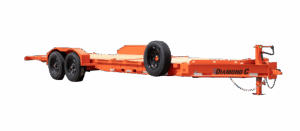
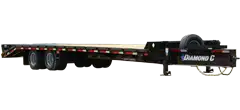
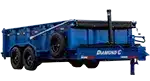
For an open welding platform, the Diamond C LPX is a genuine heavy-duty equipment trailer rather than a light cargo trailer. Current LPX configurations run from approximately 14,900 or 15,500 pounds through 24,000 pounds GVWR, depending on the package. The standard LPX axle configuration is two 7,000 lb Lippert axles, with heavier Lippert axle packages available. Lengths run from 16 to 30 feet. A current LPX207 configuration uses two 7,000 lb axles and can be certified at 14,900 or 15,500 pounds depending on the specific build. That gives a fabricator substantial capacity for a welder, material racks, steel, and job-site equipment, provided the tow vehicle, hitch, tongue weight, and finished layout are also properly matched. :contentReference[oaicite:2]{index=2}
Build a written weight sheet before ordering. Include the trailer’s published or scale-confirmed empty weight, every permanent mount, full fuel, full cylinders, spare tire, batteries, cables, cabinets, and the heaviest material you realistically expect to carry. Then leave operating reserve instead of designing the rig to sit at its maximum rating every day. A 10% to 20% planning reserve is sensible where the job allows it, but it does not replace compliance with the trailer’s GVWR, axle ratings, tire ratings, coupler rating, hitch rating, or the tow vehicle’s limits.
Once the build is complete, weigh the loaded combination on a certified scale. Obtain separate weights for the tow vehicle’s front axle, rear axle, and trailer axles, then verify loaded tongue weight with an appropriate scale or weighing procedure. A rig can be below trailer GVWR and still overload the tow vehicle’s rear axle, receiver, tires, or payload rating.
Generator and Welder Mounts
This is where many do-it-yourself rigs go wrong. A welder or generator sitting on a wood floor with four lag screws is not a safe permanent mount. Engine vibration, road shock, emergency braking, potholes, and cornering all place dynamic loads on the machine and its fasteners. A diesel unit weighing close to 1,000 pounds requires considerably more structure than its static weight alone might suggest.
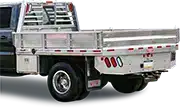
The machine should be installed through its manufacturer-provided mounting locations on a properly designed steel support. On an open trailer, that generally means a fabricated cradle or subframe tied into appropriate chassis members, with the design accounting for the equipment’s weight, center of gravity, service access, vibration, and road loads. On an enclosed trailer, the mount normally passes through the floor and into reinforced crossmembers or a purpose-built subframe. Large backing plates, correctly graded hardware, locking fasteners, and corrosion protection are more dependable than fasteners driven only into plywood.
Do not assume that every enclosed trailer has the same floor structure. Depending on the manufacturer and model, floor crossmembers may be spaced 16 inches, 24 inches, or at another interval, and their material, section size, and gauge can vary. Current Wells Cargo Road Force specifications use 16-inch-on-center floor crossmembers, while other cargo-trailer series and configurations may differ. A current 7-by-16 Darkhorse build at Spencer Trailers also uses 16-inch-on-center floor members, but that does not make the dimension universal. Confirm the actual build sheet and inspect the underside before designing a mount. :contentReference[oaicite:3]{index=3}
Have structural modifications performed or reviewed by a qualified trailer upfitter or fabricator who understands trailer frames. Welding brackets directly to a finished trailer frame without the manufacturer’s approval can create stress concentrations, damage coatings, affect heat-treated or formed components, and create warranty questions. The right solution may be a bolted subframe rather than additional welding.
Equipment placement is just as important as mount strength. A heavy machine installed at the front wall can overload the tongue and tow vehicle’s rear axle. The same machine mounted too far behind the trailer axles can reduce tongue weight and contribute to sway. Plan the entire layout at once, including cylinders, cabinets, cable reels, spare tire, batteries, and the material you will carry. Do not finish the interior first and decide where the heaviest equipment will go afterward.
An engine-driven welder or portable generator should not be operated inside an ordinary enclosed cargo trailer. Opening the ramp door, adding a powered roof fan, or routing an improvised exhaust pipe through the wall does not make that installation safe. OSHA warns that open doors and windows may not prevent carbon monoxide from accumulating in an enclosed space, and the CPSC advises operating portable generators outdoors with exhaust directed away from openings and occupied areas. :contentReference[oaicite:4]{index=4}
The practical choices are to mount the engine-driven machine on an open trailer, place it on a properly reinforced exterior platform designed for that load, or unload it and operate it outdoors at the job site. A professionally engineered exterior-access compartment may be possible on a purpose-built service body, but it must be isolated from occupied space and designed around the equipment manufacturer’s clearance, cooling, exhaust, fuel, and fire-safety requirements. A carbon-monoxide alarm inside the enclosed workspace is a valuable backup, but it is not a substitute for keeping the combustion engine outside.
Gas Bottle Racks: Secured, Not Just Stored
Compressed-gas cylinders need positive restraint and valve protection. Federal hazardous-material transportation rules require packages containing hazardous materials to be secured against shifting under normal transportation conditions and loaded in a way that minimizes damage to valves and fittings. Applicable Class 2 gas provisions also call for upright transport and secure restraint or approved racks to prevent shifting and overturning. :contentReference[oaicite:5]{index=5}
Build the rack around the actual oxygen, acetylene, shielding-gas, nitrogen, or compressed-air cylinders supplied in your area. Cylinder trade names and nominal sizes are not consistent enough to design from memory. Measure the cylinder diameter and height, verify its filled weight, allow clearance for the valve-protection cap, and make sure the rack can accommodate the replacement cylinders your supplier will issue.
A few practical points:
- Carry cylinders upright in a formed cradle or rack that prevents the base from sliding. Fuel-gas cylinders should also be kept valve-end up while in use.
- Use two effective restraint points where the rack design permits: an upper restraint and a second restraint around the body. The restraints should limit both tipping and vertical or lateral movement without damaging the cylinder.
- Close cylinder valves before transport. Remove regulators and install valve-protection caps when the cylinder design provides for them and the cylinder is not secured on an approved special cart or installation.
- Place the rack where cylinders can be changed without dragging them past hot equipment, but do not make the valves the first thing exposed to a rear or side impact. Protect the rack from cargo, shifting steel, and forklift contact.
- Keep cylinders away from sparks, hot slag, flame, hot exhaust, and locations where they could become part of an electrical circuit. Where adequate distance is not practical, use a properly designed fire-resistant shield.
- Do not allow oxygen fittings, valves, regulators, or hoses to contact oil or grease. Store torch hoses so they cannot be crushed by drawers, doors, or cargo.
- A nitrogen, argon, carbon-dioxide, or compressed-air cylinder also needs a rack and positive restraint. Do not rely on a loose chain looped around several unrelated cylinders.
OSHA’s welding requirements specifically call for fuel-gas cylinders to remain valve-end up while in use and require cylinders to be protected from sparks, slag, flame, heat, and electrical contact. The rack therefore has to do more than keep bottles from rolling around during a normal drive. It must also place them sensibly in relation to the welding operation. :contentReference[oaicite:6]{index=6}
On an open trailer, a properly designed steel rack can be integrated into the chassis or a reinforced deck area. On an enclosed trailer, use a through-bolted rack with structural backing rather than attaching it only to the wall liner. Factory reinforcement, exterior-access cylinder compartments, and custom rack provisions vary by manufacturer and model, so discuss the intended cylinder package before the trailer is ordered. A qualified upfitter can usually produce a better res


