







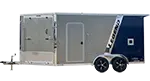
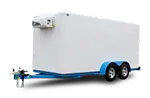


You’re standing in a parking lot looking at two trailers. One has 400 lbs of loaded tongue weight, and the other has 1,200 lbs. Your truck has a receiver hitch. But does it have the right receiver, ball mount, hitch ball, and vehicle rating for the load? That question trips up many buyers, and getting it wrong can mean leaving useful capacity on the table or overloading equipment that was never rated for the job.
Hitch classes are industry categories used to describe a receiver hitch’s general capacity range and receiver-tube size. The important numbers are the hitch’s maximum gross trailer weight (GTW), maximum tongue weight (TW), and, when applicable, separate weight-distributing ratings. Class labels are helpful starting points, but they are not substitutes for the ratings stamped on the hitch, the tow vehicle manufacturer’s limits, or the ratings of the ball mount, hitch ball, coupler, and other towing components.
The Five Classes at a Glance
| Class | Common Receiver Size | Typical GTW Range | Typical Tongue Weight Range | Typical Use |
|---|---|---|---|---|
| I | 1-1/4″ | Up to 2,000 lbs | Up to 200 lbs | Passenger cars, bike racks, and very light trailers |
| II | 1-1/4″ | Up to 3,500 lbs | Up to 350 lbs | Crossovers, minivans, and small utility trailers |
| III | 2″ | About 3,500–8,000 lbs | About 350–800 lbs | SUVs, pickups, cargo trailers, and utility trailers |
| IV | 2″ | About 8,000–12,000 lbs | About 800–1,200 lbs | Properly equipped pickups and heavier conventional trailers |
| V | 2″ or 2-1/2″ | About 12,000–20,000 lbs or more | About 1,200–2,700 lbs or more | Heavy-duty pickups, chassis cabs, and high-capacity conventional towing |
These figures are general industry ranges, not universal ratings for every product. Classes I and II commonly share a 1-1/4-inch receiver tube, while Classes III and IV commonly use a 2-inch tube. Class V products may use either a reinforced 2-inch receiver or a 2-1/2-inch receiver, depending on the hitch manufacturer and application. Some newer heavy-duty pickups also use 3-inch receivers. The rating comes from the complete hitch design and its vehicle-specific installation, not merely the opening’s dimensions. Two receivers can look similar while carrying substantially different ratings.
Class I and Class II: Light Hauling
Class I receivers are commonly fitted to passenger cars and smaller crossovers. A typical Class I hitch is rated for up to 2,000 lbs GTW and 200 lbs TW, although the vehicle may impose a lower limit or prohibit trailer towing altogether. This class is frequently used for bike racks and cargo carriers, as well as very light trailers when the vehicle manufacturer permits towing. Remember that cargo placed on a hitch-mounted carrier counts against the receiver’s tongue-weight limit and the vehicle’s allowable rear-axle and payload capacities.
Class II commonly raises the receiver rating to as much as 3,500 lbs GTW and 350 lbs TW while retaining a 1-1/4-inch opening. It can suit properly equipped crossovers, minivans, and SUVs. A small single-axle utility trailer with a 2,990-lb GVWR may fall within that GTW rating, but only if its actual loaded weight, loaded tongue weight, tow vehicle rating, hitch rating, and every other component remain within their respective limits. A trailer’s 2,990-lb GVWR does not mean it always weighs 2,990 lbs, but it does tell you the maximum permissible loaded weight of that trailer.
The 1-1/4-inch format also offers fewer heavy-towing accessory choices than a 2-inch receiver. Never use an adapter to justify carrying or towing more than the original receiver permits. An adapter does not increase the hitch or vehicle rating, and extensions can reduce usable capacity because they place the load farther behind the receiver.
Class III: Where Most Buyers Land
Class III is one of the most common receiver-hitch categories. It normally uses a 2-inch receiver and covers a broad range of vehicle-specific ratings, often from approximately 3,500 to 8,000 lbs GTW with corresponding tongue-weight limits commonly reaching about 800 lbs. Some products marketed within the broader Class III category may carry different ratings, especially when a weight-distributing system is approved, so the actual hitch label remains controlling.
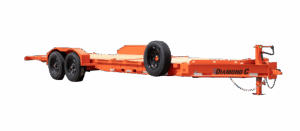
A Diamond C GTU Premium Tandem Axle Utility Trailer has a 7,000-lb GVWR, an 83-inch bed width, available lengths from 14 to 20 feet, a 4-inch channel frame, and two 3,500-lb Lippert brake axles. Whether it matches a particular Class III receiver depends on the trailer’s actual loaded weight and tongue weight, the exact rating on the receiver, and the truck’s configuration-specific towing limits. A Diamond C PSA Single Axle Utility Trailer has a 2,990-lb GVWR and is another example of a trailer that may fit within a properly rated Class II or Class III towing system, subject to all vehicle and component limits.
The key phrase is “properly rated.” A receiver labeled for 8,000 lbs does not give a truck an 8,000-lb tow rating if the truck, as configured, is limited to 5,500 lbs. Conversely, a truck advertised with a high maximum tow rating may not achieve that rating with every cab, bed, axle ratio, engine, drivetrain, wheel, tire, or equipment combination. Check the owner’s manual, towing guide, door-jamb labels, hitch label, and any vehicle-specific towing documentation.
Payload is just as important as advertised towing capacity. Trailer tongue weight presses on the truck and consumes available payload along with the driver, passengers, tools, cargo, aftermarket equipment, and the ball mount or weight-distributing hitch. The truck must remain within its GVWR, front and rear GAWR, tire ratings, receiver ratings, and specified gross combined weight rating.
Class IV: Heavy Duty Without the Big Receiver
Class IV receivers commonly use the same 2-inch opening as Class III products but are built for higher loads. Typical ratings reach approximately 10,000 to 12,000 lbs GTW and 1,000 to 1,200 lbs TW in weight-carrying service. Some receiver labels also provide a separate, higher rating when an approved weight-distributing hitch is installed. Those ratings vary by vehicle and hitch, so never assume a weight-distributing system automatically raises the allowable weight.
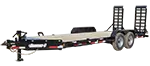
A bumper-pull equipment trailer loaded into the 10,000 to 12,000-lb range may require a Class IV or higher receiver, but the class name alone does not establish compatibility. Confirm the trailer’s measured loaded weight, loaded tongue weight, GVWR, and coupler rating. Then compare those figures with the truck, receiver, ball mount, hitch ball, weight-distribution equipment, tires, and other components. If a conventional trailer has a 14,000-lb GVWR, select towing equipment using its anticipated loaded weight while recognizing that any component intended to accommodate the trailer at full capacity must be rated accordingly.
A 2-inch Class IV receiver accepts properly sized 2-inch shanks, but that does not mean every existing ball mount, pintle mount, hitch ball, locking pin, or accessory has a Class IV rating. Each item has its own limit. The lowest-rated component determines the maximum allowable capacity of the assembled towing system.
Class III and Class IV receivers can look nearly identical beneath a truck. The meaningful differences are in the materials, cross tube, brackets, attachment points, engineering, testing, and stated ratings. Use a reputable, vehicle-specific receiver from an established manufacturer such as CURT, B&W, Reese, or Draw-Tite, install it according to the manufacturer’s instructions, and read its rating label before towing.
Class V: Commercial Territory
Class V describes the upper end of rear-receiver towing, but it is not limited to one receiver size or one fixed rating. Heavy-duty Class V products may use reinforced 2-inch receivers with ratings in the neighborhood of 16,000 to 17,000 lbs GTW, while commercial-duty 2-1/2-inch receivers may reach approximately 18,000 to 20,000 lbs GTW. Tongue-weight ratings can range from roughly 1,200 lbs to more than 2,500 lbs, depending on the hitch, truck, and whether the stated figure applies to weight-carrying or weight-distributing use.
Rear receiver hitches are frame-attached systems used for conventional bumper-pull towing; they are not simply supported by the decorative bumper. Gooseneck and fifth-wheel hitches are separate systems that connect to properly installed mounting hardware in or under the pickup bed. Their ratings and loading characteristics must be evaluated independently from the rear receiver.
If you’re regularly moving heavy bumper-pull equipment trailers, large car haulers, or other high-GVWR conventional trailers, a correctly rated Class V receiver may be appropriate. A Diamond C LPX Low Profile Extreme-Duty Equipment Trailer or HDT Hydraulically Dampened Tilt Equipment Trailer can be configured in GVWR ranges beginning around 14,900 or 15,500 lbs and extending to 24,000 lbs, depending on model and configuration. These premium Diamond C lines use Lippert axles as standard. At those weights, exact trailer configuration, loaded weight, tongue weight, truck capacity, receiver rating, hitch hardware, brakes, tires, and licensing requirements all deserve careful review.
A 2-1/2-inch receiver requires a matching shank or an approved reducer sleeve used within the receiver manufacturer’s instructions. A sleeve allows certain smaller shanks to fit; it does not increase the shank’s capacity. Avoid stacking adapters or combining parts in a way that creates looseness, excessive leverage, or an unrated assembly.
Class V does not automatically give the tow vehicle a 20,000-lb conventional tow rating. Current heavy-duty pickups can offer high maximum conventional, gooseneck, or fifth-wheel ratings, but those figures differ significantly by configuration and hitch type. A truck’s maximum fifth-wheel or gooseneck figure cannot be applied to a bumper-pull trailer. Use the conventional-towing rating for a rear-receiver connection and verify every applicable weight limit.
Weight-Distributing Hitches: A Class III/IV Add-On Worth Knowing
A weight-distributing hitch is used with an approved receiver to distribute some of the trailer’s tongue-load effect across the tow vehicle and trailer axles. Proper adjustment can restore part of the load removed from the tow vehicle’s front axle, reduce excessive rear suspension drop, and improve steering and headlamp aim. It does not reduce the trailer’s actual tongue weight, create additional payload, or override GVWR, GAWR, tire, receiver, or vehicle limits.
There is no universal rule requiring a weight-distributing hitch whenever tongue weight exceeds 10–15% of the tow vehicle’s weight. The 10–15% guideline ordinarily refers to the recommended share of a conventional trailer’s loaded weight carried on the hitch, not a percentage of the tow vehicle’s weight. Whether weight distribution is required or recommended depends on the tow vehicle manufacturer, receiver label, trailer, loaded tongue weight, and operating conditions.
Products such as the Andersen Weight Distribution Hitch and the Equal-i-zer 4-point sway control hitch combine weight-distribution features with forms of sway control. Product capacities and setup procedures vary. Select a system with spring-bar or tension capacity appropriate for the trailer’s measured loaded tongue weight, including cargo carried behind the tow vehicle’s rear axle when the manufacturer instructs it to be included in hitch setup.
A weight-distributing hitch should be installed and adjusted according to both the hitch manufacturer’s instructions and the tow vehicle manufacturer’s procedure. Some trucks specify a target amount of front-axle load restoration rather than requiring the front fender to return completely to its unhitched height. Also confirm that the trailer’s coupler and frame are approved for the selected system. Surge-brake trailers and some trailer-frame designs may require compatible equipment or special procedures.
Matching Class to Trailer: A Practical Checklist
- Find your trailer’s GVWR. GVWR is the maximum permissible loaded weight of the trailer. It appears on the federal certification or VIN label, commonly located near the front of the trailer. Do not confuse GVWR with empty weight, axle capacity, or payload capacity.
- Determine actual loaded trailer weight. A public scale provides better information than estimating from the empty weight and a list of cargo. The trailer’s actual weight must not exceed its GVWR, and axle loads must remain within GAWR and tire limits.
- Measure loaded tongue weight. Conventional bumper-pull trailers commonly need about 10–15% of actual loaded trailer weight on the hitch, unless the trailer or vehicle manufacturer specifies otherwise. A trailer actually weighing 7,000 lbs could therefore place approximately 700–1,050 lbs on the hitch. Use an appropriate tongue-weight scale or a properly performed vehicle-scale calculation rather than assuming the percentage.
- Check your vehicle’s configuration-specific limits. Verify conventional towing capacity, GCWR, GVWR, front and rear GAWR, payload, tire ratings, and any manufacturer requirements for weight distribution. The advertised maximum for a model line may not apply to your specific truck.
- Read both receiver ratings. If the label lists separate weight-carrying and weight-distributing limits, use the figures that correspond to the way the trailer is connected. Never apply the weight-distributing figure without the required equipment.
- Confirm receiver and shank compatibility. A 2-inch shank will not fit a 1-1/4-inch receiver, and a 2-1/2-inch shank will not fit a 2-inch receiver. A reducer or adapter does not increase capacity and may impose additional restrictions.
- Check the ball size and rating. Light trailers may use a 1-7/8-inch ball, many utility and cargo trailers use a 2-inch ball, and heavier bumper-pull trailers commonly use a 2-5/16-inch ball. The coupler’s stamped ball-size requirement controls. The ball’s diameter, shank dimensions, and rated capacity must all match the application.
- Set the correct hitch height. Choose a rated ball mount with enough rise or drop to keep the loaded trailer level, or at the attitude specified by its manufacturer. An improperly positioned trailer can affect axle loading, ground clearance, and stability.
- Verify brakes and breakaway equipment. Indiana generally requires brakes adequate to control and stop trailers with a gross weight of more than 3,000 lbs. A qualifying braked trailer also needs properly functioning controls and required breakaway equipment. Verify current requirements for every state where you will travel.
Common Mismatches and What They Cost You
Using a receiver with more capacity than the trailer requires can be acceptable, provided the ball mount, ball, coupler, vehicle, and connection are compatible. Describing a trailer or coupler as “Class II” is less useful than reading its actual stamped GVWR and component ratings. The danger comes from assuming that a larger-looking receiver, oversized ball, or heavy-duty truck makes every part of the towing system suitable for the load.
Overloading a receiver can permanently deform the tube or cross member, damage mounting points, loosen hardware, and contribute to loss of control or trailer separation. Too little tongue weight can encourage sway, while too much can overload the receiver, rear axle, tires, or truck payload. Sway can also result from poor cargo placement, excessive speed, improper tire pressure, worn components, crosswinds, or an incorrectly matched tow vehicle and trailer.
Do not attempt to cure a capacity problem by adding sway control, air springs, heavier rear springs, or a weight-distributing hitch. Those products may improve specific handling or suspension conditions when properly selected, but they do not raise the ratings assigned by the vehicle, tire, axle, receiver, ball mount, or trailer manufacturer.
Accessory mismatches are another common source of trouble. A ball mount may fit the receiver while having an insufficient GTW or TW rating. A hitch ball may have the right diameter but the wrong shank dimensions or capacity. A reducer sleeve may introduce movement, and a receiver extension may reduce allowable capacity. Read the markings on every component rather than judging compatibility by appearance.
Before every trip, confirm that the coupler is fully seated and latched, the hitch pin is secured, safety chains are crossed beneath the tongue and attached to designated points, the breakaway cable is connected independently, the electrical plug is secure, and all running lights, turn signals, brake lights, and trailer brakes operate correctly. Safety chains and emergency equipment are backups, not substitutes for a properly rated primary connection.
What Spencer Trailers Recommends
If you’re buying a trailer from us and aren’t sure whether your current hitch setup is rated for it, ask before you leave the lot. We sell trailers across a wide GVWR range, from small single-axle utility trailers with GVWRs below 3,000 lbs to heavy-duty equipment and dump trailers rated well above 14,000 lbs. The correct connection depends on the particular trailer, its loaded weight and tongue weight, and your truck’s exact configuration.
Many buyers in our area use half-ton, three-quarter-ton, or one-ton pickups with factory-installed 2-inch, 2-1/2-inch, or larger receivers. The receiver opening alone does not establish capacity, and factory equipment should not automatically be described as Class III or Class IV without checking its label. We recommend bringing your truck’s towing information and inspecting the receiver tag, payload label, ball mount, and hitch ball before selecting a trailer.
If you’re moving from a light utility trailer to a heavier bumper-pull equipment trailer, do not base the decision solely on whether the ball size matches. A 7,000-lb Diamond C GTU and a 15,500-lb or higher Diamond C LPX or HDT occupy very different towing categories. A trailer at the heavier end may require a high-capacity conventional receiver, an approved weight-distributing system, or a truck and hitch configuration designed for substantially greater loads.
For commercial operation, licensing also deserves attention. Under the federal CDL framework, a Class A CDL generally applies to a combination with a gross combination weight rating or gross combination weight of 26,001 lbs or more, whichever is greater, when the towed unit has a GVWR or gross vehicle weight over 10,000 lbs, subject to applicable definitions, use, and exemptions. A trailer exceeding 10,000 lbs by itself does not automatically establish the full Class A threshold; the combination must also reach the applicable 26,001-lb level. Interstate and intrastate operations may involve additional registration, USDOT, inspection, medical, logbook, and insurance rules.
If you’re stepping up to a larger equipment trailer or tandem-axle enclosed trailer and have not pulled that weight before, it is worth a phone call. Reach us at (812) 829-0226 or stop by 291 West State Hwy 46, Spencer, IN 47460. We can help you compare the trailer’s ratings with the information supplied by your truck and hitch manufacturers, but the final towing limits remain those established for your specific equipment.
And if you’re still deciding what trailer fits your needs before choosing the hitch, browse our current inventory to see what’s on the lot. The right hitch class starts with knowing what you’re going to pull, how heavily it will be loaded, and what your particular tow vehicle can safely and legally handle.


