








You’re pulling up to a job with 40 cedar posts, 20 panels, a post driver, a gas-powered auger, a portable mixer, and bags of concrete in the load. If your trailer is not sized and equipped correctly, something gets left behind, overloaded, exposed to weather, or damaged in transit. Fence installation puts an unusual mix of demands on a trailer: long and awkward lumber, dense bags of dry mix, wheeled equipment, fuel-powered tools, and smaller items that need to stay organized and secure.
The wrong trailer costs you extra trips, labor, fuel, and preventable material damage. The right trailer can reduce those costs, but only when its actual payload, deck dimensions, hitch requirements, loading system, and tie-down locations match the work your crew performs. GVWR alone does not tell you how much material you can load. Always subtract the trailer’s as-built empty weight, including installed options, from its GVWR to determine its available payload.
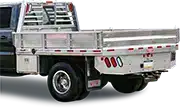
Utility Trailers for Posts and Panels
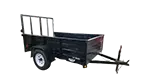
An open utility trailer is the backbone of many fence crews because it provides direct access from the sides and rear. A between-the-fenders utility deck also sits lower than a deckover, reducing the height to which posts, panels, mixers, and augers must be lifted. The current Diamond C GTU tandem-axle utility trailer has an 83-inch-wide bed, is offered in 14-, 16-, 18-, and 20-foot lengths, and carries a 7,000 lb GVWR. Its standard running gear includes two 3,500 lb Lippert electric-brake axles. Current construction includes a 4-inch channel frame, 2-inch engineered-channel crossmembers on 24-inch centers, a 24-inch Laser Grip dovetail, an EZ Bi-Fold rear gate, and 2-inch treated-lumber flooring. Diamond C finishes the steel with its DM Difference Maker multi-stage coating system.
For posts and panels, the dimensions that matter most are usable bed length, clear bed width, rear opening, and the space available for properly positioned tie-downs. A 16-foot bed can carry two standard 8-foot fence panels placed end to end, with the 6-foot dimension of a typical privacy panel fitting across an 83-inch bed. That does not mean every stack of panels will fit within the trailer’s payload. Wet pressure-treated lumber, cedar, steel posts, concrete bags, gates, hardware, and equipment can make the load substantially heavier than it looks.
A 16-by-83-inch Diamond C GTU is a practical size for many residential fence crews, but its 7,000 lb GVWR is not a 7,000 lb cargo rating. The trailer’s empty weight, spare tire, toolbox, gate, floor options, and other equipment all count against its GVWR. Add the published or measured weight of the posts, panels, concrete, mixer, auger, fuel, tools, and attachments before loading. The finished combination must also remain within the trailer GVWR, each axle’s GAWR, tire capacities, coupler rating, hitch rating, truck payload rating, rear-axle rating, and the tow vehicle’s GCWR.
H&H’s current steel Rail Side Utility Trailer is another practical mid-range choice. The tandem-axle 82-inch-by-16-foot Rail Side Utility is rated at 7,000 lb GVWR with two 3,500 lb axles. H&H lists an approximate standard curb weight of 1,790 lb for that configuration, leaving about 5,210 lb of theoretical payload before options and accessories are added. It includes treated wood flooring and a full-width, spring-assisted rear ramp gate that can fold flat into the bed to reduce wind resistance when empty. Its 2-by-2-inch tube top rail and uprights provide a useful perimeter for general cargo, although straps should be attached only to manufacturer-approved anchor points.
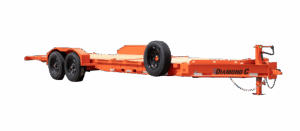
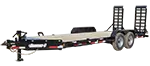
A 7,000 lb rail-side utility trailer may handle a portable mixer, auger, mini skid-steer, or compact stand-on loader if the individual machine, attachments, and remaining cargo stay within the trailer’s actual payload and ramp ratings. Many full-size skid steers are too heavy once the trailer’s own weight, bucket, forks, auger drive, and other attachments are included. For those machines, move up to a properly rated equipment trailer. Diamond C’s 9,890 lb GVWR TUT can accommodate certain smaller compact machines, while heavier equipment may call for an LPX or HDT configuration with substantially more GVWR. Match the trailer to the machine’s documented operating weight rather than relying on the equipment’s general size category.
Enclosed Trailers for Tools and Equipment
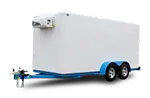
Not every fence crew needs an enclosed trailer, but it can become a rolling tool room for crews that carry impact drivers, compressors, lasers, string lines, post levels, fasteners, fuel-powered tools, and expensive specialty equipment. An enclosed trailer keeps tools out of direct rain and out of sight when parked, while shelving, bins, E-track, and wall-mounted organizers can reduce time spent searching for parts.
An enclosed trailer should not be treated as a completely waterproof storage building. Door seals, roof seams, vents, and fasteners still require inspection, and condensation can form inside when temperatures change. Bags of concrete should remain off the floor on pallets, shelves, or moisture-resistant bins. Gasoline and other fuels must be carried in approved containers, secured upright, and handled according to the trailer manufacturer’s ventilation and cargo instructions.
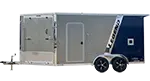
Darkhorse Cargo and Wells Cargo both offer tandem-axle contractor-sized trailers that work well for fence tools. Current Spencer Trailers inventory has included Darkhorse DHW 7-by-14-foot and 7-by-16-foot enclosed trailers with a 7,000 lb GVWR, two 3,500 lb axles, electric brakes, and a 7-foot interior height. Wells Cargo’s 7-foot-wide Wagon HD lineup includes 14- and 16-foot tandem configurations with 7,000 lb GVWR packages. Specifications vary by series, rear-door choice, interior package, and model year, so compare the VIN-specific data plate and build sheet rather than assuming that every trailer of the same nominal size has the same payload.
For a walk-behind mixer, post driver, compressor, and several hundred pounds of shelving and tools, a tandem 7-by-16 is usually more flexible than a single-axle cargo trailer. The extra two feet provide room to keep heavy equipment near the axle group instead of stacking everything against the nose. Remember that shelving, cabinets, spare tires, batteries, generators, workbenches, and reinforced ramp doors all reduce available cargo capacity.
Interior height in current 7-foot-wide enclosed trailers commonly ranges from about 6 feet 6 inches to 7 feet, depending on the model and selected height package. The rear-door opening is normally lower and narrower than the interior box, so measure the mixer, post driver, panel stack, and any wheeled machine at their widest and tallest points. A trailer advertised with a 7-foot interior does not automatically provide a full 7-foot rear-door clearance.
The Legend Deluxe all-aluminum enclosed cargo lineup includes tandem 7-by-14-foot and 7-by-16-foot sizes, with GVWR packages generally ranging from 7,000 to 8,500 lb and a listed interior height of 78 inches in standard configurations. An all-aluminum frame avoids steel-frame rust and may reduce curb weight, but there is no universal weight-saving figure. Trailer height, wall spacing, ramp reinforcement, cabinetry, axle package, floor construction, and options can make one aluminum trailer heavier than another builder’s basic steel trailer. Compare the actual empty weight and available payload of the completed trailers being considered.
Hauling a Mixer: Weight and Tongue Load
A gas-powered concrete mixer is where fence trailer setups require careful planning. Compact portable mixers may weigh roughly 100 to 200 lb, while larger contractor-grade or towable mixers can weigh several hundred pounds. Drum size alone does not establish the machine’s weight because engines, frames, wheels, gearboxes, and rated mixing capacities differ. Use the equipment identification plate or manufacturer manual for the specific mixer rather than estimating from appearance.
The bags can outweigh the mixer. For example, twenty 80 lb bags add 1,600 lb before the mixer, tools, panels, posts, and trailer accessories are counted. Concrete bags should be loaded dry, distributed evenly from side to side, and restrained so they cannot slide forward during braking. Never transport a portable mixer with a batch of wet concrete rotating in the drum unless the equipment manufacturer specifically designed and approved it for that use.
Do not automatically place the mixer against the front wall of the trailer. Heavy equipment should normally be positioned low and close to the axle group, then moved slightly forward or rearward as needed to achieve proper tongue weight. For a conventional bumper-pull trailer, a common target is approximately 10 to 15 percent of the loaded trailer weight on the hitch. Too little tongue weight can cause sway, while too much can overload the receiver, ball mount, truck rear axle, suspension, or tires.
Use a tongue-weight scale or a verified weighing method instead of judging the load by how the truck sits. Secure the mixer at multiple rated attachment points so it cannot roll, tip, or rotate. Shut off the fuel valve when equipped, allow the engine to cool, and follow the manufacturer’s transportation instructions. Wheel chocks are useful during loading but do not replace properly rated straps or chains.
For fence installers mixing concrete for posts, a utility trailer with a serviceable wood deck is often more practical than an open rail-only floor. Concrete slurry, mud, fuel, and wet lumber are hard on any surface. Individual wood boards can be replaced when damaged, while aluminum flooring resists rot but may cost more to repair and can require different traction precautions. The current Diamond C GTU uses 2-inch treated lumber as its standard floor, with the lightweight AlumaTrax aluminum floor available as an option. Clean concrete residue before it cures, especially around gates, hinges, stake pockets, lights, wiring, and tie-down hardware.
| Trailer Type | Best Use | Typical GVWR | Deck Length |
|---|---|---|---|
| Utility (tandem axle) | Posts, panels, auger, portable mixer | 7,000 lb | 14-20 ft; 16 ft is common |
| Enclosed cargo | Tools, hardware, weather-sensitive equipment | 7,000 lb | 14-16 ft |
| Equipment/flatbed (bumper pull) | Compact loaders, larger attachments, bulk material | 9,890-15,500+ lb | 18-22 ft or longer |
| Single axle utility | Residential repairs and lighter material loads | 2,990-6,000 lb by package | 10-14 ft |
Length: Where Most Fence Crews Get It Wrong
The default instinct is often to buy a 12- or 14-foot trailer because it costs less, stores more easily, and fits into tighter driveways. Fence material, however, is long and difficult to secure when the deck barely matches the material length. Standard dog-ear privacy pickets are commonly 6 feet long, assembled residential panels are often 6 by 8 feet, and posts used for a 6-foot fence may be 8, 9, or 10 feet long depending on the design, soil, frost depth, wind exposure, gate loading, local requirements, and required embedment.
A 16-foot deck is a practical working size for many full-time residential fence crews, but it is not a universal legal or operational minimum. A crew installing short ornamental sections or performing repairs may work efficiently from a 12- or 14-foot trailer. A crew routinely moving preassembled privacy panels, long posts, rolls of chain link, gates, tension bars, and stretching equipment will usually appreciate the additional room of a 16- or 20-foot deck.
A 20-foot flatbed or equipment trailer opens up larger deliveries and creates more space to separate equipment from materials. It also increases the combination’s overall length, turning radius, tail swing, parking space, and backing difficulty. Residential streets, narrow driveways, cul-de-sacs, overhead branches, soft shoulders, and steep driveway transitions should all be considered before moving to a longer deck.
A useful planning rule is to measure the longest material you carry regularly and select enough additional deck space to position rated straps without crushing the load against the gate, toolbox, coupler structure, or rear lights. Overhang can be managed when it is legal and properly marked, but it should not be the default loading plan. In Indiana, a load extending 4 feet or more beyond the rear of the vehicle must display a red flag or cloth at least 12 inches square during the applicable daytime period. During the required lighting period, the extreme rear of the load must carry a red light or lantern visible from at least 500 feet to the sides and rear.
Single Axle vs. Tandem for Fence Work
Single-axle utility trailers can be appropriate for repair calls and light residential work. Current single-axle models may be rated at 2,990 lb to remain below certain brake thresholds, while heavier single-axle configurations can reach 6,000 lb depending on the axle and manufacturer. Payload must still be calculated by subtracting the trailer’s actual empty weight from its GVWR. A trailer with a 2,990 lb GVWR may have substantially less than 2,000 lb available once the trailer, gate, spare tire, toolbox, and accessories are counted.
A mixer or auger does not automatically make a single-axle trailer unsafe, but concentrated equipment weight leaves less room for lumber and concrete. Single-axle trailers are generally easier to maneuver by hand and create less tire scrub during tight turns. They are also more sensitive to front-to-rear loading changes, and one overloaded tire or axle has no second axle sharing the load.
Tandem axles distribute the supported portion of the trailer load across four tires and generally provide a more stable platform for varied commercial loads. They do not make overloading acceptable, and a tire failure still requires the driver to slow down and stop safely as soon as practical. Do not continue operating simply because three tires remain on the road.
For a full-time fence crew carrying panels, posts, concrete, and powered equipment, a tandem trailer is often worth the additional purchase and maintenance cost. The current H&H 82-inch-by-16-foot tandem Rail Side Utility, for example, combines a 7,000 lb GVWR with an approximate standard empty weight of 1,790 lb. Compare that usable payload, gate configuration, brake equipment, tie-down layout, and actual dealer price with the single-axle alternative rather than relying on a generic price difference between categories.
A Few Practical Considerations
- Tie-down points: Look for manufacturer-rated D-rings, stake pockets, rub rails, or integrated tie-downs. Do not assume a side rail, gate hinge, fender bracket, or light guard is a cargo anchor. Long posts and panel stacks should be restrained against forward, rearward, vertical, and side-to-side movement with straps or chains rated for the load.
- Ramps vs. dovetail: For wheeled mixers and compact equipment, a dovetail or appropriately rated ramp gate reduces the loading angle. The Diamond C GTU currently combines a 24-inch Laser Grip dovetail with an EZ Bi-Fold gate and offers tractor-gate configurations. H&H’s Rail Side Utility uses a spring-assisted, full-width fold-flat gate. Verify the gate or ramp rating before loading concentrated equipment.
- Fender clearance: Measure the machine’s outside tire width, attachment width, and turning clearance. Toolboxes, high sides, removable rails, and fenders can interfere with a post driver, mini loader, trencher, or wide auger attachment even when the machine technically fits the listed bed width.
- Electric brakes: Indiana law requires a trailer or semitrailer with a gross weight of at least 3,000 lb, when operated on a highway, to have brakes adequate to control, stop, and hold the trailer. The driver must be able to apply the brakes from the tow vehicle, and the system must apply automatically during an accidental breakaway. A functioning brake controller, breakaway switch, charged breakaway battery, plug, wiring, and brakes are all part of the system.
- Actual scale weights: Weigh the loaded truck and trailer by axle when the crew is carrying a realistic day’s material. A combined total below GCWR does not prove that the truck’s rear axle, trailer axles, tires, receiver, or hitch are individually within their ratings.
- Tires and maintenance: Check cold tire pressure, load range, tread, wheel-lug torque, bearings, suspension, breakaway operation, lights, and coupler condition. Lumber and equipment loads often change from day to day, so a setup that was legal yesterday may be overloaded after adding another pallet of concrete or a heavier attachment.
Quick Q&A
Can I haul fence panels in an enclosed trailer? Yes, provided the panels fit through the actual rear-door opening and the completed load remains within the trailer’s payload. A standard 6-by-8-foot privacy panel may fit inside some 7-foot-wide enclosed trailers when loaded carefully, but panel thickness, diagonal bracing, gate hardware, and door clearance can create problems. Wood species, moisture content, construction, and fasteners cause panel weight to vary considerably, so use the supplier’s weight or weigh a representative panel. Most crews find an enclosed trailer better for tools and an open utility trailer better for full stacks of panels and posts.
What hitch do I need? Match every component to the trailer’s loaded weight and tongue weight. The receiver, ball mount, hitch ball, hitch pin, coupler, safety chains, and tow vehicle must each have sufficient ratings. Do not rely on the hitch-class name alone because actual ratings vary by receiver, vehicle, ball mount, and whether a weight-distributing system is permitted. A current Diamond C GTU may be configured with a 2-inch coupler rated for 10,000 lb or an available 2-5/16-inch coupler, while many heavier equipment trailers use a 2-5/16-inch ball. Use the size stamped on the trailer coupler and never substitute a smaller ball. For a 14,000 lb trailer, an appropriately rated heavy-duty OEM receiver or Class V receiver is commonly required, but the truck manufacturer’s towing and payload limits remain controlling.
How are trailers plated in Indiana? Indiana issues trailer-specific registrations and General Trailer plates rather than ordinary passenger-vehicle plates. Registration fees and declared weight treatment can depend on the trailer’s gross weight and business use. Indiana residents must title and register a newly acquired, unregistered vehicle within 45 days of purchase or acquisition to avoid late penalties. Confirm the proper declared weight and plate category with the Indiana BMV for the specific trailer and business.
The 26,001 lb figure is a commercial driver’s license threshold, not a trailer-registration category and not a rule that applies to the trailer by itself. A Class A CDL is generally required when the combination’s GCWR or actual gross combination weight is 26,001 lb or more and the towed unit has a GVWR or actual gross weight greater than 10,000 lb. A trailer rated above 10,000 lb does not by itself trigger a Class A CDL when the complete combination remains below 26,001 lb, although other commercial-vehicle, USDOT, medical-card, insurance, and operating requirements may apply depending on the business, route, weight, cargo, and whether the work crosses state lines.
What Spencer Trailers Carries for Fence Crews
At Spencer Trailers in Spencer, Indiana, our changing inventory includes Diamond C utility and equipment trailers, H&H steel utility trailers, Darkhorse Cargo enclosed trailers, Wells Cargo units, and other contractor-focused configurations in multiple widths, lengths, and GVWR packages. Diamond C has manufactured trailers in Mt. Pleasant, Texas, since 1985, and its current GTU uses Lippert axles as standard. If you’re building a fence installation rig and want to see what is currently available, check the full inventory page or call us at (812) 829-0226. We can review the VIN-specific build sheet, empty weight, payload, axle package, floor, brakes, gate, coupler, and tie-down layout before you buy.
The choice between a utility and an enclosed trailer comes down to the material you haul, how much equipment needs weather protection, whether tools remain on the job overnight, and whether one trailer must perform both roles. Start with the heaviest realistic workday, not the lightest. Get the payload and length right, make sure the loading system is rated for the equipment, verify the complete truck-and-trailer combination, and then choose storage and convenience options. Stop in at 291 West State Hwy 46 in Spencer and we’ll help match the trailer to the work your fence crew is actually doing.


