







You’ve loaded horses before. You know that gut-check moment when you hear hooves shifting inside the trailer and wonder whether the floor is still as solid as it looked last spring. Horse hauling is not just a logistics problem. It is a weight problem, a ventilation problem, an animal-welfare problem, and a driver-skill problem all at once. Get any one of those wrong and a routine trip to a show, trailhead, breeding appointment, or veterinary clinic can turn dangerous quickly.
This guide walks through the decisions that actually matter when choosing a trailer for horses, from floor construction and stall dimensions to loaded weight and gooseneck geometry, so you can haul with confidence instead of crossed fingers.
Why Horse Trailers Are a Specialized Category
Not every livestock, utility, or enclosed trailer is suitable for horses. Horses travel standing up and must continually adjust their balance as the tow vehicle accelerates, brakes, turns, and moves over uneven pavement. They also need sufficient headroom, safe footing, smooth interior surfaces, secure dividers, controlled ventilation, and doors that allow handlers to load or release an animal without entering a dangerous position. A trailer built primarily for equipment, cargo, or general livestock may lack one or more of those protections.
The core features to look for in a dedicated horse trailer include a solid structural floor covered by secure, non-slip rubber mats or an approved equine flooring system; stall dimensions matched to the height, length, and build of the horses; protected windows and vents; rounded or padded interior contact points; properly positioned breast bars, butt bars, or dividers; and enough room for the horse to balance without becoming trapped. Seven feet of interior height is common for average saddle horses, but many warmbloods, draft crosses, and other tall horses are better served by a 7-foot-6-inch interior or a trailer specifically sized for large horses. Current purpose-built trailers are available in straight-load, slant-load, reverse-load, bumper-pull, gooseneck, and living-quarters configurations, so the correct choice depends on the animals and the job rather than the number of stalls alone.
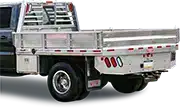
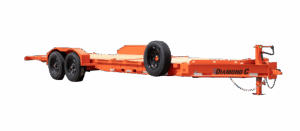
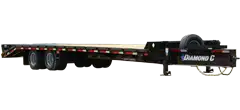
Spencer Trailers and Diamond C focus on utility, dump, equipment, car-hauler, deck-over, tilt, and heavy-duty flatbed applications rather than purpose-built equine trailers. If you’re shopping for a horse-specific unit, manufacturers such as Exiss, Sundowner, and Featherlite currently produce dedicated horse trailers with equine flooring, dividers, ventilation, windows, tack storage, and horse-area access features engineered into the original design. Do not assume that an open utility trailer or enclosed cargo trailer can be safely converted simply by adding mats and walls. Knowing what to ask for before you walk onto any lot helps prevent you from buying something that looks sturdy but was never designed to carry a live, shifting animal.
Floor First: The Non-Negotiable
Horses spend the entire trip on their feet, repeatedly loading and unloading each limb as the trailer moves. The floor, crossmembers, welds, fasteners, and mat system must remain sound as the animals shift their weight. A floor can look acceptable from above while corrosion, trapped moisture, loose fasteners, or damaged supports are developing underneath. Here’s what to evaluate:
- Aluminum vs. treated wood: Aluminum flooring does not rot like wood, but it can pit, crack, separate at welds, or corrode where urine, manure, road salt, and moisture remain trapped beneath mats. Treated wood can provide good traction and is straightforward to replace, but boards must be checked for softness, splitting, loose fasteners, and deterioration around edges and crossmembers. Composite and poured equine flooring systems are also available, but their maintenance requirements and repair procedures vary. Rubber mats are common over both aluminum and wood; many current horse trailers use mats around 3/4 inch thick, although the exact material and thickness should be verified for the trailer being considered.
- Drainage: There is no universal rule requiring a particular number of drain ports per stall. What matters is whether urine and wash water can leave the horse area instead of collecting beneath the mats. The mats should be removable, the floor should be accessible for cleaning and inspection, and the drainage path should not create sharp openings or unstable edges. After washing, allow wood, aluminum, mats, and seams to dry before reassembly. Routine cleaning also reduces ammonia, odor, corrosion, and disease exposure between horses.
- Weight rating: Do not rely on a salesperson’s informal statement that the floor is “rated for two horses.” The controlling numbers are the trailer’s GVWR, actual empty weight, available payload, axle ratings, tire ratings, and the manufacturer’s structural design. Ask about crossmember material and spacing, floor thickness, repair history, and whether any living-quarters, tack-room, hay-rack, water-tank, or aftermarket additions changed the empty weight. Two 1,400- to 1,600-pound warmbloods can consume roughly 2,800 to 3,200 pounds of payload before a saddle, feed bag, water container, divider, spare tire, or piece of camping gear is added.
Pull up the mats at the dealer and inspect the entire accessible floor, including the rear threshold, wall edges, wheel-box areas, seams, fasteners, and the spaces directly above the crossmembers. Inspect underneath the trailer as well. Look for cracked welds, corrosion, bent supports, displaced boards, fresh sealant hiding damage, or repairs that do not match the surrounding construction. If a seller will not permit a reasonable floor inspection, have the trailer evaluated by a qualified trailer service shop before buying it.
Ventilation Is Not Optional
Horses release heat, moisture, urine vapor, manure odor, and respiratory droplets into a relatively small enclosed space. Hay, bedding, road dust, and exhaust entering through poorly placed openings can make the air worse. Ventilation usually drops when the trailer is stopped because forward movement is no longer helping exchange air. On warm or humid days, a parked trailer can become dangerous quickly, so horses should not be left unattended in a closed or poorly ventilated trailer.
Good horse trailer ventilation includes:
- Adjustable roof vents distributed through the horse area, commonly one vent per stall on many current designs. Two-way or pop-up vents may be positioned to bring air in or help exhaust warm air depending on the manufacturer’s instructions, weather, travel direction, and the other openings being used. A roof vent is a ventilation component, not a substitute for a properly sized escape or access door.
- Side windows, drop-down feed doors, barred openings, air gaps, or screened panels that provide cross-ventilation while preventing a horse from putting its head, muzzle, or eyes into the highway airflow. Window bars, face guards, screens, latches, and hinges must be secure. Do not travel with an unrestricted opening that allows a horse to extend its head outside the trailer.
- Breast bars, dividers, tie points, and stall dimensions that allow a safely restrained horse a reasonable range of head and neck movement. Prolonged confinement with the head held high can interfere with normal respiratory clearance, and research has associated six to twelve hours of elevated-head confinement with inflammation and increased bacterial contamination in the lower respiratory tract. Tie length and restraint method must still prevent the horse from turning, becoming tangled, getting a leg over the rope, or reaching another animal. Discuss long-distance hauling plans with your veterinarian, especially for horses with respiratory disease or a history of shipping fever.
A current Sundowner Charter TR SE gooseneck, for example, is a two-horse straight-load trailer with a 7-foot-6-inch interior, a pop-up horse vent for each stall, large sliding stall windows, windows in the rear tail curtains, and a separate side access door for each stall. Those are the kinds of specific, verifiable ventilation and access details worth comparing from one trailer to another. Confirm the exact standard equipment on the VIN-specific trailer because manufacturers can revise components and available options.
Weight and GVWR: Run the Numbers Before You Buy
This is where otherwise careful owners get into real trouble. A trailer’s GVWR is the maximum allowable loaded weight assigned by the manufacturer. It is not the amount of cargo the trailer can carry. Payload is calculated by subtracting the trailer’s actual empty weight from its GVWR. Options such as a front tack room, rear tack, mangers, hay rack, spare tires, batteries, propane cylinders, air conditioning, living quarters, generators, water tanks, awnings, and added cabinets can reduce available payload substantially.
A current two-horse aluminum gooseneck without living quarters may weigh around 3,900 to 4,000 pounds before horses and gear, while larger straight-load, slant-load, steel, or living-quarters trailers can be much heavier. Never apply a catalog number from one floor plan to another. Use the certification label, the manufacturer’s build information, and preferably a certified scale ticket for the actual trailer as equipped. Current Exiss specifications, for example, list a two-horse 7200-series gooseneck around 3,900 pounds with a 10,400-pound GVWR, while a taller two-plus-one configuration is listed around 4,700 pounds with a 12,000-pound GVWR.
Do the math using your own horses and equipment. The following is a representative planning example, not a substitute for weighing the actual combination:
| Item | Approximate Weight |
|---|---|
| Two-horse aluminum gooseneck trailer, no living quarters | 3,900 lbs |
| Two warmbloods | 3,000 lbs |
| Tack, saddles, feed, bedding, water and supplies | 900 lbs |
| Total gross weight | 7,800 lbs |
A 10,400-pound GVWR trailer would provide approximately 2,600 pounds of remaining capacity in that example. That margin can disappear quickly if the trailer is heavier than expected, the horses are larger, a water tank is full, or substantial equipment is stored in the dressing room. Fifty gallons of water alone weighs roughly 417 pounds before counting the tank, pump, hoses, or mounting hardware. Do not deliberately load to the last available pound. A reasonable reserve helps account for inaccurate estimates, added equipment, uneven side-to-side loading, and weight that accumulates over time.
The truck must also be evaluated as a complete system. Check the exact truck’s tow rating, GVWR, GCWR, front and rear GAWR, payload label, tire capacity, wheel capacity, hitch rating, ball or kingpin rating, and bed-mounted attachment rating. Gooseneck and fifth-wheel trailers place significant vertical load in the truck bed, so a truck can remain below its advertised maximum trailer-weight rating while exceeding its rear-axle, tire, or payload limit. Passengers, fuel, tools, a bed-mounted fuel tank, and cargo carried in the cab or bed all use truck payload before the trailer is connected.
Check the trailer’s GVWR, the individual GAWR values on its certification label, and the tire load ratings shown on each tire. Axle capacity by itself does not automatically establish the trailer’s legal payload, and the sum of the axle ratings may not equal the GVWR because some loaded weight is carried by the hitch. The lowest applicable rating among the truck, hitch, ball or kingpin, coupler, trailer, axles, wheels, and tires limits the combination. A certified scale with separate steer-axle, drive-axle, and trailer-axle readings is the most reliable way to confirm the actual loaded condition.
Licensing rules also depend on the complete combination and how it is being used. For a commercial combination, a Class A CDL threshold is generally reached when the GCWR or actual gross combination weight is 26,001 pounds or more and the towed unit has a GVWR or actual gross weight over 10,000 pounds. A trailer rating over 10,000 pounds by itself does not create that Class A threshold when the combination remains below 26,001 pounds. Federal guidance also distinguishes genuinely personal, non-business horse transportation from transportation connected to a commercial enterprise, and separate hours-of-service, ELD, farm, registration, and state-license rules may apply. Confirm the requirements for your use before traveling, especially when crossing state lines or hauling in connection with training, breeding, racing, sales, or another business.
Gooseneck vs. Bumper Pull: Stability at the Core
Bumper-pull horse trailers are not automatically unsafe or limited to short trips. Current manufacturers offer purpose-built two- and three-horse bumper-pull models, and a correctly sized trailer can perform safely when matched to an appropriate tow vehicle, loaded with proper tongue weight, equipped with functional brakes, and driven within the limits of the combination. Problems develop when the trailer is too heavy for the tow vehicle, tongue weight is too low or too high, the hitch setup is incorrect, tires or suspension are overloaded, or the driver attempts abrupt maneuvers.
Gooseneck trailers connect to a ball mounted in the pickup bed near the rear axle rather than to a receiver behind the bumper. This hitch location generally gives the combination greater resistance to sway and allows a higher share of the trailer’s weight to be carried vertically by the truck. That can make a properly matched gooseneck feel more planted when horses move, wind hits the side of the trailer, or traffic creates aerodynamic pressure. It also means the truck must have enough payload and rear-axle capacity for the loaded gooseneck hitch weight.
For multiple full-size horses, large tack loads, frequent highway hauling, or living quarters, a gooseneck is often the more practical choice. It is not a substitute for correct loading, and it introduces its own concerns: cab-to-trailer clearance, bed-rail clearance, tailgate clearance, turning clearance, hitch installation, and the trailer’s tendency to track inside the truck’s path during a turn. Before buying, confirm that the trailer can turn without contacting the cab or bed and that it remains level when connected to the intended truck.
A 2-5/16-inch adjustable gooseneck coupler is common on horse trailers, including current Sundowner examples, but the ball size and rating must be confirmed from the actual coupler and owner’s documentation. Use the required safety chains, attachment points, breakaway cable, and hardware specified by the trailer and hitch manufacturers. The safety-chain system must be appropriately rated for the trailer and attached directly to approved bed-mounted anchors, not to removable cargo tie-downs. Do not twist chains to shorten them or wrap them around the ball.
Fifth-wheel configurations can also provide excellent towing stability and are used on some large living-quarters trailers. A fifth-wheel hitch uses a kingpin and locking hitch plate rather than a gooseneck ball. It occupies more of the truck bed, and converting between fifth-wheel and gooseneck connections should only be done with components approved by the trailer, hitch, and vehicle manufacturers. An adapter that changes the connection can also change leverage and warranty coverage.
Stall Configuration and Loading Stress
Slant-load trailers position horses at an angle to the trailer’s centerline, but the exact angle and usable stall dimensions vary by manufacturer and floor plan. Do not judge space by the advertised number of horses alone. Measure the usable length from the breast or head area to the rear divider, the width at the horse’s body, the space available for the head and neck, and the position of mangers or rear-tack structures. A nominal three-horse slant can be uncomfortable for a long-bodied warmblood even when its height specification appears adequate.
Straight-load trailers position horses parallel to the direction of travel and commonly use breast bars, butt bars, a center divider, and individual rear doors or a ramp. They can provide generous length and clear individual stalls, especially in designs built for large horses. Whether one horse can be loaded or unloaded without disturbing another depends on the divider, rear-door, access-door, and ramp arrangement. Some horses load more confidently into a straight stall; others prefer a wider slant stall, box stall, or reverse-facing setup.
Neither configuration is universally superior, and research does not support promising that every horse will experience less stress in a particular forward-facing or slanted orientation. Horses differ in balance, training, previous trailering experiences, body size, and preferred travel posture. Research has observed that horses may choose diagonal or rear-facing positions when given freedom to orient themselves. The better trailer is the one that provides appropriate space, footing, ventilation, secure partitions, and a configuration in which the individual horse can stand and recover its balance without becoming trapped.
In any layout, dividers should latch positively, have no sharp projections, and provide suitable clearance around the legs, shoulders, hips, and head. Padding should be intact and firmly attached. Removable or telescoping dividers can be useful for loading large horses or creating a box stall, but they should only be repositioned in ways approved by the manufacturer. Removing a divider can change how horses interact and may leave unused latch points, breast bars, or hardware exposed.
Before You Haul: A Pre-Trip Checklist
- Remove or lift the mats as necessary and check the floor for soft wood, pitted aluminum, cracks, loose fasteners, raised seams, damaged thresholds, trapped moisture, or mat edges that could curl beneath a hoof. Inspect the frame and crossmembers from underneath whenever possible.
- Test every rear door, ramp, divider latch, butt bar, breast bar, escape door, feed door, window bar, roof vent, tie ring, and interior light. Make sure nothing can swing open, protrude into a stall, or trap a handler when the horse is loaded.
- Inspect the gooseneck or bumper-pull coupler, hitch ball, locking mechanism, jack, welds, mounting hardware, and electrical connector. Confirm that the coupler is fully seated and locked, the jack is completely raised, and the truck-to-trailer clearance remains adequate through a turn.
- Confirm that the trailer brakes and in-cab brake controller operate smoothly. Indiana requires a trailer or semitrailer with a gross weight of at least 3,000 pounds to have brakes that the driver can apply from the tow vehicle, along with automatic brake application if the trailer breaks away. Current horse trailers above that threshold should have a charged breakaway battery, an undamaged switch, and brakes on the wheels required by the applicable construction and equipment rules.
- Verify cold tire pressure using the trailer manufacturer’s and tire sidewall information. Check tread, sidewalls, valve stems, load range, wheel condition, lug-nut torque, and tire age on every position, including the spare. A tire can have visible tread and still be unsafe because of weather cracking, internal damage, chronic underinflation, overloading, or age.
- Attach the safety chains to approved anchors and connect the breakaway cable independently so it can pull the switch if the trailer separates. Check that the seven-way plug is secure and that running lights, brake lights, turn signals, clearance lights, license-plate light, and electric-brake circuit all function before loading.
If you’re buying used, add a professional inspection of the frame, coupler, axles, suspension, wheel bearings, brakes, wiring, breakaway system, roof seams, doors, welds, tires, and the complete floor structure. Verify repairs against the manufacturer’s construction rather than assuming a fresh board, patch, or weld restored the original capacity. Ask for maintenance records and check the VIN and certification label for alterations or missing information.
What to Ask a Dealer
When you’re shopping, these are the questions that separate informed buyers from people who find out too late:
- What is the VIN-specific empty weight and GVWR? Does the published empty weight include this trailer’s tack room, spare tires, hay rack, batteries, water system, living quarters, and other installed options? What payload remains after my horses and normal gear are loaded?
- What are the trailer’s GAWR values, axle capacities, tire capacities, and wheel capacities? Are the brakes installed on every required wheel, and what brake, bearing, and suspension components are used?
- Is the floor aluminum plank, treated wood, composite, poured material, or another system? What supports it, how closely are the crossmembers spaced, how is corrosion or rot inspected, and what floor maintenance does the manufacturer require?
- How does the stall area drain, and can every mat or flooring section be removed or lifted for inspection and cleaning? Are replacement mats, planks, dividers, latches, and floor components still available?
- What brake controller is recommended? Does the trailer include a breakaway switch and battery, and how should the battery be tested and charged? What are the correct coupler, ball, hitch, safety-chain, and electrical-connector ratings?
- What are the actual interior height, stall width, usable stall length, rear opening dimensions, ramp angle, divider clearance, and escape-door dimensions? Will the dealer allow you to measure the trailer and test-load the horse under controlled conditions?
Good dealers can document these answers using the certification label, build sheet, owner’s manual, manufacturer specifications, scale ticket, and component labels. If you get vague answers or a redirect to a generic brochure, keep asking until the numbers match the exact trailer and tow vehicle being considered.
Spencer Trailers works with buyers on utility and equipment hauling throughout Owen County and the surrounding region. If you’re evaluating a horse-trailer setup and want to talk through loaded weight, truck ratings, hitch configurations, brake requirements, or whether a particular tow vehicle has enough capacity, give us a call at (812) 829-0226 or stop by 291 West State Hwy 46 in Spencer. We’ll give you straight answers about the ratings and equipment we can verify. And if you’re browsing what’s currently on the lot, check the current inventory here to see what’s available.
Your horses are worth hauling right. What’s the next trip you’ve got planned?

