








You bought a John Deere 1025R. Good machine. Now you need to move it, and that’s where people get into trouble. The tractor is compact and easy to maneuver, but its physical size can make it look much lighter than it really is once the loader, bucket, backhoe, ballast, mower deck, and other attachments are installed.
A current open-station 1025R has an approximate base machine weight of about 1,556 lb before many common attachments and options. Add a 120R front loader and materials bucket, and the transport weight can move into the 2,300- to 2,500-lb range before liquid ballast, wheel weights, fuel, tools, or another implement is counted. A tractor-loader-backhoe configuration with the 260B backhoe will commonly approach 3,000 lb and can exceed 3,300 lb when equipped with ballast and additional accessories. That changes which trailer will safely carry the machine, how much payload the tow vehicle must handle, and how the tractor should be positioned and secured.
How Much Does a 1025R Actually Weigh?
The confusion starts here. John Deere’s published weight for a current open-station 1025R is approximately 1,556 lb, but that is not necessarily the weight of the tractor as it sits in your barn. Fuel, tire selection, wheel spacing, three-point components, optional equipment, and model-year changes can all affect the scale weight. Older specifications may also show a lower figure, which is one reason owners should use information that matches their tractor’s model year and configuration.
The 120R loader assembly and its bucket add substantial weight. The current 53-inch materials bucket alone is approximately 183 lb, while the complete loader structure adds several hundred pounds more. A practical planning estimate for a 1025R with the 120R loader and bucket is roughly 2,300 to 2,500 lb before ballast. Adding the 260B backhoe moves the machine close to or above 3,000 lb. Liquid-filled tires, wheel weights, a mechanical thumb, a heavier bucket, pallet forks, a mower deck, chains, tools, and material left in a bucket can raise the transported weight further.
Know your actual weight before you pick a trailer. The best method is to weigh the complete towing combination on a certified scale and obtain separate axle weights when possible. Weigh the tractor in the configuration you plan to haul, including the attachments, ballast, fuel, and tools that will normally travel with it. That number drives the trailer payload calculation, tow-vehicle selection, tongue-weight setup, tire loading, and tie-down requirements.
Picking the Right Trailer
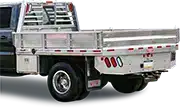
For a bare 1025R or a tractor equipped with a 120R loader, a properly configured 7,000 lb GVWR tandem-axle equipment trailer can provide enough capacity. The key word is payload. A trailer’s 7,000 lb GVWR includes the trailer itself, so you must subtract the trailer’s certified empty weight from its GVWR to determine its theoretical cargo capacity. An H&H 7K Speed Loader tilt configuration can be a practical option because current models are available with an approximately 82-inch-wide deck and a gradual loading transition. Exact empty weight and payload vary with deck length, steel or aluminum construction, options, tires, and model.
A full tractor-loader-backhoe configuration does not automatically require a 14,000 lb trailer, but moving into a 9,900- or 10,000-lb class can provide useful working margin for ballast, additional implements, and future equipment. A verified 7,000 lb tandem trailer may still carry the machine safely when its empty weight leaves enough payload and every other component is properly rated. Owners who expect commercial use, frequent highway travel, heavier compact equipment, or multiple attachments may prefer a heavier trailer even when the 1025R alone does not require all of its capacity.
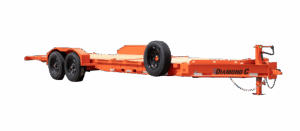
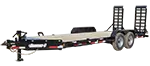
The Diamond C LPX is a premium low-profile, fixed-deck equipment trailer offered in current configurations beginning around the 14,900- to 15,500-lb GVWR class and extending higher by axle package. It is generally available with an 80- to 82-inch bed width between the fenders and uses LIPPERT axles, with tandem 7,000 lb axles standard on common LPX configurations. Its low deck height, engineered frame, heavy-duty ramp choices, and available MAX Ramp system make it useful for equipment loading. The LPX is not a tilt trailer. Buyers who want a Diamond C hydraulically dampened tilt deck should look at the HDT, which is also offered in approximately 15,500- to 24,000-lb GVWR configurations with LIPPERT axles.
Here’s a quick breakdown:
| Configuration | Approx. Transport Weight | Trailer Selection Starting Point |
|---|---|---|
| 1025R open-station tractor only | About 1,556 lb before fuel, options, and added equipment | 7,000 lb tandem preferred; verify certified payload |
| 1025R + 120R loader and bucket | Roughly 2,300-2,500 lb before ballast and accessories | 7,000 lb tandem can work when payload, dimensions, and ramp ratings are adequate |
| 1025R + loader + 260B backhoe | Often roughly 2,900-3,300+ lb depending on ballast and equipment | Verified 7,000 lb payload may work; 9,900/10,000 lb or higher provides additional margin |
GVWR is a ceiling, not the trailer’s cargo capacity. Subtract the trailer’s actual or certified empty weight from its GVWR, then account for spare tires, chains, binders, ramps, toolboxes, fuel cans, buckets, forks, and anything else carried on the trailer. The completed load must also remain within the ratings of the axles, tires, wheels, coupler, safety chains, hitch ball, receiver, frame, brakes, and tow vehicle. The lowest-rated component controls the allowable load.
Tow Vehicle Considerations
People haul 1025Rs with half-ton trucks regularly, and a properly equipped half-ton may be entirely suitable for a lighter trailer and tractor combination. Do not rely on a model name, engine size, or an advertised maximum tow rating. Check the exact truck’s certification labels, owner’s manual, towing guide, receiver rating, gross vehicle weight rating, gross axle weight ratings, and gross combined weight rating. Cab style, wheelbase, drivetrain, axle ratio, options, passengers, cargo, and hitch equipment can change the usable capacity significantly.
Trailer tongue weight counts against the truck’s available payload and rear-axle capacity. A conventional bumper-pull equipment trailer will commonly need approximately 10 to 15 percent of its actual loaded weight on the hitch for stable towing, although the trailer and hitch manufacturer’s instructions control. For example, an actual 6,000 lb loaded trailer could place roughly 600 to 900 lb on the truck before passengers, tools, fuel, and other bed cargo are considered. A three-quarter-ton truck may provide more payload, receiver capacity, braking reserve, wheelbase, and stability when towing a heavy steel trailer, but it is not automatically required solely because the trailer carries a 14,900- or 15,500-lb GVWR label. Actual loaded weight and every published rating still have to be checked.
Indiana requires a trailer or semitrailer with a gross weight of at least 3,000 lb to have brakes adequate to control, stop, and hold the vehicle. The braking system must be operable by the driver and include automatic breakaway operation. A 1025R equipment-trailer combination will normally be well above that threshold. Use a properly installed brake controller compatible with the trailer’s electric brakes, keep the breakaway battery charged, and test brake operation before every trip. A 2-5/16-inch ball is common on equipment trailers, but the ball size and rating must match the specific coupler, and both must be securely mounted to a receiver rated for the actual load.
Tie-Down Strategy for the 1025R
This is where the work actually is. A tractor that is within the trailer’s payload rating can still be unsafe if it is positioned poorly or secured to weak, moving, or unapproved components. Parking the tractor in gear and setting its parking brake do not replace cargo securement.
Four independent tie-downs are a sound working practice for a compact tractor, with two controlling forward movement and two controlling rearward movement. Federal cargo-securement rules generally require the aggregate working load limit of the tie-down system to equal at least one-half of the cargo’s weight. That is only the minimum aggregate requirement. The number, direction, length, attachment method, and condition of the tie-downs must also prevent the tractor from moving forward, rearward, sideways, or vertically during normal driving, braking, cornering, and evasive maneuvers.
Use Grade 70 transport chain with properly rated binders when practical for wheeled machinery. Heavy-duty web ratchet straps may be appropriate when their working load limits, hooks, anchor points, and manufacturer instructions support the application, but the webbing must be protected from sharp edges, heat, abrasion, and contact with moving components. Use the working load limit marked on the equipment, not its breaking strength. A tie-down system is limited by its weakest chain, strap, hook, binder, fitting, or trailer anchor.
Attach the securement equipment only to structural points permitted by the John Deere operator’s manual or identified by an authorized dealer. Depending on the configuration, suitable points may be located around structural axle or frame areas, but owners should not assume that every opening, bracket, or casting is a rated tie-down point. Do not attach to hydraulic hoses, steering linkage, loader cylinders, sheet metal, the ROPS, three-point hitch lift arms, plastic body panels, or other components that can bend, move, leak, or fail.
Arrange the front tie-downs so they resist rearward and lateral movement, and arrange the rear tie-downs so they resist forward and lateral movement. Keep the chains or straps clear of tires, brake wiring, hydraulic components, steering parts, and sharp trailer edges. Crossing tie-downs can provide lateral control in some layouts, but only when the attachment points, chain angles, and trailer anchors create a sound securement path without contacting vulnerable tractor components.
If the 120R loader is attached, empty the bucket before transport. Lower the bucket to the trailer deck, shut the tractor down, and relieve hydraulic pressure as directed in the operator’s manual. The bucket resting on the deck helps reduce movement of the loader assembly, but the bucket should not be treated as the tractor’s primary structural tie-down point unless John Deere specifically approves that method. Any attachment that can pivot, bounce, unfold, or swing should be placed in its approved transport position and restrained or mechanically locked as required.
Loading With a Backhoe Attached
The 260B backhoe changes the tractor’s overall length, rear overhang, center of gravity, and approach geometry. Select a trailer whose usable deck length and loading system allow the tractor to enter without the backhoe bucket, stabilizers, drawbar, or loader bucket contacting the ground. A tilt trailer such as the Diamond C HDT can reduce the loading transition, while a low-profile fixed-deck trailer such as the LPX can work well with properly rated ramps. Trailer design, ramp length, breakover angle, and the loading surface all matter.
Before approaching the trailer, place the backhoe boom, dipperstick, and bucket in the transport position specified by John Deere. Install the transport locking pins, fully raise and secure the stabilizers, and confirm that no hydraulic component can swing or drop. Keep the trailer connected to the tow vehicle, park on firm and level ground, set the truck’s parking brake, chock as appropriate, and clear bystanders from the loading area. Use low range and four-wheel drive when appropriate, approach straight, and move at idle or very low speed. Do not depend on differential lock to correct a poor or slippery approach, and do not load on a wet, icy, muddy, oil-covered, or otherwise slick deck.
Once the tractor is positioned, confirm that the trailer has appropriate tongue weight and that neither the truck nor trailer axle groups are overloaded. Lower the loader bucket and backhoe attachment into their approved transport or resting positions, place the transmission in the position specified by the operator’s manual, set the parking brake, shut off the engine, and remove the key before installing tie-downs. Secure or lock every articulating attachment that could move during transport. Check the load again after the first several miles and periodically during the trip. Commercial operators must also follow the applicable FMCSA cargo-inspection intervals.
Trailer Options to Look At
At Spencer Trailers, we stock equipment trailers suited to this kind of job. An H&H 7K Speed Loader tilt can work for a 1025R when its certified payload, deck width, deck length, tires, brakes, and hitch ratings match the complete load. For buyers who want more capacity or expect to haul heavier equipment later, the Diamond C LPX provides a low-profile fixed deck with heavy-duty ramp options, while the Diamond C HDT provides a hydraulically dampened tilt deck. Current premium Diamond C equipment-trailer lines use LIPPERT axles and Diamond C’s DM Difference Maker multi-stage coating process. Diamond C has built trailers in Mt. Pleasant, Texas, since 1985.
We also carry Delco and Liberty equipment trailers in several capacity and deck configurations. The right choice depends on more than the advertised GVWR. We will compare certified empty weight, usable payload, between-fender width, deck length, ramp or tilt geometry, tire ratings, brake equipment, coupler type, and your tow vehicle’s ratings. Prices and available configurations change with inventory, options, freight, and model year. Call us at (812) 829-0226 or contact us through the website and we’ll walk through what fits your tractor, truck, workload, and budget. To see what’s on the lot right now, check the current inventory page.
A Few Things People Get Wrong
- Using a utility trailer rated for 3,500 lb. A single-axle 3,500 lb GVWR utility trailer does not have 3,500 lb of cargo capacity. The trailer’s own empty weight must be subtracted first. A 1025R with a 120R loader can weigh roughly 2,300 to 2,500 lb before ballast, which can consume or exceed the remaining payload of many single-axle utility trailers. The gate or ramps, tires, brakes, deck, axle, coupler, and frame may also be unsuitable for concentrated equipment loads. Measure the tractor at its widest point and compare it with the trailer’s true usable width rather than assuming it will fit.
- Forgetting attachments, ballast, and trailer weight. The bare machine weight is only the starting point. Count the loader, bucket, backhoe, mower deck, pallet forks, wheel weights, liquid-filled tires, fuel, chains, binders, spare tire, toolbox, and anything carried in the truck or on the deck. GVWR includes the trailer, and truck payload includes hitch weight, occupants, and cargo.
- Using unrated or poorly tensioned securement equipment. Chains, binders, straps, hooks, and anchor points need visible working load limits appropriate for the job. Remove slack without damaging the tractor or overstressing the equipment, secure binder handles, protect straps from edges, and make sure hooks cannot disengage. Stop and recheck the load shortly after departure because tires, attachments, and tie-downs can settle.
- Improper hitch safety setup. Use safety chains of the correct rating and connect them to approved receiver points with enough slack for turning but not enough to drag. Cross the chains beneath a conventional coupler when the trailer and hitch instructions call for it so they can help support the tongue if the coupler separates. Attach the breakaway cable independently to the tow vehicle rather than wrapping it around the hitch ball, coupler, or safety chain. Lock the coupler, raise the jack fully, connect the electrical plug, and test the lights and brakes before moving.
Quick Q&A
Can I haul a 1025R with my half-ton truck?
Possibly. A properly equipped half-ton may handle a 1025R on a suitable 7,000 lb tandem trailer, including some loader or backhoe configurations. Confirm the truck’s tow rating, GCWR, payload, rear-axle rating, receiver rating, and allowable tongue weight using the information for that exact vehicle. Do not rely on the manufacturer’s highest advertised towing number. A three-quarter-ton may be the more comfortable choice when using a heavy steel trailer, carrying substantial ballast, traveling long distances, or towing frequently, but the ratings and actual scale weights make the final decision.
Do I need a CDL to haul this?
A typical privately used 1025R combination may not require a CDL, but the trailer’s rating matters. For commercial operation, the Class A CDL threshold generally applies when the combination has a GCWR or actual gross combination weight of 26,001 lb or more and the towed vehicle has a GVWR or actual gross vehicle weight greater than 10,000 lb. The 26,001 lb figure applies to the combination, not to the trailer alone. A 14,900- or 15,500-lb GVWR trailer behind a high-GVWR pickup can put the rated combination over that threshold even when the trailer is lightly loaded. Personal-use and other exemptions are fact-specific, so Indiana operators should verify their exact truck, trailer, use, and licensing status with the Indiana BMV and applicable federal rules.
What trailer deck length do I need?
Do not choose deck length from the tractor-only dimensions. The loader bucket and backhoe extend well beyond the tractor chassis when placed in transport position. Measure from the forward-most part of the loader bucket to the rear-most part of the locked backhoe bucket, then allow enough deck length to shift the tractor forward or rearward until proper tongue weight is achieved. A 16-foot usable deck may fit some configurations but can leave little adjustment room. An 18- to 20-foot deck is often easier to balance and may provide space for another bucket or attachment, provided the added equipment remains within every applicable rating.
If you’re still working through which trailer makes sense for your setup, we’re easy to reach. Bring the tractor’s model year, attachment list, ballast information, measured overall dimensions, and tow vehicle details when you call. Stop by 291 West State Hwy 46 in Spencer, or browse the inventory online and call us with questions. Getting the right trailer the first time is cheaper than discovering that the payload, deck length, brakes, or tow vehicle are wrong after the tractor is already loaded.


