


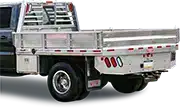
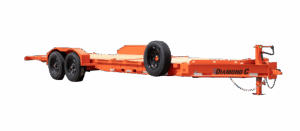



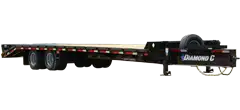
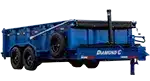

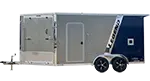
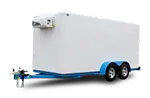
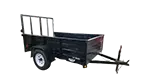

You’ve got a job that needs hauling, and you’ve got a budget. The question isn’t really “custom or off-the-lot”; it’s “how soon do you need it, and how specific are your requirements?” Get that answer right and the rest falls into place. Get it wrong, and you’re either waiting on a production slot for a trailer you needed yesterday or driving home with a rig that doesn’t quite fit the equipment, payload, loading angle, or truck you’re pairing it with.
Here’s the honest breakdown.
What “Off-the-Lot” Actually Means
When we say off-the-lot, we mean a specific trailer that is physically sitting on our yard right now, with a VIN, certification label, actual option package, advertised price, and equipment list that you can inspect before buying. These aren’t throwaways or leftovers. They’re units we’ve ordered based on what Owen County and southern Indiana customers regularly need: practical lengths, commonly requested loading systems, usable payload capacities, and proven configurations for construction, landscaping, farming, property maintenance, automotive work, and general hauling.
A 20-foot Diamond C LPX207 Low Profile Extreme Duty Equipment Trailer with an approximately 14,900-pound GVWR, two 7,000-pound Lippert axles, electric brakes, slipper-roller suspension, treated wood flooring, and heavy-duty spring-assisted flip-knee ramps is a real-world stock configuration. It gives buyers a low deck, a manageable loading angle, and enough capacity for many skid steers, compact track loaders, mini excavators, tractors, and attachment combinations, provided the trailer’s actual payload rating covers the fully equipped machine. A 16-foot Liberty LU7K Tandem-Axle Utility Trailer with a 7,000-pound GVWR, two 3,500-pound electric-brake axles, a 4-inch channel frame, treated wood deck, and rear loading gate is another predictable configuration that makes sense to keep available. We stock trailers like these because customers repeatedly ask for them, not because every buyer needs the exact same setup.
Off-the-lot pricing is also easier to evaluate because you’re comparing an actual completed trailer rather than a proposed build. The listed trailer price, installed options, MSRP or discount, payment-method charges, and delivery cost can all be reviewed before you commit. Applicable sales tax, title and registration charges, disclosed dealer documentation fees, financing costs, optional protection products, and any stated credit-card convenience fee still have to be included when calculating your true out-the-door amount. If you’re working with a tight window, a new job starting Monday, or a farm auction Saturday morning, current inventory is where you start.
What Custom Actually Means (and Costs)
Custom doesn’t have to mean exotic or one-of-a-kind fabrication. It usually means selecting a factory-approved combination of model, size, GVWR package, axle and brake equipment, loading system, flooring, coupler, jack, storage, tires, electrical equipment, and finish, then asking the manufacturer to build that configuration for you. With Diamond C Trailers, that process is more accessible than many buyers expect. Diamond C’s Build Your Own configurator lets you create a build, review compatible options, and submit the resulting configuration to an authorized dealer for final pricing and availability. Diamond C has built trailers in Mt. Pleasant, Texas, since 1985, and its current lineup covers utility, car-hauler, equipment, tilt, deck-over, dump, gooseneck, pintle, and step-deck applications.
That matters. A contractor who needs a Diamond C DEC Heavy Duty Deck Over Equipment Trailer with a 102-inch-wide deck, a particular deck length, the correct GVWR and Lippert axle package, MAX Ramps, an upgraded brake system, a winch provision, additional tie-downs, and Carbon Metallic Gray DM Difference Maker coating may not find that entire combination sitting on the lot. Ordering it can be the right decision because each selected feature serves a defined loading, towing, or operational requirement rather than being an accessory added simply for appearance.
Price difference? There is no honest universal percentage. A custom order is not automatically 5%, 10%, or 15% more than a stock trailer. A standard factory configuration may be close to the price of a similarly equipped lot unit, while a build with upgraded GVWR, premium tires, electric-over-hydraulic disc brakes, a winch package, special flooring, additional storage, a wider loading package, premium ramps, or custom paint can cost thousands more. Stock units may also carry dealer discounts or manufacturer incentives that aren’t available on a new factory order. On the other hand, an over-equipped stock trailer can cost more than a carefully specified order that includes only what you need. Diamond C publishes base MSRP and option pricing for planning purposes, but the dealer’s written quote controls the final selling price, freight, availability, and order terms. You’re not paying for the word “custom”; you’re paying for the exact equipment included in the approved build.
The Lead Time Reality
This is where a lot of buyers get tripped up. Factory lead time is a quote-time fact, not a permanent number that can be printed in a blog post and trusted indefinitely. It can vary by manufacturer, model family, production schedule, option availability, plant workload, transportation arrangements, and the time of year. A common configuration may have an earlier production opportunity than a specialized high-GVWR build, while certain axles, tires, hydraulic components, colors, or fabricated options can affect scheduling.
If you need a trailer before the end of the month, you should not base the job on a custom order unless the factory and dealer have confirmed a completion and delivery window that meets your deadline with room for delays. But if you’re planning ahead, buying equipment before the next construction season, replacing an aging fleet unit, or preparing for a contract that starts several months from now, a factory order can be easy to manage. Spencer Trailers will confirm the current production estimate when the quote is prepared, but an estimate should still be treated as an estimate rather than a guaranteed completion date unless the written agreement expressly says otherwise.
An off-the-lot unit may be able to leave the same day once payment or financing is complete, the paperwork is ready, and the tow vehicle has the correct hitch, coupler ball or pintle, electrical connection, brake controller, and capacity. That’s not a small advantage when a job is on the line, but “available today” still doesn’t make a trailer suitable if its payload, dimensions, loading system, or ratings are wrong for the work.
The Configurator: A Closer Look at What Diamond C Lets You Spec
Diamond C’s Build Your Own tool is one of the more detailed manufacturer configurators in the trailer market. It does more than let you change the color. It filters options according to the selected model, GVWR package, length, frame, and loading system. Here’s a representative look at the decisions available on a model like the Diamond C LPX Low Profile Extreme Duty Equipment Trailer:
- Length: LPX bumper-pull configurations are offered from 16 to 30 feet, generally in 2-foot increments, although the available lengths depend on the selected GVWR package and some options require an 18-foot, 22-foot, or longer trailer.
- GVWR packages: Current LPX choices include the 207, 208, 210, and 307 packages, covering approximately 14,900 or 15,500 pounds at the entry end, depending on the certified production configuration, and progressing through 18,000, 20,000, and 24,000 pounds. The final VIN certification label and manufacturer documents determine the legal rating of the completed trailer.
- Axle options: The standard heavy-duty package uses two 7,000-pound Lippert axles. Depending on the selected package, available upgrades include three 7,000-pound Lippert axles, two 8,000-pound oil-bath axles, or two 10,000-pound oil-bath torsion axles. Compatible brake choices can include forward self-adjusting electric drum brakes, electric-over-hydraulic disc brakes, and ABS-equipped electric drum systems.
- Deck material: A 2-inch treated lumber floor is the standard practical choice. Blackwood lumber and 3/16-inch diamond-plate flooring may be offered on compatible configurations, with certain steel-floor selections requiring other equipment or structural changes.
- Ramps: Available loading systems include extra-wide heavy-duty flip-knee spring-assisted ramps, 37-inch-wide MAX Ramps, and the wide X-Ramp designed to work with the 102-inch Max Width package, frame extensions, and drive-over fenders. Ramp availability depends on trailer length and the rest of the build.
- Electrical: Current LPX equipment includes LED lighting, a sealed wiring harness, a 7-way connection, and a breakaway system. Depending on the configuration, buyers can also select winch provisions, a powered winch package with battery and charger, backup lights, and other job-specific electrical equipment.
- Color: Diamond C uses its DM Difference Maker multi-stage coating system and offers multiple standard and premium colors, including Onyx Black, Carbon Metallic Gray, Platinum Silver Metallic, Arctic White, Dynamic Blue Metallic, Scarlet Red, and several work-oriented premium finishes. A custom color can be requested by quote, subject to factory approval and availability.
- Coupler: LPX bumper-pull configurations use appropriately rated 2-5/16-inch Demco EZ-Latch couplers in adjustable-channel or flat-mount forms, depending on the GVWR package, with compatible pintle-ring choices also available. Buyers who need a gooseneck should configure the separate LPX-GN model rather than treating the hitch style as a simple field conversion.
Not every option is available on every model, and several choices automatically require or exclude other components. A higher GVWR package can change the frame, axle, tire, coupler, suspension, and brake specifications together. The configurator’s displayed base MSRP and option amounts are useful for planning, but the completed build must be submitted to a dealer for final pricing, freight, availability, and compatibility review. That’s worth a phone call before you build a budget around an online configuration.
Which Makes Sense for Which Buyer
| Situation | Better Choice |
|---|---|
| Need it this week | Off-the-lot, provided the actual ratings and dimensions fit the job |
| Specific color, size, or axle combo required | Custom order |
| First trailer, not sure what you need | Start with off-the-lot units so you can inspect deck height, ramps, storage, and dimensions with a dealer |
| Fleet purchase, buying 3+ | Custom order or matched incoming units, because spec consistency, parts commonality, and driver familiarity matter |
| GVWR over 20,000 lb. | Check current inventory first; custom order if the correct length, axle, brake, hitch, and loading package isn’t available |
| Budget is the primary constraint | Compare the complete stock price with a written custom quote; stock discounts may help, but unwanted options also cost money |
| Specialty work (livestock, car hauling, heavy equipment) | Custom order when the cargo’s dimensions, weight distribution, clearance, containment, or loading method create exact requirements |
A Note on “Good Enough” vs. Right-Sized
There’s a tendency to settle when you’re in a hurry. You need a trailer, there’s one on the lot, and you take it. That works fine when the stock unit genuinely fits the work. But buyers can end up wishing they had chosen a longer deck, lower loading angle, different ramp system, wider usable surface, greater payload capacity, heavier-duty tires, more tie-downs, or a different hitch arrangement. The cost of that mistake isn’t limited to selling the trailer at a loss. It can also include lost time, unsafe loading, overloaded components, poor weight distribution, premature tire or brake wear, and a second round of financing, registration, and setup.
So before you buy off the lot, run through this checklist carefully:
- Does the trailer’s certified GVWR provide enough actual payload for the heaviest machine, attachment, material, fuel, tools, spare tire, winch, and permanently installed options you’ll carry? Payload is the trailer’s GVWR minus its actual empty weight as built. Do not treat the combined axle ratings as the trailer’s payload capacity, and do not forget that the loaded trailer must also remain within the tow vehicle, hitch, tire, axle, and combination ratings.
- Is the deck long and wide enough for your longest and widest load while allowing correct axle placement, tongue weight, securement, bucket or attachment position, and legal load containment? Measure the real equipment with its attachments installed rather than relying only on the manufacturer’s basic machine dimensions.
- Are the ramp length, ramp width, deck height, dovetail, breakover angle, fender clearance, and loading surface compatible with the equipment’s tires or tracks, wheelbase, ground clearance, and approach angle? A trailer can have enough weight capacity and still be unusable because the machine drags, high-centers, slips, or cannot clear the fenders.
- Does the coupler type and rating match the truck’s hitch, and can the truck safely control the combination? Verify the tow rating, GCWR, truck payload, rear-axle rating, tire ratings, hitch rating, ball or pintle rating, electrical connector, brake controller, mirrors, and loaded tongue or pin weight. Indiana requires qualifying trailers at or above the statutory 3,000-pound threshold to have adequate brakes controllable from the tow vehicle and an automatic breakaway function. For CDL classification, a Class A combination generally reaches at least 26,001 pounds combined and includes a towed unit rated over 10,000 pounds; the trailer’s rating alone does not automatically create that Class A threshold, and commercial-use rules or exemptions should be checked for the specific operation.
Four verified answers and the lot trailer may be exactly the right call. One unresolved answer doesn’t automatically mean you need a custom build, but it does mean you should stop and compare another stock unit or prepare a factory order. The certification label on the trailer, the towing information supplied by the truck manufacturer, and the measured specifications of the load should make the decision, not a guess based on how the combination looks.
Brands We Order Custom Through
Diamond C isn’t the only brand for which Spencer Trailers can help match a buyer with a factory configuration or incoming unit. Our represented inventory includes Liberty Trailers, Wells Cargo, Darkhorse Cargo, H&H, Delco, Legend, United, and other application-specific manufacturers, along with Zimmerman truck bodies. Custom-order availability, option menus, pricing, and production schedules vary by manufacturer and model, so the first step is confirming that the requested combination is currently offered rather than assuming every listed feature can be added to every trailer.
Enclosed cargo orders are a good example. Depending on the Darkhorse Cargo or Wells Cargo model, buyers may need a particular width, body length, interior height, axle and GVWR package, rear ramp or cargo doors, side-door size and location, roof vents, interior lining, electrical package, tie-down system, concession preparation, or equipment layout. Truck-body orders require the same discipline. Zimmerman offers different steel and aluminum body families, lengths, widths, gooseneck and receiver arrangements, toolbox packages, side-board options, bumpers, and truck-fitment choices. Those decisions need to be matched to the truck’s wheelbase, cab-to-axle measurement, chassis ratings, fuel and emissions equipment, and intended towing use.
The point: custom isn’t limited to one brand. It’s a buying process built around verified requirements, compatible factory choices, a written build sheet, and a realistic delivery plan.
How to Start a Custom Order at Spencer Trailers
The easiest path is to come in with a rough spec in mind or use Diamond C’s configurator to build a wishlist before you arrive. Bring the make and model of the equipment you’ll haul, its operating weight with attachments and fluids, its overall length and width, how you plan to load it, and the specifications of the truck that will tow it. We’ll review the configuration, confirm current factory pricing and estimated production timing, calculate freight and applicable transaction charges, and flag combinations that may not work the way you expect. If a manufacturer is running a current incentive, it should be shown in the written quote rather than assumed in advance. Before the order is submitted, we’ll also explain the deposit, change, cancellation, and delivery terms.
If you’d rather talk it through before stepping foot on the lot, call us at (812) 829-0226. We can usually narrow down the right model family and begin a quote in one conversation, although final pricing, production timing, and unusual option combinations may require factory confirmation.
And if you want to see what’s available to take home now, browse current inventory here. Review the individual listing and VIN-specific specifications rather than assuming every trailer with a similar model name has the same GVWR, empty weight, axles, ramps, brakes, tires, or included options. If nothing fits exactly, that’s what the order process is for.
The right trailer isn’t always the one available right now, but it isn’t automatically the custom-built one either. It’s the trailer whose certified capacity, usable payload, dimensions, loading system, towing requirements, delivery date, and total cost line up with the actual job. Know what you’re hauling, know what truck is pulling it, and know when the trailer has to be working. What’s the job?
Reach out to the Spencer Trailers team and we’ll point you toward the fastest practical path to the right rig.


