


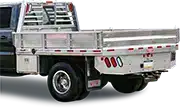
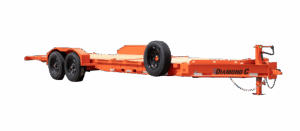






You pull up two trailers side by side. They look roughly the same from twenty feet away. One is $4,200. The other is $7,800. The price difference is real, but it usually is not arbitrary. Frame design, axle capacity, brakes, tires, loading equipment, finish quality, warranty support, freight, and optional equipment can turn two similar-looking trailers into completely different tools. Once you understand which specifications move the number, you will never evaluate a trailer by sticker price alone.
Steel Gauge: The Foundation of Everything
Steel is one of the biggest cost drivers in an open trailer, but “steel gauge” by itself does not tell the whole story. Sheet steel and formed components are commonly described by gauge, while structural trailer members may be specified by channel size, tubing dimensions and wall thickness, I-beam depth and weight per foot, steel grade, crossmember spacing, or an engineered fabricated-beam design. A thicker piece of mild steel is not automatically stronger or better than a properly engineered member made from a higher-strength grade.
A light utility trailer may use relatively small channel or rectangular-tube frame members with wider crossmember spacing. A heavier equipment trailer may use deeper channel, structural I-beams, heavier crossmembers, reinforced spring hangers, a stronger tongue, and additional bracing around high-stress areas. Every increase in section size, steel grade, weld length, and reinforcement adds material, fabrication time, trailer weight, and cost.
For a real-world comparison, the Diamond C GTU premium tandem-axle utility trailer is a 7,000-pound GVWR bumper-pull model with a 4-inch channel frame and two 3,500-pound Lippert brake axles. Moving into the LPX equipment-trailer line brings heavier I-beam construction, stronger tongue and frame packages, larger running gear, and GVWR choices extending well beyond the utility-trailer category. Diamond C’s FMAX gooseneck flatbeds use low-profile Engineered Beam frames sized according to the model and capacity, from the 15,500-pound GVWR FMAX207 through configurations rated as high as 40,000 pounds.
That engineering matters as much as the raw amount of steel. A well-designed beam can put material where stresses are highest instead of simply adding weight everywhere. Crossmember spacing, frame camber, tongue geometry, weld quality, suspension attachment points, and the way loads are transferred through the frame all influence how a trailer performs after years of loading, braking, twisting, and highway vibration.
A lower-priced trailer may save money through lighter frame members, fewer reinforcements, wider crossmember spacing, less surface preparation, or a simpler tongue design. That may be completely reasonable for occasional lawn equipment or household use. It is a poor bargain if the trailer will carry concentrated skid-steer, mini-excavator, pallet, or construction loads every day.
Axle Ratings and Count
Axles are rated by capacity, usually expressed in pounds per axle. A 3,500-pound axle is common on light utility, landscape, and enclosed cargo trailers. As capacity increases, manufacturers may use 5,200-, 6,000-, 7,000-, 8,000-, 10,000-, 12,000-, or heavier axle assemblies depending on the trailer design. Higher-capacity axles generally bring larger spindles, hubs, bearings, brake assemblies, wheels, tires, suspension hardware, and mounting components.
Axle count also changes the price. A tandem-axle trailer requires another axle assembly, additional suspension components, more tires and wheels, more brakes, more wiring, and a longer or heavier frame. A triple-axle or tandem-dual-wheel gooseneck increases those costs again. More axles can improve load distribution and stability, but they also increase empty weight, tire replacement cost, bearing maintenance, and turning scrub.
Diamond C uses Lippert axles throughout its trailer lineup. The 7,000-pound GVWR GTU uses two 3,500-pound Lippert brake axles. The LPX207 package uses two 7,000-pound Lippert axles for a 15,500-pound GVWR configuration, while higher LPX packages can use 8,000- or 10,000-pound running gear or a three-axle arrangement. FMAX axle packages vary substantially by model, from tandem single-wheel configurations through triple-axle and tandem-dual-wheel heavy-haul setups.
Do not assume the axle rating printed in an advertisement is the trailer’s usable payload. Payload is the trailer’s certified GVWR minus its actual empty weight. A 7,000-pound GVWR trailer that weighs 1,800 pounds has approximately 5,200 pounds of theoretical payload before accounting for installed options, tools, a spare tire, chains, ramps, or other equipment carried on the trailer.
Brakes are another important price and safety difference. Many current tandem equipment and utility trailers have electric drum brakes on both axles, while some lighter single-axle trailers are intentionally rated below common brake-law thresholds. In Indiana, IC 9-19-3-3 requires a trailer or semitrailer with a gross weight of at least 3,000 pounds, when operated on a highway, to have brakes adequate to control, stop, and hold the trailer. The brakes must be controllable from the tow vehicle’s cab and must apply automatically during an accidental breakaway.
Do not rely on a vague statement that a trailer “has brakes.” Confirm how many axles are brake-equipped, the brake type, the breakaway system, battery condition, and compatibility with the tow vehicle’s brake controller. High-capacity trailers may offer electric-over-hydraulic disc brakes, which provide a different level of braking performance and cost substantially more than a basic electric drum-brake package.
GVWR: The Number That Ties It All Together
Gross Vehicle Weight Rating is the maximum allowable loaded weight assigned to the trailer by its manufacturer. It includes the empty trailer, cargo, permanently installed equipment, spare tires, tools, chains, attachments, fuel carried on the trailer, and anything else adding weight. GVWR is not the same as payload, axle capacity, or the towing capacity of the truck.
The manufacturer establishes GVWR after considering the complete system: frame strength, axle and suspension ratings, coupler capacity, safety chains, brakes, wheels, tire load ratings, jack, tongue or gooseneck structure, expected weight distribution, and applicable certification requirements. The sum of the axle ratings does not always equal the trailer GVWR because part of the loaded weight is carried by the tow vehicle through the bumper-pull tongue or gooseneck ball. Some trailers are also intentionally de-rated for a particular market or operating requirement.
A conventional 14,000-pound GVWR equipment trailer commonly uses two 7,000-pound axles, appropriately rated tires and wheels, brakes, a properly rated 2-5/16-inch coupler or pintle connection, and frame construction intended for equipment hauling. Moving to a Diamond C LPX brings premium equipment-trailer construction and packages ranging from approximately 15,500 to 24,000 pounds GVWR. The HDT hydraulically dampened tilt line is also available across roughly the 15,500- to 24,000-pound range, depending on axle and configuration choices.
Every capacity increase affects more than the axle label. Larger running gear can require different tires, wheels, suspension, frame members, couplers, jacks, brakes, fenders, and deck structures. A 20,000-pound GVWR trailer is not simply a 14,000-pound trailer with heavier axle stickers. The entire configuration must support the certified rating.
Do not buy more trailer than your truck, route, or work requires, but do not buy less than the loaded weight demands. If your equipment weighs 6,000 pounds and the trailer weighs 2,200 pounds, the actual loaded trailer is already around 8,200 pounds before adding attachments, chains, buckets, fuel, or tools. That load does not belong on a 7,000-pound GVWR trailer.
You must also check the tow vehicle’s ratings. Trailer GVWR, truck GVWR, gross combination weight rating, rear-axle rating, receiver or gooseneck rating, tire capacity, available payload, and brake-controller capability all matter. For commercial operation, the federal Class A CDL threshold generally applies when the combination has a GCWR of 26,001 pounds or more and the towed vehicle has a GVWR greater than 10,000 pounds. The 26,001-pound figure applies to the combination, not to the trailer by itself, and applicable exemptions or state-specific rules should be verified for the operation.
Brand Reputation and Manufacturing Location
Brand name carries weight in the trailer market, but the value should come from engineering, repeatable manufacturing, warranty support, parts availability, dealer service, and documented specifications rather than the decal alone. An established manufacturer has the benefit of field history, production tooling, quality-control procedures, engineering resources, and a dealer network that can help when a component or warranty issue needs attention.
Diamond C Trailers is a family-owned American manufacturer founded in 1985 and based in Mt. Pleasant, Texas. Its lineup includes utility, equipment, tilt, dump, deck-over, and FMAX gooseneck flatbed trailers. Premium lines such as the LPX, HDT, LPT, FMAX, WDT, and DEC use Lippert axles as standard equipment and are positioned for buyers who need more capacity, engineering, and customization than a basic commodity trailer provides.
A Diamond C LPX low-profile equipment trailer costs more than many conventional 14,000-pound equipment trailers because the comparison includes more than bed length. Depending on the package, the LPX can include heavier running gear, I-beam construction, engineered frame technology on applicable lengths, premium couplers, stronger jacks, heavy-duty suspension choices, larger tires, specialized loading systems, and extensive storage or tie-down options.
Diamond C’s finish also contributes to the manufacturing cost. The DM Difference Maker coating system is a multi-stage process that includes steel-shot blasting, a multi-stage wash, controlled drying, zinc-epoxy powder primer, a powder topcoat, and oven curing. The important comparison is not merely whether a trailer is described as “powder coated.” Surface preparation, primer, contamination control, coverage, curing, and repair support determine how well a coating performs in actual service.
Liberty Trailers is headquartered and manufactured in Fillmore, Indiana, and now also operates a manufacturing facility in Sulphur Springs, Texas. Liberty builds utility, equipment, dump, tilt, car-hauler, and gooseneck trailers aimed at buyers who want commercial-grade American construction at competitive price points. Its models often provide a useful middle comparison between entry-level trailers and highly optioned premium equipment.
Delco Trailers is a family-owned Texas manufacturer founded in 2006. Its lineup includes dump, equipment, deck-over, utility, livestock, roll-off, and gooseneck trailers. Delco’s heavier configurations are aimed at commercial, agricultural, construction, and hauling customers, with pricing driven by the selected frame, axle package, body style, hoist, deck, dimensions, and optional equipment rather than by one universal “heavy-duty” specification.
No manufacturer should be evaluated by reputation alone. Compare the exact VIN-level build sheet, warranty terms, axle and component documentation, dealer support, and replacement-parts availability. Two trailers from the same brand can have very different prices because one has a basic axle and ramp package while the other has premium brakes, hydraulic loading equipment, specialty flooring, additional storage, and a higher certified GVWR.
Options and Upgrades: Where the Price Climbs Fast
Base price is only the starting point. Length, width, GVWR package, loading style, tire choice, brake system, deck material, storage, hydraulics, and appearance options can change the final number quickly. Factory MSRP, dealer selling price, freight, preparation, taxes, title, registration, and documentation charges also need to be separated when comparing quotes.
- Spare tire and mount: A basic utility-trailer spare may add a few hundred dollars, while a heavy 14-ply or 17.5-inch commercial tire, matching wheel, reinforced mount, or under-deck winch carrier can cost considerably more. Confirm whether the quoted spare matches the installed tire’s size, ply rating, load range, and wheel bolt pattern.
- Dovetail or loading system: A fixed dovetail, self-cleaning dovetail, spring-assisted ramps, full-width ramp, hydraulic tilt deck, or hydraulic dovetail can add anywhere from hundreds to several thousand dollars. The correct option depends on equipment weight, track width, ground clearance, loading angle, concentrated axle loads, and how often the trailer will be loaded.
- Finish system: A generic paint-versus-powder surcharge is not a reliable comparison. Some manufacturers include powder coat as standard, while others offer paint or different coating packages. Diamond C includes its DM Difference Maker multi-stage powder-coating system rather than treating basic powder coat as a simple cosmetic upgrade. Ask what surface preparation, primer, topcoat, and curing process are included.
- Lighting and electrical equipment: LED stop, tail, marker, and clearance lights are common on current trailers. The options that usually add cost are loading lights, reverse lights, additional clearance lights, work lights, solar charging, larger batteries, wireless hydraulic controls, upgraded junction boxes, and protected wiring systems.
- Deck material: Pressure-treated lumber is standard on many open trailers, so it should not automatically be priced as an upgrade. Premium wood, oak, Blackwood-type decking, steel flooring, expanded metal, aluminum track systems, or other specialty surfaces can add hundreds or thousands of dollars depending on bed size and application.
- Ramp package: Compare the actual ramp design, dimensions, support structure, load rating, spring assistance, traction surface, and storage position. Diamond C loading choices include MAX Ramps, XDR Ramps, and the full-width X-Ramp on compatible models, along with model-specific flip-knee ramps, straight decks, tilt decks, and hydraulic dovetails. The right system can be worth the extra cost if it reduces unsafe loading angles or eliminates the need to handle heavy loose ramps.
- Electric-over-hydraulic brakes: Electric-over-hydraulic actuation, especially when combined with hydraulic disc brakes on a high-capacity gooseneck, is a major upgrade over conventional electric drum brakes. The complete package can add thousands of dollars once the actuator, brake assemblies, hydraulic lines, breakaway system, battery capacity, and compatible tow-vehicle controller are included.
It adds up quickly. At the time of writing, a current Diamond C LPX has a factory base MSRP around the five-figure mark before regional pricing, freight, taxes, title, registration, and added equipment. A higher-GVWR LPX with MAX Ramps, upgraded tires, premium suspension, a winch, specialty flooring, additional storage, or hydraulic accessories can move well into the mid-teens or higher. Those additions are not automatically frivolous, but each one should solve a real loading, hauling, maintenance, or safety problem for the buyer.
Raw Material Costs and Market Timing
Trailer prices are not static, and changes are not caused only by dealer markup. Steel is a traded commodity, and trailer manufacturers also buy axles, tires, wheels, couplers, jacks, hydraulic cylinders, pumps, batteries, lumber, wiring, lights, coatings, and fasteners. Changes in steel prices, component availability, labor, energy, tariffs, freight, and supplier lead times can all affect MSRP and dealer cost.
The steel and transportation volatility of 2021 and 2022 caused major price changes throughout the trailer industry. Even after the most extreme disruptions eased, manufacturers were still dealing with higher labor, component, insurance, financing, and distribution expenses than buyers remembered from earlier years. A price someone paid several years ago is therefore not a dependable benchmark for a current model.
Dealer inventory timing matters too. A unit ordered under an older price schedule may be advertised differently from a newly delivered trailer with the same basic dimensions. One trailer may include inbound freight or factory-installed options that another listing excludes. Rebates, aged-inventory discounts, financing promotions, and factory package pricing can also make two seemingly identical trailers carry different advertised prices.
Aluminum trailers follow a different material and fabrication equation. Aluminum often costs more per pound and requires different manufacturing processes, but the finished trailer can weigh less than a comparable steel design. Lower empty weight may increase available payload within a fixed GVWR and can make a trailer easier for an appropriately rated tow vehicle to handle. Aluminum is not automatically better, however. Purchase price, repair methods, fatigue design, deck construction, intended load concentration, and exposure to corrosion all need to be considered.
Always request an itemized out-the-door quote. The advertised trailer price may exclude sales tax, title, registration, dealer documentation fees, financing charges, optional equipment, or delivery. Indiana regulates dealer documentation fees; state guidance effective July 1, 2025 identified approximately $251 as the applicable amount, although buyers should verify the current limit when purchasing.
A Quick Comparison by Segment
| Trailer Type | Typical GVWR | Typical Price Range | Key Cost Driver |
|---|---|---|---|
| Single-axle utility (Liberty or Diamond C) | 2,990 to 6,000 lb | $2,850 to $5,200+ | Axle size, frame, width, gate, finish |
| Tandem utility (Liberty or Diamond C GTU) | 7,000 lb | $4,500 to $7,000+ | Axle count, brakes, frame, ramp gate |
| Equipment/tilt (Liberty, H&H, or Diamond C) | 9,900 to 18,000 lb | $6,500 to $16,000+ | GVWR, frame, tilt or ramp system, tires |
| Enclosed cargo (Darkhorse, Legend, or Wells Cargo) | 7,000 to 9,900 lb | $6,700 to $14,000+ | Length, height, frame material, interior |
| Gooseneck flatbed (Diamond C FMAX or Delco) | 15,500 to 40,000 lb | $17,000 to $42,000+ | Frame, axle package, brakes, loading system |
These are broad planning ranges based on current manufacturer pricing and representative 2026 dealer inventory, not guaranteed quotes. Smaller enclosed trailers can fall below the listed range, while larger or highly customized cargo trailers can exceed it. Premium LPX and HDT equipment trailers are available above 18,000 pounds GVWR, and specialized dumps, roll-offs, hydraulic dovetails, air-ride goosenecks, and 30,000- to 40,000-pound configurations can move far beyond the upper end of a basic segment comparison.
What You Should Actually Do Before You Buy
Start with the actual operating weight of the load. Use a certified scale when possible, or obtain the manufacturer’s operating weight for the exact equipment and attachments. Include buckets, forks, mowers, fuel, fluids, counterweights, chains, binders, spare parts, tools, and anything else traveling on the trailer. Then add the trailer’s actual empty weight to determine the expected loaded trailer weight.
Build a sensible operating margin above that expected loaded weight. A 10 to 15 percent margin may be appropriate for many buyers, but it is not a substitute for calculating the load correctly. The margin should be applied to the complete working setup, not just the equipment’s advertised dry weight. Never use the trailer’s GVWR as if it were its cargo capacity.
Then compare trailers within the same functional category and capacity range. A conventional 14,000-pound equipment trailer can be compared meaningfully with another 14,000-pound equipment trailer of similar length and loading style. It is not a direct price comparison with a 7,000-pound utility trailer or a premium 18,000-pound LPX carrying larger axles, tires, brakes, frame members, coupler, and suspension.
Ask for the VIN-specific build sheet and confirm the axle manufacturer, axle ratings, GAWR, tire size and load range, wheel rating, brake type, coupler rating, jack capacity, frame construction, crossmember spacing, deck material, ramp design, empty weight, payload, finish process, warranty, and included accessories. On a Diamond C trailer, the axle specification should identify Lippert equipment. Do not accept a generic online description when the actual trailer tag and factory build sheet are available.
Check the truck with the same care. Confirm the truck’s GVWR, GCWR, payload label, rear-axle rating, tire ratings, receiver or gooseneck capacity, hitch-ball rating, and brake-controller compatibility. Remember that gooseneck pin weight and bumper-pull tongue weight consume truck payload. A truck may have enough advertised towing capacity but still exceed its payload or rear-axle rating once passengers, tools, fuel, and hitch weight are included.
Account for the legal and administrative costs before signing. Indiana residents generally have 45 days to register a newly acquired, unregistered vehicle without the late administrative penalty. Trailers operated at a gross weight of at least 3,000 pounds need compliant brakes under Indiana law. Commercial buyers should evaluate CDL, USDOT, operating-authority, insurance, and load-securement requirements based on the truck, trailer, cargo, route, and business use rather than assuming the trailer’s GVWR alone determines every obligation.
Business purchasers should also discuss depreciation with a qualified tax professional. Current federal rules restored 100 percent bonus depreciation for qualifying property acquired and placed in service after January 19, 2025. Eligibility, business-use percentage, financing, basis, recapture, and the interaction with Section 179 depend on the taxpayer’s circumstances. A tax deduction can improve the economics of a qualifying purchase, but it is not a manufacturer rebate or a dollar-for-dollar reduction in the trailer’s selling price.
We stock Diamond C, Liberty, and Delco at our Spencer, Indiana location, so you can inspect the frame, axles, ramps, finish, wiring, storage, deck, and running gear before you commit. Browse our current inventory to see what we have on the lot, or reach out to our team with your equipment weight, attachments, tow vehicle, preferred loading style, and expected use. We will help you identify which trailers fit the job, which configurations are unnecessary, and which options are worth paying for.
The right trailer at the right price is not the cheapest one that can carry the load once under ideal conditions. It is the trailer that stays within its certified ratings, matches the tow vehicle, loads safely, stops properly, and performs reliably with the least repair expense and downtime. The number worth optimizing is total ownership cost, not the smallest figure printed on the windshield.


