








Five thousand dollars is still useful trailer money. And it can buy a genuinely capable new trailer if you shop by actual specifications instead of size alone. The important distinction is whether your $5,000 limit means the advertised trailer price or the complete out-the-door total. A trailer listed at $4,995 will normally exceed $5,000 after sales tax, title and registration charges, and any applicable transaction fees. With that in mind, here is a straight look at what a roughly $5,000 purchase budget can realistically buy in three of the most common trailer categories.
Single-Axle Utility Trailers: The Most Trailer for Your Dollar
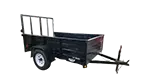
If your goal is hauling yard waste, an ATV, a riding mower, landscaping equipment, building materials, or household debris, an open utility trailer is where this budget usually goes furthest. Current advertised prices for well-built single-axle utilities commonly fall between about $2,850 and $4,500, depending on bed width, length, axle rating, gate design, side construction, tires, brakes, and included accessories. Common sizes include 77×12, 78×12, 83×12, and 83×14. Most entry-level models use a 3,500 lb. axle but are assigned a 2,990 lb. GVWR, allowing them to be sold without trailer brakes in many configurations.
H&H Trailers’ current Rail Side Utility lineup is a good example of what to expect from an established manufacturer. Popular single-axle sizes include approximately 76×12, 82×12, and 82×14. These models commonly have a 2,990 lb. GVWR, a 3,500 lb. spring axle with lubricated hubs, a treated wood deck, LED lighting, a sealed wiring harness, tube-steel top rails, and a spring-assisted full-width rear ramp gate that can fold flat against the deck. The exact payload depends on the trailer’s empty weight. For example, a trailer weighing around 1,050 to 1,210 lbs. with a 2,990 lb. GVWR will have approximately 1,780 to 1,940 lbs. of theoretical payload before tools, spare tires, side extensions, or other accessories are added.
Liberty Trailers also has several practical utility models within this price range. At the time of writing, current inventory examples include an 83×14 Liberty LU with a 3,500 lb. axle, 2,990 lb. GVWR, 4-inch channel frame, treated wood deck, radial tires, LED lights, stake pockets, and a 48-inch rear gate for approximately $3,050. With an empty weight around 1,250 lbs., that configuration provides roughly 1,740 lbs. of rated payload. Heavier Liberty configurations are also available, including 5,000 lb. GVWR single-axle models and basic 7,000 lb. GVWR tandem-axle utilities that may still advertise below $5,000. Those heavier trailers require the correct tow vehicle, receiver, electrical connection, brake controller, and trailer-brake equipment.
Do not confuse axle capacity with trailer payload. A trailer with a 3,500 lb. axle is not necessarily rated to carry 3,500 lbs. A 2,990 lb. GVWR trailer’s payload is its GVWR minus the trailer’s actual empty weight and the weight of every accessory or permanently mounted item. A spare tire, toolbox, side kit, winch, battery, landscape rack, or heavier gate all reduce the remaining cargo capacity. Likewise, dual axles and torsion suspension are not completely out of reach at this price. Basic 7,000 lb. tandem utilities and some lightweight aluminum torsion-axle utilities can advertise below $5,000, although options and out-the-door charges can quickly move them above the limit. If your normal cargo approaches 2,000 lbs., calculate the complete loaded weight carefully rather than assuming that any single-axle trailer will be sufficient.
Small Enclosed Trailers: A Tighter Budget, Real Trade-offs
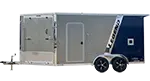
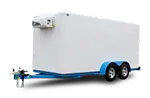
A new enclosed cargo trailer under $5,000 still exists, but the selection is narrower. The strongest values are generally 5×8, 6×10, and occasionally basic 6×12 single-axle units. Many use a 3,500 lb. axle but are assigned a 2,990 lb. GVWR. Interior height varies considerably. A compact 5×8 may provide about 5 feet 6 inches of interior height, while certain 6×10 and 6×12 models provide approximately 6 feet 6 inches. Rear barn doors, rear ramp doors, V-noses, and side access doors are configuration-dependent, so check the actual build sheet rather than assuming that every trailer in a model family is equipped the same way.
Darkhorse Cargo builds enclosed trailers that can fit at the upper edge of this budget. Current inventory examples include a 6×10 Darkhorse DHW advertised around $4,650 and a 6×12 version advertised around $4,995. These particular configurations have a 2,990 lb. GVWR, a 3,500 lb. axle with lubricated hubs, approximately 6 feet 6 inches of interior height, double rear cargo doors, a 36-inch side access door, radial tires, a one-piece aluminum roof, LED interior and exterior lighting, a 3/4-inch high-performance floor, engineered wood wall lining, ventilation, and recessed cargo-track sections. The approximate payload is around 1,665 lbs. for the 6×10 and 1,415 lbs. for the heavier 6×12 configuration. That difference is a useful reminder that buying a longer trailer does not automatically increase cargo capacity when both trailers have the same GVWR.
Wells Cargo’s FastTrac line also has legitimate options in this tier. A current 5×8 FastTrac single-axle trailer commonly carries a 2,990 lb. GVWR, a 3,500 lb. spring axle, 15-inch radial tires, a 2-inch ball coupler, plywood-based floor and wall construction, and an interior height around 5 feet 6 inches. Depending on the dealer and configuration, advertised prices can fall from the mid-$3,000s to around $4,000. A 6×10 FastTrac with approximately 6 feet 6 inches of interior height, a rear ramp, and a side door may advertise in the low-to-upper $4,000s. Equipment varies by stock number, and some 2,990 lb. models are built without brakes, so confirm the axle, GVWR, door package, interior height, empty weight, payload, and brake configuration on the specific trailer.
The honest trade-off with an enclosed trailer under $5,000 is not that it will automatically lack a V-nose or side door. Many current entry-level trailers include those features. The compromises are more likely to involve payload, trailer width, interior finish, ramp capacity, wall and floor upgrades, tie-down equipment, insulation, electrical packages, roof vents, and tandem-axle stability. A basic enclosed trailer can work well for furniture, motorcycles, lawn equipment, mobile detailing supplies, market inventory, or protected tool storage. For a daily commercial setup with built-in shelving, heavy machines, generators, water tanks, or extensive electrical equipment, a 7,000 lb. tandem-axle enclosed trailer in the $6,500 to $8,000-plus range may provide considerably more usable capacity and long-term flexibility.
Quick check before you buy enclosed: A nominal 6×12 trailer provides about 72 square feet of rectangular floor area before accounting for wall thickness, wheel boxes, door clearance, shelving, cabinets, or the shape of the nose. Measure the actual cargo, including handlebar width, machine height, ramp angle, and turning room. A trailer can have enough floor area on paper and still be too narrow, too low, or too difficult to load.
Light Dump Trailers: Budget Dump Options Are Out There
This is where a $5,000 budget becomes difficult. A used compact dump trailer, a clearance unit, or a very basic new trailer may fit below the limit, but a new hydraulic dump trailer from a well-established manufacturer generally starts above $5,000. Current advertised examples of a 2026 H&H 62×8 single-axle dump have been in approximately the mid-to-upper $5,000s, while many comparable compact dumps are priced above $6,000. That means a firm $5,000 out-the-door ceiling should usually be treated as a used-dump budget rather than a reliable new-trailer budget.
A modern compact single-axle dump in this class is more likely to have a 5,000 lb. GVWR than a 7,000 lb. GVWR. H&H’s current 62×8 Utility Dump, for example, uses a 5,200 lb. axle and carries a 5,000 lb. GVWR. With an approximate empty weight of 1,380 lbs., its listed payload is about 3,620 lbs. Current features include formed 12-gauge sides, a one-piece smooth steel bed, hydraulic lifting equipment, a combination barn-door and spreader-style rear gate, LED lights, lubricated hubs, and sealed wiring. Liberty’s current compact single-axle LD5K dump is also built around a 5,000 lb. GVWR, with a roughly 60-inch-wide bed, 8- or 10-foot length options, and 18-inch sides. Current 7,000 lb. compact dumps from these manufacturers generally use tandem 3,500 lb. axles rather than one 7,000 lb. axle.
A hydraulic dump’s payload rating is the maximum weight of cargo it can legally carry, not a guarantee that every heaped load is safe. Gravel, wet soil, broken concrete, roofing material, and demolition debris can exceed the trailer’s capacity long before the bed looks full. The loaded trailer must remain within its GVWR, axle rating, tire ratings, coupler rating, safety-chain ratings, and the tow vehicle’s limits. Tongue weight also changes as material moves forward or rearward in the bed. For dense material, use supplier weight estimates or a certified scale instead of judging the load by volume.
If you find a dump trailer below $5,000, inspect more than the bed and hydraulic cylinder. Verify the VIN and title, GVWR label, axle rating, brake operation, breakaway battery, hydraulic pump, battery condition, charging circuit, cylinder and hose leaks, hinge wear, frame cracks, floor distortion, gate latches, tire age, wheel bearings, coupler, safety chains, and wiring. A used compact dump can be an excellent property-maintenance or weekend-landscaping trailer, but a neglected hydraulic system, worn brakes, weak battery, or bent frame can erase the purchase-price savings quickly. Contractors loading dense material five days a week should generally plan for a heavier tandem-axle dump and a budget well above $5,000.
What the Budget Won’t Cover
Tandem-axle trailers are not automatically excluded. Basic 7,000 lb. GVWR tandem utilities and some entry-level 7,000 lb. car haulers currently advertise in the mid-to-upper $4,000s. However, longer decks, upgraded gates, removable fenders, drive-over fenders, winches, side kits, premium suspension, heavier frames, spare tires, and specialized ramp packages can quickly move the price past $5,000.
Heavy equipment trailers are a different category. A true 14,000 lb. GVWR equipment trailer will normally cost more than $5,000 even in a basic bumper-pull configuration. Hydraulic tilt decks, heavier I-beam frames, upgraded couplers, premium ramps, drive-over fenders, and higher-capacity jacks can raise the price considerably. Do not substitute a 7,000 lb. landscape or car-hauler trailer for a skid-steer or compact-excavator trailer simply because the machine appears to fit on the deck.
A new, dealer-supported hydraulic dump trailer is also unlikely to fit a strict $5,000 out-the-door limit. Compact 5,000 lb. models typically begin above that figure, and 7,000 lb., 10,000 lb., and 14,000 lb. tandem dumps cost progressively more. A used dump may fit the budget, but its condition and actual remaining service life matter more than the original brand name or paint appearance.
Long flatbeds with gooseneck hitches are not realistic in this price range. Current gooseneck flatbeds use substantially more steel, heavier running gear, larger tires, stronger couplers, multiple braking axles, and higher-capacity jacks. Even an older used gooseneck offered around $5,000 deserves careful inspection for structural repairs, overloaded axles, tire age, brake condition, decking, frame corrosion, and a clear title.
That is not a criticism of the $5,000 budget. It is a reminder to buy for the actual job. A properly matched 2,990 lb. utility or enclosed trailer can provide years of useful service. A trailer that is routinely overloaded, poorly balanced, or mismatched to the tow vehicle will remain the wrong purchase regardless of how attractive the original price looked.
How to Spend the Budget Well
| Category | Realistic Budget Range | Example Models | Typical GVWR |
|---|---|---|---|
| Single-axle utility | $2,850 to $4,500 | H&H Rail Side Utility, Liberty LU, Diamond C PSA135 or PSA106 | 2,990 to 6,000 lb. |
| Small enclosed cargo | $3,500 to $5,000 advertised | Darkhorse DHW 6×10 or 6×12, Wells Cargo FastTrac 5×8 or 6×10 | Usually 2,990 lb. |
| Compact dump | Under $5,000 used or clearance; approximately $5,600 and up new | H&H Utility Dump 62×8, Liberty LD5K | Typically 5,000 lb. |
Before committing, compare every rating in the complete towing system. Check the tow vehicle’s maximum trailer weight, GCWR, payload rating, rear-axle rating, receiver rating, tongue-weight limit, ball mount, hitch ball, coupler, tires, and trailer GVWR. The lowest-rated component controls the usable limit. Hitch class by itself does not prove that a vehicle can safely tow a particular trailer. A receiver may be rated for more weight than the vehicle, while a vehicle may have adequate engine power but insufficient payload or tongue-weight capacity.
Indiana requires brakes on trailers with a GVWR greater than 3,000 lbs. That is why many entry-level utility and enclosed trailers are rated at 2,990 lbs., even when they use a 3,500 lb. axle. A 5,000 lb., 6,000 lb., or 7,000 lb. trailer should have properly functioning brakes and the correct electrical connection. Electric brakes normally require a compatible brake controller and 7-way connector unless the tow vehicle already includes an integrated system. Use a weight-distribution hitch only when the tow vehicle, receiver, and trailer manufacturers permit or require one; it is not a substitute for an undersized tow vehicle.
A 7,000 lb. trailer does not create a CDL requirement by itself. For the standard Class A CDL weight threshold, the combination GCWR must be 26,001 lbs. or more and the trailer must have a GVWR greater than 10,000 lbs. Commercial use, vehicle configuration, cargo, endorsements, and applicable exemptions can affect the final licensing requirement. Indiana buyers should also complete trailer title and registration within the state’s 45-day penalty-free window rather than leaving the paperwork until the trailer is already in regular use.
When buying new, ask for the trailer’s VIN-specific build sheet, GVWR, empty weight, calculated payload, axle rating, tire ratings, brake configuration, warranty terms, and the location of the nearest authorized service provider. Also confirm exactly what the advertised price includes. A spare tire, battery, side kit, upgraded ramp, freight charge, card-processing fee, title work, or dealer-installed accessory may be separate. H&H, Liberty, Darkhorse Cargo, and Wells Cargo all have established dealer support, but warranty coverage and service procedures vary by manufacturer and component.
Browse our current inventory to see what is in stock at Spencer Trailers. We carry H&H, Liberty, Darkhorse Cargo, and Wells Cargo, and our team can compare the trailer’s actual GVWR, payload, axle configuration, dimensions, doors, gates, ramps, and braking equipment with your tow vehicle and intended use. Got a specific setup in mind? Reach out and we’ll tell you straight whether it fits your budget or where the extra money would make a meaningful difference. Sometimes the right trailer is already below your target. Sometimes spending a few hundred dollars more prevents you from outgrowing the purchase almost immediately.


