







The Trailer Is the Event Infrastructure Nobody Talks About
Think about the last county fair you attended. The food was ready, the equipment was in place, the sound system worked, and the floats rolled by on schedule. But almost everything on the grounds had to arrive by truck and trailer. In small-town Indiana, trailers do much of the heavy lifting behind fairs, parades, livestock shows, church fundraisers, school events, auctions, and community festivals. That work is easy to overlook until a trailer is overloaded, the tow vehicle is mismatched, a ramp will not support the equipment, or a crew discovers that the deck is too narrow on setup morning.
Community events run on logistics. A properly matched trailer can turn setup into a planned sequence instead of a parking-lot problem. Choosing one requires more than matching the advertised trailer size to the largest object being hauled. Organizers must account for the trailer’s empty weight, actual payload capacity, deck dimensions, ramp rating, cargo securement, hitch weight, brakes, tires, electrical connections, and the tow vehicle’s GVWR, GCWR, axle ratings, receiver rating, and available payload. Spencer Trailers sees these questions every summer and fall. The right trailer matters, and it is worth working through the details before the week of the event.
Concession Trailers and Food Vendor Setups
Food trailers are among the most visible working trailers at any fair or fundraiser. There is an important difference, however, between a purpose-built concession trailer or professionally completed mobile-food conversion and a standard enclosed cargo trailer with cooking equipment placed inside it. An enclosed cargo trailer is not automatically designed or approved for cooking, propane storage, public occupancy, commercial electrical service, plumbing, ventilation, or fire suppression. A legal mobile-food operation may require plan review, permits, and inspections from the local health department, fire authority, building department, or zoning office. Requirements can vary by county and by the type of food being prepared.
Enclosed cargo trailers from brands such as Wells Cargo and Darkhorse Cargo can be suitable starting platforms when the conversion is designed around the trailer’s actual ratings. A current Wells Cargo Road Force V-Front in the 7×16 tandem-axle configuration is commonly rated at 7,000 lb GVWR and uses a tubular-steel frame rather than an aluminum structural frame. Current Darkhorse 7×16 tandem-axle cargo trailers at Spencer Trailers are also available with a 7,000 lb GVWR, two 3,500 lb axles, electric brakes, a seven-way connector, a rear ramp door, and approximately seven feet of interior height. Those dimensions provide useful working space, but GVWR is not payload. The trailer’s empty weight, cabinets, appliances, counters, hood, fire-suppression equipment, propane system, freshwater, wastewater, refrigeration, generator, food, and supplies must all be deducted from the GVWR.
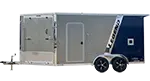
For groups serving packaged food, drinks, merchandise, or other light products, a smaller Legend Aluminum Enclosed trailer may reduce empty weight. Current Legend Deluxe single-axle models include a 6×12 configuration rated at 2,990 lb GVWR, while larger tandem-axle Legend enclosed trailers are commonly rated at 7,000 lb or more depending on the model and axle package. A 2,990 lb trailer can work for a light-duty setup, but it generally does not leave enough payload for a full commercial kitchen once permanent equipment and water are installed. It must also be matched to the tow vehicle by its loaded weight, tongue weight, receiver rating, and the vehicle’s available payload rather than by the tow rating alone.
What vendors consistently underestimate is the combined effect of ventilation, electrical demand, water, and structural modifications. Commercial cooking equipment may require an approved hood, make-up air, fire suppression, safe propane installation, adequate egress, and professionally designed electrical distribution. Water weighs about 8.34 lb per gallon, so freshwater and wastewater tanks can consume hundreds of pounds of payload. A generator should not be operated inside an ordinary enclosed trailer, where heat, exhaust, and carbon monoxide can become deadly. Interior height also matters: a trailer with a 78-inch interior is substantially different from one with a 66-inch interior when crews are installing a hood, ceiling finish, lights, and ductwork. Door-opening dimensions, axle placement, floor capacity, and the effect of cutting openings into the roof or sidewalls should be reviewed before the build begins.
Float Construction: What Actually Works
Parade floats present an unusual engineering problem. They need to look good at walking speed, remain stable through turns and stops, carry decorations without blocking the driver’s view, and survive movement to and from the parade route. They are also frequently assembled by volunteers under a tight deadline. The trailer underneath must provide the correct deck width and length, adequate payload after the float structure is added, dependable brakes and tires, secure attachment points, and a towing arrangement that can maneuver safely at low speed.
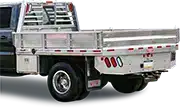
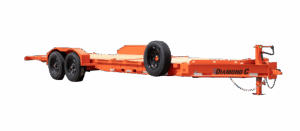
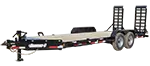
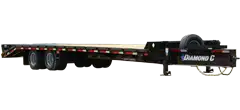
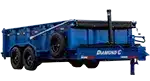
Flatbeds and car-hauler-style trailers are common choices, but the correct type depends on the scale of the float. A Diamond C FMAX is a true 102-inch-wide deck-over gooseneck flatbed built for substantial commercial hauling. The current FMAX line ranges from approximately 15,500 lb to 40,000 lb GVWR depending on the model, with lengths from 20 feet to 44 feet and Lippert axles as standard equipment. An FMAX can provide a large, uninterrupted deck for a major float, but it requires a properly equipped gooseneck tow vehicle and is considerably more trailer than most neighborhood parades need. For smaller community floats, a bumper-pull car hauler such as a Diamond C GTF or an H&H 18-foot car hauler is often more practical. Current H&H car haulers are generally 82 inches wide, available in 16- to 24-foot lengths, and offered at 7,000 to 9,900 lb GVWR. Diamond C GTF models use an 83-inch bed and are available in 7,000- and 9,890-lb configurations. These lower bumper-pull decks are easier to tow and decorate, provided their usable deck width is sufficient for the planned structure.
The practical considerations for float trailers:
- Deck height affects both visibility and stability. A lower car-hauler deck generally places riders and decorations closer to the crowd’s natural sightline, while a 102-inch deck-over provides more uninterrupted width but places the platform higher. Measure the actual unloaded deck height and include the thickness of any temporary stage floor before finalizing stairs, handrails, skirting, or overhead decorations.
- Do not casually staple, screw, weld, or drill into a borrowed trailer’s deck, frame, wiring channels, brake lines, or structural members. Many builders use securely fastened sacrificial plywood panels or a removable subframe so decorations can be attached without damaging the trailer. Every panel and decorative element must be secured for braking, turning, wind, and transport to the parade route, not merely for three-mile-per-hour parade movement.
- If people will ride on the float, tow ratings are only one part of the safety decision. Riders, seating, railings, stairs, generators, decorations, and the temporary structure are all part of the load. The organizer should obtain approval from the parade authority, local law enforcement, and its insurer; provide secure handholds or guardrails where required; keep riders away from wheels, edges, and the hitch area; and prohibit anyone from riding on the open trailer while it is traveling to or from the controlled parade route.
Float weight grows quickly. Lumber, plywood, seating, batteries, sound equipment, water-filled props, people, and decorations must be included in the calculation. Organizers should weigh the completed trailer when possible and confirm that the loaded trailer, tongue or pin weight, tow vehicle, hitch, tires, and axles all remain within their respective ratings. Decorations must not cover required lights, reflectors, the license plate, or the driver’s sightlines.
Equipment Transport for Outdoor Events
Beyond food and floats, community events move generators, tents, staging, audio equipment, fencing, carnival components, livestock, tractors, mowers, maintenance supplies, and agricultural displays. Each category creates different loading and securement demands. The trailer must be selected for the heaviest realistic load, including attachments, fuel, cables, ramps, pallets, and support equipment. Published GVWR must never be treated as cargo capacity; payload is the trailer’s GVWR minus its actual empty weight and all permanently installed accessories.
Generators and Staging Equipment
Generator weight varies widely. Small mobile units may weigh well under 2,000 lb, while larger towable generators, fuel tanks, light towers, and stage-power units can exceed 6,000 lb and may be much heavier when fueled. For smaller equipment, a Liberty 83×20 tandem-axle trailer can provide useful deck space, but the exact model matters. A current Liberty LC 83×20 car hauler rated at 7,000 lb GVWR uses two 3,500 lb axles, electric brakes, an 18-foot main deck, a 2-foot dovetail, and 5-foot slide-out ramps. That arrangement is better suited to wheeled equipment than an ordinary utility gate, but crews must still verify the ramps’ capacity, the generator’s wheel spacing, concentrated wheel loads, and the trailer’s remaining payload. If the generator and staging equipment approach the payload limit of a 7,000 lb trailer, a 9,990- or 14,000-lb equipment trailer is the appropriate next step. Generators should be operated in accordance with the manufacturer’s clearance, exhaust, grounding, and ventilation instructions, with exhaust directed away from tents, trailers, doors, windows, and occupied areas.
Livestock and Agricultural Displays
County fairs that include livestock shows need purpose-built bumper-pull or gooseneck livestock trailers. A Delco Cattleman gooseneck livestock trailer can be configured at 14,000 lb GVWR and is offered in lengths that include 24 feet. It provides the ventilation, livestock gates, floor design, and partition options needed for animal transport. The safe load must be calculated by actual animal weight rather than by a general head-count estimate. Trailer empty weight, bedding, tack, feed, show equipment, partitions, and tongue or pin weight all reduce available capacity. Before leaving, handlers should inspect the floor, gates, latches, dividers, tires, brakes, ventilation openings, and loading area. At the event site, the trailer should be positioned on firm, level ground with enough room for calm loading and unloading away from crowd traffic.
Utility and Maintenance Support
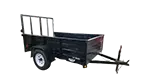
Event organizers often need a utility trailer for the event itself: trash collection, barricade movement, supply runs, landscaping, chairs, coolers, and last-minute equipment repositioning. A straightforward H&H 82×12 single-axle rail-side utility trailer is currently available at 2,990 lb GVWR, while tandem H&H rail-side models extend to 7,000 lb GVWR in longer configurations. A 2,990 lb trailer is compact and convenient, but it must not be loaded beyond the certification label simply because it uses a 3,500 lb axle. Indiana requires a trailer or semitrailer with a gross weight of at least 3,000 lb on the highway to have brakes that the driver can apply from the cab, along with automatic breakaway application. Loose trash, tents, cardboard, signs, and lightweight supplies must be contained with sides, tarps, straps, or nets so nothing can leave the trailer in transit.
| Event Need | Recommended Trailer Type | Key Spec |
|---|---|---|
| Concession / food vendor | Professionally converted enclosed cargo trailer from Wells Cargo, Darkhorse, Legend, or a purpose-built concession manufacturer | Current 7×16 tandem units are commonly 7,000 lb GVWR; calculate payload after the complete kitchen, water, propane, electrical, and ventilation build |
| Parade float | 102-inch deck-over flatbed for a large float or an 82- to 83-inch bumper-pull car hauler for a smaller float | Choose deck width, deck height, payload, tow-vehicle compatibility, and approved rider protection as separate requirements |
| Generator / staging | Car hauler or equipment trailer with a dovetail, tilt deck, or load-rated ramps | 7,000 lb GVWR may suit smaller units; use 9,990- to 14,000-lb equipment trailers when operating weight and support gear require more payload |
| Livestock display | Purpose-built bumper-pull or gooseneck livestock trailer | Delco Cattleman configurations include 14,000 lb GVWR and 24-foot lengths; load by actual animal and equipment weight |
| General event support | Open rail-side utility trailer | 2,990 lb single-axle or 7,000 lb tandem configuration, selected by actual payload, braking needs, gate rating, and tow-vehicle limits |
Mobile Setups: When the Event Comes to You
Not every community event stays at one fairground. Fundraising drives, mobile auctions, equipment demonstrations, traveling exhibits, voter-outreach programs, school activities, and agricultural education events may use the trailer as part of the setup itself. Enclosed trailers are valuable for these jobs because they protect displays from weather, keep inventory locked between event days, and allow organizers to build shelving, counters, lighting, and tie-down systems around a repeatable workflow.
A properly specified Wells Cargo 8.5-foot-wide enclosed trailer can function as a mobile workspace, but its capacity must be described by the exact model and certification label. Current 8.5-foot-wide Road Force configurations are offered with GVWR packages that include 7,000 and 10,400 lb, while heavier commercial enclosed-trailer families and competing manufacturers offer other ratings. Length alone does not determine capacity. A long trailer with cabinets, batteries, climate control, displays, counters, and a generator can have less usable payload than organizers expect. Any trailer used as an occupied workspace should have safe entry and exit, adequate ventilation, stabilized parking, protected electrical service, proper load distribution, and a layout that does not block emergency egress. The trailer can support a fast setup, but it still must be leveled, stabilized, connected, inspected, and secured before the public enters.
For groups doing mobile fundraising with merchandise or auction items, a smaller Darkhorse Cargo 7×16 can keep acquisition and towing requirements lower while providing weather-protected storage, a lockable overnight setup, approximately seven feet of interior height, and a rear ramp for carts or rolling displays. Current 7×16 Darkhorse tandem units at Spencer Trailers are rated at 7,000 lb GVWR with electric brakes on two 3,500 lb axles. Shelving and heavy merchandise should be placed to maintain appropriate tongue weight and secured directly to suitable structural members or rated track. Stabilizer jacks may be needed when people are walking in and out while the trailer is disconnected from the tow vehicle.
A Quick Q&A for Event Planners
Do I need a CDL to tow a trailer at a community event?
Not automatically, and the trailer’s GVWR by itself is not the complete test. For a commercial combination, the Class A CDL threshold is generally a gross combination weight rating or actual gross combination weight of 26,001 lb or more, with the towed unit having a GVWR or actual gross weight over 10,000 lb. A trailer rated above 10,000 lb does not by itself trigger a Class A CDL when the qualifying combination remains below 26,001 lb. Separate rules apply to vehicles carrying placarded hazardous materials or designed to carry regulated numbers of passengers. A nonprofit, volunteer, or community-event trip is not automatically exempt merely because no profit is earned on that particular haul. The organization should verify the actual truck-and-trailer ratings, the nature of the operation, and any applicable exemption with the Indiana BMV or Indiana State Police before the event.
Can I rent a trailer for a single event rather than buy?
Yes. Renting is often the sensible choice for a one-time event, especially when the organization does not have secure storage, a suitable tow vehicle, or a trained regular driver. Confirm that the rental agreement permits the intended cargo and use, and inspect the coupler, safety chains, breakaway cable, brakes, tires, lights, ramps, floor, registration, and insurance before departure. Ownership may make sense when the same trailer will be used several times per year and can store event equipment between dates. Indiana residents purchasing a newly acquired, unregistered trailer generally have 45 days to complete title and registration without the late administrative penalty. That 45-day deadline should not be treated as permission to tow an unregistered trailer on public roads for 45 days; lawful plates, permits, title documents, and insurance must be addressed before operation.
What’s the most common mistake event organizers make with trailers?
Underrating the total towing system. Organizers may compare the trailer’s GVWR with the truck’s advertised maximum tow rating and stop there. The lower limit can instead come from the truck’s payload rating, rear GAWR, GCWR, receiver, hitch ball, coupler, weight-distribution system, tires, trailer payload, or brakes. A conventional trailer loaded to 5,000 lb may place roughly 500 to 750 lb on the hitch before passengers, coolers, tools, and other cargo are added to the truck. That tongue weight counts against vehicle payload. Load placement also matters: too little tongue weight can contribute to sway, while too much can overload the rear axle or receiver. Every component should be checked by its label or owner’s manual, and the finished combination should be weighed when the margins are close.
Spencer Trailers and Owen County
Spencer Trailers has been part of the Owen County community for years. The events held in Spencer, Gosport, Ellettsville, and surrounding communities are the same fairs, parades, livestock shows, school functions, and fundraisers our customers organize, volunteer at, and attend. When someone stops in to discuss an upcoming event, the conversation is practical: what must be moved, how much it weighs, how it loads, where it will be parked, what vehicle will tow it, whether people will enter or ride on it, and what happens to the trailer after the event ends.
The inventory at 291 West State Hwy 46 includes flatbeds, enclosed cargo trailers, livestock trailers, car haulers, equipment trailers, and utility trailers from manufacturers including Diamond C, H&H, Wells Cargo, Delco, Liberty, Darkhorse Cargo, Legend, and United. Diamond C has built trailers in Mt. Pleasant, Texas, since 1985. Its current premium models use Lippert axles as standard equipment and receive the multi-stage DM Difference Maker coating process. Specifications still vary by model, length, axle package, and installed options, so the certification label and factory build information for the individual trailer should control every loading and towing decision. If you know what the event requires, we can help match those requirements to the right trailer. If the equipment list is still being developed, bring the best available weights and dimensions so the plan can be built from accurate numbers.
Call us at (812) 829-0226 or reach out through the website. Community events have fixed dates, but trailer inventory, rental availability, upfit schedules, permits, and tow-vehicle access can change. Starting early leaves time to confirm payload, measure doors and decks, inspect ramps, arrange the correct hitch equipment, test the lights and brakes, and complete a safe practice load before volunteers are working against the clock.
What’s the next event your organization has on the calendar? The answer determines what must be hauled, how it needs to load, and which trailer can do the job safely without creating a last-minute problem.


