











Most people who pull into a trailer dealership for the first time do not know the exact model or capacity they need. They know what they want to haul, where they need to take it, and which truck will be doing the towing. But the difference between a 7,000 lb. GVWR utility trailer and a 14,000 lb. GVWR equipment trailer is not simply another 7,000 lbs. of usable payload. GVWR includes the trailer itself, so the actual payload is the trailer’s GVWR minus its unloaded weight. Axles, tires, brakes, coupler ratings, deck height, ramp design, tongue weight, and the tow vehicle’s limits all affect the final decision. Closing the gap between “what I’m hauling” and “what I should buy” is exactly where a knowledgeable sales team earns its keep.
Here’s what the process looks like when you work with the team at Spencer Trailers in Spencer, Indiana. The goal is not to force every customer through the same scripted pitch or direct them toward the highest-priced trailer on the lot. It is to understand the job, compare the available equipment honestly, verify that the truck and trailer can work together safely, and make sure the customer knows what to expect before the first trip down the highway.
It Starts With a Conversation, Not a Catalog
Walk onto the lot and the first useful step is a series of questions, not a product pitch. What are you hauling? What is the heaviest machine, vehicle, pallet, or load you expect to carry? Are attachments, fuel, tools, spare tires, or additional cargo part of that weight? How often will the trailer be used? Will it stay on paved roads, travel over gravel lanes, or spend its life entering uneven job sites? Do you already own the tow vehicle, and what are its configuration-specific towing, payload, axle, hitch, and gross combination ratings?
That last group of questions matters more than many buyers expect. The tow rating advertised for a truck model is usually a maximum achieved only with a particular engine, axle ratio, cab, bed, drivetrain, wheelbase, and equipment package. The driver’s-door labels normally provide the truck’s GVWR, GAWR, tire information, and payload-related information, but they do not necessarily state the complete trailer-tow rating. The correct figure should be confirmed through the manufacturer’s towing guide or a VIN-specific lookup. If a truck’s maximum loaded-trailer rating is 8,500 lbs., the actual loaded trailer cannot exceed that limit. Tongue weight also counts against the truck’s available payload along with passengers, tools, cargo, the hitch, and accessories. A heavier-duty trailer does not increase what the truck is allowed or able to tow.
Once the load and truck are understood, the conversation moves to GVWR and payload. Suppose two ATVs weigh about 1,600 lbs. together. A single-axle utility trailer rated at 2,990 or 3,500 lbs. may work, but only if its listed payload capacity still covers the ATVs, fuel, loading accessories, tie-down equipment, and everything else placed on the deck. A 3,500 lb. axle does not automatically provide 3,500 lbs. of payload because the trailer’s own weight must be subtracted. Add a side-by-side, mower, or substantial job-site gear, and the load can quickly exceed the capacity of a light single-axle unit. At that point, a tandem-axle utility trailer such as a 7,000 lb. GVWR Liberty LU with two 3,500 lb. axles may be the more appropriate recommendation because it provides additional payload capacity and spreads the load across two axles.
Matching the Trailer to the Job
There is no universal trailer, even within a single category. A utility trailer designed for lawn equipment is not automatically suitable for a compact excavator. An enclosed cargo trailer that protects tools from weather may not have the floor capacity, ramp rating, tie-down arrangement, or door opening needed for a vehicle. A deck-over gooseneck provides a wide, unobstructed deck above the tires, while a low-profile equipment trailer offers a lower loading angle and lower center of gravity between the fenders. The correct choice starts with the job rather than the trailer’s appearance.
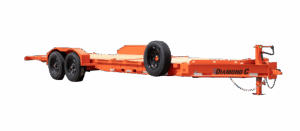
A current Diamond C LPX, for example, is a low-profile extreme-duty bumper-pull equipment trailer offered in lengths from approximately 16 to 30 feet and in GVWR packages ranging from 15,500 to 24,000 lbs. A 22-foot LPX may be configured for skid steers, compact excavators, and other construction equipment, but the recommendation still depends on the machine’s operating weight, attachments, trailer empty weight, required deck space, axle and tire ratings, loading angle, and the towing limits of the truck. LPX configurations use Lippert axles, with tandem and triple-axle packages available according to the selected GVWR. Loading choices such as MAX Ramps or the X-Ramp can also affect which machines can be loaded safely. That selection process is very different from choosing a Darkhorse 7′ x 16′ enclosed cargo trailer for tools, mobile service equipment, or protected business inventory.
Knowing those differences requires current product knowledge rather than memorized sales language. A salesperson should be able to walk a customer from a Liberty single-axle utility trailer in the 2,990 lb. GVWR class through 5,000 and 7,000 lb. utility options, enclosed cargo models, tilt trailers, dump trailers, heavy equipment trailers, and Diamond C FMAX gooseneck flatbeds without turning the comparison into homework. For Diamond C products, that also means knowing that the company has manufactured trailers in Mt. Pleasant, Texas, since 1985, that current Diamond C trailers use Lippert axles as standard, and that the finish is the DM Difference Maker multi-stage coating system. More importantly, the sales team must understand how payload, axle configuration, tires, brakes, suspension, deck height, ramp geometry, frame construction, and cargo securement affect the customer’s real-world use.
A Quick Example: Cargo vs. Open Utility
| Use Case | Trailer Type | Example Model | Typical GVWR |
|---|---|---|---|
| Lawn care equipment | Open utility | Liberty LU Tandem Utility | 7,000 lb. |
| Tools + inventory | Enclosed cargo | Darkhorse DHW 7′ x 16′ | 7,000 lb. |
| Mini excavator | Equipment/low profile | Diamond C LPX | 15,500-24,000 lb. |
| Hay / farm use | Gooseneck flatbed | Diamond C FMAX | 15,500-40,000 lb. |
The point is not to overwhelm anyone with ratings. It is to prevent a customer from buying a trailer whose usable payload, deck space, ramp capacity, tire capacity, or braking system is inadequate for the job. The same care applies to licensing questions. A trailer rated above 10,000 lbs. does not, by itself, automatically require a Class A CDL. The general Class A threshold involves a combination rating of 26,001 lbs. or more together with a towed vehicle rated above 10,000 lbs., with the vehicle’s use and any applicable exemptions also affecting the requirement. A dealer can help identify the ratings involved, but customers with commercial, interstate, or farm-use questions should confirm their specific obligations with the Indiana BMV, FMCSA, or another appropriate authority.
Financing: Clearing Up the Confusion
Many buyers arrive expecting to pay cash, wondering whether trailer financing is available, or uncertain about the difference between consumer financing, business equipment financing, and lease-to-own programs. Spencer Trailers offers multiple financing paths for qualifying consumers and businesses, but lender availability, residency restrictions, credit requirements, down payments, rates, and terms vary. The sales team’s job at this stage is to explain the available process accurately, not promise an approval or present a monthly payment without showing what is behind it.
Some financing applications can receive a decision quickly, but approval and delivery timing depend on the lender, the applicant’s information, required documents, trailer preparation, and completion of the sale. A longer term can reduce the monthly payment while increasing the total interest paid. A larger down payment may reduce both the financed balance and the monthly obligation. For a contractor, landscaper, farmer, or other small business owner, financing can preserve cash for payroll, fuel, materials, insurance, repairs, and operating expenses, but that does not automatically make it the best option for every buyer.
A good sales conversation itemizes the complete transaction: the trailer price, factory options, dealer-installed accessories, spare tire, toolbox, winch or tie-down equipment, applicable sales tax, title and registration costs, any dealer document fee, down payment, interest rate, term, monthly payment, and total amount paid over the life of the financing. Current inventory prices can change with model year, configuration, freight, manufacturer adjustments, and specials, so the discussion should be tied to the exact stock unit or written build being purchased. Indiana buyers should also understand that title and registration steps generally need to be completed within 45 days of acquisition to avoid late penalties.
And if financing does not make sense for someone, the honest answer may be to pay cash, select a less expensive configuration, or consider a properly inspected used trailer. Business buyers may also want to discuss depreciation with their tax professional. Under current federal rules, qualifying business property acquired and placed in service after January 19, 2025, may be eligible for 100 percent additional first-year depreciation, but eligibility, business-use requirements, elections, and the interaction with Section 179 depend on the taxpayer’s circumstances. A trailer salesperson can provide purchase documents; they should not guarantee a tax deduction.
The Walkthrough: Not a Formality
Once a trailer is selected and the paperwork is complete, there is still important work to do. A useful delivery walkthrough may take 20 to 30 minutes or longer depending on the trailer. A basic utility trailer, an enclosed cargo trailer, a hydraulic dump, a tilt trailer, and a heavy gooseneck all have different operating procedures. The customer should leave knowing how to hitch, test, load, secure, inspect, and maintain the exact trailer being delivered.
- Brake-controller setup: Trailers with electric drum brakes require a compatible and correctly adjusted brake controller. Electric-over-hydraulic systems must also be matched with a controller that supports that brake type. The walkthrough should cover controller gain, manual-override testing, breakaway-system checks, and the manufacturer’s brake burnishing or break-in procedure.
- Weight distribution: The familiar 60-percent-forward and 40-percent-rearward cargo guideline can be a starting point for many bumper-pull utility trailers, but it is not a universal substitute for measured tongue weight or the manufacturer’s instructions. The load must remain within GVWR, GAWR, tire, wheel, hitch, and tow-vehicle limits while staying low, centered side to side, properly secured, and positioned to produce stable tongue weight.
- Ball size and hitch rating: A 2-inch ball cannot be used with a 2-5/16-inch coupler. The ball, ball mount, receiver, coupler, pintle connection, gooseneck ball, safety-chain attachments, and weight-distribution equipment must all match the trailer and be rated for the actual load. The lowest-rated component determines the connection’s usable capacity.
- Tire pressure and lug torque: Tire pressure should be checked cold and set according to the trailer certification label, tire requirements, and manufacturer’s guidance. Lug nuts must be tightened with a torque wrench to the specification for the wheel and stud combination. Current Diamond C maintenance guidance calls for rechecking lug-nut torque after the first 10, 25, and 50 miles, followed by periodic inspections.
- Coupler latch and safety equipment: The customer should know how to seat and secure the coupler, install the latch pin, attach the safety chains to approved points, provide enough chain slack for turning without allowing the chains to drag, and connect the breakaway cable independently to the tow vehicle. On applicable bumper-pull designs, the chains should be crossed beneath the tongue as instructed so they can help support it if the coupler separates.
These are not obscure technicalities. They are basic steps that help keep the trailer stable, connected, visible, and controllable. The walkthrough should also include lights, turn signals, brake lights, ramps, doors, tie-down points, hydraulic controls, battery charging, spare-tire equipment, jack operation, tire condition, safety labels, and pre-trip inspection procedures. A sales team that rushes past this part of delivery leaves the customer with equipment but not the knowledge needed to use it responsibly.
After the Sale: Where the Relationship Actually Starts
Here is one of the clearest differences between a dealership that wants a long-term customer and one that only wants to complete a transaction: what happens after the trailer leaves the lot. Questions do not stop at delivery. New owners may need help with brake-controller settings, replacement keys, warranty documentation, accessory selection, loading technique, torque specifications, maintenance intervals, or parts identification.
A few weeks into ownership, a customer might notice a new rattle, an intermittent light, unusual tire wear, a hydraulic issue, a door that needs adjustment, or wear on the deck that may or may not be normal. Those calls should be evaluated rather than dismissed. Some concerns are routine adjustments or maintenance items. Others may require a repair, replacement component, manufacturer guidance, or warranty claim. A reliable dealer helps the customer determine the correct next step instead of making the owner guess.
Longer term, Spencer Trailers customers may return for tie-down rings, straps, spare tires, wheels, jacks, coupler components, toolboxes, tarps, winches, hydraulic parts, brake components, lighting, or other accessories. Eventually, the customer’s work may outgrow the original trailer. The lawn-care business that started with a single-axle utility trailer may need a 7,000 lb. tandem unit. A contractor may move from an open equipment trailer to an enclosed cargo trailer. An owner hauling compact machinery may eventually need a higher-GVWR Diamond C LPX, HDT, or FMAX configuration. That next purchase is easier when the first sale was correctly matched and the dealer remained available afterward.
Referral business works the same way. A tandem-axle enclosed car hauler, hydraulic dump trailer, commercial equipment trailer, or heavy gooseneck flatbed is a substantial purchase. Buyers naturally ask coworkers, neighbors, family members, farmers, contractors, and equipment operators where they bought their trailers and how the dealer handled questions after the sale. A detailed recommendation from someone who has actually used the product carries more weight than a general advertisement. Every interaction therefore becomes part of the dealership’s reputation.
What to Bring When You Come In
If you’re planning a visit to browse inventory, a little preparation makes the conversation faster and more productive. You do not need to arrive knowing a model code, axle package, or ramp option. Bringing accurate information about the truck and the intended load gives the sales team a much stronger starting point.
- Bring the tow vehicle’s year, make, model, engine, drivetrain, cab and bed configuration, axle ratio if known, VIN, payload label, GVWR, GAWR, receiver rating, and manufacturer-provided maximum loaded-trailer and GCWR information. Do not rely only on a generic online tow-rating chart.
- Have a realistic estimate of the heaviest expected load. Include attachments, buckets, implements, fuel, batteries, tools, pallets, spare parts, coolers, and other cargo rather than counting only the primary machine or vehicle.
- Tell the team where the trailer will be registered and operated and whether it will be used personally, commercially, on a farm, or across state lines. Indiana requires brakes on trailers and semitrailers with a gross weight of 3,000 lbs. or more, while other states may apply different rules. The brake system must also be compatible with the tow vehicle’s controller.
- Have a budget range in mind and decide whether that figure refers to purchase price, cash due at signing, or a target monthly payment. Also consider the cost of the correct hitch, brake controller, spare tire, tie-down equipment, registration, insurance, maintenance, and any job-specific accessories.
You do not need to have every answer before arriving. That is what the team is there to help work through. But accurate truck information, a realistic maximum load, the intended use, and a workable budget remove much of the guesswork. They also make it easier to compare payload capacity, deck dimensions, loading style, brake type, axle configuration, and total ownership cost without steering the conversation toward a trailer that cannot perform the intended job.
The Honest Version of “We’re Here to Help”
Every dealer says the staff is there to help. The meaningful test is whether the person in front of you understands the equipment well enough to recommend a smaller trailer when it is sufficient, a heavier trailer when the load requires it, or a different towing setup when the truck is the limiting factor. Good advice sometimes means directing a customer away from a trailer that is available on the lot because its payload, dimensions, loading system, hitch requirements, or GVWR do not fit the job.
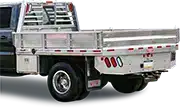
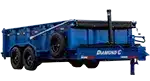
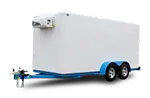
Spencer Trailers carries products across a wide range of prices and applications, including single- and tandem-axle utility trailers, enclosed cargo trailers, car haulers, dump trailers, tilt trailers, low-profile equipment trailers, deck-over trailers, gooseneck flatbeds, truck beds, and specialized mobile refrigeration equipment. That inventory depth only creates value when the team understands how to match each product to the customer’s load, tow vehicle, operating environment, budget, and long-term plans. The process begins with questions, continues with an accurate comparison, and should end with a complete delivery walkthrough rather than a set of keys and a receipt.
Call (812) 829-0226, stop by at 291 West State Hwy 46 in Spencer, Indiana, or reach out online. Bring your questions, tow-vehicle information, load scenario, and intended use. The team will help you compare the relevant ratings and configurations so you can leave with a trailer that fits the work rather than one that merely looked right from across the lot.

