





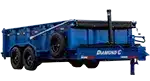

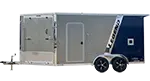
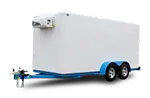
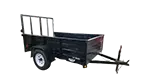

You bought the trailer. You have hauled a few loads, put some miles on it, and now something does not feel quite right. Maybe the brakes are not responding as smoothly as they used to. Maybe a running light went dark after a wet weekend. Maybe one tire is wearing faster than the others, or you simply cannot remember the last time the wheel bearings were inspected. That is where our service department comes in.
A trailer may look simple, but it combines a frame, suspension, hubs, tires, brakes, wiring, coupler, safety equipment, and sometimes hydraulic or 120-volt electrical systems. Every one of those components needs to remain compatible with the trailer’s GVWR and intended use. The service side of Spencer Trailers exists because trailers need real maintenance and because owners deserve a place that understands how those systems work together.
What We Actually Work On
Trailer service is not glamorous, but it protects your equipment, your load, your tow vehicle, and everyone sharing the road with you. Here is what moves through our service bay on a regular basis.
Bearing Repacks
Wheel bearings are among the most commonly neglected components on a trailer. They carry the trailer’s weight while turning at highway speed, and they are exposed to heat, moisture, road salt, dust, and long periods of storage. When grease breaks down, a seal leaks, or bearing adjustment becomes too loose or too tight, damage can progress quickly.
A failed bearing can destroy the hub, damage the spindle, overheat the brake assembly, or allow the wheel and hub assembly to separate from the trailer. That is more than an inconvenient breakdown. It can create a serious loss-of-control hazard and turn a routine maintenance item into an axle replacement, roadside tow, damaged load, or collision.
For grease-lubricated Lippert trailer hubs, published service guidance calls for replacing the bearing grease every 12,000 miles or 12 months, whichever comes first. That interval is a useful baseline, but the correct schedule still depends on the axle and hub manufacturer, operating conditions, mileage, storage environment, and service history. Trailers used daily, exposed to water, operated on dusty jobsites, or run under demanding loads may need inspection sooner. Some heavier hub assemblies use oil lubrication rather than packed grease and must be serviced according to their own oil-level, seal, and inspection procedures.
A proper bearing service involves more than pumping grease through a lubrication fitting. We remove the hub when appropriate, remove the old lubricant, clean and inspect the bearing cones and cups, check for corrosion, pitting, spalling, heat discoloration, scoring, and abnormal wear, and examine the spindle and sealing surface. Bearings are matched components, so a damaged cone and cup should be replaced as a set. We also inspect the grease seal and normally install a new seal when the hub has been removed for full service.
Grease compatibility matters as well. Different thickener chemistries should not be mixed unless compatibility has been confirmed. When changing grease types, the old material should be removed rather than assuming any two products labeled “wheel bearing grease” can safely be combined.
Brake Service
Many utility, equipment, dump, cargo, and flatbed trailers use electric drum brakes. Higher-capacity trailers may use electric-over-hydraulic disc or drum systems, while boat trailers frequently use hydraulic surge-actuated brakes. Each system operates differently and requires the correct inspection, controller, actuator, wiring, fluid, and replacement components.
On an electric drum brake, the magnet, drum armature surface, shoes, springs, adjuster, wiring, and bearings all affect braking performance. Magnets can wear unevenly, linings can become thin or contaminated, drums can become scored or out of round, and wiring resistance can reduce the current reaching the brakes. A trailer that pulls to one side, grabs, locks a wheel, responds weakly, or brakes intermittently needs diagnosis rather than a simple controller adjustment.
Our brake service can include inspecting brake shoes and magnets, checking drum and armature surfaces, verifying adjustment, measuring electrical output, checking trailer grounds, examining axle-to-axle brake wiring, and confirming that the brakes apply evenly. When brake shoes, magnets, or complete backing plates are replaced, components should be matched across the axle so the left and right wheels develop balanced braking force.
New electric drum brakes and newly installed friction components may also need to be burnished according to the brake manufacturer’s procedure. Burnishing seats the brake shoes and magnets to their working surfaces. Skipping that process can leave an owner with new parts that do not yet produce their expected braking performance.
The tow vehicle’s brake controller is part of the system. Controller type, gain, boost, load setting, and electric-over-hydraulic compatibility must match the trailer’s brake equipment. Too little output leaves the tow vehicle doing more than its share of the stopping. Too much output can cause harsh braking or wheel lockup. We can evaluate the trailer and tow vehicle together so the settings are based on actual brake response rather than guesswork.
The breakaway system also deserves attention. We inspect the switch, cable, wiring, battery, charger circuit, and brake activation. The cable must be attached independently to an appropriate point on the tow vehicle, not looped around the safety chains or attached where it could pull out during ordinary turns.
Indiana’s brake statutes use a 3,000-pound gross-weight threshold. A trailer or semitrailer at 3,000 pounds or more, when operated on a highway, must have brakes adequate to control, stop, and hold the vehicle. The brakes must be controllable from the towing vehicle’s cab and must apply automatically during an accidental breakaway. Indiana also requires service brakes on all wheels of a new trailer sold in the state and operated on the highway, except for a trailer under the statutory 3,000-pound threshold. Commercial operation may bring additional federal requirements, but the basic rule is straightforward: every required brake and breakaway component must actually work.
Wiring and Lighting Repair
Trailer wiring takes constant abuse. It flexes, vibrates, gets pinched against frames and crossmembers, collects road spray, and is frequently exposed to corrosion at plugs, junction boxes, light housings, and ground connections. Wiring problems can also begin in the tow vehicle, so replacing a trailer light is not always the real solution.
We diagnose trailer wiring from the connector at the hitch through the junction box and back to the individual circuits. That may include the running lights, brake lights, turn signals, side markers, clearance and identification lights, license-plate light, electric brakes, reverse circuit, auxiliary power, breakaway charger, and trailer ground.
Common repairs include replacing damaged 7-way plugs, repairing junction-box connections, rerouting wiring that has rubbed through against steel, replacing corroded terminals, correcting poor grounds, and troubleshooting intermittent faults. A weak ground can make several lights flash together, cause lights to dim when the brakes apply, or produce confusing symptoms that appear to move from one circuit to another.
LED lamps last a long time, but they are not immune to moisture intrusion, impact damage, failed circuit boards, broken connectors, or voltage problems. Before replacing a lamp, we verify that the circuit is supplying the correct voltage and that the ground path can carry the load.
Enclosed cargo trailers may also have 12-volt interior lights, batteries, converters, receptacles, or optional 120-volt shore-power equipment. Those systems are different from ordinary trailer lighting and should not be diagnosed by randomly connecting wires or replacing fuses with higher-rated ones. We evaluate the installed equipment and determine whether the repair fits our service scope or requires a specialist for the line-voltage portion.
Axle Work and Welding
Axle and suspension problems can begin with a hard curb strike, pothole impact, overloaded trip, loose wheel bearing, worn spring bushing, broken leaf spring, damaged equalizer, bent hanger, or years of fatigue. Uneven tire wear, a trailer that tracks to one side, abnormal wheel camber, clunking over bumps, or one axle carrying visibly more load than another all deserve inspection.
We examine the axle tube, spindle area, hubs, springs, equalizers, shackles, wet bolts or standard bolts, bushings, U-bolts, hangers, and attachment points. Loose U-bolts, elongated spring-eye bushings, cracked hangers, and worn equalizers can change alignment and load distribution even when the axle tube itself is still usable.
A bent axle tube or damaged spindle is not automatically a welding job. Axle tubes, spindles, brake flanges, and suspension mounts are engineered load-bearing components. Welding or heating them without an approved procedure can change alignment, reduce material strength, damage internal components, or create a new failure point. In many cases, replacing the axle assembly is safer and more economical than attempting an improvised repair.
Structural frame repairs require the same judgment. We inspect coupler mounts, tongues, crossmembers, spring hangers, ramp mounts, frame rails, stake pockets, and other load-bearing areas to determine whether a qualified welded repair is appropriate. The damaged area must be prepared correctly, aligned correctly, and repaired with consideration for the original material and load path. Covering a crack with a weld bead without correcting the cause is not a dependable repair.
We handle repairs that fall within our equipment and service capabilities. When a manufacturer-approved replacement is the proper solution, or when corrosion, deformation, or widespread cracking makes a trailer uneconomical to repair, we will explain that plainly. Spending money on a repair that cannot restore safe service is not in the customer’s interest.
Parts
We keep practical service items available and can source model-specific components when the repair requires them. Common needs include trailer tires and wheels, bearing kits, seals, hub and drum assemblies, electric brake components, complete brake backing plates, breakaway switches and batteries, 7-way connectors, junction boxes, replacement lights, coupler components, jacks, safety chains, suspension hardware, and cargo-securement equipment. Availability changes, so calling ahead is the best way to confirm that a particular item is on hand.
Trailer tires should be matched by more than the size molded into the sidewall. Load range, maximum load, pressure rating, construction, speed rating, wheel width, wheel pressure capacity, bolt pattern, pilot diameter, and offset can all matter. Installing a higher-load tire does not increase the trailer’s GVWR, axle rating, wheel capacity, or payload. The trailer remains limited by its lowest-rated component and the rating shown on its certification label.
Bearing and brake parts also need positive identification. A trailer’s brand, year, or advertised axle rating may not be enough because manufacturers can use different hub, spindle, brake, and suspension packages within the same model family. Bearing numbers, seal dimensions, brake diameter and width, axle tags, VIN information, and direct measurements help us order the correct components the first time.
For brands we represent, including Diamond C, H&H, Liberty, Delco, Darkhorse Cargo, Wells Cargo, Legend, and United Trailers, we can help identify the appropriate parts or warranty channel. Warranty coverage varies by manufacturer, model year, component, and cause of failure. Manufacturers may require the VIN, proof of purchase, photographs, service records, or prior authorization before approving parts or labor. Normal wear, lack of maintenance, overloading, corrosion, and impact damage are generally treated differently from a covered manufacturing defect.
If you need something we do not have in stock, we can order it when the component remains available or identify a suitable replacement where substitution is permitted. Bringing the VIN, certification-label information, axle tag, old part, or clear photographs can speed that process considerably.
Pre-Purchase and Pre-Season Inspections
Two situations come up constantly: someone buying a used trailer from a private party who wants a professional eye on it before handing over cash, and an existing owner who has stored a trailer over winter and wants it checked before the busy season starts.
A pre-purchase inspection can cover the coupler, latch, tongue or gooseneck structure, safety chains, breakaway system, jack, frame, welds, suspension, axles, hubs, brakes, tires, wheels, lighting, ramps, gates, floor, decking, and visible hydraulic equipment. We also look for signs of collision damage, overloaded suspension, improvised wiring, mismatched tires, missing certification information, and repairs that may be hiding a larger problem.
The inspection scope matters. A basic wheel-end check can identify looseness, noise, leakage, obvious overheating, or abnormal rotation, but confirming the internal condition of bearings, cups, seals, and brake components generally requires removing the hub or drum. We can explain the difference so you know what has and has not been inspected before making a purchase decision.
Wood decking deserves more than a quick glance from above. Boards can look acceptable while being soft around fasteners, cracked underneath, separating at the ends, or damaged where equipment tires repeatedly load the same area. Steel floors and dump bodies should be checked for distortion, thinning, cracked welds, and corrosion around crossmembers and hinge points.
Tire inspection includes tread condition, uneven wear, cuts, bulges, sidewall cracking, date codes, inflation requirements, and confirmation that the tire and wheel capacities are appropriate for the trailer. Tread depth alone does not determine whether a trailer tire is serviceable. A lightly used tire that has spent years outdoors may be in worse condition than a newer tire with more miles.
A pre-season inspection follows many of the same steps but also looks for storage-related problems such as discharged breakaway batteries, seized brake components, rodent-damaged wiring, low tire pressure, surface corrosion, hydraulic leaks, contaminated connectors, and deteriorated decking. Wheel fastener torque should be verified according to the trailer and wheel manufacturer’s procedure, especially after a wheel has been removed or installed.
A professional inspection cannot guarantee that an old component will never fail, but it can identify defects and overdue maintenance that are easy to miss in a driveway. It is a small investment compared with lost work time, roadside towing, damaged cargo, or liability from operating an unsafe trailer.
Why This Matters After the Sale
The trailers we sell come from established manufacturers, including Diamond C, H&H, Liberty, Delco, Darkhorse Cargo, Wells Cargo, Legend, and United Trailers. Each manufacturer has its own designs, component suppliers, maintenance instructions, and warranty terms. No trailer is maintenance-free, regardless of purchase price or brand reputation.
A heavy-duty Diamond C FMAX gooseneck working every week has a different service profile from a lightly used single-axle utility trailer. Mileage matters, but so do load cycles, road conditions, weather exposure, storage, number of starts and stops, time spent near rated capacity, and whether the trailer regularly operates on gravel, farms, construction sites, or salted winter roads.
We know the trailers we sell, but we still identify parts from the actual trailer rather than relying on assumptions. Current Diamond C premium families such as FMAX, HDT, LPT, LPX, WDT, and DEC use Lippert axles as their standard axle equipment, while the exact axle capacity, hub, brake type, suspension, wheel, and tire package vary by model and configuration. The certification label, VIN, axle tag, build information, and physical component measurements remain the best guides for service and parts selection.
That familiarity helps us diagnose problems efficiently, but it also helps prevent a common service mistake: ordering a part merely because it looks similar. Two brake assemblies can share the same drum diameter and still use different widths, mounting flanges, magnet ratings, or hardware. Two hubs can share a bolt pattern but use different bearings, seals, capacities, or wheel studs.
Factory warranty and routine maintenance are also separate issues. A warranty may cover certain defects, but it does not replace bearing lubrication, brake adjustment, tire inspection, fastener checks, battery maintenance, or damage prevention. Keeping service records can help establish what work was performed and when, which is valuable for maintenance planning, resale, and some warranty claims.
A Few Questions We Hear Often
Do I have to buy my trailer here to use your service department?
No. We service trailers regardless of where they were purchased, subject to the type of trailer, component availability, and the scope of repair. Bring what you have, and we will evaluate it. Calling first with the make, model, GVWR, and problem description helps us confirm whether the work fits our service capabilities.
How do I know if my bearings need repacking?
If you cannot document when they were last inspected or serviced, it is time to establish a maintenance baseline. Warning signs include grinding or rumbling, grease leaking onto the wheel or brake area, noticeable wheel play, a hub that is significantly hotter than the others after operating under similar conditions, or a wheel that does not rotate smoothly when safely lifted. A hub may normally become warm in use, so temperature should be compared among wheel positions rather than judged by touch alone. Stop towing if there is looseness, severe heat, smoke, noise, or visible bearing damage.
Can you match a brake controller to my specific trailer?
Yes. Bring the tow vehicle and trailer so we can verify the connector, controller operation, trailer brake circuit, and actual braking response. We can help set gain and related controls for the trailer’s loaded condition and determine whether the controller is compatible with electric drum or electric-over-hydraulic equipment. Controller settings should be rechecked when trailer weight changes significantly, road conditions change, or brake components have been serviced.
My trailer is older and I am not sure parts are still available. Is it worth servicing?
It depends on the trailer’s condition and the work required. Bearings, seals, brakes, hubs, suspension hardware, wiring, lights, jacks, and coupler components are available for many older trailers, but correct identification is essential. A sound frame with worn service components may be worth repairing. A trailer with extensive frame corrosion, severe axle damage, repeated structural cracking, or an unknown rating may not be. We will give you a direct assessment before recommending a major repair.
How to Schedule Service
Spencer Trailers is located at 291 West State Hwy 46, Spencer, IN 47460. We serve Owen County and customers throughout the surrounding region. Call or text (812) 829-0226 to schedule service or ask about parts availability before making the drive. Our posted service hours are Monday through Friday, 8:30 a.m. to 5:00 p.m.
When you call, provide as much information as you can: trailer manufacturer, model, year, VIN, GVWR, axle rating, tire size, brake type, and a description of what you are seeing, hearing, or feeling. Photographs of the certification label, axle tag, damaged area, or old component can also help us prepare for the appointment.
A squealing or grinding wheel, uneven tire wear, intermittent brake activation, a hot hub, a flickering light, a hydraulic leak, or a coupler that does not latch correctly are all useful diagnostic details. Tell us when the problem occurs, whether the trailer is loaded or empty, whether it began suddenly or gradually, and what work has already been attempted.
Some conditions should not wait for an appointment while the trailer continues to be used. Do not tow a trailer with a loose wheel, smoking or severely overheated hub, visibly broken spring, cracked coupler attachment, tire bulge, exposed tire cord, major frame crack, unsecured hydraulic cylinder, or a brake-related electrical short. Arrange safe transport or roadside assistance rather than risking a larger failure.
You can also reach us through our contact page. If you are shopping for a new trailer and want to understand what routine maintenance, component service, and manufacturer warranty support look like before you buy, review our current inventory and ask us about the specific trailer when you call.
A well-maintained trailer is a trailer that is more likely to work safely when you need it. Get yours on the schedule before a loose connection, worn bearing, weak brake, damaged tire, or small crack becomes a much more expensive problem.


