


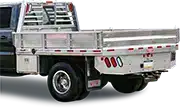
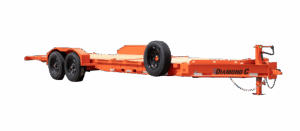






You’ve got a three-quarter-ton or one-ton pickup, a heavy trailer waiting in the yard, and a hitch ball already sticking up through the bed floor. It should be simple, right? Then someone mentions pin weight, vertical load, OEM puck systems, sliding hitch heads, and rear-axle ratings, and suddenly the whole setup feels much more complicated. It doesn’t have to be, but every component has to match.
Truck-bed hitching generally breaks down into two distinct systems: gooseneck and 5th wheel. They use different trailer connections, different hitch hardware, and different coupling procedures. Neither connection automatically increases what the truck can legally or safely carry. Choosing the correct hitch starts with identifying the trailer’s coupler and then confirming the ratings of the truck, hitch, trailer, tires, axles, and every adapter or mounting component in the system.
Gooseneck Ball vs. 5th Wheel: Not the Same Thing
A gooseneck hitch uses a ball mounted near the center of the truck bed, normally directly over or slightly forward of the rear axle as specified by the hitch or truck manufacturer. A 2 5/16-inch ball is common on pickup-truck gooseneck systems, while some higher-capacity commercial configurations use a 3-inch ball. The trailer’s downward-facing coupler lowers over the ball and locks around it. This arrangement is common on livestock trailers, agricultural trailers, equipment haulers, dump trailers, and heavy flatbeds.
A 5th wheel hitch uses a coupling plate with jaws that close around a kingpin mounted beneath the front of the trailer. The hitch may mount to factory pucks, industry-standard above-bed rails, or a vehicle-specific under-bed mounting system. Pickup-truck 5th wheel hitches use the same basic kingpin-and-jaw principle seen in larger commercial equipment, but pickup hitches, mounting systems, weight ratings, and intended applications vary substantially by product.
The connection installed on the trailer dictates the hitch you need. A gooseneck coupler must match the correct ball diameter, while a kingpin must engage a compatible 5th wheel hitch. Manufacturer-approved adapters, replacement pin boxes, and factory coupler options are available for certain trailers, but an adapter should never be treated as a universal shortcut. It must be approved for the specific trailer, hitch, truck, and intended load without reducing required clearances or exceeding any component rating.
What Your Truck Can Actually Handle
This part matters more than the style of hitch. A truck’s advertised maximum towing capacity is only one limit in a much larger system. For an in-bed trailer, you also have to evaluate the truck’s gross vehicle weight rating, payload allowance, rear gross axle weight rating, tire and wheel capacities, gross combined weight rating, hitch rating, and the vehicle-specific gooseneck or 5th wheel towing limit.
When you tow a gooseneck or 5th wheel trailer, part of the loaded trailer weight transfers vertically into the truck bed. That load is usually called pin weight for a 5th wheel and hitch weight, tongue weight, or vertical ball load for a gooseneck. Depending on the trailer design, loading, and manufacturer instructions, an in-bed trailer may place approximately 15 to 25 percent of its loaded weight on the truck. That percentage is planning guidance, not a substitute for weighing the actual combination.
For example, a gooseneck weighing 20,000 pounds as loaded could place roughly 3,000 to 5,000 pounds on the truck. The actual amount can change considerably when equipment, pallets, livestock, or other cargo is moved forward or rearward. Too little hitch weight can reduce stability, while too much can overload the truck’s payload, rear axle, suspension, tires, wheels, or hitch even when the combination remains below the advertised maximum trailer rating.
Check the certification, tire-loading, and payload labels inside the driver’s door or door jamb. The payload figure on the truck’s label reflects that vehicle as manufactured, not the highest payload advertised for the model line. Passengers, tools, auxiliary fuel tanks, transfer tanks, bed covers, toolboxes, hitch hardware, cargo, and the trailer’s vertical load all use part of that allowance. Aftermarket equipment added after the truck was built can reduce the remaining capacity further.
Payload is critical, but it is not the only number to watch. A combination can remain within payload and still exceed the truck’s rear-axle rating, tire capacity, gross combined rating, hitch rating, or vehicle-specific towing limit. The safe working limit is always the lowest applicable rating anywhere in the complete setup. For a heavily loaded combination, certified scale weights for the truck alone and the connected trailer are far more useful than estimates.
Commercial driver’s-license requirements are a separate issue from hitch capacity. For commercial operation in Indiana, a Class A CDL is generally required when the combination has a gross combination weight rating of 26,001 pounds or more and the towed unit has a gross vehicle weight rating greater than 10,000 pounds, subject to applicable exemptions. A trailer rating above 10,000 pounds by itself does not automatically create that Class A threshold; the rated combination must also reach 26,001 pounds or more. Operators should verify current Indiana BMV and federal requirements for their exact business use, vehicle ratings, and exemption status.
Puck Systems: When the Bed Has Holes
Many late-model heavy-duty pickups are available with a factory puck system, often described as an OEM gooseneck or 5th wheel prep package. A typical system has four capped outer mounting points for a 5th wheel base and a center receiver for a removable gooseneck ball. Separate openings may accept removable safety-chain anchors. The number, spacing, shape, and locking method of those mounting points are specific to the truck manufacturer, model, bed, and model year.
Current Ford Super Duty, Chevrolet Silverado HD, GMC Sierra HD, and Ram Heavy Duty trucks can be configured with factory in-bed towing preparation. The hardware under the bed ties the mounting points into structural frame components rather than relying on the pickup-bed sheet metal to carry the load. A truck that has round bed plugs is not automatically compatible with every puck-mounted hitch, so the hitch must be listed for that exact OEM pattern.
The primary advantage is a clean, removable installation. A compatible gooseneck ball, safety-chain anchors, or 5th wheel base can lock into the factory receivers without leaving permanent above-bed rails in place. When the equipment is removed and the protective caps are reinstalled, most of the bed remains open for normal cargo. Brands such as B&W Trailer Hitches, Reese, and other established manufacturers offer vehicle-specific products for these factory systems.
Installation and removal procedures vary. Some gooseneck balls use a quarter-turn or latch-operated locking mechanism, while 5th wheel bases commonly use locking feet and pinned handles at the four outer pucks. Every foot, ball, anchor, handle, and retaining pin must be fully seated and locked according to the manufacturer’s instructions. Paint buildup, corrosion, bed-liner material, dirt, or debris around a receiver can prevent proper engagement even when the component appears to be in place.
If your truck doesn’t have factory pucks, you still have several legitimate options. A vehicle-specific under-bed gooseneck hitch, above-bed 5th wheel rails, or an aftermarket under-bed 5th wheel mounting system can transfer the load into the frame. The correct choice depends on the truck’s frame, bed length, hitch rating, intended trailer, and whether you want permanent rails visible in the bed.
Rail Systems for 5th Wheel Hitches
A traditional above-bed 5th wheel installation uses two rails that run side to side across the pickup bed. Vehicle-specific brackets or a universal bracket kit connects those rails to the truck frame below. The hitch legs pin into the rails at standardized attachment locations, allowing many compatible fixed or sliding pickup-truck 5th wheel hitches to be removed when the bed is needed for cargo.
A fixed hitch keeps the kingpin connection in one approved towing position, normally near the rear-axle centerline. A sliding hitch includes a mechanism that moves the hitch head rearward for additional cab-to-trailer clearance during certain low-speed maneuvers. The rails do not slide; the hitch’s slider assembly moves along its own fore-and-aft mechanism while the hitch remains attached to the rails or OEM mounting points.
That additional movement can be useful on short-bed trucks, but it is not a universal cure for every clearance problem. Clearance depends on the actual bed length, distance from the axle to the cab, hitch position, trailer-front profile, kingpin location, pin-box design, and any manufacturer-approved turning-point system. A slider should be placed in its forward towing position and positively locked before normal road travel unless the hitch manufacturer expressly specifies another procedure.
Rail-mounted products are available in several capacities. The B&W Patriot line is one example of a hitch designed for industry-standard rails, while other B&W Companion models attach to an under-bed Turnoverball system or directly to OEM pucks. Reese and other manufacturers also offer fixed and sliding hitches with different rail, puck, and under-bed mounting requirements. Product-family names alone do not establish compatibility; the exact part number and mounting kit must match the truck.
Installing rails is not simply a matter of bolting hardware to the pickup-bed floor. The load must transfer through approved brackets into the truck frame. Depending on the truck and kit, installation may use existing frame holes or require drilling, bed measurements, temporary removal of the spare tire, repositioning of heat shields, or other vehicle-specific work. Never weld a consumer rail kit or substitute generic hardware unless the instructions expressly authorize it. Correct hole placement, fastener grade, torque, clearances, and periodic reinspection are essential to the hitch’s rated capacity.
Installing a Gooseneck Ball: What the Job Actually Involves
On a factory-prepped truck, installing a removable gooseneck ball can be relatively quick. Remove the protective cap, clean and inspect the receiver, insert the truck-specific ball, and operate its locking mechanism exactly as directed. Install the matching safety-chain anchors in their designated receivers and pull upward on every removable component to confirm that it is fully captured. Some designs require lubrication or periodic inspection, so follow the maintenance section of the hitch instructions rather than assuming the ball is maintenance-free.
The ball’s position is determined by the OEM prep package or the engineered aftermarket hitch kit. It is generally located over or slightly forward of the rear axle, but there is no reliable universal measurement from the tailgate or front wall of the bed. Never relocate the ball based on a generic distance. An incorrect fore-and-aft position can affect cab clearance, axle loading, bed clearance, handling, and the structural load path into the truck frame.
For trucks without factory preparation, a common solution is an under-bed gooseneck hitch with frame brackets and structural crossmembers. Installation normally requires a precisely located opening in the bed for the ball and additional openings for safety-chain anchors. Access varies by truck, and some jobs require working around the exhaust, spare tire, wiring, fuel tank, shields, or bed supports. A spray-in liner may need to be cleared from contact surfaces, while a drop-in liner may need accurately trimmed openings that do not interfere with the ball or chain anchors.
Installation time depends heavily on the truck, hitch kit, tools, corrosion, bed liner, and installer experience. Rather than relying on a universal time estimate, review the instructions for the exact part number before starting. If the procedure involves frame drilling, lifting heavy crossmembers, or working near fuel and electrical components, professional installation is often the safer choice.
One thing people skip and shouldn’t is safety chains. A gooseneck trailer must have properly rated chains or other approved safety devices attached to dedicated anchors on the tow vehicle. Indiana requires suitable safety connections on trailers and semitrailers, and the attachment system must be strong enough for the trailer. The breakaway cable is a separate safety component; it should be connected to an independent attachment point so it can activate the trailer brakes if the trailer separates from the hitch.
Gooseneck or 5th Wheel: Which One Do You Actually Need?
Here’s the practical answer: begin with the connection installed on the trailer, and then select a compatible hitch that is rated for the truck and the trailer’s loaded weight.
- If you’re pulling a livestock trailer, equipment hauler, agricultural flatbed, or heavy dump trailer, it commonly uses a gooseneck connection. A Diamond C FMAX flatbed or another gooseneck trailer from our inventory should be matched to the ball diameter, coupler rating, trailer GVWR, and vertical-load limit shown on that specific unit’s identification and component labels.
- If you’re pulling a 5th wheel RV or another trailer equipped with a kingpin, you need a compatible 5th wheel hitch and mounting system. Confirm that the hitch is approved for the trailer type and intended use, because some pickup-truck hitches have application restrictions in addition to their weight ratings.
- If you’re not sure what your trailer has, inspect the connection at the front of the trailer. A downward-facing round socket with a locking mechanism is a gooseneck coupler. A solid vertical steel pin with a retaining groove is a 5th wheel kingpin. Then read the coupler, pin-box, hitch, and trailer labels instead of identifying the system by appearance alone.
Both systems can handle serious loads when properly engineered, installed, maintained, and matched to the truck. A removable gooseneck ball generally occupies less bed space and may cost less than a complete 5th wheel assembly, although pricing varies by truck and mounting system. A 5th wheel hitch provides a broad coupling plate, positive jaw engagement, and, on many models, a visible coupling indicator. Which one feels easier to connect solo depends on the trailer, hitch design, bed access, visibility, and driver experience.
Quick Reference: Common Ratings at a Glance
| Hitch Type | Typical GTW Rating | Typical Pin/Hitch Weight Rating | Example Product |
|---|---|---|---|
| Gooseneck ball for OEM puck system | Commonly up to 30,000 lbs; higher-capacity systems are application-specific | Commonly up to 7,500 lbs on a 30,000-lb kit | B&W OEM Gooseneck Ball & Safety Chain Kit |
| Aftermarket under-bed gooseneck hitch | Commonly up to 30,000 lbs, depending on truck and part number | Commonly up to 7,500 lbs | B&W Turnoverball |
| Fixed pickup 5th wheel hitch | Approximately 16,000 to 32,000 lbs | Approximately 4,000 to 8,000 lbs | B&W Companion OEM or Reese M5 |
| Sliding pickup 5th wheel hitch | Commonly 16,000 to 20,000 lbs | Commonly 4,000 to 5,000 lbs | B&W Companion OEM Slider or Patriot Slider |
These are general market ranges, not ratings for a particular truck or installation. Verify the exact hitch part number, mounting kit, ball, coupler, pin box, truck, and trailer. The complete combination is limited by its lowest-rated component, and a hitch’s maximum rating does not increase the truck manufacturer’s payload, axle, tire, gross vehicle weight, gross combined weight, or towing limits.
A Few Things That Catch People Off Guard
Bed liner interference. Spray-in liners can add material around puck openings, under removable components, or near above-bed rails. Drop-in liners can flex or become trapped between a hitch and the structural mounting surface. Trim or clear the liner only as directed by the hitch manufacturer, and make sure the ball, puck feet, rail legs, safety-chain anchors, handles, and pins can seat and move through their full range. Never use a liner as a structural spacer.
Bed and cab geometry. Cab style alone does not determine trailer clearance. Bed length, axle location, trailer-front shape, kingpin or coupler position, hitch height, pin-box design, and the trailer’s pitch all matter. Short-bed trucks often require closer clearance analysis and may benefit from a compatible slider, offset, or manufacturer-approved turning-point system. A sliding hitch is not automatically mandatory for every short bed, and an offset component is not automatically safe for every trailer frame or coupler.
Hitch height and bed clearance. The trailer should tow level or within the range allowed by its manufacturer, while retaining adequate clearance between the underside of the trailer neck or overhang and the truck’s bed rails and tailgate. Raising or lowering the hitch can change trailer attitude, axle loading, suspension travel, and clearance. Adjust only through approved coupler, pin-box, hitch-head, or suspension positions, and recheck all fastener torques after adjustment.
Brake controllers. Indiana requires brakes on trailers at the applicable 3,000-pound threshold, not merely on trailers above 10,000 pounds. A trailer with electric drum brakes needs a compatible, properly adjusted in-cab controller. Electric-over-hydraulic brake systems require a controller specifically compatible with that actuator, while a purely hydraulic surge-brake system operates differently. Many late-model heavy-duty pickups have an integrated controller, but it still must be configured for the trailer’s brake type and tested before travel.
Breakaway equipment. The breakaway battery, switch, cable, and trailer brakes must be functional. Connect the breakaway cable to a secure point independent of the ball latch or 5th wheel jaw-release mechanism. It should have enough length for normal articulation without dragging or wrapping around the hitch, but it must activate before a separated trailer can travel freely.
Turning and articulation. A trailer can clear the cab during a level turn and still contact the bed rails, tailgate, toolbox, or cab when entering a steep driveway or crossing uneven ground. Check clearance gradually with a spotter before making a full-angle turn, especially after changing trucks, hitch height, coupler position, suspension height, or tires.
What If You’re Not Sure Your Setup Is Right?
We see this regularly. Someone buys a trailer, gets home, and discovers that the existing hitch does not match the trailer connection. Others have the correct ball diameter but insufficient hitch capacity, the wrong coupler height, inadequate bed clearance, missing safety-chain anchors, an incompatible brake controller, or a truck that runs out of rear-axle or payload capacity before reaching the trailer’s GVWR.
Start by recording the truck’s VIN-specific towing information, payload label, GVWR, rear GAWR, tire capacities, bed length, and installed towing-prep package. Then identify the trailer’s GVWR, empty weight, expected cargo, coupler or kingpin type, brake system, and required ball size. Finally, verify the hitch and mounting-kit part numbers and their gross-trailer and vertical-load ratings. Do not rely on the appearance of the ball, an online listing for a similar truck, or the rating stamped on only one component.
Before towing, confirm that the coupler or hitch jaws are fully locked, every retaining pin is installed, the safety chains and breakaway cable are correctly attached, the electrical connector is secure, and all trailer lights and brakes operate. Perform a low-speed brake test, verify tire pressures when cold, close the tailgate when the setup requires it, and recheck the connection after the first few miles. On a 5th wheel, visually confirm that the jaws are closed around the kingpin and that the pin box is resting correctly on the hitch plate rather than high-pinned above the jaws.
If you’re buying a trailer from us or already have one and want to confirm your truck is properly set up to pull it, reach out to the team at (812) 829-0226. We’re at 291 West State Hwy 46 in Spencer, Indiana, and we’d rather compare the truck, trailer, coupler, hitch, and brake system before you’re in the driveway wondering why nothing lines up. You can also browse available trailers to match your truck’s actual rated capacity to the appropriate trailer size, configuration, and weight class.
The hitch in your truck bed can be an extremely capable piece of equipment. Used correctly, a properly matched system can move livestock, vehicles, construction equipment, farm machinery, and other heavy loads with predictable control. Used incorrectly, even premium hardware can overload the truck or fail to secure the trailer. Match the connection, verify every rating, install the correct mounting system, and load the combination within its real limits before the first trip.


