



You just bought a trailer. Maybe it is a tandem-axle 7×16 enclosed cargo trailer with a 7,000-pound GVWR, or a 20-foot Diamond C FMAX212 gooseneck flatbed with a 25,900-pound GVWR. You have the title, VIN, purchase paperwork, and the right tow vehicle. You have it hitched up and ready to haul. Then someone asks: “Is that thing insured?” And you pause.
Good question. The honest answer is that your tow vehicle’s policy may provide liability protection while you are towing, but that does not necessarily mean the trailer itself is insured against collision damage, fire, hail, vandalism, or theft. The exact answer depends on the wording of your policy, whether the trailer is listed on the declarations page, how the trailer is used, and whether it is owned, borrowed, rented, financed, or used for business.
What Your Auto Policy Actually Covers
Under many standard personal auto policies, liability coverage applying to an insured tow vehicle also applies when that vehicle is pulling a qualifying trailer. If the trailer swings into another lane, strikes another vehicle, or contributes to a covered accident, the tow vehicle’s liability coverage may pay for bodily injuries and property damage for which you are legally responsible, up to the policy’s limits. The trailer usually does not receive a second, separate liability limit; the tow vehicle’s applicable limit is shared across the covered accident.
That protection should never be treated as automatic without checking the policy. Definitions and exclusions can differ for owned trailers, borrowed trailers, large trailers, trailers with multiple axles, trailers used for delivery or contracting work, and trailers rented to or loaned by someone else. Liability is also not the piece you are least likely to need. A serious towing accident can create losses far greater than the value of the trailer. Liability protects you against covered claims from other people, but it does not necessarily repair or replace your own trailer.
The Gap: Physical Damage and Theft
Here is where many trailer owners get surprised. Collision and comprehensive coverage carried on the tow vehicle usually protect the insured truck, SUV, or car named on the policy. They do not automatically insure every trailer connected to that vehicle. If you strike a guardrail and damage both your truck and an H&H tilt trailer, the truck’s collision coverage may pay for the truck, subject to the deductible. The trailer may remain entirely out of pocket unless it has been specifically scheduled or covered by a trailer endorsement or separate policy.
Comprehensive coverage, sometimes called other-than-collision coverage, generally addresses losses such as theft, vandalism, fire, hail, wind, falling objects, and animal strikes. If a Liberty utility trailer is stolen from your driveway, the comprehensive coverage on your truck does not automatically transfer to the detached trailer. A homeowners or renters policy may provide limited protection for certain personal property, but owners should not assume it covers the trailer itself. Coverage limits, motor-vehicle-related exclusions, business-property restrictions, and off-premises provisions can all affect the result.
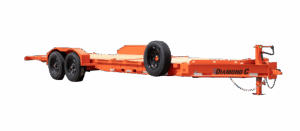
The value at risk makes this worth addressing. A small utility or single-axle enclosed trailer can represent several thousand dollars. Tandem-axle enclosed trailers, aluminum car haulers, dump trailers, and equipment trailers can quickly move into five-figure territory. A Diamond C FMAX212 with a 25,900-pound GVWR, Lippert axles, and loading options such as MAX Ramps or a hydraulic dovetail is a substantial investment. In addition to confirming that the trailer is covered, ask how a total loss would be settled. Actual cash value coverage may deduct depreciation, while stated-value, agreed-value, or replacement-cost provisions work differently and are not offered by every insurer.
How to Fill the Gap
You have a few options depending on the trailer’s value, configuration, ownership, storage location, and intended use.
- Trailer endorsement on your auto policy. Some insurers allow an owned trailer to be listed by VIN on the same policy as the tow vehicle. Collision and comprehensive coverage may then be added with separate deductibles and limits. Confirm whether protection applies while the trailer is attached, detached, stored at home, parked at a worksite, or temporarily left at another location. Also ask whether the endorsement covers the trailer’s current replacement value or only its depreciated actual cash value.
- Standalone trailer insurance policy. A separate cargo, utility, equipment, or recreational trailer policy can provide physical-damage protection without relying solely on the tow vehicle’s coverage. Depending on the carrier and policy, available protection may include collision, comprehensive, roadside assistance, emergency towing, accessory coverage, and certain liability protection while the trailer is parked or being used as temporary premises. The trailer still needs to be described accurately, including its VIN, year, manufacturer, model, GVWR, purchase price, installed options, and primary use.
- Inland marine or equipment floater. This is more common for contractors, tradespeople, landscapers, and other commercial operators. An inland marine or contractors-equipment policy may cover tools, machinery, materials, and mobile equipment while they are transported or stored away from the primary business location. Some forms can schedule the trailer as covered property, but inland marine coverage should not be assumed to replace commercial auto liability or physical-damage coverage for a road trailer.
One thing worth confirming with your agent is whether the policy covers the trailer’s contents and permanently installed accessories. A Darkhorse Cargo 6×12 loaded with $3,000 in tools creates a different exposure than an empty trailer. Trailer physical-damage insurance commonly protects the trailer itself, not every item inside it. Personal belongings may receive limited coverage under a homeowners or renters policy, subject to deductibles, off-premises limits, and exclusions. Business tools, customer property, merchandise, landscaping equipment, or construction materials generally need appropriate business property, inland marine, contractors-equipment, or cargo coverage. Ask separately about shelving, cabinets, winches, spare tires, generators, refrigeration equipment, hydraulic components, tarps, upgraded wheels, graphics, and other additions because they may need to be declared or scheduled.
The Commercial Difference
If you use a trailer for business, do not assume a personal auto policy will cover the operation. Occasional incidental use may be treated differently from regular commercial use, but landscaping, construction, delivery, mobile service, equipment hauling, catering, and rental activities must be disclosed to the insurer. A personal policy may limit or exclude losses connected with business ownership, delivery work, transportation for compensation, or vehicles and trailers furnished for regular business use. Failing to describe the operation accurately can create a serious coverage dispute after a claim.
Commercial auto policies can insure tow vehicles and trailers under the coverage symbols and schedules shown in the policy. Some forms provide limited automatic liability treatment for certain small trailers, but large, high-value, tandem-axle, or multi-axle trailers commonly need to be listed. Physical-damage coverage should also be selected separately rather than assumed. A heavy equipment trailer carrying a skid steer on a public highway creates exposure from the truck, trailer, load, securement equipment, and the business operation itself. The trailer’s GVWR is important to underwriting, but the insurer will also consider its actual value, empty weight, load type, radius of operation, storage arrangements, driver history, annual mileage, and whether hauling is private, for-hire, intrastate, or interstate.
Food trailers and other mobile businesses may need several policies working together. Commercial auto can address road-related liability and scheduled vehicle or trailer damage. Commercial general liability may address customer injuries and premises-related claims while the unit is operating at an event. Property, equipment-breakdown, spoilage, product-liability, and workers’ compensation coverage may also be relevant. Contractors and rental businesses face additional complications when the trailer is borrowed, leased, or rented. The rental agreement may place responsibility for physical damage, theft, loss of use, towing, and diminished value on the renter even when the owner’s insurance exists. Hired-auto, non-owned-auto, trailer-interchange, motor-truck-cargo, or rental-damage coverage may be needed depending on the operation.
A Quick Reality Check on Liability When Unhitched
There is another scenario people miss: liability while a trailer is parked and no longer connected to the tow vehicle. If an unattached trailer rolls down a slope, falls from an improperly supported jack, blocks a walkway, or injures someone while being loaded, the claim may not be handled the same way as a highway accident. A homeowners policy may respond to some personal-use incidents occurring at a residence, while a commercial general liability policy may be relevant at a business location or worksite. An auto or trailer policy may also contain provisions affecting detached trailers. The result depends on the ownership, location, use, and exact policy language, so it is not safe to assume that the tow vehicle’s liability coverage follows the trailer everywhere. Proper wheel chocks, jack support, locks, secure storage, and parking-brake procedures reduce the risk but do not replace insurance.
What to Ask Your Insurance Agent
Rather than guess, pull out your current policy, declarations page, and endorsements, or call your agent and ask these questions directly:
- Does my liability, collision, and comprehensive coverage apply to this specific trailer while it is hitched, being loaded, parked, stored, or left temporarily at another property?
- Is the trailer listed by VIN, and would a total loss be settled at actual cash value, stated value, agreed value, or replacement cost? What deductible and maximum limit apply?
- Are installed accessories and contents covered, including tools, cargo, spare tires, ramps, winches, tarps, hydraulic equipment, shelving, generators, or refrigeration equipment?
- Does coverage change if I use the trailer for landscaping, construction, deliveries, equipment hauling, a food business, rental activity, or any other business purpose?
- What happens if I loan or rent the trailer to someone, borrow a trailer, buy a replacement trailer, add another tow vehicle, or fail to report a newly acquired trailer immediately?
The answers vary by insurer, state, policy form, trailer type, and use. Some policies provide limited automatic protection for a newly acquired or qualifying trailer for a specified reporting period. Others provide liability only, exclude larger trailers, or require the trailer to be scheduled before physical-damage coverage begins. Do not rely solely on a verbal statement that “trailers are covered.” Ask your agent to identify the trailer on the declarations page or provide the endorsement, binder, or written coverage confirmation showing the VIN, selected coverages, limits, deductibles, lienholder, and effective date.
What This Means Before You Buy
If you are shopping for a trailer right now, factor insurance into the decision before you tow it off the lot. A look through current inventory gives you a real replacement-cost anchor across utility, enclosed, dump, equipment, car-hauler, and gooseneck trailers. A single-axle utility trailer and a 25,900-pound-GVWR Diamond C FMAX212 are very different insurance conversations. The GVWR tells the insurer about the trailer’s rated carrying class, but it is not the same as its empty weight, payload capacity, market value, or replacement cost. Provide the exact model, VIN, purchase price, installed options, financing information, intended cargo, storage address, and type of use so the quote reflects the trailer you actually own.
Arrange coverage before the first trip, especially when the trailer is financed. A lender may require collision and comprehensive coverage and may need to be listed as the loss payee. Make sure the effective date begins before delivery and keep written proof with your records. Trailers rarely remain in one protected place. They travel to worksites, campgrounds, storage lots, farms, events, and friends’ properties, where they face traffic accidents, weather, theft, vandalism, loading damage, and unsecured-storage losses. Coupler locks, wheel locks, GPS trackers, secure fencing, lighting, and recorded VIN information can reduce risk, but they do not replace properly written coverage.
A personal auto policy may extend liability protection while a qualifying trailer is being towed, but that does not automatically insure the trailer against collision damage, fire, weather, vandalism, or theft. Physical-damage coverage usually requires the trailer to be specifically scheduled, endorsed, or insured under a separate policy, and business use must be disclosed.
If you are buying through Spencer Trailers and need the replacement value or identifying information for a specific unit, we are happy to walk through the details with you. Brands such as Diamond C, H&H, Liberty, Darkhorse Cargo, Legend, United, and Wells Cargo have documented VINs, GVWR ratings, dimensions, equipment, and installed options that help an insurer prepare an accurate quote. We can help confirm the exact model, empty weight, GVWR, axle configuration, loading system, accessories, purchase price, and current replacement cost. Do not wait until a collision, storm, or theft to discover that the tow vehicle was insured but the trailer was not.


