


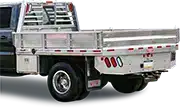
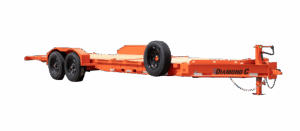


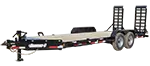


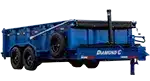



You hook up a loaded equipment trailer, pull out of the lot, and tap the brakes at 45 mph. Instead of slowing as one coordinated combination, the trailer shoves the truck forward. That is a sign that the trailer brakes may be under-applied, improperly adjusted, poorly connected, or not working at all. A properly operating and calibrated brake controller should make the truck and trailer stop together without an obvious push from behind or a sharp tug from the trailer. It cannot make a heavy trailer disappear, but it should make braking predictable.
If your trailer uses electric service brakes, the tow vehicle needs a compatible brake controller or integrated trailer-brake system that the driver can operate from the cab. Indiana law requires a trailer or semitrailer with a gross weight of at least 3,000 pounds, when operated on a highway, to have brakes adequate to control, stop, and hold the trailer. Those brakes must be operable by the driver from the tow vehicle and must apply automatically if the trailer breaks away. That legal requirement does not mean every trailer uses the same braking technology: conventional electric brakes need an electronic controller, while traditional hydraulic surge brakes operate through the trailer coupler.
Electric Trailer Brakes: The Quick Foundation
Many current equipment, utility, dump, flatbed, and enclosed trailers use electric drum brakes. Inside each brake assembly is an electromagnet positioned near the drum’s armature surface. When the controller supplies power, the magnet contacts the rotating drum. Drum rotation pulls the magnet and its actuating lever, which expands the brake shoes against the inside of the drum. As electrical current through the magnet increases, braking force generally increases.
The brake controller is the link between the truck’s braking input and the trailer’s electric brakes. It detects that the driver is braking, determines how much trailer-brake output is appropriate, and sends that output through the tow vehicle’s brake-output circuit and 7-way connector. Modern controllers may also provide manual trailer-brake activation, connection diagnostics, stored trailer settings, electric-over-hydraulic compatibility, and adjustable response characteristics.
The controller is separate from the trailer’s breakaway system. A breakaway switch uses the trailer’s onboard breakaway battery to apply the trailer brakes if the trailer becomes disconnected from the tow vehicle. The breakaway battery, switch, cable, wiring, and brake assemblies must all be functional. The breakaway pin should not be used as a parking brake or routine brake test for extended periods because leaving the magnets continuously energized can discharge the battery and overheat components.
Time-Delay Controllers
Time-delay controllers, also called time-activated controllers, begin applying trailer-brake output after receiving the tow vehicle’s stoplight signal. Output then increases according to a preset rate until it reaches the maximum level selected by the driver. Depending on the controller, the user may have separate adjustments for maximum output and for how quickly or aggressively that output ramps up.
The Tekonsha POD is an example of an economy time-delay controller intended for basic towing applications. Time-delay designs are generally simple, compact, and less expensive than feature-rich proportional controllers. Because they do not need to measure vehicle deceleration, many can be installed horizontally, vertically, or at another convenient angle as long as the manual control remains accessible.
The limitation is that a time-delay controller does not directly measure how rapidly the truck is slowing. A gentle brake-pedal application and a hard application initially trigger the same programmed response. The controller’s output changes with elapsed braking time and the selected settings, not with the actual severity of the stop. That can create a compromise: a setting that feels comfortable during gentle stops may be too weak during an emergency stop, while a more aggressive setting may make routine stops abrupt.
A properly installed time-delay controller can work for a consistent trailer and load, especially in basic light-duty towing. However, the driver should expect to adjust it when trailer weight, brake condition, road traction, or driving conditions change. It is usually less convenient for a dump trailer that may be empty in one direction and heavily loaded in the other, or for a truck that regularly pulls several trailers with different brake configurations.
Proportional (Inertia-Based) Controllers
Proportional controllers use an internal motion or inertia sensor to measure the tow vehicle’s rate of deceleration. When the truck slows gently, the controller supplies relatively light trailer-brake output. When the truck decelerates rapidly, the controller increases output more quickly, up to the maximum established by the gain or power setting. The goal is to make the trailer contribute braking force in proportion to what the tow vehicle is doing.
Current proportional choices include the Tekonsha Voyager, Tekonsha Prodigy P3, and Tekonsha BRAKE-EVN. The Prodigy P3 supports electric brakes and compatible electric-over-hydraulic systems, works with as many as four trailer axles, stores multiple trailer or driver settings, and provides on-screen diagnostics. Brake-type and axle-count compatibility vary by controller, so the controller must be matched to the trailer rather than selected by price alone.
The CURT Echo Mobile is a plug-in proportional controller that connects at the vehicle’s 7-way socket and uses a triple-axis accelerometer inside the controller itself. The smartphone serves as the setup, monitoring, and manual-control interface; the phone’s accelerometer does not control braking. Echo retains its last saved settings and continues automatic braking if Bluetooth connectivity is lost or the phone dies, although app-based manual override is unavailable during that disconnection. The vehicle must have a compatible, powered 7-way connection, and adjustments should be made while the vehicle is safely stopped.
Proportional controllers generally provide smoother braking when loads, traffic, and terrain vary. They are well suited to equipment and dump trailers, mountain travel, and tow vehicles that pull more than one trailer. They still require a correct gain setting. A proportional sensor cannot compensate for badly adjusted shoes, worn magnets, contaminated drums, an open ground, undersized wiring, or a trailer that exceeds the tow vehicle’s ratings.
Mounting requirements depend on the controller. Some older or basic proportional models have a limited allowable angle, while current self-leveling models permit a much wider range. The Prodigy P3, for example, can rotate through a wide vertical range in the direction of travel, but its front must remain horizontally oriented from side to side and the unit must be parallel with the vehicle’s direction of travel. Other models have different rules. Always follow the installation diagram for the exact controller instead of relying on a universal angle such as 20 degrees.
Gain Setting: What It Actually Does
Both time-delay and proportional controllers have an output, power, or gain adjustment. Many factory systems use a scale from 0 to 10, but there is no universal scale. Some aftermarket units display estimated output voltage, while others display a numerical setting that is meaningful only for that controller.
Gain establishes the maximum trailer-brake output that the controller is permitted to command. On a proportional controller, the sensor varies braking output according to deceleration, but it will not exceed the selected maximum. On a time-delay controller, output ramps toward that selected maximum. A separate boost, sync, or sensitivity feature, when equipped, changes how quickly or aggressively the controller begins participating; it is not the same adjustment as maximum gain.
The correct setting depends on the trailer’s actual loaded weight, number and size of brake assemblies, brake adjustment, brake temperature, tire traction, road surface, and controller design. There is no reliable rule that every tandem-axle trailer with a particular GVWR should use the same number. Two trailers with identical GVWR labels may need different settings because their current loads and brake conditions are different.
Use the setup procedure in the controller or tow vehicle owner’s manual. A typical procedure is to load the trailer as it will normally be towed, connect it on a dry and level paved area free of traffic, select the manufacturer’s recommended starting output, accelerate to approximately 20 to 25 mph, and fully operate the controller’s manual override without pressing the truck’s service-brake pedal. Increase output if trailer braking is weak. Reduce it if the trailer tires lock, chatter, or produce an abrupt jerk. Repeat until the trailer produces firm braking at a setting just below wheel lockup, or until the strongest practical braking is achieved without instability.
For example, the Prodigy P3 instructions use an initial power setting of 6.0 and a 25 mph manual-control test. That is a P3-specific setup procedure, not a universal prescription for every controller or every 14,000-pound trailer. Factory controllers may use a similar test but specify a different speed, starting gain, brake-type mode, or loaded-trailer requirement.
Set the gain too high and the trailer tires may lock before the truck’s tires, particularly when the trailer is empty or the pavement is wet, icy, loose, or covered with gravel. Locked trailer tires lose lateral traction, which can contribute to instability and tire flat spotting. Set the gain too low and the trailer pushes the tow vehicle, stopping distance increases, and the truck’s brakes absorb more of the combination’s braking load.
Recheck the setting when the load changes substantially, when switching trailers, after brake service, after new brakes have completed their required burnishing procedure, or when road conditions change. Do not use maximum gain to mask a mechanical or electrical problem. If high output still produces weak braking, inspect the trailer before towing it again.
Wiring and Installation
A conventional hardwired aftermarket brake controller commonly uses four circuits:
- 12V battery power supplied through a dedicated fuse or circuit breaker sized according to the controller manufacturer and number of brake axles
- Ground connected to an approved chassis or battery-negative grounding point with wiring capable of carrying the controller’s full load
- Brake or stoplight input connected through a vehicle-specific harness or to the correct cold side of the stoplight switch when the brake-controller instructions permit hardwiring
- Output to the trailer brakes connected to the dedicated electric-brake terminal in the tow vehicle’s 7-way connector
Black, white, red, and blue are common aftermarket-controller wire colors for power, ground, stoplight input, and brake output, respectively, but vehicle and trailer wiring colors are not guaranteed. Likewise, connector terminal numbers can change depending on whether a diagram is viewed from the front or wire-entry side. Use the labels molded into the connector and a diagram for that exact socket rather than connecting the output to a terminal identified only as “pin 4.”
The brake-output circuit is one of the additional functions provided by a properly wired 7-way connector. A basic 4-way lighting connector does not provide a trailer-brake output circuit. Installing a 4-way-to-7-way socket adapter does not create functional electric brakes unless the required power, ground, brake-output, and other necessary circuits are also installed.
Many tow-package-equipped pickups provide a vehicle-specific brake-controller connector, jumper harness, or prepared wiring location. That provision is not universal across all years, trims, engines, and towing packages. Some trucks have an under-dash plug, some include blunt-cut wires, some require an adapter harness, and others require additional wiring or programming. A factory 7-way socket at the bumper does not automatically prove that a plug-and-play connector is present under the dash.
Start with the tow vehicle owner’s manual and a controller fit guide based on the exact year, make, model, and equipment package. A vehicle-specific plug-and-play harness is preferable when available because it avoids unnecessary splicing into modern brake-light and data circuits. Some late-model vehicles use multiplexed lighting, low-current brake-switch signals, or electronic modules that can be damaged or confused by an incorrect connection.
If hardwiring is required, do not select a brake-switch wire by color alone and do not cut into the circuit before identifying its function. Use the vehicle’s service information and the test method approved by the controller manufacturer. The correct stoplight input normally changes state when the service-brake pedal is pressed and returns when it is released, but the required voltage and switching method can vary. If the circuit cannot be positively identified, have the controller installed by a qualified technician.
Overcurrent protection must also match the controller. Some Tekonsha installation instructions specify a 20-amp automatic-reset breaker for one or two brake axles and a 30-amp breaker for three or four axles, but that is not a substitute for reading the manual supplied with the selected controller. Wire gauge, breaker size, connector capacity, and grounding must support the maximum number of brake magnets or the electric-over-hydraulic actuator being controlled.
Mount an in-cab controller where the driver can reach the manual override without leaning away from the seat or taking attention off the road. Keep it clear of pedals, knees, steering-column movement, knee-airbag deployment zones, and other airbags. Before drilling, verify that no wiring, brake components, HVAC parts, or structural components are behind the panel. Time-delay controllers may permit almost any orientation, but proportional controllers must be mounted and calibrated according to their individual instructions.
After installation, test trailer detection, manual output, service-pedal output, stop lamps, turn signals, running lights, reverse or auxiliary functions, and the 12-volt charge circuit where equipped. A voltage reading at an unloaded 7-way socket does not prove that the circuit can carry full brake current. A proper diagnosis may require testing under load and measuring voltage drop across the power, output, connector, and ground circuits.
Integrated OEM Controllers
Ford, Ram, Chevrolet, and GMC offer integrated trailer-brake controllers on many current full-size pickups. Ford commonly calls its system the Integrated Trailer Brake Controller. Ram identifies the feature as Trailer Brake Control or an Integrated Trailer Brake Module, while GM uses Integrated Trailer Brake Control terminology. On 2025-2026 trucks, availability may be standard, optional, package-dependent, or available as an approved accessory depending on the exact model and trim.
These systems are connected to the truck’s electronic network and can use vehicle information such as brake demand or hydraulic brake pressure, vehicle speed, and stability-control data, depending on the model. Gain, selected brake type, trailer connection status, and commanded output may appear in the instrument cluster or trailering display. The bar graph or output display generally represents commanded trailer-brake output; it should not be interpreted as a direct amperage reading from every brake magnet.
The practical advantage is integration. The manual control and gain buttons are built into the dash, warnings can appear in the instrument cluster, and some trucks store gain with an individual trailer profile. Certain systems can distinguish between electric and compatible electric-over-hydraulic brake modes. They may also coordinate with other truck functions, including trailering profiles and approved driver-assistance features.
An integrated controller still has to be adjusted for the connected trailer. It cannot correct worn brake shoes, weak magnets, air in an electric-over-hydraulic system, a discharged breakaway battery, poor grounds, corroded connectors, or an overloaded trailer. It also does not increase the truck’s GVWR, GCWR, rear-axle rating, receiver rating, payload capacity, or maximum trailer rating.
A high-quality aftermarket proportional controller can provide excellent braking when correctly selected, installed, and adjusted. The main OEM benefits are packaging, network integration, dashboard diagnostics, and factory controls rather than permission to tow a heavier trailer or a guarantee of shorter stopping distances.
Retrofitting an OEM controller is vehicle-specific. Some trucks have supported accessory kits that include the switch, module, harness, mounting hardware, and required software programming. Other configurations lack the necessary wiring or electronic support and cannot be economically converted to full factory operation. Before ordering parts, have a dealer or qualified installer check the VIN, build configuration, applicable service information, and programming requirements.
Which Type Do You Actually Need?
| Situation | Controller Type |
|---|---|
| Consistent load, basic light-duty towing, budget-conscious | Time-delay controller, correctly rated and adjusted |
| Variable loads, hills, equipment trailers, or multiple trailers | Proportional controller such as a Prodigy P3, Voyager, BRAKE-EVN, or comparable unit |
| Compatible late-model full-size truck with the feature installed | OEM integrated controller |
| Occasional towing or no permanent in-cab installation desired | Portable plug-in proportional controller such as CURT Echo, if the vehicle, trailer, brake count, and powered 7-way are compatible |
A Few Things That Catch People Off Guard
Not every hydraulic trailer brake system works the same way. Traditional surge brakes, commonly found on boat trailers, use coupler compression to pressurize the trailer’s hydraulic brakes and do not use a conventional in-cab electric-brake controller. Electric-over-hydraulic systems use an electrically powered hydraulic actuator and do require a controller specifically approved for electric-over-hydraulic operation. A controller that works with ordinary electric drum brakes is not automatically compatible with an electric-over-hydraulic actuator.
A trailer below the Indiana brake threshold may still be built with brakes, and an axle’s capacity does not prove whether brakes are installed. A 3,500-pound axle can be supplied as an idler axle without brakes or as a brake axle with a hub-and-drum assembly and backing plate. Check the trailer’s build sheet, certification label, wiring, brake backing plates, and actual hub assemblies. Do not assume brake equipment from axle rating alone.
Corrosion at the 7-way connector is a frequent cause of weak or intermittent braking, but it is not the only cause. Loose trailer grounds, a poor tow-vehicle ground, damaged brake-output wiring, undersized conductors, worn magnets, grease-contaminated shoes, out-of-adjustment brakes, broken conductors inside an axle tube, and low charging voltage can produce similar symptoms. Clean and repair terminals with products intended for electrical connectors, correct loose or overheated contacts, and test the circuit under load before raising the gain.
Electric drum brakes must also be mechanically adjusted unless the installed assemblies provide a functioning self-adjusting mechanism. Even self-adjusting brakes require inspection and may need initial setup or service. New shoes and drums may require a manufacturer-specified burnishing procedure before they develop full, even braking force.
The breakaway system is not part of the in-cab controller’s normal output circuit. Its cable should be attached to a secure point on the tow vehicle that is independent of the safety chains and positioned so it will pull the switch if the trailer separates without dragging or activating during normal turns. Test the breakaway system according to the trailer and brake manufacturer’s instructions, and verify that its battery is charged.
Quick Q&A
Can I run two brake controllers at once? Do not use two active controllers to command the same trailer-brake circuit. If an aftermarket controller is installed in a truck that also has an integrated controller, follow the tow vehicle and controller instructions for disabling one system or setting its gain to zero. Some portable controllers are designed to override an existing output when connected, but that behavior must be confirmed for the specific product and vehicle.
Do I need a controller for a borrowed trailer? If the borrowed trailer has conventional electric brakes, the tow vehicle needs a compatible and functioning controller regardless of who owns the trailer. Indiana requires adequate, cab-operable brakes and automatic breakaway application on a trailer or semitrailer with a gross weight of at least 3,000 pounds when operated on a highway. If the trailer uses surge-hydraulic brakes, a conventional electronic controller is not used, but the surge system and breakaway mechanism must still be functional and appropriate for the trailer.
Will a brake controller help with sway? Correct brake balance reduces the instability that can occur when a trailer pushes the tow vehicle during deceleration. Some tow vehicle and controller instructions may recommend a gentle manual trailer-brake application to help straighten an emerging sway event, but the manual control is not a sway-prevention system. Proper loading, adequate tongue or pin weight, correct hitch height, sound tires, safe speed, and compliance with all truck, hitch, axle, and trailer ratings come first. On a bumper-pull travel trailer, use weight-distribution and sway-control equipment when required or recommended by the tow vehicle, receiver, and hitch manufacturers.
Ready to Get Hooked Up?
If you’re picking up a new trailer from us and you’re not sure what your truck already has, ask. We can help identify whether the truck has an integrated controller, a vehicle-specific aftermarket-controller connection, an active 7-way brake-output circuit, or only basic trailer-light wiring. We can also verify the trailer’s brake type and axle configuration so the controller is matched to the number of brake assemblies and the type of actuator actually installed.
Browse our current trailer inventory to see what’s in stock, or reach out to us directly at (812) 829-0226. We’re at 291 West State Hwy 46 in Spencer. If you’re buying a trailer that needs a brake controller and you’re not sure where to start, that’s exactly the kind of question we answer every day.
If you’ve been towing with the gain at its default setting, perform the manufacturer’s setup procedure in a safe, dry, level area before the next loaded trip. Then recheck it whenever the load, trailer, brake condition, or road traction changes. A small adjustment can make a major difference in stopping feel, but a controller should never be treated as a set-it-once-for-years device or used to cover up brakes that need inspection and repair.


