










Pull a heavy bumper-pull trailer without the weight-distribution equipment required by the tow-vehicle manufacturer, and you may feel the difference immediately. The back of the truck settles, the front rises, the headlight aim changes, and the steering can feel lighter than it did before the trailer was connected. Excessive rear-axle loading and loss of front-axle load can reduce steering response, alter braking behavior, and overload the truck even when the trailer itself remains below its GVWR.
A properly selected and adjusted weight-distribution (WD) hitch can correct much of that load transfer. The basic physics are straightforward, but the hitch must be compatible with the tow vehicle, receiver, trailer coupler, loaded tongue weight, and gross trailer weight. It must also be adjusted according to the instructions from both the tow-vehicle manufacturer and the hitch manufacturer. Here is what the system actually does, when it may be required, and how to set it up correctly.
What a Weight-Distribution Hitch Actually Does
A conventional bumper-pull trailer applies downward force at the hitch ball. That force is called tongue weight. For many conventional trailers, a commonly recommended starting range is approximately 10 to 15 percent of the trailer’s actual loaded weight. The correct target can vary by trailer type and manufacturer, so the trailer owner’s information should take priority. At a 10,000-lb actual trailer weight, a 10-to-15-percent range would equal approximately 1,000 to 1,500 lbs of tongue weight.
Because the hitch ball is behind the tow vehicle’s rear axle, tongue weight acts through leverage. It adds load to the rear axle while removing some load from the front axle. A WD hitch uses spring bars and the trailer frame as part of a lever system to counter that effect. When adjusted properly, it returns a specified portion of the removed load to the tow vehicle’s front axle and transfers part of the load through the trailer structure to the trailer axles. It does not eliminate tongue weight, increase the truck’s payload rating, or make an overloaded combination legal.
Restoring the amount of front-axle load specified by the vehicle manufacturer helps preserve the steering, braking, suspension geometry, and headlight aim for which the vehicle was designed. The goal is controlled load distribution within every applicable rating, including the tow vehicle’s GVWR, front and rear GAWR, payload capacity, receiver limits, trailer GVWR, tire capacities, hitch rating, and gross combined weight rating.
Spring Bars: The Muscle Behind the System
A typical WD hitch includes an adjustable shank that fits the receiver, a hitch head that carries the properly sized hitch ball, two steel spring bars, and frame brackets mounted on the trailer’s A-frame. Depending on the design, the spring bars may be round bars that insert below the hitch head or trunnion-style bars that attach at the sides of the head. Their rear ends extend toward brackets, chains, cams, or latches on the trailer frame.
When the spring bars are engaged and tensioned, they act as levers between the hitch head and the trailer frame. The resulting moments counter some of the rearward load transfer caused by tongue weight. This returns part of the lost load to the tow vehicle’s front axle, reduces the additional load imposed on the rear axle, and transfers part of the distributed load to the trailer axles. The precise amount depends on spring-bar capacity, head angle, bracket position, chain length or bracket setting, trailer geometry, and the manufacturer’s adjustment procedure.
A WD hitch is not automatically a sway-control device. Some systems integrate sway resistance into the hitch, while others provide weight distribution only or accept a separate sway-control component. Equal-i-zer’s 4-Point Sway Control hitch uses friction at the spring-bar sockets and the trailer-frame brackets. Blue Ox SwayPro uses spring-bar tension and the geometry of its hitch head and rotating latches as part of its sway-control design. Reese offers conventional weight-distribution systems as well as configurations that use friction sway control or the company’s Dual Cam system. Always follow the instructions for the exact model because hookup, lubrication, reversing, and adjustment rules differ.
Sway control is an additional aid, not a substitute for correct loading. Insufficient tongue weight, overloaded tires, uneven side-to-side loading, excessive speed, worn suspension parts, improper tire pressure, and poor trailer alignment can all contribute to instability. Those underlying problems must be corrected rather than masked with more spring-bar tension.
When Do You Actually Need One?
There is no universal 350-lb tongue-weight or 5,000-lb trailer-weight rule that applies to every tow vehicle. The controlling information is found in the owner’s manual, towing guide, receiver label, and vehicle certification labels for the specific truck, SUV, or van. Some manufacturers require or recommend weight distribution above a stated trailer weight or tongue weight. Others permit the same maximum conventional-trailer rating in weight-carrying and weight-distributing configurations, or specify a particular front-axle load-restoration target when load bars are used.
Visible rear suspension drop, a raised front end, changed headlight aim, or light steering are warnings that the combination needs evaluation, but appearance alone does not determine whether a WD hitch is required. First confirm the actual loaded trailer weight and tongue weight, then verify the tow vehicle’s payload, rear GAWR, receiver rating, and manufacturer instructions. Air springs, helper springs, and automatic leveling may restore ride height, but they do not redistribute load to the front axle and do not increase any weight rating.
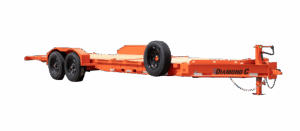
Heavy bumper-pull equipment trailers are a common application for high-capacity WD equipment when the tow-vehicle and trailer manufacturers permit it. The Diamond C LPX is a low-profile, extreme-duty bumper-pull equipment trailer offered in lengths that include 22 feet and in GVWR configurations from approximately 15,500 to 24,000 lbs. Current LPX configurations use Lippert axles as standard equipment, with axle packages varying by GVWR. A loaded LPX can impose substantial tongue weight, but the actual number must be measured rather than estimated solely from GVWR.
At these weights, many half-ton trucks will exceed one or more ratings before the trailer reaches its rated capacity. A WD hitch cannot turn an undersized truck into a suitable tow vehicle. Even a properly equipped three-quarter-ton or one-ton truck must be checked for payload, rear-axle capacity, receiver limits, maximum conventional-trailer weight, and gross combined weight. Some LPX configurations may also exceed the capacity of common WD systems, making careful equipment matching essential.
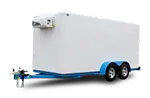
Enclosed cargo trailers are another category in which weight distribution and sway control may be valuable. An 8.5-by-24-ft enclosed trailer can have a large frontal area and can be sensitive to crosswinds and passing trucks. If its actual loaded weight is 9,000 lbs and the manufacturer calls for 10 to 15 percent tongue weight, the corresponding range would be approximately 900 to 1,350 lbs. That total must remain within the trailer, coupler, hitch, receiver, vehicle, axle, and tire ratings.
Travel trailers frequently use WD hitches because their loaded tongue weights, long bodies, and large side areas can make proper front-axle load restoration and sway resistance especially important. However, a 6,000-lb GVWR does not automatically create a legal or universal requirement. Follow the tow-vehicle manual and the travel-trailer manufacturer’s instructions, and base the decision on actual loaded weights rather than brochure dry weight.
Choosing the Right WD Hitch
WD hitches are rated by both maximum tongue weight and maximum gross trailer weight. Neither rating may be exceeded. Select spring bars for the trailer’s actual loaded tongue weight plus any cargo carried in the tow vehicle behind the rear axle when the hitch manufacturer instructs you to include that weight. Water, batteries, propane, tools, generators, and cargo placement can change tongue weight significantly.
Choosing bars that are too light can prevent adequate load restoration. Bars that are substantially stiffer than the application requires can produce a harsh ride, make proper adjustment difficult, and place unnecessary stress on the trailer frame. Do not simply buy the highest-capacity system available. Confirm that the system fits the receiver size, ball height, coupler location, trailer-frame dimensions, loaded tongue-weight range, and gross trailer weight.
A few current system types worth knowing:
- Equal-i-zer 4-Point Sway Control Hitch (Progress Mfg.): Uses square spring bars and integrated metal-to-metal friction at four points: two in the hitch head and two at the L-brackets. Current configurations cover several tongue-weight classes, with the largest version rated for up to 1,600 lbs of tongue weight and 16,000 lbs of gross trailer weight. The selected model must match the measured load; a separate friction sway bar is not part of this system.
- Reese Weight-Distribution Systems: Reese offers round-bar and trunnion-bar configurations in multiple capacities. Some systems provide weight distribution without integrated sway control, while other packages use friction sway control or the Reese Dual Cam design. Current capacities vary by part number, so verify both the gross trailer-weight and gross tongue-weight ratings instead of relying on a generic product-family description.
- Blue Ox SwayPro: Uses interchangeable spring bars, a specialized hitch-head geometry, and rotating latches. Current SwayPro offerings cover tongue-weight classes from lighter applications through heavy-duty versions rated as high as 2,000 lbs, with gross trailer-weight capacity depending on the exact model. Receiver size and shank configuration also vary, so select by part number rather than assuming every SwayPro has the same rating.
- Trunnion-Bar Integrated-Sway Systems: Several manufacturers offer systems in which trunnion-style spring bars ride on frame brackets to provide both weight distribution and friction-based sway resistance. Capacities and frame-clearance requirements differ considerably. Confirm current availability, replacement-part support, bracket location, and the exact ratings printed on the hitch before purchasing.
Trunnion bars connect at the sides of the hitch head and usually provide more ground clearance than round bars that insert beneath it. That can matter on low vehicles, steep approaches, and trailers with limited clearance below the A-frame. Round-bar systems remain a practical choice for many combinations and may offer broad parts availability. Bar shape alone does not determine quality or capacity; the complete system’s ratings and fit are what matter.
Frame compatibility deserves special attention. Some aluminum trailer frames, surge-brake trailers, pole tongues, enclosed-trailer frame arrangements, and trailers with equipment mounted near the coupler require special brackets or may restrict WD use. Hydraulic surge brakes must remain able to articulate and operate as designed. Never clamp or drill into a trailer frame until the hitch and trailer manufacturers confirm the installation method.
Setting Up a Weight-Distribution Hitch
Setup is where many otherwise suitable systems lose their effectiveness. The hitch manufacturer’s manual controls the details, and the tow-vehicle manual controls the required front-axle restoration. The following is a general outline, not a replacement for either document:
- Load the vehicle and trailer as they will be towed. Include passengers, fuel, tools, equipment, water, batteries, propane, and cargo. Confirm the trailer is level and the cargo is secured. Measure actual trailer weight and tongue weight whenever possible.
- Measure the unhitched vehicle. Park on firm, level pavement with the vehicle and trailer aligned. Measure the front wheel-opening height at a repeatable point specified by the vehicle or hitch manufacturer. The rear measurement can be useful for reference, but front-axle restoration is the more important setup indicator. Record the measurements.
- Hitch the trailer without engaging the spring bars. Lower the fully loaded coupler onto the ball, latch it, and raise the tongue jack. Measure the front wheel-opening height again. The difference between this measurement and the unhitched measurement represents the front-end rise created by the trailer.
- Set ball height and hitch-head angle. Use the correct rise or drop so the loaded trailer tows level or at the attitude specified by its manufacturer. Set the head angle using the washers, serrations, spacers, or adjustment system supplied with the hitch. There is no universal two-to-three-degree setting, and the correct direction and amount of tilt depend on the hitch design.
- Engage the spring bars safely. Couple the trailer before tensioning the bars. Raising the connected truck and trailer together with the tongue jack can reduce the force needed at the brackets. Attach the chains, L-brackets, cams, or rotating latches exactly as instructed, keep hands and body parts clear of loaded components, and never use an improvised pipe or damaged lift handle.
- Measure front-end restoration. Lower the tongue jack fully and remeasure the front wheel opening. Adjust the head or bracket setting until the measurement matches the tow-vehicle manufacturer’s target. That target may be partial restoration rather than a return to the exact unhitched height. For example, current Ford towing guidance for applicable vehicles recommends 50-percent front-axle load restoration when load bars are used.
- Verify the result on a scale. Fender measurements are a setup aid, not proof that the combination is within its ratings. A three-pass weighing at a certified scale—tow vehicle alone, combination hitched with WD disengaged, and combination with WD engaged—can show how axle loads change. Confirm that the front axle, rear axle, tow vehicle, trailer axles, tires, receiver, hitch, and complete combination remain within their respective ratings.
The goal is not to make the truck and trailer look perfectly level at any cost. The goal is to achieve the front-axle restoration specified by the vehicle manufacturer while keeping every component within its rating and maintaining the trailer attitude specified by its manufacturer. Rear suspension drop may remain even after a correct adjustment.
Common Setup Mistakes
- Using a generic head-angle rule instead of the instructions for the exact hitch. Head angle, washer count, chain links, and bracket settings are system-specific.
- Trying to remove all rear suspension drop. Excessive spring-bar tension can return more front-axle load than the manufacturer specifies, reduce rear-tire traction, create a harsh ride, and add stress to the receiver and trailer frame.
- Selecting spring bars from the trailer’s empty or advertised tongue weight. The hitch must be matched to the loaded towing condition, including relevant cargo behind the tow vehicle’s rear axle.
- Using WD to compensate for an overloaded truck. Tongue weight still counts against the tow vehicle’s carrying limits, and weight distribution does not raise GVWR, GAWR, payload, tire capacity, receiver capacity, or GCWR.
- Ignoring load changes. Moving a skid steer, adding attachments, filling water tanks, or loading cargo at the front or rear can materially change tongue weight and axle loading. Reweigh and readjust when the load changes substantially.
- Assuming sway control cures poor balance. If tongue weight is too low or cargo can shift, correct the loading and securement before towing.
- Failing to recheck hardware. Follow the manufacturer’s inspection and torque schedule, particularly after initial installation. Inspect the ball, coupler, shank, receiver pin, frame brackets, spring bars, chains, safety chains, breakaway cable, wiring, tires, and brakes before travel.
A Quick Note on Hitch Receivers
WD hitches are available with shanks for 2-inch, 2.5-inch, and selected 3-inch receivers. Receiver size alone does not establish capacity. Two receivers with the same opening can have different weight-carrying and weight-distributing ratings, and a reducer sleeve does not increase the rating of the hitch, shank, or receiver.
Read the receiver label and the tow-vehicle manual. Some receiver labels publish separate limits for weight-carrying and weight-distributing operation. Others list only one set of limits or prohibit WD use for a particular vehicle or receiver. Never assume that adding spring bars automatically increases allowable tongue weight. The lowest-rated component in the entire connection—including the receiver, shank, head, hitch ball, coupler, spring bars, and trailer frame—sets the usable limit.
Many high-capacity Diamond C bumper-pull trailers use a 2-5/16-inch coupler, but ball diameter is only one part of compatibility. The hitch ball must have the correct diameter, shank dimensions, and weight rating, and it must be installed to the specified torque. A WD hitch designed primarily for travel trailers may not have enough tongue-weight or gross trailer-weight capacity for a heavily loaded equipment trailer.
If you’re shopping for a trailer at Spencer Trailers’ current inventory and aren’t sure whether a particular trailer calls for weight distribution, call us at (812) 829-0226. We can review the trailer’s GVWR, configuration, coupler, expected load, and likely tongue-weight range. Final compatibility still depends on the ratings and instructions for your specific tow vehicle and receiver, so bring the vehicle information or towing guide when possible.
Does Every Tow Vehicle Need One?
No. A small utility trailer may be safely towed on an ordinary weight-carrying ball mount when its actual loaded trailer weight and tongue weight remain within the tow vehicle, receiver, hitch, ball, axle, payload, and tire ratings. The decision cannot be made from a broad 350-lb or 5,000-lb threshold, and GVWR alone does not reveal the trailer’s actual loaded weight.
A single-axle trailer also is not automatically a car hauler, and axle count does not determine whether WD is necessary. Diamond C’s GST, for example, is a single-axle telescopic dump trailer with a 6,000-lb GVWR. Its actual towing requirements depend on its loaded weight, tongue weight, tow vehicle, and receiver instructions. Indiana also requires brakes on a trailer or semitrailer with a gross weight of at least 3,000 lbs under IC 9-19-3-3; a WD hitch does not replace required trailer brakes or a compatible brake controller.
For larger enclosed trailers, bumper-pull equipment trailers, and travel trailers, a properly rated WD hitch is often required or strongly recommended by the vehicle manufacturer. It can materially improve front-axle load restoration and towing stability when correctly installed. However, it remains only one part of a safe towing package. Correct vehicle selection, measured weights, adequate payload, functioning brakes, proper tongue weight, secure cargo, suitable tires, and conservative speed are equally important.
Do not assume that a stable-feeling rig is automatically legal or within its ratings. For commercial operation, licensing requirements also must be evaluated separately. Under the federal and Indiana CDL framework, a Class A CDL generally applies to a combination with a gross combination weight rating or gross combination weight of 26,001 lbs or more, whichever is greater, when the towed unit has a GVWR or gross vehicle weight over 10,000 lbs, subject to applicable exemptions. A trailer exceeding 10,000 lbs by itself does not automatically create the complete Class A threshold.
If you’re in Owen County or elsewhere in Indiana and you’re putting together a towing package, reach out to Spencer Trailers. We can walk through the trailer specification, expected cargo, tongue weight, hitch capacity, receiver size, brake requirements, and tow-vehicle ratings based on what you are actually planning to pull.
What are you planning to tow, how will it be loaded, and what does your tow vehicle permit? Those are the right starting points for every weight-distribution hitch conversation.


