







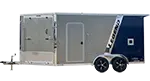


You load the zero-turn. You add the walk-behind mower, two blowers, a trimmer rack, fuel cans, hand tools, and several bags or part of a yard of mulch. Then you merge onto the highway at 65 mph and wonder whether the trailer was selected for that load or is simply surviving it. Most landscaping crews do not ask that question until they run out of payload, discover that the mower will not clear the gate, or find that the truck is overloaded at the rear axle. The good news is that choosing the right utility trailer is straightforward once you compare actual weights, usable dimensions, loading equipment, securement points, brakes, and tow-vehicle ratings.
Start With GVWR, Not Deck Size
Deck size is the first thing people notice, but Gross Vehicle Weight Rating is the number that limits the trailer’s maximum loaded weight. GVWR includes the trailer itself, every mower, racks, fuel, tools, spare parts, debris, and any other cargo on board. Payload is not the same as GVWR. To estimate available payload, subtract the trailer’s actual empty weight from its GVWR, then confirm the result against the certification label and the ratings of the axles, tires, wheels, coupler, and other components. Options such as expanded-metal sides, spare tires, storage boxes, racks, and heavier flooring add empty weight and reduce available cargo capacity.
Commercial mower weights vary more than many buyers expect. Depending on deck width, engine, fuel capacity, accessories, and whether the machine is a stand-on, walk-behind, or zero-turn, one commercial mower can weigh from several hundred pounds to well over 1,500 pounds. Add a second machine, backpack blowers, trimmers, fuel, water, fertilizer, tools, and wet mulch, and a crew can quickly place 2,500 to 4,000 pounds or more of cargo on the trailer. Build a written equipment list using the manufacturers’ published operating or shipping weights, then add a reasonable allowance for everything that normally accumulates during the workday.
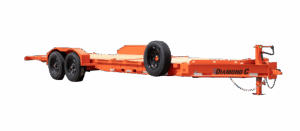
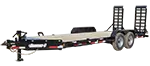
For many one- or two-mower crews, a properly configured Diamond C GTU is a realistic starting point. The current GTU is an 83-inch-wide, 7,000-pound-GVWR tandem-axle utility trailer offered in 14-, 16-, 18-, and 20-foot lengths. It uses two 3,500-pound Lippert electric-brake axles, a 4-inch channel main frame, 2-inch engineered-channel crossmembers on 24-inch centers, and 2-inch treated-lumber flooring as standard. The usable payload still depends on length and installed options, so compare the listed empty weight of the exact trailer with the combined weight of your equipment. Crews carrying multiple large zero-turns, compact tractors, skid-steer attachments, or other heavier equipment should move into a properly rated equipment trailer such as the Diamond C LPX rather than assuming a longer 7,000-pound utility trailer automatically provides more payload.
Gate or Ramp: It’s Not a Small Decision
For landscaping work, the rear loading system affects every stop of the day. A full-width ramp gate is usually the most convenient arrangement for zero-turns, stand-on mowers, walk-behinds, and carts because the operator does not have to align the tires with two narrow individual ramps. However, the gate must have enough clear width, appropriate load capacity, reliable latches, adequate traction, and a loading angle that the mower can climb without the deck, anti-scalp wheels, or rear frame contacting the transition.
The current GTU addresses that transition with a 24-inch Laser Grip dovetail and an EZ Bi-Fold Gate as the standard loading arrangement. The gate folds in the center, reducing its upright height and wind exposure while towing compared with a tall one-piece gate. A 48-inch tractor gate, including a version with supporting knees, is also available for appropriate applications. Before buying any trailer, operate the gate several times. Inspect the hinges, spring or lift assistance where equipped, retaining hardware, latches, welds, and the points that support the gate when equipment crosses it. Also confirm the gate’s stated capacity rather than assuming that a full-width gate is automatically rated for every machine that physically fits.
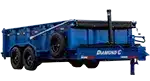
If you regularly haul loose mulch, soil, stone, grass clippings, or demolition debris, an open utility trailer should not be treated like a dump body. Loose material must be contained and secured so it cannot shift or leave the trailer, and its weight can rise sharply when wet. A dedicated dump trailer is generally the better tool for bulk material because it provides an enclosed body and hydraulic unloading. Many professional crews operate a utility trailer for mowers and handheld equipment while using a separate dump trailer for mulch, soil, brush, and job-site debris. That arrangement also keeps abrasive material and fertilizer residue away from mower decks, electrical connections, and tie-down hardware.
Why Mesh Sides Matter More Than You Think
Open rails and expanded-metal sides can make a landscaping trailer more useful, but they are not substitutes for cargo securement. Side rails may help contain lightweight items and provide structure for properly installed racks, while expanded metal can reduce the chance that bags, small branches, or loose hand tools leave the deck. Mowers, fuel containers, blowers, and other equipment still need to be secured to manufacturer-designated anchor points with correctly rated straps, chains, or wheel-restraint systems. Do not assume that every rail, upright, mesh panel, or rack bracket is a rated tie-down point.
Rail height should be chosen around the work you actually perform. Low open rails make it easier to load pallets from the side and reach equipment, while expanded-metal panels provide better containment for smaller items. Taller seasonal leaf boxes can add useful volume, but they also add weight and aerodynamic drag and may affect lighting visibility, gate operation, and tongue weight. Any removable side or leaf-box system should be attached to suitable stake pockets or mounting points and built strongly enough for highway airflow. It should never cover required lamps, reflectors, the license plate, or the driver’s view of the trailer.
The current GTU has 13-inch-tall open sides with a 2-3/8-inch, 13-gauge balled-end pipe top rail, integrated upright tie-downs, and five stake pockets; expanded-metal sides are an available upgrade. Spencer Trailers also carries the Liberty LU utility line. A current 83-inch-by-14-foot Liberty LU tandem-axle configuration has a 7,000-pound GVWR, two 3,500-pound axles with electric brakes, a 4-inch channel chassis, treated-wood floor, 2-1/2-inch-by-1-1/2-inch tube top rails, four tie-down pockets, and a 48-inch-tall rear gate with extra uprights. Current inventory specifications, options, empty weights, and pricing can change, so compare the individual stock unit rather than relying only on a model-family description.
Tongue and Hitch: The Connection Point Nobody Inspects Enough
The trailer tongue, coupler, safety chains, jack, wiring plug, and breakaway system form the connection between the trailer and tow vehicle. Look for a properly engineered A-frame or tongue structure that transfers load into the main frame. Welded construction is common, but a bolted component is not automatically inferior when it is designed, rated, and installed correctly. Inspect for cracked welds, elongated bolt holes, loose fasteners, rust expansion, bent coupler channels, damaged safety-chain attachments, and evidence that the trailer has been repeatedly operated with the coupler height set incorrectly.
Do not select a hitch ball by guessing from GVWR. The current Diamond C GTU has a 2-inch, 10,000-pound-rated Demco EZ-Latch adjustable coupler as standard, with a 2-5/16-inch coupler available. Current 7,000-pound-GVWR Liberty LU tandem models listed by Spencer Trailers commonly use an adjustable 2-5/16-inch coupler. The correct ball size is the size stamped on the actual coupler. The ball, ball mount, receiver, hitch pin, tow vehicle, and trailer must all be rated for the load, and the usable rating is limited by the lowest-rated component. A 2-inch receiver opening by itself does not tell you whether the hitch is rated for 5,000, 7,500, 10,000 pounds, or another amount.
Conventional bumper-pull trailers are commonly loaded for approximately 10 to 15 percent tongue weight, subject to the trailer and tow-vehicle manufacturers’ instructions. A trailer weighing 5,000 pounds when loaded may therefore place roughly 500 to 750 pounds on the hitch before accounting for people, tools, racks, fuel, and other cargo in the truck. Check the truck’s payload label, receiver rating, maximum tongue-weight rating, rear Gross Axle Weight Rating, tire capacities, Gross Combination Weight Rating, and towing guide for the exact cab, engine, axle ratio, wheelbase, and drivetrain. A properly equipped half-ton may be rated to tow some 7,000-pound trailers, but the truck’s payload or rear-axle capacity can be reached before its advertised maximum tow rating. For commercial combinations, also remember that a trailer over 10,000 pounds does not by itself determine CDL status: the Class A threshold generally involves a combined GCWR of at least 26,001 pounds and a towed vehicle with a GVWR over 10,000 pounds, subject to the operation and any applicable exemptions.
Deck Surface and Tie-Down Points
Pressure-treated lumber is common on steel utility and equipment trailers because it provides traction, distributes wheel loads, is quieter than steel, and can be replaced board by board. The GTU uses 2-inch treated lumber as its standard floor, installed after the frame is coated so the decking does not hide unfinished frame surfaces; Diamond C also offers AlumaTrax aluminum flooring as an upgrade. Current Liberty LU units at Spencer Trailers likewise commonly use treated-wood floors. Inspect boards for rot, splitting, loose fasteners, chemical damage, and crushing where mower tires repeatedly sit. Fertilizer, salt, wet clippings, and trapped soil should be removed promptly because they can attack both decking hardware and the steel structure beneath it.
Tie-down locations should be attached to structural members and have ratings suitable for the securement equipment being used. The number printed on a strap does not increase the rating of an anchor point, and the working load limit of the system is controlled by its weakest component. For commercial cargo securement subject to federal rules, the aggregate working load limit of the securement system generally must be at least one-half the weight of the cargo being restrained, in addition to the applicable minimum-tiedown and movement-control requirements. Secure each mower against forward, rearward, lateral, and vertical movement using approved attachment points or wheel-restraint equipment. Lower attachments, set the parking brake, remove the ignition key, and close fuel valves where the equipment manufacturer instructs, but do not treat a mower’s parking brake as a replacement for tie-downs.
| Model | Deck Size | GVWR | Ramp Gate | Best For |
|---|---|---|---|---|
| Diamond C GTU 83″x16′ | 83″ x 16′ | 7,000 lb | EZ Bi-Fold Gate with 24″ Laser Grip dovetail | One- or two-mower commercial crews after payload and length are verified |
| Diamond C LPX 82″x20′ | 82″ x 20′ | 14,900 or 15,500 lb in commonly stocked builds; verify the individual trailer | Spring-assisted HD flip-knee ramps; MAX Ramps available on eligible configurations | Multiple large mowers, compact equipment, attachments, and heavier commercial loads |
| Liberty LU 83″x14′ | 83″ x 14′ | 7,000 lb | 48″-tall rear gate with extra uprights on current stocked configurations | Owner-operators and one- or two-mower routes within the trailer’s actual payload |
A Few Questions Worth Asking Before You Buy
How many mowers are you loading daily? Measure the complete machine, not only the advertised cutting width. A mower with a 60-inch deck may be substantially wider at the discharge chute, anti-scalp wheels, or deck guards. Confirm the clear opening between the trailer’s rails, the space between the fenders where applicable, and the gate opening. Two large zero-turns are normally arranged one behind the other, so deck length, axle position, and the ability to maintain proper tongue weight matter as much as deck width. Lay out the machines on paper, including room for the operator to exit, lower the gate, and reach each tie-down point.
Do you run leaf season or snow work? Removable sides, stake pockets, expanded metal, and a properly designed leaf-box system can improve seasonal versatility. Snowplows, spreaders, bagged salt, and liquid deicer can be surprisingly heavy and highly corrosive, so add their actual weights to the payload calculation and rinse the trailer after exposure. If the trailer is used only for mowers, a lower open-rail configuration may be easier to load, inspect, and clean. If it carries palletized material, make sure the side structure does not prevent forklift access.
What’s your crew’s daily mileage? Highway-heavy routes place more demand on tires, bearings, suspension, gate latches, wiring, and brakes than short local trips. In Indiana, a trailer or semitrailer with a gross weight of at least 3,000 pounds operating on a highway must have brakes that the driver can apply from the cab and that activate automatically in an accidental breakaway. A 7,000-pound GTU uses electric brakes on both 3,500-pound Lippert axles, and current tandem Liberty LU listings also specify electric brakes. The tow vehicle therefore needs a compatible, correctly adjusted brake controller. Test the breakaway switch and battery, inspect the seven-way connector, check tire pressure when cold, and verify lug-nut torque and bearing service intervals before the busy season.
What to Avoid
Do not reject every single-axle trailer simply because it is rated below 3,500 pounds. A well-built 2,990-pound-GVWR utility trailer can be appropriate for one lighter mower, small-property work, or occasional hauling when its payload and dimensions are sufficient. What should be avoided is selecting a trailer with no reserve capacity, then operating it at or above its ratings every day. Tandem axles often provide greater payload, a longer deck, more stable load distribution, and better support for a commercial route, but they also add purchase cost, tire expense, empty weight, and maintenance. Choose from the measured load rather than from a blanket single-axle-versus-tandem rule.
Also avoid relying on the gate’s advertised height as its usable loading width. A listing that describes a 48-inch gate usually refers to the gate’s height, not a 48-inch-wide opening. Measure the narrowest clear width through which the mower must pass, including latches, uprights, side rails, and any mounted racks. Confirm the gate capacity and approach angle with the dealer, especially for heavy zero-turns, compact tractors, or machines carrying rear baggers. A mower that barely clears while centered may not leave enough margin for wet tires, uneven ground, or normal operator error.
Finally, do not choose a trailer based only on whether the finish is described as powder coated, galvanized, or painted. Surface preparation, coating coverage, drainage, weld quality, and maintenance all affect corrosion resistance. Diamond C currently uses its DM Difference Maker multi-stage coating system on the GTU and LPX. Even a high-quality coating can be damaged by rocks, mower decks, chains, fertilizer, road salt, and pressure-washing at close range. Rinse corrosive residue, keep drain areas clear, repair chips before rust spreads, and avoid directing high-pressure water into bearings, electrical connectors, breakaway components, or sealed lighting.
Where to See These Trailers
Spencer Trailers carries the Diamond C GTU, Diamond C LPX, Liberty LU, and other utility and equipment trailers at 291 West State Hwy 46, Spencer IN 47460. Diamond C has built trailers in Mt. Pleasant, Texas since 1985, and its current GTU uses Lippert axles, electric brakes, a 4-inch channel frame, treated-lumber flooring, an EZ Bi-Fold Gate, and the DM Difference Maker coating system. You can browse available units at the full inventory page or call (812) 829-0226 to ask about current deck lengths, empty weights, payload capacities, couplers, gates, flooring, tie-downs, and GVWR configurations. Specifications and prices should always be confirmed from the individual trailer’s listing and certification label.
The right utility trailer is not simply the cheapest unit that will hold a mower. It is the trailer with enough verified payload for the complete working load, enough deck length and clear width for safe loading, a gate matched to the equipment, structural tie-down points, legally compliant brakes, correctly rated tires and running gear, and a hitch combination that remains within every tow-vehicle limit. Bring your equipment list, machine dimensions, published weights, truck information, and expected seasonal cargo when you reach out directly. A few minutes spent calculating the complete combination can prevent years of awkward loading, overloaded components, premature tire wear, poor braking, and expensive downtime. What does your current setup cost your crew each week in extra trips, loading delays, and avoidable workarounds?


