





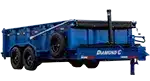
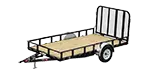

You back the trailer up to the shop. Your skid steer needs to get loaded. The ramps are folded up, the ground is uneven, and you’ve got about 30 seconds of patience before the job starts feeling like it needs a second person. That moment is where the spring-assist versus hydraulic loading-system decision actually lives.
It is not only a spec-sheet argument. It is a “how does this work at 6 a.m. when I am alone in a muddy field” argument. The right answer depends on your machine’s weight, track or tire width, ground clearance, loading frequency, trailer geometry, and what you are willing to spend for faster, more controlled operation. It also matters whether you are comparing spring-assisted stand-up ramps with a true powered hydraulic dovetail, because those systems change more than the amount of lifting required.
What Spring-Assist Ramps Actually Do
Spring-assist ramps use heavy-duty springs at the hinge area to offset part of the ramp’s weight. Depending on the design, the system may use coil springs, torsion-style spring components, or another factory-engineered counterbalance arrangement. The springs do not increase the ramp’s load rating, trailer payload, or GVWR. Their job is to make the ramp easier to raise and lower while the ramp structure carries the equipment during loading.
Diamond C uses factory-matched spring assistance on several current loading systems. The Diamond C FMAX212 can be equipped with 44-inch-wide MAX Ramps built with 50 KSI steel ramp frames and heavy-duty spring loading for lifting from the deck or the ground. Current FMAX models can also be configured with 24-inch-wide by 60-inch-long XDR Ramps for concentrated equipment where spacing between the ramps helps provide clearance. On the LPX, Diamond C offers 37-inch-wide MAX Ramps on qualifying deck lengths, along with the spring-loaded X-Ramp for the 102-inch Max-Width Package. H&H also uses spring-assisted ramp gates and stand-up ramps on current utility, equipment, and dovetail deckover configurations.
Spring-assist setups are mechanical. They do not need hydraulic fluid, a pump, a charged trailer battery, a solenoid, or a remote control to move the ramps. That simplicity is a real advantage in the field. The tradeoff is that the operator still controls the ramp manually, and the assistance must be matched to the original ramp weight and hinge geometry. Replacing a factory ramp with a heavier or differently shaped aftermarket ramp can change the balance dramatically. Spring adjustment and replacement should be handled carefully because the components store substantial energy.
What Hydraulic Ramps Actually Do
In everyday trailer conversations, “hydraulic ramps” often refers to a powered hydraulic tail, dovetail, or tilt deck rather than two separate ramps lifted by individual cylinders. A typical powered system uses a 12-volt electric hydraulic power unit, battery, controls, hoses, valves, and one or more cylinders to lower and raise the loading section. The operator still needs to position the trailer correctly, inspect the loading area, release or verify the locking system, and keep everyone clear, but the hydraulic system removes most or all of the manual lifting.
On current Diamond C FMAX gooseneck models, the primary hydraulic alternative to spring-assisted MAX or XDR Ramps is the 12-foot fully automatic hydraulic dovetail. It provides a published 12.5-degree approach angle and includes an automatic latch and wireless remote control. Depending on the build, the loading surface may use Blackwood rubber-infused runners or full-steel runners with cleats. This is a complete powered rear loading section, not merely a heavier pair of folding ramps. Diamond C’s HDT is another distinct solution: it is a low-profile hydraulically dampened tilt equipment trailer offered in GVWR configurations from 15,500 to 24,000 pounds.
Other manufacturers use similar but differently configured systems. H&H currently offers a 9-foot power-up and power-down hydraulic dovetail on its Hydraulic Tail Deckover Trailer, along with power-tilt deckover and full-width hydraulic tilt models. Delco also offers factory hydraulic-dovetail and equipment-tilt configurations. The important point is to compare the actual tail design, loading angle, usable loading surface, power system, latch arrangement, and rated capacity rather than assuming every powered system works the same way.
The Effort Gap (And When It Matters)
Spring assistance reduces manual effort. A powered hydraulic dovetail or tilt system removes most of the lifting effort and controls the loading surface through its hydraulic circuit. That distinction matters more as the loading section becomes wider, longer, or heavier, and it matters more when one operator cycles the trailer several times every day.
If you are loading an ATV, mower, compact tractor, or moderate-size skid steer a few times per week, properly adjusted spring-assisted ramps may be more than enough. You release the transport retainers, control the ramps as they move, position them for the machine’s tire or track spacing, load, and fold them back into the travel position. If a landscaping, excavation, rental, or delivery crew loads and unloads repeatedly throughout the day, a hydraulic dovetail or powered tilt deck can reduce fatigue, speed up each stop, and provide more consistent movement regardless of who is operating the trailer.
There is also a wear and inspection angle, but it is not as simple as saying one system lasts longer. Spring-assisted ramps place repeated movement on springs, hinge pins, bushings, ramp frames, latches, and pivot areas. Hydraulic systems add a battery, charger, electrical connections, switches, solenoids, pump components, hoses, fittings, valves, cylinder seals, and structural pivots. Either system can provide long service when it is correctly sized, kept clean, inspected regularly, and operated within the manufacturer’s limits. Neither system should be chosen as a substitute for proper ramp capacity, payload calculations, tongue weight, securement, or stable loading ground.
Cost: What You’re Actually Paying
Spring assistance is generally the lower-cost approach, but it is not always listed as a separate $200 or $600 option. On many current trailers, spring-assisted ramps or a spring-assisted ramp gate are part of the model’s standard loading package. On other builds, the price is bundled with the chosen ramp style, dovetail, ramp width, deck length, flooring, or equipment package. That is why a dealer quote or VIN-specific build sheet is more dependable than a universal spring-assist upgrade price.
A hydraulic loading system is a broader investment because the trailer needs more than a cylinder. The package may include the powered dovetail or tilt structure, hydraulic power unit, battery, charger, wiring, controls, remote, hoses, latching hardware, and compatible flooring or runners. Current Spencer Trailers inventory shows why whole-trailer comparisons must be made carefully. At the time of writing, 25,000- to 25,900-pound-GVWR Diamond C FMAX trailers with MAX Ramps are represented in the low-to-mid-$20,000 range, while many similarly heavy hydraulic-dovetail FMAX configurations are listed from the low $30,000s into the low $40,000s depending on deck length, axle package, suspension, brakes, hydraulic jacks, flooring, and Pacesetter equipment. A lighter 15,500-pound-GVWR FMAX207 with a hydraulic dovetail can be priced in the low $20,000s, so GVWR and complete build specifications must be considered before assigning the price difference to the tail alone.
Commercial buyers should calculate labor and downtime rather than looking only at the purchase price. Saving a few minutes at every loading stop can become meaningful when a crew moves equipment multiple times per day. The powered system may also make the trailer practical for operators who would struggle to control large manual ramps safely. On the other hand, a contractor who loads once in the morning and unloads once at night may get a better return from spring-assisted ramps and spend the difference on a winch, additional tie-down equipment, upgraded flooring, better tires, or another option that directly supports the work.
Reliability: Springs vs. Cylinders
Both systems can be dependable, and both systems fail differently.
- Spring-assist failure may involve a broken or weakened spring, damaged spring mount, worn hinge pin, seized pivot, bent ramp component, or faulty transport latch. The ramp may suddenly feel much heavier, move unevenly, or fail to stay balanced through its normal travel. A damaged spring can contain stored energy and should not be handled casually. Secure the ramp, keep people clear, and have the system repaired with the correct factory-rated parts rather than continuing to use an uncontrolled ramp.
- Hydraulic failure may come from a discharged battery, blown fuse, corroded terminal, failed switch or solenoid, remote-control issue, pump or motor problem, low fluid, damaged hose, loose fitting, blocked valve, or leaking cylinder seal. The tail may move slowly, stop in position, fail to raise, or fail to lower as intended. Current Diamond C hydraulic dovetails include an automatic latch for transport, but the latch, pivots, hydraulic components, and electrical system still need inspection. Never crawl beneath or place any part of your body under an unsupported hydraulic tail or tilt deck.
Long-term reliability comes from following the trailer manufacturer’s maintenance instructions. On spring-assisted ramps, inspect the springs, hinge pins, welds, ramp frames, retainers, and designated lubrication points. Remove packed mud, gravel, and debris before folding the ramps. On hydraulic systems, inspect fluid level and condition as specified, look for wet fittings or hose abrasion, keep battery terminals clean, maintain the onboard charger, confirm that the control and remote work correctly, and test the latch before travel. Hydraulic fluid and replacement components should match the manufacturer’s requirements rather than being selected by guesswork.
For buyers who want the fewest components and the simplest field diagnosis, spring-assist usually has the advantage. For buyers who prioritize powered operation, controlled movement, and reduced physical effort, the extra hydraulic components may be entirely justified. Reliability should be evaluated as part of the complete trailer specification, not as a claim that springs never fail or hydraulics are automatically troublesome.
Heavy Equipment Ramps: The Case for Going Hydraulic
Hydraulic loading systems make their strongest case when a machine’s clearance, the loading frequency, or the operator’s needs call for a longer and more controlled transition. Weight alone does not settle the decision. A properly rated spring-assisted ramp system can load substantial equipment, while a powered hydraulic tail can still be unsafe if the trailer is overloaded, the machine does not fit the loading surface, the ground is unstable, or the operator ignores weight distribution.
Diamond C’s 12-foot hydraulic dovetail uses its full powered tail length to provide a published 12.5-degree approach angle. That can be valuable for equipment that tends to high-center at the breakover point between a conventional ramp and deck. At the same time, Diamond C’s current spring-assisted options are purpose-built for serious work: 44-inch MAX Ramps provide a broad loading path, while 24-inch by 60-inch XDR Ramps are designed for concentrated machines such as backhoes and excavators when open space between the ramps helps with knuckle or undercarriage clearance. The correct choice comes from measuring the machine and matching it to the actual loading geometry.
If you are regularly loading:
- Skid steers, compact track loaders, or other machines with limited belly clearance
- Mini excavators, backhoes, rollers, or equipment with a sensitive breakover point
- Heavy commercial equipment that must be loaded and unloaded repeatedly throughout the workday
- Machines that need a continuous, wide loading surface instead of two independently positioned ramps
…then a hydraulic dovetail or powered tilt deck deserves serious consideration. Before ordering, confirm the machine’s operating weight with attachments and fuel, overall width, track or tire spacing, lowest ground-clearance point, approach and departure requirements, and the concentrated load placed on the loading surface. Also confirm the trailer’s empty weight, available payload, axle and tire ratings, coupler rating, ramp or tail rating, and the tow vehicle’s ratings. A manual system is not automatically wrong for heavy equipment, and a hydraulic system does not create extra GVWR. The loading system must still be properly matched to the complete hauling combination.
A Quick Comparison
| Factor | Spring-Assist | Hydraulic |
|---|---|---|
| Effort to deploy | Reduced, but the operator still controls and positions the ramps | Very low manual effort; powered tail or deck is operated by controls |
| Typical cost premium | Usually the lower-cost choice and sometimes included in the ramp package | Higher-cost system with pump, battery, hydraulics, controls, and powered structure |
| Capacity and geometry | Limited to the factory ramp rating, spacing, length, and dovetail design | Limited to the factory tail or tilt rating; may provide a longer, shallower transition |
| Maintenance complexity | Lower; inspect springs, hinges, welds, pins, latches, and pivots | Moderate; inspect hydraulics, battery, charger, wiring, controls, pivots, and latch |
| Failure mode | Ramp may become heavy, uneven, difficult to control, or unsafe to move | Tail may move slowly, stop, or remain in position until power or hydraulic service is restored |
| Best use case | Utility and equipment hauling where simplicity, lower cost, and manual positioning work well | Low-clearance equipment, frequent loading, full-width access, and operators who need powered movement |
What We Recommend at Spencer Trailers
Many buyers shopping in the 7,000 to 14,000 lb GVWR range for a utility, car hauler, or equipment trailer get everything they need from a properly designed spring-assisted ramp gate or pair of stand-up ramps. It costs less, requires no hydraulic power system, and handles a wide range of mowers, ATVs, UTVs, tractors, skid steers, and job-site equipment when the ramps are rated and positioned correctly. Do not choose solely by GVWR, though. Measure the machine and consider the ramp angle, breakover point, track spacing, ramp width, and loading frequency.
If you are specifying a commercial gooseneck equipment hauler, regularly moving heavy low-clearance machinery, or loading several times per day, include the hydraulic dovetail or powered tilt system in the original factory build. Retrofitting a complete powered tail later can require structural fabrication, new pivot and latch geometry, a hydraulic power unit, battery and charging equipment, electrical controls, hoses, cylinders, and changes to the rear of the trailer. It can also create warranty, balance, and resale questions. A factory-designed system from Diamond C, H&H, Delco, or another established manufacturer is the cleaner route.
We keep both types in stock and can compare specific configurations based on what you are hauling. Current pricing covers a wide range: lighter utility trailers with assisted ramp gates can begin around the $4,000 range, while heavy Diamond C equipment and FMAX trailers with spring-assisted MAX Ramps commonly reach the teens or low-to-mid $20,000s depending on GVWR and equipment. Current FMAX hydraulic-dovetail inventory begins in the low $20,000s for selected 15,500-pound-GVWR builds and can extend through the $30,000s and into the low $40,000s for 25,000- to 25,900-pound-GVWR commercial configurations. Inventory, discounts, factory pricing, freight, and option packages change, so confirm the live listing and complete build sheet before comparing totals.
The best time to get the right ramp system is before you buy. The second best time is to call us and describe exactly what you are loading. Tell us the machine make and model, operating weight, attachment, width, ground clearance, and how often you expect to load it. We will help you compare spring-assisted MAX Ramps, XDR Ramps, the LPX X-Ramp, hydraulic dovetails, and tilt-deck configurations without overselling equipment you do not need. Give us a call at (812) 829-0226 or stop by 291 West State Hwy 46 in Spencer, Indiana.


