







You’re hauling a skid steer every weekend and need to know whether the deck will hold up. Or maybe you’re pricing a new flatbed or equipment trailer and the salesperson mentions treated-wood and steel flooring as though you’re supposed to already have an opinion. Most buyers don’t, so they choose whatever comes standard. That can be perfectly reasonable, but the wrong flooring choice can reduce payload, create traction problems, or cost real money to repair later.
Here’s a straight answer on which deck makes sense for the work you’re actually doing.
What You’re Actually Choosing Between
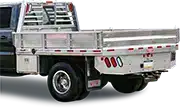
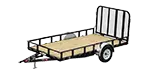
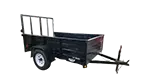
Many utility, flatbed, and equipment trailers use nominal 2-inch pressure-treated lumber as their standard flooring. Depending on the manufacturer and model, available upgrades may include oak, rubber-infused treated lumber, aluminum flooring, smooth steel plate, or raised-pattern diamond plate. Flooring choices are model-specific, so an option offered on one equipment trailer may not be available on another.
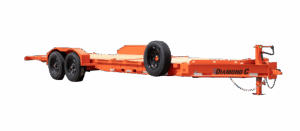
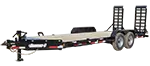
Diamond C currently lists 2-inch treated lumber as standard on many equipment and gooseneck models. Certain models can be configured with alternatives such as oak, BLACKWOOD rubber-infused treated lumber, AlumaTrax aluminum flooring, or 3/16-inch diamond plate. For example, the Diamond C LPX and HDT equipment-trailer configurators list 2-inch treated lumber as the standard floor and make 3/16-inch diamond plate available with compatible tilt configurations. H&H, Liberty, Delco, and other manufacturers also use different flooring packages depending on the exact model, size, suspension, ramp system, and intended application.
The right choice depends on what you load, whether the equipment has rubber tires or steel tracks, how much traction you need, where the trailer is stored, and how much usable payload you can afford to give up.
Weight: Wood Usually Wins Here
For equal deck dimensions, treated lumber is generally lighter than a full 3/16-inch steel-plate floor, although the exact difference depends on lumber species, moisture content, board thickness, steel thickness, deck width, and supporting structure. Fresh pressure-treated lumber can also be surprisingly heavy because it retains moisture after treatment, so published curb weight is more useful than a rule-of-thumb calculation.
A 3/16-inch steel sheet weighs roughly 7.7 pounds per square foot before accounting for any additional reinforcement or raised diamond pattern. A 20-foot-by-102-inch deck covers about 170 square feet, which puts the theoretical sheet weight near 1,300 pounds. The lumber covering the same area can still weigh several hundred pounds and may approach 1,000 pounds when wet, but it will ordinarily weigh less than a complete 3/16-inch steel floor.
Why does that matter? Payload is not the same as GVWR. A trailer’s approximate payload is its certified GVWR minus its actual empty weight, and installed options can change that empty weight. A current Diamond C LPX is offered in several axle, length, pull-type, and GVWR configurations beginning in the roughly 15,500-pound class, rather than as one universal 14,000-pound trailer. Its real payload must be determined from the finished trailer’s certification label and an accurate empty weight, not from a generic model estimate.
A steel floor, hydraulic tilt package, winch, spare tire, toolbox, heavier ramps, upgraded axles, and other options all add weight. The truck must also remain within its own GVWR, rear-axle rating, tire ratings, hitch rating, and gross combined rating. A trailer having unused payload does not mean the tow vehicle can legally or safely pull that amount.
If payload capacity is tight, treated lumber usually has the advantage over 3/16-inch steel plate. If minimum floor weight is the main priority, a compatible aluminum-floor option may be worth considering where the manufacturer offers one.
Traction: Steel Deck Needs More Attention
Anyone who has walked across wet smooth steel in work boots knows how slick it can become. Diamond plate provides more surface texture than smooth plate, but it can still be slippery when covered with rain, frost, mud, oil, clay, or fine dust. The raised pattern does not eliminate the need for careful loading practices.
Treated lumber has surface grain that generally provides useful grip for rubber tires and foot traffic. Rubber-infused flooring can provide still more traction and impact resistance. Wood can become slick too, however, especially when algae, ice, oil, manure, or packed mud is present. Worn, polished, split, or badly weathered boards should not be treated as a high-traction surface.
Livestock-trailer flooring cannot be reduced to a simple wood-versus-steel rule. Stock trailers may use treated wood, aluminum, or other floor systems, normally with fitted rubber mats or another nonslip surface. Drainage, mat condition, corrosion underneath the mats, ventilation, sanitation, and secure footing are all critical. Animals should not be transported on an uncovered slick metal floor merely because it is easy to wash.
Steel traction can be improved with properly secured rubber matting, manufacturer-approved coatings, abrasive strips in appropriate walking areas, or a raised-pattern plate. Any added material must remain securely attached and must not trap water, manure, road salt, or corrosive debris against the floor. Treated lumber generally begins with a traction advantage, but every deck still needs to be kept clean and inspected.
The Rot vs Rust Question
This is where the real debate lives.
Treated wood can eventually decay. Pressure treatment greatly improves resistance to fungi and insects, but it does not make lumber waterproof or permanent. Service life varies too widely to promise a fixed eight-, ten-, or fifteen-year replacement interval. Climate, preservative retention, board quality, drainage, storage, road salt, trapped debris, chemical exposure, fastener compatibility, and maintenance all affect how long a floor lasts.
Water and debris that remain between boards, above cross-members, around fasteners, or beneath stationary equipment accelerate deterioration. Boards can also check, cup, crack, gouge, and splinter. Inspect the entire deck, including board ends and the areas over cross-members. Soft spots, deep splitting, loose fasteners, crushed fibers, and boards that flex abnormally under a carefully applied test load are warning signs. Do not crawl under or work on a raised trailer unless it is correctly supported and secured against movement.
Replacing individual lumber boards is often practical for an experienced owner, but the replacement material must match the required dimensions and strength. Use preservative-treated lumber appropriate for the exposure, compatible coated or stainless fasteners where specified, and the manufacturer’s approved attachment pattern. Some modern copper-based wood preservatives can accelerate corrosion of unprotected steel fasteners, so ordinary interior screws are not suitable. Board prices vary substantially by species, length, treatment, grade, and local market; obtain a current material quote instead of relying on a fixed per-board estimate.
Steel can rust. Carbon steel exposed through scratches, gouges, damaged weld areas, or worn coating will oxidize when moisture and oxygen are present. Road salt, fertilizer, manure, and certain chemicals can accelerate corrosion considerably. A raised diamond pattern improves texture but does not make the material corrosion-proof.
A quality coating system delays corrosion. Diamond C uses its DM Difference Maker multi-stage finish process on its steel trailers, but even a well-prepared and coated deck can be damaged by tracks, buckets, chains, binders, dropped attachments, and aggregate. Chips and deep scratches should be cleaned and repaired with a compatible touch-up system before corrosion spreads underneath the surrounding coating.
Steel deterioration is not always invisible, but some high-risk locations are difficult to see from above. Inspect the underside, floor-to-frame welds, seams, drain paths, cross-members, and places where dirt or moisture collects. Surface discoloration is different from section loss, scaling, cracking, perforation, or a compromised weld. Suspected structural corrosion should be evaluated by a qualified trailer repair facility.
Neither material is maintenance-free. Lumber normally makes isolated floor repairs more approachable, while damaged steel plate may require cutting, welding, coating repair, and professional evaluation. A wood floor can still fail dangerously if obvious deterioration is ignored, and a steel floor can provide a long service life when it is kept clean, drained, coated, and promptly repaired.
What Each Deck Actually Costs
Treated lumber is commonly the baseline floor on open equipment and flatbed trailers, while full steel plate is usually an extra-cost option. The actual premium depends on deck length, plate thickness, trailer design, and whether the steel floor requires another compatible option. On current Diamond C LPX and HDT configurations, for example, the listed 3/16-inch diamond-plate floor is tied to a compatible tilt setup and is priced by bed length. That can put the floor upgrade alone well above $1,000 before considering any related configuration changes.
Because manufacturer pricing and dealer inventory change, a universal claim that every steel deck costs exactly $1,000 more would be misleading. Compare two written build sheets for the same model, length, axle package, GVWR, ramps, and other equipment. Otherwise, the apparent flooring price difference may actually include a tilt mechanism, reinforcement, different cross-member spacing, or another required feature.
Long-term lumber costs are usually manageable when deterioration is caught early. Maintenance includes keeping drain gaps clear, washing away salt and chemicals, checking fasteners, inspecting board ends and support points, and replacing damaged boards before they affect safe loading. Apply only a coating or water repellent suitable for pressure-treated trailer decking; a glossy film-forming finish can reduce traction and may peel under equipment traffic.
Steel requires its own maintenance: remove corrosive debris, keep drain paths open, inspect welds and seams, and repair coating damage before heavy scaling or section loss develops. Small coating repairs may be owner-manageable, but structural plate or frame work should be performed by a qualified welder or trailer repair shop using procedures appropriate for the trailer’s construction. Welding new anchors or modifying the deck without manufacturer guidance can create stress concentrations, damage wiring or hydraulic components, affect corrosion protection, and potentially alter warranty coverage.
When Steel Deck Is the Right Call
Steel decks earn their place in demanding applications. Here’s where they can make sense:
- Frequent hauling of steel-tracked equipment. Steel tracks, sharp grousers, damaged cutting edges, and concentrated loads can gouge or crush softwood. A properly supported 3/16-inch steel floor may tolerate this repeated abrasion better than standard treated pine. Floor material alone does not establish load capacity, however; the machine’s actual operating weight, attachments, track contact area, axle placement, cross-member spacing, ramp rating, and trailer payload must all be checked. A current Bobcat T595 compact track loader has a published operating weight of approximately 7,906 pounds before accounting for certain attachments or added equipment, so the complete machine should be weighed or calculated in its transport configuration.
- Repeated loading that damages standard lumber. Demolition equipment, steel pallets, sharp stands, and concentrated feet can shorten the life of a softwood floor. Steel plate may be appropriate if the trailer manufacturer approves it for those loads and provides adequate under-floor support.
- Operations that require a washable, nonporous surface. Properly coated steel can be easier to sweep or wash than rough or splintered lumber. The trailer still needs drainage, and the floor must be dried and inspected after washing.
- Applications with a manufacturer-engineered steel-floor package. A factory option accounts for plate thickness, deck support, tilt compatibility, weight distribution, and finish. That is preferable to welding plate over an existing wood floor without an engineering review.
- Jobs where minor deck gouging is unavoidable. Repeated movement of metal attachments may damage lumber quickly enough that the added purchase price and weight of steel are justified.
Steel is not automatically the best choice for chemicals or corrosive cargo. Fertilizer, salt, acids, alkalis, manure, and other substances can attack steel, coatings, aluminum, wood, fasteners, or all of them. Compatibility must be checked for the particular substance, concentration, contact time, floor material, and coating. Hazardous or loose bulk materials may also require a purpose-built body, containment system, permits, placards, or handling procedures rather than an open equipment-trailer deck.
When Wood Deck Is the Right Call
- General landscaping, farm, and property-maintenance use. Rubber-tired compact equipment, mowers, ATVs, implements, palletized supplies, and properly secured hay are common applications for treated lumber.
- Mixed loads and occasional use. Wood offers a practical balance of traction, replaceability, purchase price, and weight when the trailer is not exposed to steel tracks every day.
- Payload-sensitive applications. When comparing the same trailer with a full 3/16-inch steel floor, treated lumber will generally preserve more payload. Always verify the finished trailer’s actual empty weight and certification label rather than assuming a fixed 300-pound saving.
- Budget-conscious buyers. Treated lumber is often standard equipment, and an isolated damaged board can normally be replaced without removing and rewelding a large floor section.
- Loads that benefit from surface grip. Clean, sound lumber usually offers better grip than wet smooth steel for rubber tires and foot traffic. It does not replace proper ramps, wheel chocks, tie-downs, cautious loading, or a dry and clean work surface.
For animal transport, use a trailer specifically designed for livestock. Suitable flooring, nonslip mats, ventilation, gates, dividers, drainage, interior clearances, and animal-safe construction matter more than choosing a general-purpose equipment trailer merely because it has a wood deck.
A Quick Side-by-Side
| Factor | Treated Wood | Steel Plate |
|---|---|---|
| Weight for the same deck area | Generally lighter than 3/16-inch steel; moisture content affects weight | 3/16-inch sheet is roughly 7.7 lb. per sq. ft. before related structure |
| Traction when wet or dirty | Generally better surface grip, but mud, oil, algae, and ice remain hazards | Smooth plate can be very slick; diamond plate helps but does not eliminate the hazard |
| Common deterioration | Checking, splitting, gouging, fastener damage, and decay | Coating damage, oxidation, scaling, weld deterioration, and section loss |
| Inspection | Check ends, fasteners, soft spots, deep cracks, and support locations | Check the upper and lower surfaces, seams, welds, drain paths, and chipped coating |
| Typical repair | Individual boards can often be replaced with correct materials and fasteners | Plate or structural repairs may require cutting, welding, and coating restoration |
| Upfront cost | Often the standard baseline floor | Usually an extra-cost factory option; price depends on length and configuration |
| Best suited to | General cargo, rubber-tired equipment, farm, landscaping, and mixed use | Repeated abrasive loading and compatible steel-tracked equipment |
What We Typically Recommend
For many buyers in Owen County and the surrounding area, treated lumber is the smart default. It is usually lighter and less expensive than a full steel-plate floor, provides useful traction, and is comparatively straightforward to repair. It works well for many common loads, including ATVs, mowers, rubber-tired compact equipment, implements, palletized cargo, and properly secured round bales.
Loose gravel, soil, mulch, demolition debris, and similar bulk materials should be transported in a properly rated dump trailer or suitable contained body, not carried loose on an open flatbed or equipment-trailer deck. Likewise, livestock should travel in a purpose-built stock trailer rather than on an open equipment trailer.
The trailers we stock from Diamond C, H&H, Liberty, and Delco use flooring and options selected for particular models and applications. On Diamond C equipment and gooseneck trailers, that may include standard 2-inch treated lumber or model-compatible upgrades such as oak, BLACKWOOD, AlumaTrax, or 3/16-inch diamond plate. Availability should be confirmed from the current factory build sheet for the exact trailer.
Steel plate is the right upgrade when repeated contact with tracks, cutting edges, steel feet, or abrasive cargo would destroy standard pine prematurely and when the added weight still leaves enough legal payload. It is not a universally superior floor; it is a more suitable floor for particular work. For severe tracked-equipment service, oak or another factory-approved heavy-duty flooring option may also provide a useful middle ground without committing to a complete steel deck.
Before choosing, collect the actual transport weight of the machine and every attachment, the trailer’s certified GVWR and empty weight, the ratings of its axles, tires, coupler, ramps, and tie-down system, and the tow vehicle’s GVWR, GAWR, GCWR, hitch rating, and towing limits. The lowest applicable rating controls. Deck material does not increase the trailer’s certified GVWR or compensate for an overloaded axle, tire, ramp, hitch, or tow vehicle.
Not sure which floor fits your situation? Describe exactly what you’re hauling, its loaded weight, whether it has tires or tracks, how often it will be loaded, and where the trailer will be stored when you reach out to us. Those details usually make the right answer clear.


