






You have a piece of equipment that fits the trailer’s weight rating but creates a height problem once it is loaded. Maybe it is a skid steer with an enclosed cab, a mini excavator with the boom folded, a tractor, an agricultural attachment, or a tall contractor unit. You have measured the machine, measured the deck, and realized that a conventional flatbed places the highest point too close to Indiana’s legal height limit. The step-deck is the answer you keep circling back to, but you want to understand exactly what it does before you buy one.
Good. Here is what actually matters.
What a Step-Deck Trailer Is (and What It Solves)
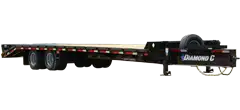
A step-deck trailer, also called a drop-deck trailer, has two deck elevations. On a gooseneck step-deck such as the Diamond C SDX, the shorter upper deck is positioned over the gooseneck connection and the longer main deck sits lower behind it. The vertical transition between those surfaces creates more usable height above the main deck without forcing the entire trailer to ride at the upper-deck height.
The amount of drop is not a universal 8 or 10 inches. It depends on the frame, suspension, axle, tire, and hitch configuration. Heavy hotshot step-decks commonly have a substantially larger transition. Diamond C’s published SDX dimensions show an approximately 22-inch difference between the upper deck and lower main deck on the illustrated configurations, with the unloaded main deck sitting roughly 35 inches from the ground. Final dimensions can vary with the selected model and equipment.
Indiana’s normal legal vehicle height is 13 feet 6 inches. That is an Indiana limit, not a single federal height limit that applies identically in every state. A load exceeding 13 feet 6 inches in Indiana generally requires oversize permitting, and any interstate trip must be checked against every state and route involved. Posted bridge clearances, utility lines, construction zones, local roads, and customer entrances can be lower than the statewide maximum, so legal height is not the same thing as guaranteed route clearance.
The height calculation is straightforward: measure from the road surface to the highest point of the loaded machine. A traditional flatbed deck in the low-to-mid-50-inch range carrying a machine that is 9 feet tall can place the combination at or near 13 feet 6 inches. Put the same 9-foot machine on a main deck approximately 35 inches high and the theoretical loaded height is about 11 feet 11 inches, before accounting for the exact trailer attitude, tires, suspension, and machine position. That extra margin is the core value of a step-deck.
Do not choose a step-deck from an arbitrary rule such as “anything taller than 5 feet needs one.” The correct decision comes from the actual machine height plus the actual deck height. If a straight-deck flatbed keeps the load comfortably within the legal and route-specific limit, the extra step may not help you. If the higher deck leaves little or no clearance margin, the lower main deck becomes a practical necessity rather than a specialty feature.
Deck Height: The Number That Actually Drives the Decision
When comparing trailers, start with the unloaded deck height measured from level ground to the top of the deck surface. Then confirm the selected tire, axle, and suspension package because those choices can change the number. The tow vehicle’s hitch height also matters: a trailer that runs nose-high or nose-low will not have the same deck attitude or axle loading as one that is level.
Loading the trailer may compress the suspension and lower parts of the deck slightly, but that is not a safe clearance strategy. Use the manufacturer’s unloaded dimensions for comparison, then measure the completed truck, trailer, and cargo combination after loading. Measure the highest point of the machine, including exhaust stacks, folded booms, cab lights, air intakes, mirrors, attachments, and anything stored on the upper deck.
The Diamond C SDX is a useful benchmark because it is a true hotshot-style gooseneck step-deck rather than a short bumper-pull equipment trailer. The current SDX212 is 102 inches wide and is offered in total deck lengths from 35 to 53 feet, including its 10-foot upper step deck. Diamond C lists a 25,900-pound GVWR, an approximate empty-weight range of 9,880 to 11,980 pounds, a 16-inch low-profile Engineered Beam frame, and two 12,000-pound Lippert axles. The manufacturer’s current dimension drawings depict the lower main deck at roughly 35 inches and the upper-to-lower transition at about 22 inches on the illustrated setups.
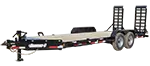
Compare that with the Diamond C LPX, a low-profile bumper-pull equipment trailer. The LPX uses a primarily single-level, between-the-fenders equipment deck instead of a long upper-deck/lower-deck hotshot layout. Current LPX packages range from 15,500 to 24,000 pounds GVWR, depending on axle and frame configuration, with 80- or 82-inch standard bed widths and an available 102-inch max-width package using frame extensions and drive-over fenders. It is often the more practical choice for hauling one skid steer, compact track loader, mini excavator, or tractor over shorter distances.
The SDX and LPX are therefore not interchangeable versions of the same trailer. The SDX is a long, full-width gooseneck step-deck built for hotshot work, long cargo, multiple pieces of equipment, and loads that benefit from separate deck elevations. The LPX is a shorter low-profile equipment trailer built around convenient ground loading and concentrated equipment transport. The right choice depends on the cargo footprint as much as the cargo height.
Step-Deck vs. Flatbed: When Each Wins
A standard flatbed is simpler and may have a lower purchase price and lower empty weight than a comparably rated step-deck. It also gives you one uninterrupted deck plane. The question is whether the lower main deck and additional loading flexibility of the step-deck justify its cost, length, and weight for the work you actually perform.
| Situation | Better Choice |
|---|---|
| Hauling lumber, pipe, fencing, pallets, hay, or other relatively low cargo | Standard flatbed such as a Diamond C FMAX |
| Hauling tall machinery while preserving full 102-inch deck width | Step-deck such as a Diamond C SDX |
| Loading from a dock or elevated surface | Flatbed or deckover that matches the dock height |
| Ground-loading one skid steer, compact excavator, or tractor | Low-profile LPX or hydraulically dampened HDT in many cases |
| Hauling long cargo plus tall equipment on the same trip | Step-deck |
| Budget is tight and overall load height is not a constraint | Standard flatbed or conventional equipment trailer |
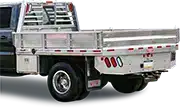
The flatbed wins when an uninterrupted deck is more valuable than additional vertical clearance. Long bundles, pallets, building materials, and cargo loaded from the side with a forklift are usually easier to position on one level. A Diamond C FMAX gooseneck flatbed also offers multiple loading systems, including MAX Ramps, XDR Ramps, a hydraulic dovetail, or a straight-deck arrangement, depending on model and configuration.
The step-deck wins when the lower main deck solves a measurable height problem or when the upper deck provides useful additional cargo space. It can also help separate equipment, attachments, pallets, and support materials across two levels. The benefit is not simply that the trailer “looks more commercial.” It is that the deck geometry gives you a combination of lower loaded height, long usable deck space, and a full-width hauling surface.
Approach angle should be evaluated separately. A lower deck can reduce the climb for a given ramp length, but the rear loading system determines the actual angle. Ramp length, dovetail length, breakover point, machine wheelbase, ground clearance, track design, and rear overhang all matter. A low deck with short ramps can still create a difficult transition, while a higher deck with a long hydraulic dovetail may load smoothly.
Step-Deck vs. Deckover: An Underrated Distinction
Step-deck and deckover describe different parts of trailer geometry, so they are not necessarily opposites. “Step-deck” means the trailer has two deck elevations. “Deckover” means the usable deck is positioned above the tires rather than between conventional fenders.
A conventional single-level deckover provides a wide, unobstructed deck, commonly up to the normal 102-inch legal width. The Diamond C DEC deck-over equipment trailer, for example, has a 102-inch bed, lengths from 20 to 30 feet, bumper-pull or pintle configurations, and GVWR packages from 15,500 to 23,000 pounds. Its deck is higher than a between-the-fenders LPX because the floor must clear the tire and suspension package.
The Diamond C SDX also has a 102-inch-wide main deck positioned over the tires, but it adds a separate upper deck at the gooseneck. In practical terms, an SDX combines full deckover width with step-deck height management. That is why comparing an SDX only against an 82-inch between-the-fenders trailer does not tell the whole story.
If your main problem is carrying wide pallets, lumber, attachments, or equipment that will not fit between fenders, a DEC or another 102-inch deckover may be enough. If your main problem is overall loaded height on a long gooseneck trailer, the SDX deserves a closer look. If your job is moving one compact machine around Owen County, an LPX or HDT may remain easier to maneuver, lighter, shorter, and less demanding on the tow vehicle.
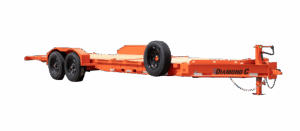
Some operators need both width and a low loading system but do not need a 35- to 53-foot hotshot trailer. In that situation, compare the DEC, deck-over tilt models, the LPX max-width package, and the 102-inch-wide Diamond C HXD tilt trailer. Trailer category names are only the starting point. The deciding measurements are deck width, deck height, total length, loading angle, payload, and the machine’s concentrated axle or track loading.
The Diamond C SDX: What the Real Specs Look Like
The current Diamond C SDX lineup includes the tandem-dual-wheel SDX212, the heavier tandem-dual-wheel SDX216, and the triple-dual-wheel SDX312. The SDX212 is rated at 25,900 pounds GVWR. The SDX216 is offered at 30,000 pounds with an available 40,000-pound package, while the SDX312 is offered across 30,000- to 40,000-pound configurations. Model selection must be based on the completed trailer’s VIN plate and build sheet, not simply the number of axles.
The SDX212 uses two 12,000-pound Lippert axles and a low-profile Engineered Beam frame. The current Diamond C configurator lists electric drum brakes with ABS as the standard brake selection, with electric-over-hydraulic disc brakes available. The SDX216 uses two 16,000-pound Lippert axles with hydraulic disc brakes, while the SDX312 uses triple Lippert axle configurations. Axle capacity alone does not establish GVWR because part of a gooseneck trailer’s loaded weight is carried through the hitch, and the frame, coupler, tires, suspension, and certification rating all remain controlling limits.
The standard floor is 2-inch treated lumber installed after the trailer is coated, with board caps protecting the ends. The frame receives Diamond C’s DM Difference Maker multi-stage coating system. Diamond C builds its trailers in Mt. Pleasant, Texas, where the company has operated since being founded in 1985.
There are two separate loading areas to consider. The 10-foot upper step deck includes engineered channel slide-in ramps so equipment or cargo can be moved from the lower deck to the upper deck. At the rear, the SDX can be configured with MAX Ramps, XDR Ramps, a 12-foot fully automatic hydraulic dovetail, or a straight deck with 96-inch rear slide-in ramps.
MAX Ramps are 44 inches wide and use four 50 ksi steel ramp frames per ramp. XDR Ramps are 24 inches by 60 inches and leave space between the ramps for equipment requiring additional knuckle or undercarriage clearance. The 12-foot hydraulic dovetail has a published 12.5-degree approach angle, an automatic latch, traction runners, and wireless operation. The right rear system depends on tire width, track width, machine belly clearance, concentrated loading, and whether you want to handle ramps manually.
As of July 2026, Diamond C listed a base MSRP of $31,733 for the SDX212 before regional adjustments, options, taxes, title, licensing, and registration. Spencer Trailers had a 2026 SDX212 with a 32-foot lower deck, 10-foot upper step deck, 25,900-pound GVWR, two 12,000-pound axles, electric brakes with ABS, and a 12-foot hydraulic dovetail listed at $39,150. That particular trailer had an advertised empty weight of 10,070 pounds and payload capacity of 15,830 pounds. Inventory, pricing, and option availability change, so the live listing and VIN-specific build sheet should control the purchase decision.
That price is substantially above a basic utility or conventional equipment trailer because the SDX is a long commercial-grade gooseneck with dual wheels, a large engineered frame, heavy running gear, two usable deck levels, and specialized loading systems. For an operator who uses the deck length and height clearance regularly, those features can produce real value. For someone moving one compact machine a few times per year, an LPX, HDT, rental, or delivery service may make more financial sense.
Load Placement on a Step-Deck
One issue that can surprise a first-time step-deck owner is how quickly load placement changes gooseneck pin weight and individual axle loading. Cargo on the upper front deck is well ahead of the trailer axles, so adding substantial weight there transfers more load to the truck. Cargo placed too far behind the trailer axles can remove necessary pin weight and make the combination unstable.
Do not apply a bumper-pull “10 percent tongue weight” rule to an SDX. Gooseneck and fifth-wheel combinations normally carry a higher percentage of the trailer weight on the truck, and many truck towing guides use approximately 15 percent as a planning figure. The correct result, however, is whatever keeps the combination within the trailer manufacturer’s requirements and every applicable rating: truck GVWR, rear GAWR, tire capacity, hitch rating, trailer GVWR, trailer axle ratings, and coupler rating.
The primary machine will often sit on the lower main deck with its center of mass ahead of the trailer axle group, but there is no universal loading mark that works for every machine. A compact excavator with a rear counterweight behaves differently from a skid steer, tractor, palletized load, or multiple-machine combination. Boom position, bucket position, fuel, attachments, and counterweights all change the balance.
The reliable method is to load the actual cargo, secure it, and weigh the combination on a certified scale. Record the truck’s steer axle, drive axle, and trailer axle weights. If the distribution is wrong, reposition cargo on the trailer rather than trying to compensate by moving passengers, tools, or miscellaneous weight around the truck cab. Keep the trailer level and verify that no individual axle, tire, wheel, hitch component, or vehicle rating is exceeded.
The upper deck is useful for lighter attachments, pallets, toolboxes, dunnage, and support materials, but it is also a structural cargo deck and may carry heavier freight when the load plan supports it. The key is not to assume that “upper deck means light cargo only.” The key is to calculate and scale the complete combination.
Brake and Axle Requirements Worth Knowing
Indiana law requires a trailer or semitrailer with a gross weight of at least 3,000 pounds to have brakes adequate to control, stop, and hold it. The driver must be able to apply those brakes from the tow vehicle, and the system must automatically apply the trailer brakes if the trailer accidentally separates. For a heavy trailer, that means a functioning in-cab brake controller, a correctly connected breakaway switch, and a charged breakaway battery are essential rather than optional accessories.
A current SDX212 is not simply a generic tandem-axle trailer with ordinary light-duty brakes. It uses two 12,000-pound Lippert axles, and current builds may have electric drum brakes with ABS or optional electric-over-hydraulic disc brakes. The brake controller must be compatible with the selected system. A controller designed only for electric drum brakes may not correctly operate an electric-over-hydraulic actuator.
Before a loaded trip, confirm brake-controller gain, manual override operation, breakaway function, tire pressure, wheel fastener torque, hub condition, lights, safety chains, coupler engagement, and the gooseneck ball or kingpin connection. Brake gain should be adjusted for the loaded trailer rather than left at the same setting used for an empty utility trailer.
On the tow-vehicle side, an SDX212 can be rated for 25,900 pounds by itself. That requires far more than looking at a pickup badge or a broad advertisement claiming a maximum towing number. Check the exact truck’s maximum trailer rating, GCWR, payload label, GVWR, rear GAWR, tire ratings, bed-mounted hitch rating, cab, bed, wheelbase, drivetrain, and axle ratio. A properly configured one-ton dual-rear-wheel pickup or commercial truck is a more typical starting point for this class of trailer, but even within that category the ratings vary significantly.
The SDX uses a gooseneck connection with a square adjustable 2-5/16-inch ball coupler or an available kingpin adapter. It is not a bumper-pull trailer and does not use a receiver-mounted weight-distributing hitch. The hitch, ball, mounting system, truck frame attachment, and any adapters must all be rated for the actual loaded combination.
Commercial drivers also need to understand the Class A CDL threshold correctly. A trailer being rated over 10,000 pounds does not automatically create a Class A CDL requirement by itself. The combination generally reaches the Class A threshold when the GCWR or actual gross combination weight, whichever controls under the applicable rule, is 26,001 pounds or more and the towed unit has a GVWR or actual gross weight over 10,000 pounds. Applicable farm, recreational, military, emergency, and other exemptions must be evaluated separately. Because an SDX paired with a capable tow vehicle will commonly have combined ratings above 26,001 pounds, commercial buyers should verify licensing, USDOT, insurance, medical-card, and operating-authority requirements before putting the combination to work.
Is a Step-Deck Right for You?
A step-deck is right when its lower main deck solves a demonstrated loaded-height problem, when you need the upper deck as additional cargo space, or when you need a long 102-inch-wide commercial trailer for mixed freight and equipment. The geometry is the product, but the decision still has to include weight, length, loading style, turning clearance, truck capacity, licensing, and route restrictions.
Start with four measurements: the cargo’s actual operating or transport weight, its highest transport point, its width, and its required deck footprint. Add the selected trailer’s unloaded deck height to the cargo height. Then check the trailer’s payload, concentrated-load capability, ramp compatibility, axle configuration, and the truck’s available ratings. Leave practical clearance rather than planning to run exactly at 13 feet 6 inches.
A machine taller than 9 feet does not automatically require a detachable-neck lowboy. A 9-foot machine on a roughly 35-inch SDX main deck is theoretically about 11 feet 11 inches overall. Even a taller machine may remain within Indiana’s normal height limit. A lowboy, removable gooseneck, or permitted oversize movement enters the conversation only when the actual loaded height, weight distribution, machine clearance, or loading method cannot be handled safely and legally by the selected step-deck.
Likewise, do not buy an SDX solely because it has the highest-looking specification sheet. If you normally haul one compact machine and do not need a long full-width deck, an LPX low-profile equipment trailer or HDT hydraulically dampened tilt trailer may be easier to load, easier to store, and more economical to tow. If you primarily haul long, low cargo, a Diamond C FMAX flatbed may give you a simpler uninterrupted deck.
We carry Diamond C trailers at Spencer Trailers and can walk you through the SDX, FMAX, LPX, HDT, and DEC configurations that match your cargo weight, deck-length, loading, and height-clearance requirements. Browse current inventory to see what is in stock, or stop in at 291 West State Hwy 46 in Spencer. You can also call or text (812) 829-0226 and tell us exactly what you are hauling before making the trip.
Not sure whether a step-deck or a Diamond C LPX low-profile equipment trailer fits your situation better? Reach out with the machine make and model, operating weight, overall transport height, width, wheelbase or track length, attachments, and the truck you plan to use. Those numbers usually make the correct trailer category clear, and we would rather help you buy the right trailer once than discover a height, loading, payload, or tow-vehicle problem after the fact.


