







You’ve got a truck. You need a body that can do real work, whether that means loading disabled vehicles, transporting equipment, supporting a service crew, or carrying cargo that does not belong in a pickup box. A rollback tow body is one of the most useful tools in the towing and recovery industry, but it is also a specialized hydraulic carrier that must be matched carefully to the chassis. The deck rating, completed truck weight, rear-axle load, wheelbase, cab-to-axle measurement, hydraulics, winch, securement system, and intended duty cycle all matter. Before you order, it helps to separate a true rollback carrier from the fixed platform, service, and dump bodies commonly installed on work trucks.
Rollback vs. Flatbed Tow Beds: Not the Same Thing
In the towing industry, people often use “rollback,” “carrier,” and “flatbed tow truck” to describe the same basic machine: a truck with a deck that hydraulically tilts and slides rearward until the loading edge approaches the ground. A disabled vehicle is then pulled onto the deck with a winch or driven aboard when it is safe to do so. Once loaded, the deck slides forward, returns to its transport position, and is secured for travel. The deck movement is hydraulic. The steel or synthetic cable is normally the winch line used to load the casualty vehicle, not the mechanism that slides the carrier deck.
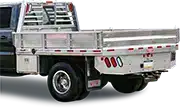
A fixed flatbed or platform truck body is a different product. It remains stationary on the chassis and is normally loaded with a forklift, crane, removable ramps, dock, or other material-handling equipment. Fixed platform bodies are common on farm trucks, construction trucks, welding rigs, equipment haulers, landscape operations, and service fleets. They can be equipped with toolboxes, gooseneck hitches, receiver hitches, stake pockets, rub rails, headache racks, lighting, and cargo-securement points, but adding those features does not turn the body into a rollback carrier.
Both types have a place. If you are performing regular roadside recovery or loading vehicles that cannot move under their own power, a properly upfitted rollback carrier is usually the right tool. If you are hauling pallets, fencing materials, compact equipment, building supplies, feed, ATVs, or tools, a fixed platform body or dedicated equipment trailer may be simpler, lighter, and more economical. Spencer Trailers carries Zimmerman and Martin truck bodies for platform, service-body, and dump applications, so we can help you compare those choices before you order. A true rollback should be specified through a qualified carrier manufacturer and upfitter using the chassis manufacturer’s body-builder requirements.
Zimmerman Truck Beds
Zimmerman Truck Bodies offers a broad lineup of work-truck bodies, including steel and aluminum platform beds, service bodies, contractor-oriented configurations, ranch-style bodies, and aluminum dump bodies. The company’s history goes back more than 25 years, with its truck-body manufacturing operation developing from its expansion into trailers and commercial work equipment. Current Zimmerman product families include the 3000XL steel platform, 6000XL aluminum platform, Ranch Master, Advantage Service, Legacy Contractor, and EZ Dump.
What matters with a Zimmerman body is choosing the exact configuration for the chassis rather than treating every “8-foot” or “11-foot” bed as interchangeable. Current platform bodies appear in widths and lengths such as 84 by 84 inches, 84 by 102 inches, 97 by 102 inches, 97 by 114 inches, and 97 by 136 inches, depending on model and material. Service and dump bodies have their own dimension charts and chassis requirements. Cab-and-chassis trucks, pickup-box-delete trucks, single-rear-wheel trucks, and dual-rear-wheel trucks do not all use the same body width, frame arrangement, or mounting package.
Steel and aluminum also change the finished-truck calculation. Aluminum can reduce body weight and resist corrosion, while steel may provide a lower initial price and suit operators who prefer a traditional heavy-duty platform. Do not rely on a generic statement that every 8-foot body weighs a certain amount. Body weight changes with width, length, flooring, headache rack, toolboxes, hitch equipment, bumpers, lighting, dump hardware, and mounting components. Ask for the published weight of the exact body and accessories, then obtain an axle-by-axle scale weight after installation. The completed truck must remain within its certified GVWR, front and rear GAWRs, tire ratings, and any chassis-manufacturer limitations.
Martin Truck Beds
Martin Truck Bodies focuses on aluminum work-truck bodies. Its current lineup includes multiple flatbed, skirted-bed, service-body, dump-body, gooseneck-service, and agricultural configurations. Examples include the MX, MP, BX, DX, SB, and SBV flatbeds, several service-body designs, the Avalanche and Highlander dump bodies, and bodies intended for ranch and bale-handling work. The correct choice depends on the truck, the cab-to-axle dimension, the intended hitch system, toolbox needs, and the type of cargo being carried.
Martin’s aluminum platform bodies use corrosion-resistant aluminum construction and are offered in chassis-specific dimensions. For example, current MX configurations include bodies for short-bed and long-bed single-rear-wheel trucks, dual-rear-wheel pickup-box-delete trucks, and 60-inch or 84-inch cab-to-axle chassis. Available dimensions include 84-inch and 98-inch nominal widths with lengths such as 88, 100, 110, and 134 inches, depending on the chassis application. That range illustrates why ordering by a general description such as “an 8-foot flatbed” is not enough.
The body’s structural design is only one part of the payload equation. An aluminum body may leave more of the chassis capacity available than a comparable heavier body, but the legal and mechanical limits still come from the completed vehicle. A Ford F-550, for example, may be ordered with different GVWR packages, with properly equipped versions reaching 19,500 pounds. Some F-350 configurations may carry a 14,000-pound GVWR, but not every F-350 is rated that high. Always use the certification label, axle ratings, tire labels, chassis build information, and completed scale weight for the truck you actually own. Do not base a purchase on the maximum rating advertised for a different wheelbase, engine, axle, or suspension package.
Specs That Actually Matter
Bed length is important, but it is only one part of a safe and useful installation. These are the measurements and ratings worth confirming before you commit:
- Cab-to-axle (CA) measurement: CA is the distance from the back of the cab to the centerline of the rear axle. It is one of the primary measurements used to match a commercial body to a cab-and-chassis truck. You should also verify wheelbase, usable frame length, rear frame overhang, frame width, frame height, frame section strength, cab clearance, exhaust routing, fuel and DEF tank locations, battery placement, spare-tire location, and any manufacturer restrictions on drilling, welding, or altering the frame. A body may have the correct nominal length and still be unsuitable for the chassis.
- Body weight and completed axle weight: A true light-duty rollback commonly uses a deck around 20 to 22 feet long, while medium- and heavy-duty carriers may use decks from roughly 24 to 30 feet. The installed system includes the deck, subframe, hydraulic cylinders, hydraulic reservoir and pump, winch, controls, rear structure, lighting, optional wheel-lift, toolboxes, and mounting hardware. That equipment can consume a substantial portion of the chassis capacity. Obtain the manufacturer’s weight for the exact configuration and weigh the completed truck with full fluids, the driver, normal tools, chains, straps, dollies, and other operating equipment. Check both total weight and individual axle weights. A rollback can reach its rear GAWR before it reaches its overall GVWR.
- Deck width: Many current rollback carriers are offered with 96-inch or 102-inch decks. For commercial motor vehicles operating on the federal National Network, 102 inches is the standard maximum vehicle width excluding certain safety devices. A body or load exceeding the applicable legal width may require permits, route review, and compliance with state or local restrictions. Width also affects mirror clearance, lane positioning, storage, loading geometry, and whether the deck can safely accommodate the vehicles you expect to carry.
- Tie-down and anchorage ratings: There is no universal rule that every recessed ring must carry one specific rating. Use only manufacturer-approved anchorage points and tiedowns with legible working load limits suitable for the vehicle or equipment being transported. Under federal commercial cargo-securement rules, automobiles, light trucks, and vans weighing 10,000 pounds or less must be restrained at the front and rear with at least two tiedowns. Wheeled or tracked equipment weighing 10,000 pounds or more generally requires at least four tiedowns, with accessories lowered and secured and articulation prevented where applicable. The securement system is limited by its weakest component, including the anchor, chain, strap, hook, ratchet, and attachment method.
- Hydraulic system and winch: The rollback deck’s slide-and-tilt functions are hydraulic. Depending on the carrier and chassis, hydraulic power may come from a transmission-mounted PTO system or an electric-over-hydraulic power unit. Evaluate pump capacity, reservoir size, cylinder design, control placement, hose routing, filtration, emergency procedures, and local parts availability. The winch is a separate loading component. Light-duty carriers commonly use winches in the 8,000- to 12,000-pound class, while larger carriers may use higher-capacity systems. Winch selection must account for the casualty weight, loading angle, rolling resistance, number of line parts, wire or synthetic rope specification, and the carrier manufacturer’s limits.
Matching the Bed to Your Chassis
This is where a dealer or qualified upfitter adds real value. Not every body fits every truck, even when two trucks appear to be in the same weight class. Ford, Ram, Chevrolet, and GMC chassis can have different frame widths, CA dimensions, wheelbases, rear overhangs, fuel systems, exhaust after-treatment equipment, electrical interfaces, PTO provisions, camera systems, and frame-modification rules. Differences can also exist between model years or between a pickup-box-delete truck and a purpose-built cab-and-chassis model.
Zimmerman and Martin provide application information for their current bodies, and the installation must also follow the truck manufacturer’s body-builder or upfitter guide. The installer should use an engineered mounting method that accommodates frame movement and distributes load correctly. Improper drilling, welding, clamping, or rigid mounting can concentrate stress, damage the frame, interfere with emissions or fuel-system components, affect handling, and create warranty or compliance problems. After installation, confirm lighting, backup-camera operation, hitch height, rear overhang, mudflaps, license-plate placement, conspicuity equipment where required, and the final center of gravity. The finished vehicle should be weighed by axle and labeled or documented as required for a completed or altered vehicle.
Do You Actually Need a Rollback Bed?
Honest answer: maybe not. A rollback is the right tool when you regularly load disabled vehicles, perform roadside recovery, transport low-clearance cars, or need a hydraulically adjustable loading angle. A well-specified carrier can load a vehicle without relying on long portable ramps, and the winch allows controlled loading when the vehicle does not run. It also keeps the casualty vehicle fully supported on the deck during normal transport rather than towing it with an axle on the road.
If your primary work is hauling building materials, pallets, compact equipment, farm supplies, ATVs, landscaping tools, or machinery that can be loaded with a forklift or purpose-built ramps, a fixed platform body may be more practical. It generally has fewer hydraulic components, uses less of the chassis payload, and costs less than a complete rollback installation. A dedicated equipment trailer may provide even more flexibility because it can be disconnected when the truck is needed for another job and can offer a higher payload than a light-duty rollback when paired with a properly rated tow vehicle.
The operators who benefit most from a rollback are towing companies, repair shops, vehicle transporters, equipment-rental businesses, municipalities, and contractors that routinely move disabled or low-clearance vehicles. A mixed fleet can also make sense. One truck can be equipped as a rollback for vehicle recovery, while another uses a fixed platform or pulls an equipment trailer for machinery and material hauling. That separation keeps specialized recovery equipment available for the work it was designed to do.
A common question we get is: “Can I add a winch to a standard flatbed later and make it a rollback?” The answer is no. A winch can help pull cargo onto a fixed body if the body, ramps, anchorages, and winch mount are engineered for that load, but it does not add the hydraulic subframe, sliding deck, tilt geometry, rear support structure, controls, or low loading angle of a true rollback carrier. A fixed platform and a rollback are fundamentally different body systems.
Trailers vs. Truck Beds: A Quick Comparison
| Feature | Rollback Truck Bed | Equipment Trailer |
|---|---|---|
| Load capacity (typical) | Light-duty carriers commonly have structural deck ratings around 10,000–12,000 lbs.; medium- and heavy-duty carriers may be rated around 17,000–30,000 lbs. Actual legal payload is often lower and depends on completed truck weight, GVWR, GAWR, tires, wheelbase, and load position. | Current equipment trailers range from approximately 7,000 lbs. to 40,000 lbs. GVWR depending on model. Usable payload equals the trailer GVWR minus the empty trailer, installed options, tools, and cargo-control equipment, subject to axle, tire, coupler, hitch, and tow-vehicle limits. |
| Driver’s license class needed | When operated as a straight truck carrying the vehicle on its deck, a weight-based Class B CDL is generally required at a GVWR of 26,001 lbs. or more. A lighter rollback may be CDL-exempt by weight, although USDOT, insurance, for-hire, operating-authority, inspection, and other commercial rules may still apply. | A Class A CDL is generally triggered when the combination has a GCWR of 26,001 lbs. or more and the trailer has a GVWR over 10,000 lbs. A trailer rating over 10,000 lbs. by itself does not automatically require a Class A CDL when the combined rating remains below 26,001 lbs. |
| Maneuverability | Operates as one vehicle and is generally quicker to position at roadside scenes, although the long rear overhang, deck length, turning radius, and rear swing still require training and clearance. | Requires additional room for turns and backing. Maneuverability depends on trailer length, axle placement, tongue or gooseneck configuration, truck wheelbase, and driver experience. |
| Vehicle recovery use | Designed for controlled loading and transportation of disabled vehicles when properly equipped with a rated winch, securement system, lighting, and recovery accessories. | Can transport vehicles when equipped with suitable ramps or a tilt system, rated anchorages, a properly mounted winch when needed, and compliant securement. It does not provide the same roadside loading speed or recovery capability as a dedicated rollback. |
| Setup cost | Higher because the complete package includes the chassis, carrier body, subframe, hydraulic system, winch, controls, installation, and often a wheel-lift and recovery accessories. | Usually offers a lower entry point when the buyer already owns a properly rated tow vehicle, although the hitch, brake controller, wiring, registration, insurance, maintenance, and securement equipment must be included in the total cost. |
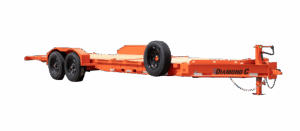
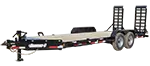
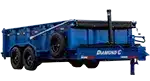
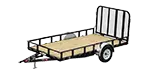
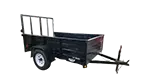
If you’re still deciding between a rollback truck and a dedicated equipment trailer, the answer usually comes down to frequency, payload, loading conditions, and flexibility. A rollback works well for frequent vehicle-recovery and transport calls. A trailer can make more sense when you move equipment periodically, already own an appropriately rated truck, and want to disconnect the hauling platform when it is not needed. At Spencer Trailers, current Diamond C choices cover a wide range of work, from the 7,000-lb. GVWR GTU utility trailer to LPX and HDT equipment models in the roughly 14,900/15,500- to 24,000-lb. range and FMAX gooseneck flatbeds reaching as high as 40,000 lbs. GVWR on certain models. Equipment, ramps, and ratings vary by exact configuration, so use the VIN plate and current build sheet rather than relying on a family name alone. In Indiana, a trailer with a gross weight of at least 3,000 lbs. must have compliant brakes, including driver control and an automatic breakaway function. Newly acquired trailers should generally be titled and registered within Indiana’s 45-day penalty-free window.
What We Carry and How to Order
Spencer Trailers carries Zimmerman and Martin truck beds, including fixed platform, service-body, ranch, contractor, and dump configurations, from our location in Spencer, Indiana. These are chassis-specific work bodies, so most orders should begin with a fitment conversation. We will need the truck’s year, make, model, VIN or detailed build information, cab style, single- or dual-rear-wheel configuration, pickup-box-delete or cab-and-chassis status, wheelbase, cab-to-axle measurement, GVWR, front and rear GAWRs, and the work you plan to perform. We should also discuss body material, toolboxes, gooseneck or receiver hitch needs, lighting, camera retention, fuel and DEF access, dump operation, cargo securement, and any equipment that will remain on the truck every day.
Pricing varies significantly by body and installation requirements. For a current 2026 reference, listed Zimmerman 3000XL steel platform bodies in our inventory have generally been advertised from approximately the mid-$4,000s to the upper-$5,000s, depending on size. Listed 6000XL aluminum platforms have generally ranged from approximately $5,000 to just under $7,000. More specialized ranch, service, and dump bodies commonly move into five-figure pricing, with current examples around $10,500 to $14,600 or more. Those figures should be treated as body or inventory asking prices, not a promise that every installation, freight charge, mounting kit, wiring change, hitch, camera relocation, fuel-system modification, accessory, tax, or chassis alteration is included. Ask for an itemized installed quote for your exact truck.
A true rollback carrier normally costs considerably more than a fixed platform body because it adds a sliding and tilting subframe, hydraulic power system, cylinders, controls, winch, carrier-specific lighting, and often a wheel-lift. The chassis may also require a longer wheelbase, higher GVWR, PTO provisions, frame reinforcement approved by the body builder, and additional electrical or hydraulic work. For example, some current 12,000-lb. light-duty carriers require a chassis with at least a 15,000-lb. GVWR without a wheel-lift and around a 19,500-lb. GVWR when equipped with one. Larger 17,000-, 20,000-, or 30,000-lb. structural-deck carriers require appropriately heavier medium- or heavy-duty chassis. The carrier rating does not override the truck’s GVWR, GAWR, tire ratings, or completed axle weights.
Business buyers should also separate purchase price from potential tax treatment. Federal law restored 100% bonus depreciation for qualifying property acquired after January 19, 2025, with qualifying property generally needing to be placed in service after that date. Eligibility depends on the property, business use, acquisition structure, placed-in-service date, and the taxpayer’s circumstances. A deduction is not the same as an immediate discount or refund, so review the purchase with a qualified tax professional and compare bonus depreciation with Section 179 and any applicable Indiana treatment.
You can reach us directly at (812) 829-0226 or stop by 291 West State Hwy 46, Spencer, IN 47460. If you want to see what else we carry for hauling work, check the full inventory. We stock Diamond C, H&H, Liberty, and other trailer brands alongside our truck-body lines. Diamond C trailers are built in Mt. Pleasant, Texas, and the company’s current premium lines use Lippert axle systems, model-specific loading equipment such as MAX Ramps, XDR Ramps, or X-Ramp configurations, and the DM Difference Maker multi-stage coating process where specified.
Got a specific truck and load in mind? Call us before you order anything. Getting the chassis fitment, finished weight, axle loading, body configuration, securement system, and legal operating requirements right the first time is worth the phone call.


