







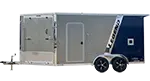
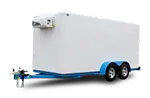
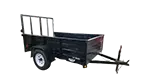

You’re standing on a trailer lot with two options in front of you. One is open to the sky, with a wood or steel deck, exposed rails, and no permanent roof. The other is a box on wheels with exterior skin, a roof, lockable doors, and usually a rear ramp or double rear doors. Both can haul equipment and materials. Both require the right tow vehicle, hitch, brakes, tires, and load securement. So which one do you actually need?
This is not a close call for everyone. A rider transporting valuable motorcycles and riding gear may quickly lean toward enclosed. A landscaper hauling brush, mulch, and debris may get more value from an open utility trailer. Many buyers, however, operate in the gray area between those examples. Choosing the wrong style can leave you paying for capacity you cannot use, security you did not need, or weather protection you wish you had purchased. The best decision starts with how the trailer will actually be loaded, stored, and towed.
What We Mean by Open vs Enclosed
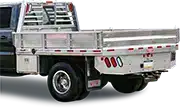
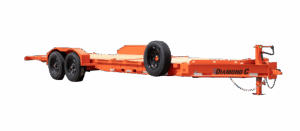
An open cargo trailer has no permanent walls or roof around the load area. It may be a flatbed equipment trailer, a rail-side utility trailer, a mesh-side landscape trailer, a tilt trailer, or a deck-over design. Examples include the H&H Rail Side Utility Trailer and the Diamond C GTU Premium Tandem Axle Utility Trailer. The current GTU is a 7,000 lb GVWR utility trailer built with dual 3,500 lb axles and a 4-inch channel frame. Cargo remains visible from the road and exposed to rain, sunlight, road spray, and wind.
An enclosed trailer surrounds the cargo with a floor, walls, and roof. Most cargo models use a rear ramp door or double rear doors, while many also include a curbside personnel door. Current examples include the Wells Cargo Road Force, the lighter-duty Wells Cargo FastTrac, and the Darkhorse DHW enclosed cargo line. Depending on the manufacturer and configuration, enclosed trailers can be ordered with different interior heights, axle packages, wall liners, flooring, vents, tie-down systems, electrical packages, windows, and other upgrades.
Common nominal sizes overlap. You can find both open and enclosed trailers in sizes such as 6×12 and 7×16. That does not mean two trailers carrying the same size description provide identical usable space. An enclosed trailer’s wall thickness, wheel boxes, interior height, rear-door opening, ramp width, and roof-bow structure can affect what fits inside. An open trailer may provide easier side access or more clearance for an unusually shaped load, even when its advertised deck dimensions appear similar.
The core question is therefore not just size. It is whether the permanent enclosure adds enough security, weather protection, organization, and working space to justify its additional purchase price, empty weight, aerodynamic drag, storage height, and maintenance requirements.
Security: The Biggest Real-World Difference
Open trailers provide almost no concealment for the cargo. A quality coupler lock, hitch lock, wheel lock, or parking boot can make the trailer more difficult to steal, but equipment sitting on the deck remains visible and potentially accessible. Chains, straps, lockable toolboxes, and cable locks can slow opportunistic theft, but they do not turn an open trailer into secure storage. This matters when a trailer is left overnight at a job site, parked at a hotel, stored at a trailhead, or kept outside between uses.
Enclosed trailers provide a meaningful security advantage because they conceal the cargo and allow the rear and side doors to be secured. A properly equipped Wells Cargo Road Force 7×16, for example, can keep motorcycles, tools, parts, and riding equipment out of public view. Someone passing through a parking area cannot immediately see whether the trailer is empty or carrying thousands of dollars in equipment. Concealment does not guarantee security, but it reduces casual visibility and can make quick access more difficult.
An enclosed cargo trailer is not a vault. Door hasps, hinges, locks, side doors, and even exterior panels can be attacked by a determined thief. The entire trailer may also be a desirable target. That makes layered security important regardless of trailer style. A strong coupler lock, receiver lock, wheel immobilizer, protected parking location, lighting, camera coverage, and discreet GPS tracker can work together more effectively than relying on one padlock.
Storage habits matter just as much as trailer construction. Park with the rear door close to a wall or another secure barrier when practical. Avoid leaving keys, titles, registrations, or identifying paperwork inside. Record the VIN, license plate, distinguishing features, and photographs. For business equipment, maintain an inventory with serial numbers so a loss can be documented accurately.
Insurance also deserves attention. Coverage for the trailer itself does not automatically mean every tool, motorcycle, piece of inventory, or customer-owned item inside is fully covered. A tow vehicle policy, trailer physical-damage policy, commercial inland-marine policy, and cargo or tool coverage can apply differently. Confirm the limits, deductibles, exclusions, and overnight-storage requirements with your insurer instead of assuming the enclosure makes the contents insured.
Bottom line: when cargo security matters, enclosed has the stronger advantage. It hides the load and creates another barrier to access. It still needs quality locks, smart parking, and appropriate insurance.
Weather Protection: More Than Just Rain
Indiana weather can expose a trailer and its cargo to thunderstorms, summer humidity, UV radiation, freezing temperatures, winter road salt, slush, and repeated temperature swings. Whether that matters depends on the load and on how long the equipment remains in the trailer.
Motorcycles, power equipment, tools, electronics, upholstery, merchandise, signage, paper products, and painted or polished surfaces can deteriorate after repeated exposure. Moisture encourages corrosion. Road salt can be especially aggressive when it remains on steel, aluminum components, wiring connections, brakes, and fasteners. UV exposure can fade finishes and degrade plastics, rubber, straps, and seat materials. An enclosed trailer can substantially reduce direct exposure to these conditions.
Enclosed does not mean completely waterproof or humidity-free. Water can enter through damaged roof seams, worn door seals, improperly installed accessories, or neglected exterior joints. Wet equipment placed inside can also release moisture and create condensation as temperatures change. Flow-through vents, roof vents, regular inspections, and adequate drying time are important, particularly when storing motorcycles, mowers, detailing equipment, or other machines that enter the trailer wet.
Open trailers remain the practical choice for many weather-tolerant loads. Gravel, brush, landscape debris, concrete block, compact construction equipment, and many bulk materials do not need a permanent enclosure. A Diamond C LPX Low-Profile Extreme-Duty Equipment Trailer, available in packages ranging from approximately 15,000 to 24,000 lb GVWR, is designed to transport equipment such as skid steers and compact track loaders without surrounding the machine with a cargo box. Even equipment built for outdoor operation should be cleaned after exposure to road salt and maintained according to the equipment manufacturer’s instructions.
Some materials fall in the middle. Lumber can absorb moisture or warp. Hay can be damaged if it gets wet. Bagged products, finished building materials, and furniture may require complete protection even when they physically fit on an open deck. A properly secured, load-rated tarp can provide temporary coverage, but loose coverings can tear, obscure lights, come free in traffic, or interfere with straps. Tarps should supplement proper load securement rather than replace it.
There are additional middle-ground options. Open trailers may be equipped with removable sides, fold-down gates, lockable front toolboxes, equipment covers, or purpose-built tarp systems. These features preserve much of the loading flexibility of an open trailer while protecting selected items. They do not provide the same theft deterrence, enclosed workspace, or all-around weather resistance as a permanent cargo box.
Weight and Capacity: Where Open Trailers Often Win
Enclosed trailers are normally heavier than comparably sized open trailers because the walls, roof, rear door, side door, roof bows, wall posts, exterior skin, interior lining, and additional floor structure all add weight. That empty weight comes directly out of the trailer’s available payload when two trailers have the same GVWR.
GVWR is the maximum permitted total weight of the trailer and everything loaded on or inside it. Payload is not the same as GVWR. A basic calculation starts by subtracting the trailer’s actual empty weight from its GVWR, but installed options, spare tires, batteries, cabinets, generators, water tanks, fuel, tools, and accessories must also be counted. The most reliable way to confirm a loaded combination is to use a certified scale and compare the measured weights with the trailer’s GVWR, axle ratings, tire ratings, hitch rating, and tow-vehicle limits.
Current dealer inventory illustrates the difference. Recent 83-inch-by-16-foot Diamond C GTU utility trailers rated at 7,000 lb GVWR have been listed at approximately 2,000–2,100 lb empty, leaving roughly 4,900–5,000 lb of calculated payload before additional equipment or dealer-installed options. A current 7×16 Darkhorse DHW enclosed trailer with the same 7,000 lb GVWR is listed at approximately 2,825 lb empty, leaving about 4,175 lb of calculated payload. In that real-world comparison, the enclosed construction uses roughly 700–800 lb more of the available rating.
Those figures should not be treated as universal weights for every 7×16. Interior height, axle package, floor material, wall lining, roof construction, ramp design, spare tire, cabinets, ventilation, and other options can change the final weight. Compare the actual unit being purchased rather than relying on a generic size chart.
The tow vehicle must be evaluated as a complete system. A pickup advertised with an 8,500 lb maximum trailer rating is not automatically suitable for every trailer weighing less than 8,500 lb. Passengers, tools, aftermarket accessories, cargo in the truck, and trailer tongue weight all consume vehicle payload. The receiver, hitch ball, weight-distribution equipment, tires, rear axle, and gross combined weight rating must also be adequate. Some vehicle manufacturers publish trailer frontal-area guidance, which can be especially important with tall enclosed trailers.
A loaded enclosed trailer and a loaded open trailer may place very different demands on the same truck even when the cargo itself weighs the same. The enclosed trailer begins heavier and presents a larger wall to the air. That additional frontal area can increase fuel consumption, transmission load, and sensitivity to headwinds and crosswinds. A V-nose may improve interior space and airflow around the front corners, but it does not eliminate the aerodynamic resistance created by a full-height box.
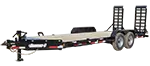
For heavy equipment, open trailers usually provide a better payload-to-empty-weight ratio and fewer height or doorway restrictions. Published specifications for an 82-inch-by-16-foot H&H 14K Full-Width Industrial Equipment Trailer, for example, list a curb weight of approximately 2,660 lb. Subtracted from its 14,000 lb GVWR, that produces a theoretical payload of about 11,340 lb before options or added equipment. Longer configurations and optional equipment will weigh more, so the exact trailer still needs to be checked individually.
Braking equipment must match the trailer and the tow vehicle. Indiana requires brakes on trailers over 3,000 lb GVWR. The 7,000 lb tandem-axle examples discussed here are equipped with electric brakes and require a compatible, properly adjusted brake controller in the tow vehicle. Brakes, breakaway equipment, tires, wheel bearings, and lights should be inspected and maintained regardless of whether the trailer is open or enclosed.
Cost: The Honest Numbers
When construction quality, materials, size, axle capacity, and features are reasonably comparable, an open trailer generally costs less than an enclosed trailer. There are exceptions. A premium aluminum utility trailer or heavy-duty equipment trailer can cost more than an entry-level enclosed cargo trailer, so the comparison needs to involve trailers intended for similar loads and duty cycles.
Current posted inventory provides a more useful baseline than broad national price estimates. Recent 7×16 Diamond C GTU utility trailers with a 7,000 lb GVWR have been advertised around $6,100, while a current 7×16 Darkhorse DHW enclosed trailer with a 7,000 lb GVWR has been advertised around $8,300. These are examples rather than permanent price guarantees. Model year, construction material, manufacturer changes, freight, availability, interior height, axle package, color, doors, flooring, vents, spare tires, electrical equipment, and other options can change the price.
Larger enclosed trailers and premium aluminum models can move well into five-figure pricing. Finished interiors, cabinets, additional lighting, windows, air-conditioning preparation, electrical packages, generators, awnings, concession equipment, and car-hauler upgrades can increase the total quickly. Buyers comparing only the exterior dimensions may miss thousands of dollars in construction and equipment differences.
Ownership costs also extend beyond the purchase price. An enclosed trailer has more exterior panels, seams, trim, roof joints, doors, seals, hinges, and interior surfaces to maintain. Damaged skin or roof components may require specialized repair. Water intrusion that is ignored can damage flooring, walls, cargo, and electrical components. An open steel trailer has fewer enclosed-body components, although bent frames, damaged tongues, worn ramps, cracked welds, and severe corrosion can still be expensive to repair correctly.
Enclosed trailers are not guaranteed to hold their value better than open trailers. Resale depends on brand reputation, construction, configuration, condition, maintenance records, local demand, and evidence of leaks or structural damage. Enclosed cargo trailers often attract contractors, powersports owners, mobile businesses, and moving customers. Open utility and equipment trailers also have strong demand among landscapers, farmers, property owners, and equipment operators. A clean, properly maintained trailer with a useful axle and size combination will normally be easier to sell than a neglected trailer of either style.
Before comparing advertised prices, confirm what is included. Check the GVWR, actual empty weight, axle ratings, brake equipment, tire load range, floor and wall materials, interior height, rear-opening dimensions, ramp capacity, tie-down equipment, spare tire, warranty, and installed options. The lowest sticker price is not necessarily the lowest cost if the trailer cannot safely carry the intended load or requires immediate upgrades.
Real Use Cases: Who Should Buy What
| Buyer Type | Recommended Style | Why |
|---|---|---|
| Landscaper / lawn care | Open or mixed fleet | Open trailers simplify mower loading, debris hauling, side access, and cleanup; enclosed trailers add tool and equipment security |
| Motorcycle / powersports hauler | Usually enclosed | Conceals valuable machines, reduces weather exposure, and can provide rated floor anchors, E-track, wheel chocks, and changing or gear-storage space |
| Construction contractor | Enclosed or both | Enclosed trailers protect tools and finished materials; open utility or equipment trailers handle machines, scrap, and oversized loads |
| Heavy equipment mover | Open | Better payload-to-empty-weight ratio, fewer door-height restrictions, and loading systems designed for compact equipment |
| Mobile vendor / show display | Enclosed | Provides a weather-resistant shell, lockable storage, branding space, and a platform that can be professionally converted for the intended use |
| Farmer / ag hauler | Open or purpose-built | Open trailers suit equipment and many bulk loads; weather-sensitive products need covers or enclosure, and livestock requires a dedicated stock trailer |
| Recreational hauler (general) | Depends on cargo and storage | Enclosed becomes more attractive as the value, weather sensitivity, overnight exposure, and amount of loose gear increase |
The Case Where Enclosed Usually Wins
If a trailer will function as a mobile shop, organized tool room, merchandise space, or daily business storage unit, enclosed is usually the practical choice. Contractors who carry power tools and supplies need organized, lockable storage. Event vendors need products and displays protected during transportation. Powersports owners may want one trailer that carries motorcycles, helmets, clothing, parts, fuel containers, and track equipment without unloading everything at every stop.
A mobile dog-grooming, detailing, repair, concession, or service operation requires more than purchasing a stock cargo trailer and placing equipment inside. The completed conversion must remain within the trailer’s GVWR, axle ratings, tire capacities, and tongue-weight limits. Water tanks, batteries, generators, cabinets, appliances, and mounted machinery add weight quickly. Electrical work, ventilation, heat-producing equipment, plumbing, emergency exits, floor loading, fire protection, insurance, and applicable operating requirements should be addressed by qualified professionals.
For these buyers, the enclosed premium can be justified by reduced setup time, better organization, cargo concealment, and protection from direct weather exposure. A Darkhorse DHW enclosed trailer carrying $15,000 worth of business equipment can be a reasonable investment, but the trailer does not prevent every theft or weather loss. Secure storage, maintenance, alarm or tracking equipment, and appropriate commercial insurance remain necessary.
A Quick Question Worth Asking Yourself
Before deciding, answer this honestly: where will the trailer sleep? If it stays inside a locked garage or barn and the cargo is unloaded after every trip, the security and weather advantages of enclosed become less important. If the trailer sits outside, remains at job sites, travels to events, or parks overnight in unfamiliar areas, concealment and weather resistance become much more valuable.
Also measure the storage space. An enclosed trailer may be too tall for a residential garage door, barn opening, carport, tree canopy, or other covered area. Its full-height sides can make it more noticeable in a driveway and more difficult to maneuver in wind. An open trailer normally has a lower overall profile and may be easier to store, inspect, wash, and load from multiple directions.
Consider what happens at the destination. An open trailer allows a forklift, skid steer, or crew member to approach from the side. Oddly shaped materials can extend above the rails when properly secured and legally transported. An enclosed trailer limits the load to its interior dimensions and door openings, but it provides walls for shelving, cabinets, track systems, and organized storage. Neither advantage is theoretical if it affects every load you move.
Buyers who regret choosing open often underestimated how frequently the load would remain outside or how inconvenient it would be to unload tools after every trip. Buyers who regret choosing enclosed may have underestimated empty weight, wind resistance, storage height, maintenance, or the effect of tongue weight on the tow vehicle. Thinking through a normal week of use is more valuable than planning around one unusual trip.
Write down the heaviest cargo you expect to carry, its dimensions, how it will be loaded, how often it will stay in the trailer overnight, and what a theft or weather loss would cost. Then compare those needs with the actual payload, door opening, floor rating, anchor locations, and towing requirements of the trailers under consideration.
Where to Look First
At Spencer Trailers in Spencer, Indiana, we carry open utility and equipment trailers as well as enclosed cargo trailers. Depending on current availability, that includes open models from manufacturers such as Diamond C and H&H, along with enclosed options from Darkhorse Cargo, Legend, United Trailers, and Wells Cargo. H&H also offers enclosed configurations. Brands, model years, specifications, colors, options, and inventory change, so evaluate the individual trailer rather than assuming every unit from one manufacturer is configured alike.
Prices, specifications, photographs, and current availability are listed in our full inventory. Use the filters to compare GVWR, dimensions, axle count, construction, doors, ramps, and listed payload. For another real-world reference, our recently sold listings show configurations that buyers have recently chosen. A sold listing is a useful baseline, but its price and equipment may not match a newly ordered or currently available trailer.
Not sure what fits your tow vehicle or your specific use case? Call us at (812) 829-0226 or reach out through our contact page. Bring the tow vehicle’s year, make, model, engine, drivetrain, cab and bed configuration, receiver rating, and payload information from the tire-and-loading label. Tell us the weight and dimensions of the cargo, how it will be loaded, how many people and how much gear will ride in the truck, and where the trailer will be stored.
Do not rely on the truck’s advertised maximum tow rating alone. The final combination must comply with the truck’s payload, axle, tire, receiver, trailer, and gross combined ratings. The trailer’s VIN label should be checked for GVWR and axle information, and a certified scale is the best way to verify actual loaded weights.
The open-versus-enclosed decision does not have to be complicated. Identify what you haul, what it weighs, what dimensions must pass through the loading area, where the trailer will be stored, and how valuable the cargo is to protect. Once those facts are matched to the trailer’s actual specifications and the tow vehicle’s limits, the right answer usually becomes clear.


