





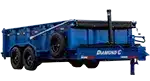


Every trade-in that pulls into our lot at Spencer Trailers tells a story. Some of them tell a good one: even wear, clean wiring, tight suspension, a sound deck, and service records that match the condition of the trailer. Others show what happens when a trailer is worked hard without the inspections and maintenance that hard use requires. After looking at trade-ins year after year, the same problem areas keep appearing because the same forces keep acting on them: moisture, heat, vibration, concentrated loads, road salt, and time.
If you’re hauling regularly, or if you’re weighing a trade-in yourself, knowing what we inspect changes how you think about maintenance. It also helps you separate ordinary age from neglected damage. And if you’re on the buying side of a used trailer, it gives you a better idea of what deserves a closer inspection, what can be repaired economically, and what may justify walking away.
The Deck: First to Go, First We Check
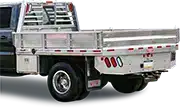
Deck decay and deck damage are among the most common issues we find on trade-in utility trailers and equipment haulers. Pressure-treated pine is a common trailer-floor material, including on many Diamond C configurations, but pressure treatment does not make wood immune to trapped moisture, UV exposure, chemical contamination, gouging, or crushed fibers. Manure, mulch, wet soil, leaves, fertilizer residue, gravel fines, and wrapped agricultural material can hold moisture against the boards. The top may dry in the sun while the underside, board ends, and areas around fasteners stay damp. Over time, that combination can produce checking, splitting, soft spots, loose fasteners, and decay.
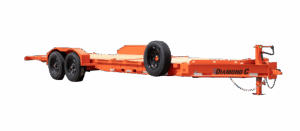
Dimensions and ratings have to be identified correctly before estimating a deck job. The current Diamond C GTU tandem utility is 83 inches wide, available in 14- to 20-foot lengths, and rated at 7,000 lb. GVWR with two 3,500 lb. Lippert brake axles. The heavier LPX equipment trailer is a different class of trailer, with an 80- to 82-inch bed, lengths from 16 to 30 feet, and GVWR packages from 15,500 to 24,000 lb. A full floor replacement on any 20-foot trailer is therefore not a one-price project. The cost depends on the original floor thickness, lumber species and grade, board width, fasteners, board caps, damaged cross-members, and shop labor. Replacement material should match the manufacturer’s requirements rather than being chosen only by nominal board size.
A compromised deck is a safety and value issue, not just a cosmetic one. A tire, jack foot, pallet corner, or machine track can punch through weakened wood. Floor-mounted hardware can lose support, and cargo can shift when a board breaks. During appraisal, we inspect the top and underside where possible, probe suspicious areas, look around screws and board ends, and check whether rust or damage has spread into the supporting steel. One bad board may be a localized repair. Multiple soft boards, widespread checking, or hidden frame corrosion can turn it into a complete floor and fastener job.
The best prevention is routine cleaning and drainage. Sweep or wash away material that holds water or corrosive residue, then let the deck dry completely. Do not leave manure, wet mulch, fertilizer, or decomposing material sitting on the floor. Inspect board ends, fasteners, and the underside at least annually and more often under commercial, livestock, or off-road use. A compatible penetrating wood preservative or water-repellent product can help once the lumber is dry enough for treatment, but follow the lumber and trailer manufacturer’s directions instead of sealing wet wood. Replace damaged boards with the correct thickness, grade, support, and fastening method before a localized problem spreads.
Bearings: The Wear You Don’t See Until It’s Too Late
Wheel bearings are among the most commonly neglected trailer components because they are hidden inside the hubs. They carry the trailer load at highway speed while dealing with heat, grease or oil condition, seal wear, brake dust, water intrusion, and imperfect roads. On trade-ins, warning signs include grease or oil leaking past a seal, discoloration from heat, roughness when the wheel is rotated, metallic debris, pitted bearing surfaces, abnormal tire wear, and looseness when the raised wheel is checked for play. A hot hub can also be caused by a dragging brake, so the hub, bearing, seal, brake, spindle, and adjustment all need to be considered together.
Axle configuration matters. A 7,000 lb. Diamond C GTU uses two 3,500 lb. Lippert brake axles, not one 3,500 lb. axle. A base LPX or HDT uses two 7,000 lb. Lippert axles, with higher-GVWR packages using different Lippert axle and wheel-end configurations. Grease-lubricated bearings should be inspected, cleaned, and repacked at the interval specified for the axle and service conditions; a common minimum schedule is every 12 months or 12,000 miles, with more frequent attention for heavy loading, frequent water exposure, rough roads, long-distance use, or extended storage. Pre-trip checks should also include unusual wheel play, grinding, leaks, tire condition, and hub temperature at safe stops.
Many current Diamond C spring-axle configurations use Lippert Super Lube hubs with a grease fitting at the end of the spindle. That feature can make lubrication more convenient, but it does not eliminate scheduled bearing, race, seal, brake, and spindle inspection. Grease must be compatible with what is already in the hub, applied according to Lippert’s procedure, and added carefully to avoid damaging a seal or contaminating the brake assembly. Oil-bath wheel ends require oil-level and leak checks rather than grease. Simply pumping grease into an unknown hub is not the same as a complete bearing service.
When maintenance is skipped, the cost can escalate quickly. A damaged bearing may ruin the hub and races, score or overheat the spindle, contaminate the brakes, damage the tire, or require axle replacement. In the worst case, the wheel end can separate on the road. During trade-in appraisal, a routine service need is one thing; visible heat damage, spindle damage, or a loose wheel end is a much larger deduction because the trailer cannot be represented as road-ready until the cause is corrected.
Paint and Finish: More Than Cosmetic
Faded or chalky finish is easy to dismiss as a surface issue, but the coating system is part of the trailer’s corrosion protection. Once chips, scratches, peeling areas, or worn edges expose bare steel, moisture, road salt, fertilizer, manure residue, and industrial contaminants can begin attacking the metal. Light surface rust is not automatically structural damage, but corrosion at weld toes, overlapping seams, spring hangers, cross-members, coupler areas, and gussets deserves careful attention because those locations carry or transfer load.
On an enclosed cargo trailer, faded exterior panels alone do not prove that the previous owner failed to maintain it. Sun exposure, color, age, storage, and material all affect appearance. What matters more is the condition around roof edges, corner trim, doors, fasteners, sealant joints, the lower perimeter, and the floor underside. Failed sealant or damaged trim can allow water into wall and floor assemblies, where deterioration may remain hidden until the subfloor softens, fasteners loosen, or interior staining appears. That can be more expensive to diagnose and repair than an open wood deck because access is limited.
Diamond C’s current finish is the DM Difference Maker multi-stage powder-coating system, which uses surface preparation, corrosion-resistant primer, a powder topcoat, and controlled curing. Even a durable coating still needs care. Wash away road salt, fertilizer, mud, and chemical residue promptly; avoid harsh or abrasive cleaners; and dry areas where moisture collects in seams. Inspect chips and scratches before rust spreads under the surrounding finish. If damage may qualify as a coating defect on a newer trailer, have the dealer inspect it before making a repair that could affect a warranty evaluation.
For ordinary wear, use a compatible manufacturer-approved touch-up process on properly cleaned and prepared metal. Powder-coated trailers are commonly spot-repaired with an approved air-dry or wet-paint product rather than being locally re-powder-coated. Wax or a compatible protectant may help some painted panels, but it should be used only where the finish manufacturer permits it and kept off decks, steps, tires, brakes, couplers, and other surfaces where reduced traction or contamination would create a hazard. Early, honest touch-up protects value; heavy paint applied over rust, cracks, or poor repairs does not.
Cracked Welds: When and Why They Happen
Weld cracks on a trade-in are a red flag, but context matters. A small crack in a non-load-bearing accessory bracket is not evaluated the same way as a crack in the tongue, main frame, suspension hanger, tilt pivot structure, or gooseneck. Age alone should not be blamed for a structural crack. Repeated overloading, concentrated point loads, improper tongue or pin weight, collision damage, corrosion, loose components, poor load placement, and operating the trailer outside its intended application can all contribute. Any suspected structural crack should be treated as a stop-and-inspect condition rather than a cosmetic defect.
The most common cracked weld locations we find on trade-ins:
- Tongue at the coupler: The tongue and coupler area repeatedly transfers braking, acceleration, vertical, and side loads between the tow vehicle and trailer. Excessive or poorly distributed tongue weight, an incorrectly matched or improperly adjusted hitch, loose mounting hardware, overloading, collision damage, or repeated impacts on rough roads can concentrate stress in this area.
- Rear rail corners on equipment haulers: The rear structure carries ramp reactions and loading impact. Driving a skid steer, mini excavator, tractor, or other machine up one side, loading before ramps are fully seated, exceeding a ramp rating, or placing a track near an unsupported edge can twist the rear frame and stress corner welds.
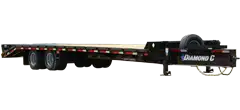
- Cross-member welds on gooseneck trailers: Heavy goosenecks are designed to flex within controlled limits, but repeated operation near the trailer’s rated capacity, concentrated equipment loads, poor blocking, and uneven load placement can overstress individual cross-members or attachments. GVWR is the total allowable trailer weight, not the payload. Actual payload is reduced by the trailer’s empty weight and installed options, so the VIN label and the trailer’s real empty weight matter.
- Stake pocket welds: Stake pockets are intended primarily to accept stakes and may serve other functions only when the manufacturer identifies and rates them for that use. Using an unrated pocket as a recovery point, lifting point, step, handle, or primary cargo anchor can bend the pocket or crack its welds. Cargo should be secured to rated D-rings, chain slots, rub rails, or other approved tie-down points.
Structural weld repair is not just a matter of laying another bead over a visible crack. The cause must be found, the damaged area properly prepared, and the repair completed by a qualified trailer-repair professional using the manufacturer’s guidance or an appropriate engineering repair procedure. Heat input, reinforcement, alignment, material type, and nearby corrosion all matter. A repaired tongue or frame may still be serviceable when the repair is correct and documented, but an unexplained, covered-over, or repeatedly cracking repair reduces buyer confidence and trade-in value. In severe cases, we may decline the trailer rather than take on an uncertain structural liability.
What the Wear Pattern Actually Tells You
The most useful part of examining a trade-in is not any single scratch, worn board, or rusty fastener. It is the pattern and whether the evidence agrees. Similar tire wear at every position, consistent deck wear, even finish aging, and serviceable wheel ends can indicate normal use. But uniform wear does not automatically prove good maintenance; it may simply mean that all components are the same age. We still compare tread depth, tire date codes, brake condition, hub temperature, suspension movement, deck support, frame alignment, and maintenance records.
Concentrated wear tells us where to investigate. One overheated hub may point to a bearing problem, a dragging brake, an over-tight bearing adjustment, a damaged seal, an underinflated tire, misalignment, or impact damage. One badly worn tire may indicate axle alignment, suspension, pressure, load distribution, or wheel problems rather than a bad bearing by itself. Rot in one deck corner may come from storage angle and trapped water, but it may also come from a leaking container, livestock waste, damaged end grain, or debris packed above a cross-member. One fresh weld repair can lead us to inspect the opposite side and nearby frame members for distortion.
Those patterns are clues, not proof of a specific owner’s behavior. Concentrated problems usually call for a focused inspection of the connected systems. Uniform deterioration usually calls for a broader maintenance estimate. Either way, the safest appraisal is based on measurements, condition, serviceability, VIN-label ratings, and the actual trailer configuration rather than assumptions about how the trailer was used.
Trade-In Value: What Moves the Number
At Spencer Trailers, we look at trade-ins practically. We are not applying one auction-house formula to every trailer. We are identifying the trailer by VIN and configuration, evaluating its current condition, and estimating what must be repaired or serviced before it can go back on the lot and be sold with confidence. Parts, qualified labor, inspection time, transportation, and time out of inventory all affect the offer.
Here’s a rough breakdown of what we factor:
| Issue | Impact on Value | Notes |
|---|---|---|
| Deck replacement (full, 20′) | Moderate to significant deduction | Correct lumber or flooring, fasteners, labor, and possible support repair |
| Bearing service (all hubs) | Minor deduction if no damage | Inspection, cleaning, lubricant, seals, adjustment, and brake check |
| Damaged hub, spindle, or wheel end | Significant deduction | May require hub, brake, spindle, or complete axle replacement |
| Paint/powder-coat touch-up | Minor deduction | Depends on preparation, corrosion, location, and finish condition |
| Full repaint or major refinish | Significant deduction | Labor-intensive and rarely restores full retail value |
| Weld repair (non-structural) | Minor to moderate deduction | Depends on the component, cause, access, and finish repair |
| Weld repair (tongue, frame, or suspension mount) | Significant to disqualifying | Structural evaluation and documented qualified repair required |
| Lights or wiring repair | Minor to moderate deduction | Can range from a lamp or plug to a full harness and junction-box repair |
| Worn, aged, or mismatched tires | Moderate to significant deduction | Correct load range and a complete matched set may be needed |
| Brake or breakaway-system repair | Moderate deduction | Road-readiness requires functional brakes, wiring, controller compatibility, and breakaway components |
| Bent axle or worn suspension | Significant deduction | Alignment, springs, hangers, equalizers, bushings, and tires may all be affected |
| Hydraulic leak or hoist/tilt repair | Moderate to significant deduction | Cylinder, hoses, pump, battery, pivots, and structure must be evaluated together |
The trailers that receive the strongest offers are not necessarily spotless. They are identifiable, structurally sound, honestly represented, and maintained. An older Diamond C LPX with a solid floor, serviceable Lippert wheel ends, sound brakes, straight frame members, intact welds, and a working electrical system can trade well because we are evaluating a usable trailer rather than a repair project. Age, brand, and original price matter, but condition and the cost to make the unit safe and marketable often move the number more.
How to Protect Your Trade-In Value Before You Come In
You do not need to spend heavily before trading, and you should not hide defects. Start with inexpensive, verifiable maintenance: remove debris, clean corrosive residue, replace failed bulbs or damaged lenses, secure loose wiring, check the breakaway battery, provide keys and remotes, and gather the title, VIN information, manuals, and service receipts. Replace an isolated damaged floor board only with the correct material and support. Have wheel bearings, brakes, or hydraulic components serviced by a qualified shop if you do not have the tools and experience to do the job correctly. A documented service is worth more than fresh grease with no inspection.
Touch up small finish chips after proper cleaning and rust treatment, but do not paint over cracks, severe corrosion, VIN labels, reflective tape, wiring problems, or questionable weld repairs. Correct tire pressure and remove personal equipment, but do not install cheap mismatched tires just to make the tread look newer. The goal is to present the trailer accurately and eliminate simple maintenance items, not to disguise a condition that the next owner needs to know about.
What you generally should not do is invest in a full repaint or commission major structural work solely to improve a trade-in offer without first having the trailer appraised. Those expenses may not return dollar for dollar, and an improper repair can reduce value further. Bring the trailer in as-is, disclose known damage and prior repairs, and let us separate normal wear from work that is actually required. We will explain what we find and how it affects the offer.
If you’re thinking about trading in a trailer and moving into something new, whether that means a Diamond C GTU 7,000 lb. tandem utility, an LPX or HDT equipment trailer in the 15,500- to 24,000-lb. GVWR range, or an FMAX gooseneck selected for heavier work, reach out to Spencer Trailers at (812) 829-0226. We’re at 291 West State Hwy 46 in Spencer, Indiana. Take a look at our current inventory to see what’s in stock, and if you want a sense of recent turnover, our recently sold page gives you a real picture of what’s moving. Final payload, axle, brake, hitch, and tow-vehicle compatibility depend on the exact VIN and configuration, so we will help you compare the ratings before you buy. Bring your trailer by. We’ll take a look.


