









You’re backing a loaded flatbed into a job site at dusk and a passing driver tells you your tail light is out. Again. If that’s happened more than once, it may be an incandescent filament failing under vibration, but don’t assume the bulb is always the only problem. A weak ground, corroded socket, damaged connector, pinched wire, or moisture inside the housing can repeatedly take out either incandescent or LED trailer lights.
The switch to LED trailer lights is one of those upgrades that sounds minor but can noticeably improve day-to-day reliability. LED assemblies generally draw less current, illuminate faster, resist vibration better, and last much longer than filament bulbs. The upfront price is usually higher, though, and an LED label by itself does not guarantee better optics, waterproofing, or federal compliance. Here’s a straight comparison so you can decide what actually makes sense for your rig.
Lifespan: The Biggest Difference
Incandescent trailer bulbs use a heated tungsten filament. Depending on the bulb, filament, voltage, and duty cycle, rated life may range from a few hundred hours to the low thousands. A dual-filament stop/tail bulb can have a different rating for its low-output tail filament than for its brighter stop-and-turn filament. That makes a single universal lifespan number misleading.
Trailer service can also be harder on an incandescent bulb than laboratory testing. Road vibration, hard impacts, repeated heat cycles, excessive charging voltage, loose sockets, and water intrusion can shorten filament life. Open equipment trailers, dump trailers, and car haulers often expose their rear lamps to more vibration, gravel, mud, and pressure washing than a passenger vehicle light normally experiences.
Quality LED vehicle lamps are commonly advertised with projected service lives measured in tens of thousands of hours. Some commercial lamps carry 50,000-hour or even 100,000-hour claims, but those figures are not a promise that every complete trailer lamp will operate that long in every environment. The diodes may have a very long projected life while a circuit board, internal driver, connector, seal, or external wire fails earlier. LED useful life may also be described by gradual lumen depreciation rather than by the sudden burnout associated with a filament.
For a trailer pulled 10 to 15 hours a week, a 50,000-hour rating would mathematically represent many decades of operating time, not merely 10 years. In practice, calendar age, corrosion, impacts, wiring condition, heat, and moisture are more likely to determine when the assembly needs attention. The useful takeaway is that a well-built LED lamp will normally outlast a comparable incandescent bulb by a wide margin, not that it is guaranteed to last forever.
The practical result is fewer roadside bulb changes and fewer routine lamp replacements. A sealed LED assembly can still fail, dim, flicker, or lose individual diodes. If enough diodes stop working that the lamp no longer provides the required output or visible pattern, the assembly needs to be replaced even if part of it still lights.
Brightness and Visibility
LED does not automatically mean brighter, and brighter is not the only measure of a safe trailer lamp. Federal lighting requirements establish minimum and maximum photometric output, visibility angles, colors, locations, and functions. A properly designed incandescent stop/tail/turn lamp can comply with those requirements, while a poorly designed LED lamp may create a narrow hot spot, uneven output, excessive glare, or weak off-angle visibility.
Where quality LED assemblies generally have an advantage is response time. An LED reaches operating brightness almost immediately, while an incandescent filament takes a measurable fraction of a second to heat. That faster rise gives a following driver an earlier visual indication when the brakes or turn signal activate. Commercial lighting manufacturers specifically identify faster light-on response as an advantage of LED stop, tail, and turn lamps.
LED optics can also produce a crisp, consistent light pattern, but the lens and reflector design matter as much as the light source. A lamp should remain visible from the required angles, not just look bright when viewed directly from behind. That matters when a driver is following slightly off-center, passing the trailer, approaching on a curve, or viewing the lamp from the side.
Rain, fog, road spray, dirt, and snow reduce the visibility of both technologies. A clean, correctly mounted, compliant incandescent lamp may be easier to see than a cheap LED module with poor optics. Before replacing a lamp solely because it looks dim, check supply voltage, grounds, lens condition, and corrosion. Low voltage caused by resistance in the trailer connector or harness can make an incandescent lamp especially weak.
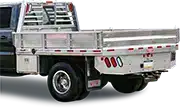
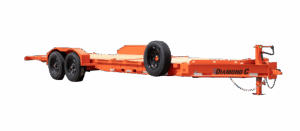
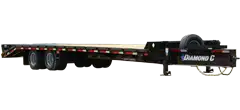
On a Diamond C equipment trailer or an H&H car hauler, faster illumination and a well-defined light pattern can give following traffic a clearer warning. The safety advantage comes from using a complete, compliant lamp assembly that is properly mounted and maintained, not simply from installing the highest diode count available online.
Power Draw
LED lamps require substantially less current than comparable incandescent lamps. The difference becomes more noticeable on longer trailers with multiple tail lamps, clearance lamps, identification lamps, side markers, license-plate lamps, and optional work lights.
As one real product comparison, Optronics lists a waterproof incandescent combination trailer lamp at 12.8 volts with approximately 2.3 amps of draw on the stop/turn circuit and 0.9 amp on the tail circuit. A comparable sealed LED combination lamp is listed at approximately 0.259 amp on stop/turn and 0.062 amp on the marker or tail function. Exact figures vary by lamp, but the scale of the reduction is typical of a properly engineered LED assembly.
That lower draw reduces the load on the tow vehicle’s running-light and stop/turn circuits. It can help limit voltage drop on long harnesses and leave more electrical capacity for additional compliant marker lamps or accessories. It may also help vehicles with electronically protected trailer-light outputs that have relatively modest circuit limits.
Trailer lighting and electric trailer brakes should not be treated as one shared output. On a properly wired 7-way connector, the electric-brake circuit is controlled separately from the tail, stop, and turn circuits. Converting the lamps to LED does not increase brake capacity, change the trailer’s GVWR, or compensate for undersized brake wiring. It simply reduces the electrical load created by the lighting.
Lower lamp current can reduce stress on a healthy connector, but it does not repair a bad connection. Corroded terminals and loose grounds can generate heat because of electrical resistance even when the lamp itself draws relatively little current. If an LED conversion still flickers or operates intermittently, inspect and test the wiring instead of assuming the new lamp is defective.
Sealed vs. Non-Sealed: The Real-World Wrinkle
The LED vs. incandescent question is separate from the sealed vs. non-sealed question. Both technologies are available in open, serviceable housings, and both are available in waterproof or submersible designs. Sealed incandescent marine-trailer lamps with replaceable bulbs are still manufactured, so waterproof construction is not exclusive to LED.
Many older utility trailers use a replaceable incandescent bulb inside a housing with a removable lens. These are inexpensive and easy to service, but the socket, contacts, lens gasket, and bulb base can corrode when water enters. A cracked lens or missing gasket can turn repeated bulb replacement into a temporary fix because the underlying moisture problem remains.
Many modern LED trailer lamps use a sonically welded lens and housing, encapsulated electronics, potted circuit board, molded seal, or hardwired leads. This eliminates the removable bulb socket and can significantly improve resistance to vibration, dust, and moisture. Quality sealed LED stop/tail/turn lamps are widely available from manufacturers such as Optronics, Grote, and Peterson.
Do not assume every LED lamp is submersible just because the package says “sealed” or “water resistant.” Check the exact product description. IP67 generally indicates dust protection and resistance to temporary immersion under specified test conditions. IP68 covers immersion under conditions defined by the manufacturer. Those ratings are more specific than a generic waterproof claim, but they still need to be evaluated for the intended use.
For a boat trailer, buy a lamp specifically listed for marine or submersible trailer use. For a landscape, dump, or equipment trailer that sees pressure washing, mud, road salt, and rain, a sealed assembly with a sealed wiring connection is usually a better choice than an exposed socket. The pigtail, splice, and ground still need protection because a waterproof lamp does not make an unsealed wiring repair waterproof.
The tradeoff is serviceability. When an integrated sealed LED assembly fails, the normal repair is to replace the complete lamp rather than a low-cost bulb. Common round and oval grommet-mount lamps are easy to replace, but a proprietary molded light bar or custom body lamp may be more expensive and harder to source. Checking replacement availability before buying an unusual assembly can save trouble later.
Cost: Upfront vs. Lifetime
Incandescent remains the lower-cost option at the parts counter. A standard replacement bulb usually costs only a few dollars, and common incandescent combination housings are generally less expensive than equivalent branded LED assemblies. Long-life bulbs, marine housings, complete wiring kits, and specialty shapes cost more, so there is no single price that applies to every trailer.
LED pricing varies even more. A common sealed round or oval stop/tail/turn module may be reasonably affordable, while combination lamps with license illumination, integrated side markers, backup lights, sequential functions, stainless trim, or custom light bars can cost considerably more. Work lights and long rear light bars should not be compared directly with a basic two-function tail lamp.
The five-year cost cannot be calculated accurately by assuming that every owner replaces several bulbs each year. Some incandescent bulbs last for years on a lightly used trailer. Others fail repeatedly because the socket, ground, housing, or wiring is damaged. Replacing bulbs without repairing that underlying problem can make incandescent ownership look more expensive than it should be.
LED savings also come more from reduced maintenance, downtime, and roadside failures than from electricity. The fuel or charging-cost difference created by a few trailer lamps is normally too small to drive the purchase decision. For a commercial trailer that works daily, avoiding a service interruption can justify the higher LED price quickly. For a trailer used a few weekends a year, the financial payback may be slow or may never be meaningful.
There is no universal two- or three-year payback period. The better comparison is the total installed cost, expected use, environmental exposure, availability of replacement parts, and value of your time. A complete conversion also may require new grommets, pigtails, brackets, junctions, wiring repairs, or a vehicle-side compatibility solution, not just two lamp assemblies.
When Incandescent Still Makes Sense
Incandescent can still be a reasonable choice when an existing compliant system is working properly, the trailer sees limited use, replacement bulbs are readily available, and the owner values low-cost field serviceability. There is no legal requirement to replace a functioning incandescent system merely because LED technology is available.
An older trailer may use a housing shape, mounting footprint, or combination lamp that does not have a clean LED equivalent. Fabricating brackets or cutting the body for a conversion may not be worth the cost, especially when a correct replacement incandescent assembly fits the original opening and provides all required functions.
Be cautious with LED replacement bulbs installed inside a housing designed and tested around an incandescent filament. The LED bulb may physically fit the socket, but its diode position and directional output can change how the reflector and lens distribute light. A lamp that looks bright directly behind the trailer may have weak off-angle visibility or an improper tail-to-stop intensity ratio. Replacing the complete lamp with an LED assembly designed for the required trailer-lighting function is generally the safer conversion.
Some vintage, agricultural, or specialty trailers may use 6-volt or 24-volt electrical systems. Install a lamp rated for the actual system voltage rather than assuming every trailer is 12 volts. Multi-volt commercial LED lamps are available, but the acceptable voltage range must be verified on the product specification.
Incandescent can also make sense as an immediate repair when a compatible bulb or housing is locally available and the priority is getting a legal, working trailer back on the road. A low-cost repair today does not prevent a complete LED conversion later when there is time to inspect the wiring and select matching assemblies.
What We See at Spencer Trailers
LED exterior lighting is now common on current-production trailers, but the exact standard equipment still varies by manufacturer, model, trim, length, and build date. A listing or brochure for one model should not be used to assume that every trailer from that brand has the same lighting package.
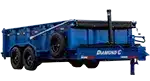
Current Diamond C configurators list all-LED lighting on major models, including FMAX gooseneck flatbeds, HDT tilt equipment trailers, LPX equipment trailers, and GTU utility trailers. Depending on the model, Diamond C describes waterproof or automotive-grade LED lighting combined with a heavy-duty or sealed wiring harness. Optional loading lights, caution lights, reverse lights, and extra clearance lamps are separate from the required road-lighting package.
Many current H&H utility, equipment, deckover, and enclosed lines also list LED lighting as standard equipment. Legend’s current FTV enclosed cargo specifications identify surface-mount LED exterior lighting, and Delco’s current product information identifies LED lighting across its trailer offerings and available configurations.
For Liberty, Wells Cargo, or any other manufacturer, verify the actual trailer’s build sheet, VIN-specific equipment, and physical lamps rather than relying on a broad brand-level statement. Lighting packages can change between model years and may differ between a base cargo trailer, upgraded contractor package, car hauler, or custom order.
On the used trailer side, incandescent lights are still common, particularly on older utility, enclosed, equipment, and boat trailers. Before budgeting for an LED conversion, test every function and inspect the complete system. A used trailer may need grounds, connectors, wiring, junction boxes, lenses, or marker lamps in addition to its rear stop/tail/turn assemblies.
If the wiring is sound and common replacement sizes are used, converting the critical road lamps to sealed LED can be worthwhile. Treat it as part of the trailer’s electrical reconditioning, much like servicing wheel bearings, checking tires, testing the breakaway system, and inspecting the brakes. A matched, properly installed system is more valuable than a mixture of bright new rear lamps and nonworking side markers.
| Factor | Incandescent | LED |
|---|---|---|
| Typical source life | Hundreds to low thousands of hours; vibration and voltage can shorten life | Tens of thousands of hours commonly claimed; complete assembly life depends on electronics, heat, seals, and wiring |
| Brightness and response | Can meet required output; filament takes time to reach full brightness | Instant-on; actual brightness and viewing angle depend on the complete lamp’s optics |
| Power draw | Higher; some combination lamps draw more than 2 amps on stop/turn | Much lower; many combination lamps draw well under 0.5 amp on stop/turn |
| Sealed unit available | Yes, including waterproof and marine designs | Common; verify sealed, marine, submersible, or IP claims for the exact product |
| Assembly cost | Usually lower upfront; replaceable bulb is common | Usually higher upfront; complete integrated module is normally replaced after failure |
| Best for | Low-use trailers, original-system repairs, and low-cost field serviceability | Regular use, commercial service, vibration, wet conditions, and reduced maintenance |
A Quick Note on DOT Compliance
Both incandescent and LED trailer lights can comply with federal requirements. The governing federal standard is FMVSS No. 108, which applies to required original and replacement lamps, reflective devices, and associated equipment on most trailers. It regulates more than whether a lamp turns on: function, color, intensity, mounting position, visibility, and the interaction between combined functions all matter.
“DOT approved” is not the most accurate description because the Department of Transportation does not individually test and approve every retail trailer lamp. Manufacturers certify that their products conform to the applicable requirements. Required original and replacement lamps are marked with the DOT symbol, and SAE identification codes are commonly used to indicate functions such as stop, tail, turn, side marker, clearance, identification, license, and reflex-reflector performance.
Check the lens or housing for appropriate markings and review the manufacturer’s stated FMVSS functions. A lamp certified only as a marker light cannot be used as a stop lamp simply because it is red and bright. Likewise, an auxiliary work light or caution light cannot replace a required tail, clearance, identification, or license-plate lamp.
Trailer width and length also affect the required lighting layout. Wider trailers require clearance and rear identification lamps, and longer trailers may require intermediate side-marker lamps and reflectors. When changing housings or installing a light bar, make sure the conversion does not remove a required function or place it where ramps, fenders, cargo, or accessories block the required viewing angle.
Established manufacturers such as Optronics, Grote, and Peterson publish lamp functions, electrical specifications, and compliance information. With an inexpensive no-name assembly, a seller’s online claim is not a substitute for correct lens markings and documentation. A small price difference is not worth installing a lamp that produces the wrong pattern or cannot be verified for the intended function.
Making the Switch
If you’re converting an existing trailer from incandescent to LED, start with the wiring rather than automatically buying load resistors. Test the tow vehicle’s connector, verify the trailer ground, inspect the harness, and measure voltage at the lamps while each circuit is operating. An LED conversion may hide the visual symptoms of moderate voltage drop because LEDs draw less current, but damaged wiring should still be repaired.
Many common round and oval LED assemblies fit existing grommets, brackets, and three-wire pigtails. Surface-mount combination lamps may also share common bolt patterns. That does not mean every conversion is a direct swap. Confirm the opening dimensions, mounting orientation, connector type, required functions, license-plate illumination, side-marker function, and whether a separate reflex reflector is needed.
Polarity matters on many LED products. Follow the lamp manufacturer’s wiring diagram instead of relying solely on wire color, particularly on repaired or custom trailers. Use sealed heat-shrink connectors or an appropriate junction box, support the harness so it cannot rub against the frame, and protect splices from road spray. Do not depend on the hitch ball as the electrical ground.
Load resistors are needed only on some tow vehicles. Certain lamp-out monitoring systems and electronic flashers interpret the low current of LED lamps as a burned-out bulb, which can cause hyper-flash, warnings, flickering, or failure to recognize that a trailer is connected. Other vehicles and factory tow modules work with LED trailers without any modification.
When a compatibility problem occurs, use the solution recommended for the specific tow vehicle. Depending on the vehicle, that may be an LED-compatible flasher, vehicle programming, a powered converter, a compatible trailer adapter, or load resistors. Do not install resistors automatically on every LED conversion. Resistors intentionally consume power to imitate an incandescent load, become hot during operation, and cancel part of the efficiency advantage. When required, they must be sized correctly and mounted to a suitable metal surface away from plastic, insulation, and other wiring.
After installation, test running lights, left turn, right turn, brake lights, hazard lights, reverse lights if equipped, license-plate illumination, clearance lights, identification lights, side markers, and any combined functions. Check the lamps from straight behind and from an angle. Also test them with the tow vehicle’s headlights on, because a weak ground can cause one function to backfeed through another only when multiple circuits operate together.
A full rear conversion on a clean utility or cargo trailer can be straightforward with basic hand tools, but there is no reliable two-hour estimate for every trailer. Rusted hardware, inaccessible wiring, body modifications, corroded grounds, missing markers, and incompatible connectors can turn a simple lamp replacement into a larger harness repair. Plan around the condition of the trailer, not only the number of lamps.
If you’re shopping for a new trailer and want to talk through which models come with LED standard versus which lighting options are worth adding at purchase, call us at (812) 829-0226 or stop by 291 West State Hwy 46 in Spencer. And if you’re browsing what we have on the lot right now, check the current inventory to see what’s in stock. LED lighting is one of those details that’s easy to overlook when you’re focused on GVWR and payload, but a compliant, sealed, properly wired system is something you’ll appreciate every time you pull out in the dark.


