


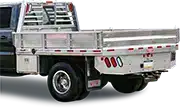












You’ve already signed the paperwork, connected the trailer to the hitch, and driven it home. Then someone asks, “Did you get it titled and registered?” And you realize you are not completely sure what that involves, what it costs, or which documents the Indiana BMV expects to see.
It happens more often than you might think. A farmer outside Bloomington picks up a new 16-foot flatbed on a Friday, hauls a round baler that weekend, and starts wondering Monday morning whether the plate and weight classification are correct. A contractor in Terre Haute buys an enclosed cargo trailer and plans to handle the paperwork “this week,” only to realize several weeks have passed.
Indiana’s trailer registration process is usually straightforward when the ownership documents are complete. The details that cause problems are the current title form, the 45-day filing deadline, weight-based registration classes, farm-use eligibility, VIN inspections, and the difference between registration requirements and commercial motor-carrier rules. Here’s what you actually need to know.
What Documents You Need to Bring
The BMV needs proof that you own the trailer, enough information to issue an Indiana title, identification for the applicant, and payment for the title, registration, and applicable taxes. The exact paperwork depends on whether the trailer is new, used, purchased out of state, or assembled without conventional ownership documents.
- Proof of ownership. For a new trailer, this is normally the original Manufacturer’s Certificate of Origin or Manufacturer’s Statement of Origin, commonly called an MCO or MSO. The dealer provides it or submits it electronically as part of the title transaction. For a used trailer that has already been titled, you generally need the existing Certificate of Title, properly assigned by the seller. Check that the seller’s name, purchaser information, sale date, signatures, odometer section when applicable, and lien information are completed correctly before leaving the sale.
- Bill of Sale. Bring a bill of sale or purchase order showing the buyer, seller, trailer description, VIN, purchase date, and purchase price. A bill of sale is useful evidence of the transaction, but it is not a universal replacement for a required title or MCO. When a trailer is legally required to have a title, a bill of sale alone usually will not establish a complete ownership chain.
- Application for Certificate of Title for a Vehicle, State Form 205. This is Indiana’s current vehicle title application. A dealer may prepare or electronically submit it for a new purchase. If you are completing the transaction yourself, use the current revision available through the Indiana BMV rather than relying on an older title application found on another website. Current forms and instructions are available at in.gov/bmv.
- Valid identification. Bring a valid Indiana driver’s license, identification card, or other identification accepted by the BMV. A business purchasing the trailer may also need documentation identifying the business and the person authorized to act for it.
- Lien information or lien release. If a lender financed the purchase, the lienholder information must be entered correctly. If an old title still shows a lien that has been paid, obtain an acceptable lien release before attempting the transfer.
- Sales-tax documentation. A dealer normally collects Indiana sales tax and provides the appropriate paperwork. For a private sale or an out-of-state transaction, the BMV may need documentation showing the purchase price, tax already paid, or the basis for an exemption.
- Payment for applicable fees and taxes. Your total may include the title fee, registration fee, excise tax, county or municipal wheel tax or surtax, and any late penalties. Accepted payment methods can vary by transaction location, so verify them before visiting.
If the trailer was previously titled in another state, Indiana generally requires the original out-of-state title or other acceptable ownership document, a completed State Form 205, and a physical inspection of the trailer’s vehicle identification number. The VIN inspection is documented on State Form 39530 and may be completed by an authorized law-enforcement officer, BMV employee, or another person authorized under Indiana procedures. Keep copies of your purchase documents for your records, but expect the BMV to require original ownership documents for the actual title transfer.
A Trailer Ownership Affidavit, State Form 43753, is used only in qualifying situations. It is not a guaranteed substitute for a missing title. A privately assembled trailer, an older trailer with incomplete documentation, or a trailer without an acceptable VIN may also require an inspection, supporting receipts, photographs, an Indiana special identification number, or additional review by the BMV. When an ownership chain cannot be established through the normal administrative process, a court order may be required before an Indiana title can be issued.
How Fees Work: It’s All About Weight
Indiana trailer registration fees are based primarily on the trailer’s declared gross weight. This is generally the empty weight of the trailer plus the heaviest load you expect to carry during the registration period. It is the weight class under which the trailer is registered, not permission to exceed the manufacturer’s ratings.
Your declared weight should never be higher than the trailer’s certified gross vehicle weight rating, or GVWR. You must also stay within the ratings of the axles, tires, coupler, hitch, safety equipment, tow vehicle, and any other load-bearing component. The registration weight, manufacturer GVWR, actual loaded weight, and tow vehicle ratings are related, but they are not interchangeable terms.
There are two main registration choices for smaller trailers and a separate annual weight schedule for heavier trailers:
Trailers at 3,000 lbs Declared Gross Weight or Under (IC 9-18.1-5-13)
Indiana allows an owner of a trailer with a declared gross weight of 3,000 pounds or less to apply for permanent registration. The current base permanent-registration fee is $82. This is an optional registration type, not an automatic conversion of every small trailer registration.
The state fee schedule also lists an annual general-trailer registration fee of $16.35 for a trailer registered at 3,000 pounds or less. Whether permanent or annual registration makes more sense can depend on how long you expect to own the trailer and what additional taxes or local charges apply to the transaction.
A permanent registration does not require an annual registration renewal, but “permanent” does not mean the plate can be transferred freely to another person or another trailer. A sale, ownership change, title correction, or other material change still has to be handled through the BMV. The new owner must complete a proper title and registration transaction.
Trailers Over 3,000 lbs Declared Gross Weight (IC 9-18.1-5-8)
Trailers above 3,000 pounds use annual registration classes. The current Indiana fee schedule separates lighter general trailers from weighted trailers beginning at 9,001 pounds. The base registration fees are:
| Declared Gross Weight | Base Annual Registration Fee |
|---|---|
| 3,000 lbs or less | $16.35 |
| 3,001 to 9,000 lbs | $25.35 |
| 9,001 to 12,000 lbs | $72 |
| 12,001 to 16,000 lbs | $108 |
| 16,001 to 22,000 lbs | $168 |
| Over 22,000 lbs | $228 |
These are base registration fees. They are not necessarily the entire amount due. A standard Indiana title currently has a separate fee, and applicable excise tax, sales or use tax, county wheel tax, municipal surtax, transaction charges, and penalties can increase the total.
Indiana currently imposes a $30 late-title penalty when an applicant misses the title deadline and a separate $15 late-registration penalty when the registration deadline is missed. That makes it worthwhile to complete the paperwork promptly even when the trailer is not being used every day.
Annual trailer registrations renew according to the expiration date assigned to the registration. They should not be assumed to expire automatically on December 31. Check the registration certificate, plate record, or myBMV account for the actual expiration date. Most ordinary renewals can be completed online, at an eligible BMV Connect kiosk, or through a branch.
Personal Plate, Farm Plate, or Commercial Plate?
This is where a lot of buyers in Owen County and the surrounding area get confused. Indiana does not simply divide every trailer into a “personal plate” and a separate universal “commercial plate.” The correct registration depends on the trailer’s declared weight, ownership, use, and whether it qualifies for a specialized registration category.
Standard General Trailer Plate
Most privately owned utility trailers, equipment trailers, enclosed cargo trailers, car haulers, boat trailers, and similar trailers use Indiana’s standard general-trailer or weighted-trailer registration. The fee depends on declared gross weight.
A standard registration can be appropriate whether the trailer is used for recreation, household projects, property maintenance, or ordinary business activity. Register the trailer in the correct owner’s name and at a weight sufficient for the loads it will actually carry. A company-owned trailer should normally be titled and registered to the company rather than informally kept in an employee’s or owner’s personal name.
The plate category does not replace insurance review. Tell your insurer how the trailer will be used, what it will carry, who will tow it, and whether it is used in a business. Coverage for the trailer, its cargo, liability, theft, physical damage, and commercial activity depends on the policy language, not simply on the wording printed on the registration.
Farm Trailer Registration (IC 9-18.1-7)
Indiana provides a reduced farm-registration rate for a qualifying trailer used in agricultural operations, but the weight requirement is important: a farm trailer must have a declared gross weight of more than 9,000 pounds.
The trailer must be used in connection with agricultural pursuits usual and normal to the owner’s farming operation. Qualifying use can include transporting farm products, livestock, machinery, tools, seed, fertilizer, feed, or other supplies to or from a farm or ranch.
A qualifying farm trailer generally may not be used in the conduct of a separate commercial enterprise, and the farm-registration rules restrict transportation of farm products beyond their first point of processing. The registration is intended for genuine farming operations, not as a lower-cost plate for a landscaping company, construction contractor, hauling service, or other business that occasionally performs work on agricultural property.
The statutory farm-trailer registration fee is generally one-half of the corresponding weighted-trailer registration fee. Other applicable taxes and local charges may still apply. A trailer does not qualify merely because it carries a tractor, skid steer, hay, or livestock; the owner’s operation and the actual purpose of the trip matter.
Business and Commercial Use
Using a trailer in a business does not automatically mean there is one special BMV plate called a commercial trailer plate. Many business-owned trailers are registered under the same general or weighted-trailer categories used for other trailers. However, business use can trigger insurance, federal motor-carrier, Indiana Department of Revenue, safety, driver-qualification, and recordkeeping requirements that are separate from the BMV registration itself.
For example, a truck-and-trailer combination used in interstate commerce may be subject to federal motor-carrier safety rules when its gross vehicle weight rating, gross combination weight rating, or actual gross weight reaches the applicable commercial-motor-vehicle threshold. An interstate commercial combination rated or operating at 10,001 pounds or more can require a USDOT number and compliance with federal safety rules even though it is well below the CDL threshold.
The CDL rule is different. For a typical commercial combination, a Class A CDL is required when the combination has a gross combination weight rating of 26,001 pounds or more and the vehicle being towed has a GVWR of more than 10,000 pounds. A trailer rated over 10,000 pounds does not, by itself, create a Class A CDL requirement when the combination remains below 26,001 pounds. Certain personal-use, recreational, military, emergency, and farm exemptions may apply, so operators should confirm their exact situation rather than relying on the trailer’s plate alone.
Indiana Motor Carrier Services requirements, including fuel-tax and carrier credentials, use their own vehicle, axle, weight, and operating-area rules. A business towing heavy equipment across state lines should review the combined ratings of the truck and trailer, actual operating weight, USDOT status, driver licensing, medical-card requirements, apportioned registration rules, fuel-tax obligations, and insurance with qualified professionals.
The rule of thumb: Title, register, insure, and operate the trailer according to its actual ownership, weight, cargo, and use. A valid plate is essential, but it does not replace compliance with CDL, motor-carrier, equipment, or insurance requirements.
Where to Register in Owen County and Nearby
For most buyers in the Spencer area, the nearest branch is the Spencer BMV location:
Spencer BMV Branch
168 East Morgan Street, Spencer, IN 47460-1426
Phone: 888-692-6841
Current listed hours: Wednesday and Friday, 9:00 AM – 5:00 PM
(Verify hours before visiting, because branch schedules can change)
Indiana BMV branch schedules have changed over time, and smaller branches may not be open every weekday. Do not rely on an older business-directory listing, an outdated local phone number, or hours saved from a previous visit. Check the official branch locator shortly before leaving.
You are not limited to the BMV branch in your home county for most ordinary transactions. Buyers traveling through Bloomington, Terre Haute, Martinsville, or the Indianapolis area may use another Indiana BMV branch if its location and hours are more convenient. The branch locator at in.gov/bmv provides current addresses, business hours, directions, available services, and appointment options.
Bring the complete document package on the first visit. Missing signatures, an open lien, an incorrect VIN, an incomplete title assignment, or the wrong title form can turn a short transaction into multiple trips.
Can You Do It Online?
Yes, in qualifying situations. After the trailer has been titled in Indiana, a new registration may be completed through myBMV when the sale date is less than 60 days old and the transaction is not a lease. The owner’s identity, title record, insurance information when requested, and other BMV records must match well enough for the online system to process the registration.
This online eligibility period should not be confused with the legal filing deadline. Indiana generally gives a purchaser 45 days from the acquisition date to complete the required title transaction without the late-title penalty. The fact that an online registration system may accept a qualifying transaction less than 60 days after sale does not extend the 45-day title deadline.
Annual trailer-registration renewals can usually be handled through myBMV.com. Eligible transactions may also be completed at a BMV Connect kiosk. Permanent registrations for trailers at 3,000 pounds or less do not have an annual registration renewal, although ownership and title records must still be updated when required.
Transactions involving a missing ownership document, Trailer Ownership Affidavit, special identification number, homemade trailer, disputed VIN, title correction, unresolved lien, or incomplete out-of-state ownership chain usually cannot be handled as a simple online registration. They may require a branch visit, VIN inspection, law-enforcement documentation, or submission to the BMV’s central title-processing office.
A Few Things That Catch People Off Guard
After helping buyers find and purchase trailers across central Indiana, the same snags come up repeatedly:
- The deadline is 45 days, not 60. Indiana residents generally have 45 days after acquiring a vehicle or trailer to complete the title transaction and required registration without late penalties. The 60-day rule commonly mentioned by the BMV applies to certain different situations, including the period in which a new Indiana resident must title vehicles already owned and the online eligibility rule for some recent purchases. Missing the applicable deadline can result in separate title and registration penalties.
- The filing window is not a 45-day permission slip to tow without credentials. Follow the dealer’s instructions concerning a temporary permit or temporary plate, and carry the purchase and registration documentation required for the trip. The deadline for completing a title transaction does not automatically authorize unrestricted highway operation with no valid plate or permit.
- Modern trailers normally have a VIN. Most modern road trailers use a standardized 17-character vehicle identification number. It may appear on the manufacturer’s certification label and may also be stamped or marked on the tongue or forward frame. Older trailers, privately assembled trailers, and trailers manufactured before modern VIN standards may have a shorter serial identifier or no acceptable VIN. Those cases can require an inspection and an Indiana-issued special identification number.
- Verify every VIN character before submitting the title. The characters I, O, and Q are normally excluded from standardized VINs because they can be confused with numbers. A single incorrect character on the MCO, title application, bill of sale, insurance record, or inspection form can delay the transaction.
- Declare enough weight for the actual job. Registering a heavy equipment trailer at an unrealistically low declared weight to reduce the fee can leave the trailer improperly registered when loaded. On the other hand, paying for a higher plate weight does not increase the trailer’s structural capacity. Stay within the lowest applicable rating among the trailer, axles, tires, hitch, tow vehicle, and related components.
- Indiana requires brakes at 3,000 pounds. A trailer or semitrailer with a gross weight of at least 3,000 pounds that is operated on a highway must have adequate brakes. Indiana law also requires the braking system to be controllable by the driver of the towing vehicle and to apply automatically if the trailer separates from the tow vehicle. That means the brake controller, breakaway switch, breakaway battery, wiring, connectors, and service brakes all need to be functional, not merely installed.
- A 10,000-pound trailer does not automatically require a CDL. For the usual Class A commercial threshold, the combination must have a GCWR of at least 26,001 pounds and the towed unit must have a GVWR over 10,000 pounds. Always calculate the combination using the truck and trailer ratings rather than looking only at the number on the trailer’s plate.
- Permanent registration is optional and ownership-specific. A trailer at 3,000 pounds or less is not automatically converted to permanent registration merely because it is old or was previously registered annually. Check the registration certificate and BMV record. When the trailer is sold, the purchaser must title and register it in the purchaser’s name.
Ready to Pick Up a Trailer?
If you’re still in the shopping stage, the registration process is one more reason to buy from a dealer who prepares the paperwork correctly from the start. A clean MCO, accurate VIN, properly documented sale date, correct purchaser information, and complete tax paperwork make the Indiana title process much easier.
Before leaving the dealership, verify that the name on the purchase documents is the name that should appear on the title. Check the VIN on the paperwork against the VIN attached to the trailer. Confirm whether the dealer is submitting the title application or giving you the documents to handle yourself. Ask what temporary plate or permit applies, when it expires, and which original documents you should take to the BMV.
Also decide on the correct registration weight before the transaction is completed. Think about the trailer’s empty weight, the heaviest equipment or cargo you realistically expect to carry, and the trailer’s certified GVWR. Changing the registered weight later may require an amended registration and additional fees.
At Spencer Trailers, we walk buyers through what they’ll need before they leave the lot. Take a look at our current selection at spencertrailers.com/all-inventory, or reach out to us directly if you have questions about a specific trailer or want to know what paperwork to expect before you buy.
The registration part really is simple once the trailer has a clean ownership record, the correct declared weight, and a complete set of documents. Handle it within the 45-day deadline, verify current fees and branch hours with the Indiana BMV, and keep the title, registration, insurance, and equipment requirements matched to how the trailer will actually be used.


