








You load a dump trailer with cold mix asphalt expecting a quick patching run. Then you reach the job site, start the hydraulic hoist, and the material barely moves. It hangs in the front of the body, leaves a heavy film on the floor, or releases all at once after the bed is already high. Hauling asphalt cold mix is one of those jobs that exposes every weak point in the plan: an undersized trailer, an inaccurate weight estimate, a dirty bed, the wrong release product, poor load distribution, or an unloading area that is not level and stable.
Cold mix is different from hot mix, but “cold mix” is not one universal formula. Depending on the supplier and product, it may use an emulsified asphalt binder, recycled asphalt components, or another proprietary binder system that stays workable without being delivered at normal hot-mix paving temperature. That makes it useful for pothole repair, utility cuts, driveway maintenance, edge repair, and year-round patching. It also means density, tackiness, storage life, application temperature, and handling instructions can vary significantly. The material supplier’s product data, scale ticket, and loading instructions should control the job.
Weight Comes First
Do not plan a cold-mix load from a single generic density number. Published values for cold patch products can range from roughly 105 pounds per cubic foot for some compacted premium patch mixes to approximately 145-150 pounds per cubic foot for denser asphalt mixtures. That works out to about 2,835-4,050 pounds per cubic yard, or roughly 1.4-2.0 tons per cubic yard. Bulk density can also differ before and after compaction. Ask the plant or supplier for the actual loose unit weight, then use the higher reasonable value when planning the haul. The scale ticket is the final authority on what was loaded.
A 14-foot dump body that is about 82 inches wide with 24-inch sides has a geometric level volume of approximately 7 cubic yards. That volume rating does not mean the trailer can legally or safely carry 7 cubic yards of cold mix. At typical cold-mix densities, a completely level body could contain roughly 10-14 tons of material, far beyond the payload of most bumper-pull dump trailers. A small single-axle dump such as a 5,000-7,000 lb GVWR unit may be appropriate for bagged material, tools, or a very small bulk quantity, but it is not a substitute for a properly rated tandem-axle trailer when the plant is loading several tons.
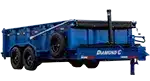
For Diamond C buyers, the current heavy-duty low-profile dump line is the LPT. It is offered in 12-, 14-, and 16-foot lengths with an approximately 82-inch-wide body, a 45-degree dump angle, and a three-stage telescopic cylinder. The LPT family spans approximately 15,500-24,000 lb GVWR depending on axle, suspension, brake, tire, and frame configuration. Standard premium-line axle equipment uses Lippert axles, with dual 7,000 lb Lippert axles on the base heavy-duty configuration and higher-capacity packages available for higher GVWR builds. A 14-foot LPT at about 15,500 lb GVWR will commonly provide around five tons of net payload after trailer weight, but the exact payload must be calculated from the certification label and the actual unloaded weight of that specific trailer. A 23,000-24,000 lb configuration can provide substantially more payload, often in the eight-ton range, but options, body height, tarp equipment, ramps, liner weight, axle package, and hitch type all change the final number.
Overloading a dump trailer with dense material is not only an axle problem. It can overload the tires, wheels, suspension, coupler, safety chains, hitch, truck receiver, rear axle, and brakes while also reducing stability and stopping performance. Payload equals GVWR minus the trailer’s actual empty weight; it is not the same as GVWR. The lowest-rated component in the entire truck-and-trailer combination controls. In Indiana, a trailer or semitrailer with a gross weight of at least 3,000 pounds must have adequate brakes, and a Class A CDL threshold is based on the combination rating: a GCWR of 26,001 pounds or more when the towed vehicle has a GVWR over 10,000 pounds. A trailer over 10,000 pounds does not create that CDL requirement by itself, although separate commercial vehicle, medical-card, registration, insurance, and operating rules may still apply depending on how and where the combination is used.
Dump Trailers Worth Using for This Job
Not every dump trailer is a good cold-mix trailer. Look for a factory-engineered body and hoist system, a smooth steel floor in good condition, enough payload after empty weight, brakes on the required wheels, properly rated tires, a tailgate that can open without binding, and a dump angle near 45 degrees. A 10-gauge body can be completely appropriate when it is part of a properly engineered trailer, while a 7-gauge body or floor upgrade adds resistance to impact and abrasion for frequent contractor use. Floor thickness alone does not determine payload, and installing thicker steel does not increase the GVWR shown on the certification label.
A few current trailer families that can be configured for this application include:
- Diamond C LPT, 14 ft x approximately 82 in: The LPT is the correct heavy-duty low-profile telescopic dump line for this work. Current configurations cover approximately 15,500-24,000 lb GVWR, use a three-stage telescopic cylinder, and reach a 45-degree dump angle. The heavy-duty body is normally 10-gauge, with a 7-gauge body upgrade available for more demanding use. Base heavy-duty builds use dual 7,000 lb Lippert axles, while higher-GVWR packages use the axle, suspension, tire, brake, and frame upgrades required for the rating. Diamond C builds its trailers in Mt. Pleasant, Texas, where the company has operated since 1985, and current trailers use the multi-stage DM Difference Maker coating system.
- H&H Industrial Telescopic I-Beam Dump: H&H currently offers this 83-inch-wide industrial dump family in 12- to 16-foot lengths, generally at 14,000-16,000 lb GVWR depending on configuration. A published 14-foot, 14,000 lb model has an unloaded weight around 4,250 pounds, leaving approximately 9,750 pounds of theoretical payload before added options. That is about 4.9 tons, not a full 7-cubic-yard body of cold mix. Verify the exact hoist, axle, tire, floor, tarp, and payload specifications on the unit being purchased.
- Liberty 14K Telescopic Dump: Liberty’s current heavy-duty 14K telescopic bumper-pull dump is listed at approximately 15,400 lb GVWR with an 83-inch bed, 14- and 16-foot length choices, and 24- or 40-inch side configurations. The series is known for a 7-gauge steel floor and is available in telescopic and scissor-hoist versions, so buyers should confirm which lift system is installed rather than relying on the model family name alone. The taller 40-inch body adds useful volume for lighter material, but it does not create more legal payload for asphalt.
- Delco 14K-16K Dump: Delco offers 83-inch-wide bumper-pull dump configurations in the contractor range, including standard-cylinder and telescopic-lift versions in common 12-, 14-, and 16-foot lengths. Current published specifications for the 14K 83-inch series include a 10-gauge engineered bed, combo spreader/barn-door gate arrangements, and electric-brake tandem axle packages. Select the exact lift, GVWR, body length, tire rating, and empty weight for the amount of cold mix you intend to haul; do not assume every Delco dump with the same body width has the same payload or hoist.
Whichever trailer you choose, treat the hydraulic system as one engineered assembly. The cylinder or hoist geometry, frame, hinges, hydraulic power unit, hoses, battery, cables, solenoid, reservoir, and pressure-relief setting all work together. A hydraulic pump is not selected simply by matching it to the trailer’s loaded weight, and the pressure relief should never be adjusted in an attempt to lift an overloaded or stuck body. Keep the battery fully charged, inspect cable connections and fluid level, follow the manufacturer’s duty-cycle limits, and stop if the motor labors, the pump overheats, the body twists, or the load begins to release unevenly.
The Sticking Problem and How to Beat It
Cold mix can cling to painted or bare steel because its binder remains workable and tacky. The amount of carryback depends on the formulation, aggregate shape, temperature, moisture, condition of the floor, time in the trailer, and whether old residue is already creating a rough surface. Leaving a bulk load parked for hours or overnight can make unloading and cleanup much harder, even when the product itself is designed for stockpile storage.
The best controls, in order of long-term effectiveness, are:
- Properly specified dump-body liner: A professionally fitted UHMW-PE liner can provide a lower-friction surface, reduce carryback, and protect the steel body from abrasion. Asphalt-specific liner materials are available, but liner thickness, attachment method, thermal expansion, gate clearance, body geometry, and operating temperature must match the application. A liner also adds empty weight and therefore subtracts from payload. Do not assume generic plastic sheets bolted flat to the floor will expand, release material, or survive impact correctly. Obtain a fitted quote and confirm that the installation will not interfere with the tailgate, hoist, body supports, warranty, or rated operation.
- Approved commercial asphalt release agent: Use a release agent that the cold-mix supplier, project specification, or asphalt producer approves. Appropriate products are commonly soap-based, emulsified-wax, water-based, or otherwise formulated to prevent sticking without dissolving the asphalt film on the aggregate. Follow the label for dilution and application, spray a thin and even coating, and avoid puddles. Diesel fuel is a solvent and can contaminate or weaken asphalt; it should not be used as a release agent. The same caution applies to motor oil, hydraulic oil, kerosene, and other petroleum products.
- Clean bed and short dwell time: For occasional hauling, begin with a clean, smooth body, use an approved release product, load evenly, and unload as soon as practical. Plain water is not a universal substitute for release agent. It may provide momentary wetting with some materials, while other products or project specifications may restrict added water or contamination. Use water only when the mix supplier specifically allows it, and never rely on a quick rinse to overcome old asphalt buildup, rust scale, weld spatter, or a badly gouged floor.
Do not improvise with cooking spray, used oil, WD-40, diesel fuel, or whatever happens to be in the service truck. Contamination can affect bond, compaction, appearance, environmental compliance, and acceptance on public work. Keep the product safety data sheet available, wear suitable gloves and eye protection, avoid unnecessary skin contact, and control dust or fumes during loading, scraping, and cleanup.
Temperature and Timing
There is no universal 40°F minimum or one correct hauling temperature for every cold mix. Some packaged and bulk premium patch products are marketed for all-weather placement, including wet or freezing conditions, while other plant-produced mixes have narrower storage and application requirements. Always use the supplier’s current technical data and the project specification. The fact that a material can be placed in cold weather does not mean it will flow out of a steel dump body as easily as it does on a mild day.
As temperature falls, many cold mixes become stiffer and less willing to slide. A cold body, rough floor, long haul, and partially compacted load can increase carryback. In warm weather, the binder can become softer and tackier, and the load may settle or shift more readily during braking and cornering. That shift can change tongue weight and axle loading and can release material suddenly when the bed is raised. Heat-related softening is therefore a handling and stability concern, not merely a cleanup inconvenience.
Moderate weather is generally easier on the operator and equipment, but the working plan matters more than an arbitrary temperature window. Confirm how long the product may remain in the trailer, keep the haul route and unloading sequence organized, avoid unnecessary parking in direct sun, and do not leave the loaded trailer sitting overnight unless the supplier and trailer setup are intended for that use. In colder conditions, minimize dwell time and verify that the battery and hydraulic fluid are suitable for the temperature. In warmer conditions, accelerate and brake smoothly, watch for load movement, and maintain enough freeboard below the top of the body for secure transport.
Tarping: Not Optional
Cold mix is not hauled at normal hot-mix delivery temperature, but it still needs effective load control. A secured tarp helps keep fines, aggregate, and binder-coated pieces from leaving the trailer. It also helps protect the material from road debris and excessive rain while keeping loose residue inside the body. Before tarping, sweep the fenders, tarp housing, tongue, tailgate ledges, and frame surfaces so material sitting outside the dump body cannot fall onto the roadway.
Manual and electric tarp systems are available in mesh, solid vinyl, and application-specific fabrics. The right choice depends on particle size, moisture, haul speed, body height, and whether the trailer will ever carry hot material. A loose mesh tarp may not contain fine particles as well as a properly tensioned, more tightly woven system. For regular contractor use, an electric or spring-assisted tarp is often worth the added cost because it can be deployed from a safer position and is more likely to be used on every trip. Confirm that the tarp system is rated for the body length and side height and that the arms, rear bar, motor, wiring, and tarp do not interfere with the tailgate or raised body.
Indiana does not have a blanket statute that requires every dump load to be covered by a tarp by name. It does prohibit operating a vehicle when its contents are dripping, sifting, leaking, or otherwise escaping. For cold mix, a properly secured tarp or equivalent containment is the practical way to meet that responsibility. Routes crossing into another state may have more specific covering rules, so check every jurisdiction on the trip rather than assuming Indiana’s rule applies everywhere.
Unloading Without a Fight
The unloading sequence matters, but safety comes before getting a stubborn load out. Read the trailer owner’s manual and the hoist instructions before the first asphalt run, and make sure the operator knows the tailgate controls, remote functions, body-prop procedure, battery cutoff, and emergency lowering method.
Position the truck and trailer in a straight line on firm, level ground with enough overhead and rear clearance for the fully raised body and open tailgate. Do not choose a downhill or side-slope position because it appears likely to make the material slide faster. Raising a loaded dump body moves the center of gravity sharply upward, and soft shoulders, ruts, side slopes, uneven tire support, or a sharply angled tow vehicle can cause frame twist or rollover. Set the tow vehicle parking brake, keep the service brakes applied as instructed, use wheel chocks when appropriate, and keep all people out of the dump zone.
Configure and unlatch the tailgate exactly as the manufacturer directs before raising the body. A barn-door gate, spreader gate, and combination gate do not all use the same procedure. Confirm that the gate can swing or spread without contacting the ground, pile, curb, or equipment. Operate the hoist from a position where you can see the body and load without standing behind the trailer, beneath the body, beside the hinge area, or in the path of escaping material. Raise slowly and stop immediately if the trailer leans, a tire sinks, the body racks, the gate binds, or material begins to hang on one side.
Do not rock a loaded trailer by hand, jerk the tow vehicle, shock-load the hydraulics, or keep the pump against relief pressure in an attempt to break the load free. If the material does not move, lower the body completely, secure the equipment, and reassess the cause. Break carryback only from a safe position with suitable long-handled tools or mechanical equipment. Never crawl, reach, or place any part of the body beneath a raised dump body. If service or cleaning requires access under the body, the trailer must be empty and supported with the manufacturer-provided mechanical body prop exactly as the manual specifies; hydraulic pressure alone is never a safety support.
Once the main load releases, continue watching the trailer rather than walking away. Sticky material can unload in stages, shifting the center of gravity abruptly. Keep the truck and trailer aligned, do not pull forward with the body raised unless the manufacturer’s procedure and the job-site conditions specifically permit it, and lower the body before traveling. Make sure the tailgate is cleared, closed, and positively latched before returning to the road.
Clean the body promptly, but do it safely. The easiest residue to remove is usually fresh residue, yet that does not justify scraping under an unsupported raised body. Lower the body for normal cleaning whenever possible. Use a scraper material that will not gouge the floor or damage a liner, collect removed asphalt instead of washing it into a drain or onto the ground, and inspect the floor, gate seals, hinges, tarp, hydraulic hoses, wiring, tires, and brakes before the next load.
Trailer Sizing for the Load
| Trailer Size | GVWR | Approx. Cold Mix Capacity | Good For |
|---|---|---|---|
| 10 ft tandem medium duty | About 9,890-10,000 lb | Often about 3-4 tons of net payload | Small patching routes and controlled plant loads |
| 14 ft tandem heavy duty | About 14,000-15,500 lb | Often about 4.5-5.5 tons of net payload | Driveways, utility cuts, and moderate contractor work |
| 14 ft high-GVWR heavy duty | About 18,000-24,000 lb | Often about 6-9 tons of net payload | Contractor patching runs with a properly rated tow vehicle |
| 16 ft high-GVWR heavy duty | About 23,000-24,000 lb | Often about 7-9 tons of net payload | Larger paving-support and multi-stop operations |
These are planning ranges, not guaranteed ratings. Use the certification label, actual empty scale weight, axle and tire ratings, hitch limits, and truck ratings for the specific combination. For example, a 15,500 lb GVWR trailer that weighs 4,800 pounds as equipped has 10,700 pounds, or 5.35 tons, of theoretical payload before any other restriction. Depending on whether the cold mix weighs 105 or 150 pounds per cubic foot, that payload may represent only about 2.6-3.8 cubic yards. Load by weight, not by how full the body looks. Indiana residents must apply for title and register a newly acquired, unregistered trailer within 45 days of purchase or acquisition, and operators should determine CDL and commercial compliance from the combined truck-and-trailer ratings rather than the trailer rating alone.
Do You Need a Liner, or Just a Spray?
If cold mix is a regular part of the work schedule, an asphalt-compatible UHMW-PE liner can save substantial cleanup time and reduce carryback. The break-even point is not a universal three or four loads per season; it depends on liner cost, labor rate, material lost to carryback, trailer downtime, floor condition, and whether the trailer also hauls rock, demolition debris, hot material, or equipment. For occasional patching runs, a clean body and a supplier-approved commercial release agent may be the more practical setup.
A liner can protect the steel floor from abrasion and reduce the aggressive scraping that removes coating and exposes steel, but it must be designed and installed for the actual body. Verify the added empty weight, fastener system, liner temperature rating, impact rating, floor coverage, front-wall transition, tailgate clearance, and maintenance procedure. On a Diamond C LPT, the standard heavy-duty body and available 7-gauge upgrade should be evaluated separately from the liner decision. The DM Difference Maker coating is a multi-stage corrosion-resistant finish, but no coating eliminates wear from repeated asphalt, aggregate, shovels, and scrapers.
If you’re not sure what setup fits your haul schedule, talk to the team at Spencer Trailers. We stock Diamond C, H&H, Liberty, and Delco dump trailers in Spencer, Indiana, and can compare the exact GVWR, unloaded weight, payload, body gauge, hoist type, axle package, tarp equipment, and liner compatibility for the units currently available. Browse available units at our current inventory or check recently sold trailers to see the configurations contractors have been choosing. For a business purchase, ask your tax professional whether the trailer qualifies for current federal depreciation treatment, including the restored 100% bonus-depreciation rules for qualifying property a


