








Your credit score took a hit. Maybe it was medical bills, a slow stretch of work, a business setback, or a divorce that got ugly. Whatever happened, you still need a trailer, and you are wondering whether a score around 580 means you are stuck.
It does not automatically disqualify you. It does mean you need to approach the purchase carefully. Trailer financing with damaged credit usually involves more documentation, fewer lender choices, a larger down payment, or a higher borrowing cost than financing with a strong credit profile. The loan term, fees, amount financed, and payoff rules matter just as much as the monthly payment. A few informed decisions before applying can save thousands of dollars and keep a necessary work purchase from becoming a long-term financial problem. Here is what actually works.
What “Bad Credit” Means in the Trailer World
There is no single trailer-industry cutoff that every lender uses. Under the commonly used FICO scoring ranges, scores below 580 are categorized as poor, while scores from 580 through 669 are categorized as fair. Lenders may still refer to some borrowers in the fair range as subprime, but each lender sets its own approval standards. A score that one lender declines may fall within another lender’s program.
Your score is only one part of the application. Lenders may also review recent late payments, collections, bankruptcies, outstanding debts, housing expense, income, time on the job, time in business, bank activity, down payment, requested term, and the age and value of the trailer. A borrower with a 600 score, stable income, recent on-time payments, and 20% down may present a much stronger application than someone with the same score, unverifiable income, recent delinquencies, and no cash down.
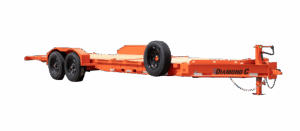
The type of financing matters too. A consumer buying a utility or enclosed trailer for personal use may receive a conventional installment loan. A contractor buying a Diamond C LPX heavy-duty equipment trailer may be evaluated through a business-equipment loan, commercial finance agreement, or lease-to-own program. Business programs may focus more heavily on time in business, revenue, bank statements, and equipment use, although a personal guarantee and personal credit review may still be required.
Do not assume that a trailer is automatically easier to finance than a truck because its purchase price is lower. Trailer prices range from modest single-axle utility trailers to commercial gooseneck, dump, and equipment trailers costing tens of thousands of dollars. The lender will consider the requested loan amount, the trailer’s resale market, whether the collateral is titled or secured through a UCC filing, and how easily the lender could recover its balance if the borrower defaults.
Subprime Lenders and What You’ll Pay
Financing programs for fair, poor, thin, or recovering credit do exist. Spencer Trailers provides access to multiple consumer and business financing paths, including programs designed to consider a broad range of credit profiles. Availability, approval, required down payment, and final terms are determined by the individual lender. No advertised score range is a promise that every applicant within that range will be approved.
There is no reliable universal APR range for bad-credit trailer financing. Published credit-union rates for qualified trailer borrowers may begin in the single digits, while applicants with weaker credit, older collateral, a high loan-to-value ratio, or limited documentation may receive offers in the mid-to-high teens or above. Some commercial programs price the transaction using a factor, fixed finance charge, or total repayment amount rather than presenting it like a conventional consumer loan. That makes it especially important to compare the full dollar cost.
Always ask for the annual percentage rate when an APR disclosure applies, not just the note rate or monthly payment. APR generally reflects the interest rate plus certain lender charges, making it a better comparison tool than the interest rate alone. Also compare the cash price, down payment, amount financed, finance charge, number of payments, payment amount, total of payments, late fees, optional products, and any documentation or origination charges.
Do the math before signing. On a standard 48-month amortizing loan for $10,000, a 9% APR produces a payment of about $249 per month and approximately $1,945 in total interest. At 20% APR, the payment rises to about $304 per month and total interest rises to approximately $4,607. Those examples exclude taxes, registration, insurance, dealer charges, and other costs, but they show why APR and term matter.
A longer term may make the monthly payment look easier while substantially increasing the total interest paid. It can also leave you owing more than the trailer is worth for a longer period. Before accepting a five-, six-, or seven-year term, compare it with a shorter term and decide whether the payment reduction is worth the additional cost.
Paying extra principal or paying the loan off early can reduce interest on many simple-interest loans, but read the contract first. Ask whether the agreement has a prepayment penalty, minimum finance charge, early-purchase provision, or another fee connected with early payoff. When you are ready to pay off or refinance, request an official payoff quote from the lender rather than estimating the remaining balance from your monthly statement.
Before submitting several applications, ask each lender or dealer whether the initial review uses a soft inquiry or a hard inquiry. A soft inquiry does not affect your credit score. A hard inquiry can affect it, although the impact is often modest. Some scoring models group qualifying rate-shopping inquiries made within a focused period, but trailer applications are not always coded or treated exactly like automobile, mortgage, or student-loan inquiries. Do not assume every trailer-finance inquiry will be combined into one.
In-House Financing: The Dealer Option
True in-house financing means the dealership is the creditor, carries the account, collects the payments, and assumes the repayment risk. Some dealers offer that arrangement, but many advertisements described as dealer financing are actually dealer-arranged financing. In that structure, the dealer helps submit the application, but a bank, credit union, specialty finance company, or equipment lender makes the approval decision and owns or services the account.
The distinction matters. Ask who the creditor will be, where payments will be sent, whether the account will be reported to the credit bureaus, what collateral documents will be filed, and who handles payoff statements or title and lien releases. A family-owned dealership can help you navigate available programs and present the correct application, but it cannot override the underwriting requirements of an independent lender.
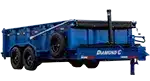
Dealer-arranged financing can still be valuable. Instead of calling unrelated lenders and trying to explain whether a Delco dump trailer, Wells Cargo enclosed trailer, or Diamond C equipment trailer qualifies under their loan policy, you can work with a dealership that regularly submits trailer transactions. The dealer may know which finance partner is better suited to a consumer purchase, a business equipment purchase, an older used trailer, a thin credit file, or a borrower who needs an alternative documentation path.
Business lease-to-own financing can be another route for contractors and companies, but it should not be treated as automatically cheaper or easier. Review the initial payment, recurring payment, number of payments, end-of-term purchase option, early-purchase amount, filing fees, personal-guarantee requirements, and total amount required to own the trailer. A business lease may also be reported differently from a consumer installment loan and may not help build personal credit.
At Spencer Trailers, we work with buyers to identify the financing applications that fit the purchase and the applicant’s situation. Contact us directly to discuss whether you are buying personally or through a business, how much you plan to put down, and what kind of trailer you need. A straightforward conversation before applying can prevent you from choosing the wrong program or submitting unnecessary applications.
Put More Down, It Changes Everything
The most powerful step many subprime borrowers can take is increasing the down payment. A larger down payment does not guarantee approval or a lower APR, but it can improve several parts of the transaction at once.
- It reduces the amount financed, which normally lowers the monthly payment and the total interest paid.
- It demonstrates that you have invested your own funds in the purchase, which may make a borderline application more acceptable to some lenders.
- It lowers the loan-to-value ratio and gives the lender more protection if the trailer must be repossessed and resold after a default.
- It can help keep the balance closer to the trailer’s actual market value after taxes, fees, optional products, and depreciation are considered.
There is no universal standard down payment for a trailer. Some well-qualified borrowers may be offered little or no money down, while a lender evaluating damaged credit may require 10%, 20%, 30%, or more. The requirement can also change based on the trailer’s age, sale price, collateral value, intended use, and whether the borrower is applying as a consumer or a business.
Consider a hypothetical $8,000 trailer purchase. With 10% down, you finance $7,200 before any taxes or fees added to the contract. With 30% down, you finance $5,600. At a 20% APR over 48 months, that $1,600 reduction in principal lowers the payment by roughly $49 per month and reduces interest by approximately $737. The exact figures will depend on the final contract, but the principle is consistent: borrowing less reduces the dollars exposed to a high rate.
Ask the lender how the down payment affects both approval and pricing. In some programs, additional cash down only reduces the amount financed. In others, reaching a particular loan-to-value level may also help you qualify for a different rate, term, or advance limit. Get the revised figures in writing instead of assuming that adding money down automatically changes the APR.
Do not empty your emergency savings just to reach a down-payment target. You still need enough cash to cover registration, insurance, tires, maintenance, loading equipment, tie-downs, and an unexpected repair or slow work period. A loan is not affordable merely because you can produce the money required at signing.
If the required cash is not available, give yourself 60 to 90 days to save, correct credit-report errors, reduce revolving balances, and establish a cleaner recent payment pattern. Renting a trailer for occasional jobs, buying a properly inspected lower-cost used trailer, or delaying the purchase may be financially safer than accepting a high-cost loan with no reserve funds.
Using a Cosigner
A qualified cosigner can improve the chance of approval or help the primary borrower receive better terms. It is a legitimate financing option, but it is a serious legal and financial commitment. A cosigner is not simply providing a character reference. The cosigner agrees to be responsible for the debt if the primary borrower does not pay.
The lender will evaluate more than the cosigner’s credit score. Income, debt obligations, housing expense, employment, credit history, and ability to repay can all matter. A cosigner with strong credit but excessive existing debt may not strengthen the application as much as expected. The rate and approval decision will be based on the lender’s review of the complete application, collateral, and transaction.
A stronger joint application can make a meaningful difference on a 20-foot equipment trailer, a dump trailer, or an enclosed cargo trailer, but no particular score guarantees a specific rate. Do not promise a family member that cosigning will automatically cut the APR in half. Ask the lender to provide the actual approved terms and compare them with the offer available to you alone.
The cosigner should understand that the account may appear on their credit reports and may be counted as their debt when they apply for a mortgage, vehicle loan, credit card, or other financing. Late payments, default, collection activity, and repossession can damage the cosigner’s credit. The lender may also seek payment directly from the cosigner when the primary borrower fails to pay.
Cosigning generally does not give the cosigner ownership rights in the trailer. Ownership depends on the title, bill of sale, and applicable contract documents, not merely on responsibility for the debt. That means someone may be legally obligated to repay the loan without having the right to use, possess, or sell the collateral.
Before proceeding, both parties should agree on who will make payments, how payment confirmations will be shared, what happens if income drops, who maintains insurance, and whether the cosigner will receive statements or missed-payment alerts. A separate written understanding does not change the lender’s rights, but it can reduce confusion between family members or business partners.
Credit Unions Over Banks
If you are considering a traditional secured loan, check credit unions as well as commercial banks and dealer finance programs. Credit unions are member-owned, not-for-profit financial cooperatives, and some offer products specifically covering horse trailers, utility trailers, recreational vehicles, and UCC-secured equipment. Membership requirements apply, and every loan remains subject to credit approval.
Do not assume a credit union will overlook serious credit issues simply because you are a member. Credit unions still evaluate repayment risk, income, debt, collateral, and credit history. The advantage is that a local institution may offer a clearly defined trailer product, allow you to speak directly with a loan officer, or consider a direct purchase that does not fit another lender’s automated program.
Centra Credit Union, for example, publishes loan categories that include horse and utility trailers as well as UCC-secured equipment. Its available rates and terms vary based on factors such as credit, loan term, trailer age, amount financed, and whether the transaction is completed directly or through a dealership. Other Indiana credit unions may classify the same trailer differently, so call before applying and describe the exact unit you are purchasing.
Ask whether the lender finances both titled and non-titled trailers, dealer purchases and private-party purchases, new and used units, and consumer and business transactions. Also ask about the minimum loan amount, maximum trailer age, required down payment, insurance requirements, lien or UCC filing, application inquiry type, and estimated approval timeline.
If a lender declines the application, read the adverse-action notice. It should identify the reasons for the decision or explain how to obtain them. A decline based on high revolving balances calls for a different response than a decline based on insufficient income, recent delinquency, an unverifiable business, excessive loan-to-value, or collateral the lender does not finance.
Building Credit While You Finance
A trailer loan can contribute positive payment history when the lender reports the account to one or more consumer credit bureaus and every payment is made as agreed. An installment account may also contribute to credit mix. However, taking on debt solely to improve a score is usually a poor strategy, and no lender can promise that a trailer loan will raise your score by a particular number of points.
Before relying on a loan for credit-building purposes, ask whether the lender reports to Equifax, Experian, TransUnion, or all three. Some business-equipment agreements, lease-to-own programs, and in-house accounts may report only to commercial bureaus or may not report routine on-time payments at all. They may still report a default, collection, judgment, or personal-guarantee claim.
Payment history is a major factor in widely used credit-scoring models, but the effect of a new account depends on your entire file. Opening the loan may initially create a hard inquiry, a new account, and a new balance. Over time, consistent on-time payments and a declining balance may help, while a payment reported 30 days late can cause significant damage.
Set up autopay only after confirming the due date, withdrawal account, and amount. Schedule the withdrawal for a time when sufficient funds will be available, then verify that the first several payments actually post. Autopay reduces the risk of forgetting, but it does not protect you from a failed transfer, expired bank information, payment-processing problem, or insufficient balance.
Review your credit reports periodically and confirm that the account balance, payment status, opening date, and responsibility type are accurate. Dispute genuine reporting errors with the credit bureau and the company furnishing the information. Do not dispute accurate negative information merely because it is hurting your score.
After a period of clean payments, you can investigate refinancing, but trailer refinancing is not as universally available as automobile refinancing. A new lender may have restrictions based on the remaining balance, trailer age, current value, title status, business use, or existing UCC filing. Some lenders also impose a minimum amount financed that makes refinancing a smaller balance impractical.
Compare the refinance offer by looking at the new APR, fees, remaining term, total of payments, and payoff amount on the original loan. A lower monthly payment is not necessarily a better deal if it comes from restarting the balance over a much longer term. Confirm that the original lender will release its lien or UCC filing after receiving the payoff.
What to Avoid
A few decisions commonly backfire for borrowers with damaged credit:
- Applying everywhere without a plan. Research the lender’s trailer policy, minimum loan amount, collateral requirements, and inquiry type before applying. Ask whether prequalification is available with a soft pull. Complete rate shopping within a focused period when possible, but do not assume every trailer-finance inquiry will receive special rate-shopping treatment from every scoring model.
- Focusing only on the payment. A low payment can hide a long term, high APR, large finance charge, balloon payment, or expensive optional products. Review the amount financed, APR, finance charge, total of payments, final payment, late fees, and early-payoff rules. If a balloon payment is included, make sure you understand exactly how much will be due and how you will pay it without depending on an uncertain future refinance.
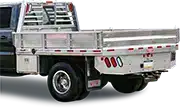
- Financing more trailer than the work requires. A premium aluminum car hauler, heavy-duty dump trailer, or high-GVWR equipment trailer may be an excellent product, but it is not the right first loan when the actual job can be handled safely by a smaller utility or equipment trailer. Choose the correct capacity, deck size, ramp system, payload, and towing configuration, then finance the least expensive trailer that safely performs the work.
Also be cautious with guaranteed-approval claims. A legitimate lender may charge an application, filing, or documentation fee, but paying an advance fee should never be represented as a guarantee that credit will be approved. Verify the lender, read the contract, and do not send money through an unusual payment method to an unverified finance company.
Do not misstate income, time in business, intended use, housing cost, or employment. Inaccurate information can cause a lender to withdraw approval, refuse funding, demand additional documents, or treat the application as potential fraud. Self-employed applicants should be prepared to provide the documents the program requires, which may include bank statements, tax information, proof of business registration, invoices, or other evidence of revenue.
Quick Comparison: Financing Paths for Subprime Buyers
| Path | Best For | Rate and Cost Pattern | Approval Speed |
|---|---|---|---|
| Credit union secured or UCC loan | Eligible members purchasing collateral the credit union specifically finances | Lender-specific pricing based on credit, term, trailer age, loan amount, and direct or dealer funding | Often one to several business days after a complete application |
| Specialty equipment or trailer lender | Applicants needing trailer-specific underwriting or business-focused review | May cost more than prime credit-union financing; compare APR, fees, total repayment, and filing charges | Possible same-day decision, although documentation can extend the process |
| Dealer-arranged financing | Buyers who want help matching the transaction with an appropriate finance partner | Determined by the approving lender; dealer access does not guarantee a particular rate or approval | Same day to several business days, depending on lender and documentation |
| Cosigned loan | Applicants with a qualified person willing and able to accept full repayment responsibility | Based on the complete joint application, collateral, down payment, term, and lender policy | Similar to an individual application once both parties submit required information |
| Large down payment | Buyers whose approval is limited by loan-to-value, payment size, or amount financed | Reduces principal and interest cost; may improve approval or pricing but does not guarantee either | Varies by lender and may require proof that the funds are available |
Come In and Have the Real Conversation
Bad-credit financing is not something to be embarrassed about when you walk into a dealership. It is a financial and logistics problem that can often be addressed through the right trailer choice, realistic down payment, complete documentation, qualified cosigner, or lender program. Dealers and lenders who handle trailer transactions regularly have worked with applicants recovering from medical debt, job loss, divorce, business interruptions, thin credit, and past late payments.
The most useful conversation starts with the work, not the credit score. Explain what you need to haul, the weight and dimensions of the load, the tow vehicle you will use, whether the purchase is personal or business-related, and how much payment comfortably fits your budget. Buying an undersized trailer creates safety and capacity problems, while buying substantially more trailer than you need creates an unnecessarily difficult loan.
Spencer Trailers carries changing inventory from Diamond C, H&H, Delco, Wells Cargo, Liberty, Darkhorse Cargo, and Legend, along with other trailer and truck-bed manufacturers. Availability changes as units are sold and new inventory arrives, so confirm the current stock number, price, specifications, and financing eligibility before making plans around a particular trailer. Browse current inventory here or call or text us at (812) 829-0226 to discuss the trailer and financing path before you come in.
Bring your driver’s license, current address, employment or business information, estimated monthly income, housing payment, down-payment amount, and any documents requested by the lender. Business applicants should ask in advance whether bank statements, proof of entity formation, equipment quotes, tax records, or a personal guarantee will be required. Providing complete and accurate information can prevent avoidable delays.
If you are not ready to buy, spend the next few months building the down payment, paying every account on time, lowering credit-card balances, and reviewing your credit reports for genuine errors. Avoid opening unnecessary accounts immediately before applying. Reach out when you’re closer and we will review the current inventory and available application paths at that time. A particular trailer may sell, but we can help you check what is available or locate the right replacement when you are financially ready.


