


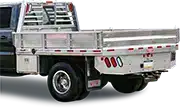
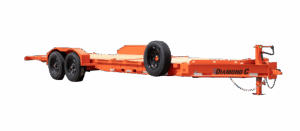





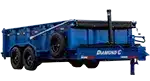

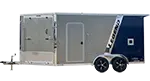
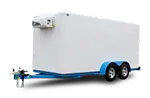


You just financed a 22-foot Diamond C FMAX212 gooseneck with a 25,900 lb GVWR. That is a real current configuration: the FMAX212 is offered in a 22-foot length, uses tandem 12,000 lb Lippert axles, and carries a 25,900 lb gross vehicle weight rating. The monthly payment is locked in, the lender is listed as loss payee, and then the physical-damage insurance quote comes back much higher than expected. That is a painful surprise, especially when the premium was not included in the original total-cost calculation. Remember that GVWR is the maximum rated weight of the loaded trailer, not its payload or empty weight, and an insurer may consider all three numbers along with the trailer’s value, use, location, and loss history.
Insuring a large trailer is not exactly like insuring a car. Liability from the tow vehicle may apply while a trailer is attached, depending on the policy, but that does not automatically insure the trailer itself against collision, theft, fire, vandalism, hail, or other physical damage. It also does not automatically insure tools, machinery, vehicles, or customer property carried on the trailer. A financed trailer will commonly need comprehensive and collision coverage that satisfies the lender’s requirements. Rates and available coverages vary by carrier, policy form, state, business type, operating radius, storage address, driver history, and valuation method. The good news is that there are legitimate ways to reduce cost without stripping away coverage you may need. Here are six that actually work when they are applied carefully.
1. Take a Higher Deductible (And Actually Commit to It)
One of the fastest ways to reduce the physical-damage portion of a trailer premium is to select a higher deductible. Higher deductibles generally produce lower premiums because you agree to absorb more of each covered loss. What is not reliable is a universal savings percentage. Moving from a $500 deductible to $1,000 or $2,500 might create a worthwhile reduction with one carrier and only a modest reduction with another. Ask the agent to quote the same trailer, limits, valuation basis, endorsements, and use classification at several deductible levels. Make sure you are comparing comprehensive and collision consistently; changing the deductible does not reduce the liability risk created by towing operations.
The math only makes sense if you can pay the deductible immediately after a theft, collision, storm, or vandalism claim. Keep the amount in a dedicated reserve instead of assuming the next month’s cash flow will cover it. Also check the finance contract before choosing a very high deductible. A lender may require physical-damage coverage, may limit the maximum deductible, and will normally need to be shown on the policy as the lienholder or loss payee. A deductible that violates the loan agreement is not a real savings strategy. When the reserve is in place and the lender permits it, you are choosing to retain smaller losses while transferring larger covered losses to the insurer.
Run a simple break-even calculation before signing. Compare the annual premium at each deductible and divide the additional out-of-pocket exposure by the annual savings. For example, moving from a $500 deductible to a $2,500 deductible increases your potential expense on a covered claim by $2,000. If the quote saves $250 per year, it takes eight claim-free years to recover that added exposure. Do the same calculation whether you are covering a 15,500 lb GVWR FMAX207, a 25,900 lb GVWR FMAX212, or another heavy equipment, dump, tilt, or car-hauler trailer. GVWR alone does not determine the rate; insured value, repair cost, theft exposure, use, and claims history can matter just as much.
2. Secured Storage Changes Everything
Where the trailer normally sits when it is not in use can materially affect underwriting. A trailer left beside a public road, in an unfenced lot, or overnight at changing jobsites presents a different theft, vandalism, weather, and collision exposure than one stored inside a locked building or within a controlled yard. Insurers may ask for the garaging or storage ZIP code, the type of enclosure, whether the location is occupied, whether the trailer is routinely left loaded, and whether it spends nights away from the declared premises. Give a precise answer rather than simply saying it is stored at the business.
Tell the agent the trailer’s true primary storage address and describe the controls that are actually in place: a locked building, gated fence, lighting, cameras, access logs, wheel clamps, coupler locks, or an alarm. If the trailer rotates between your shop, a farm, customer sites, and public parking areas, disclose that pattern too. Do not describe an open carport as enclosed storage or a shared gravel yard as a secured facility. Inaccurate information can create trouble at claim time. For a high-value enclosed cargo trailer or a Diamond C gooseneck carrying expensive equipment, the insurer also needs to know whether the cargo remains on the trailer overnight because the trailer policy and the property being hauled may require separate coverage.
Some carriers recognize protected storage in their rating or eligibility rules, while others do not advertise a specific discount. There is no dependable industry-wide 10 or 20 percent reduction for putting a trailer indoors. Before spending money on a building or major security upgrade solely for insurance savings, ask the carrier to quote the actual change. A secure structure can still be worthwhile for theft prevention, weather protection, paint and deck preservation, and reduced downtime, but its business case should not depend on an unconfirmed premium credit. Keep photographs, receipts, camera records, and a written description of the storage arrangement so the application can be documented accurately.
3. Bundle Commercial and Personal Policies
Consolidating coverage can create multi-policy, multi-vehicle, fleet, continuous-insurance, pay-in-full, or account credits, but bundling is not automatically cheaper. Personal auto, commercial auto, farm, inland marine, general liability, and trailer physical-damage coverages may be issued on separate policies even when the same insurance group handles them. Ask for the total annual cost of the complete account and compare it with the total cost of using more than one carrier. A discount on one line is not a bargain if another line becomes more expensive or loses an important endorsement.
For a business trailer, ask exactly where the owned trailer itself is insured. It may be scheduled for physical damage on a commercial auto policy, written on a specialty trailer policy, or covered through an appropriate commercial property form. Tools, portable equipment, and other business property carried on or in the trailer may need an inland marine or contractors-equipment policy. Property belonging to customers may require motor truck cargo or another form suited to property of others. Trailer interchange coverage is a different protection intended for certain non-owned trailers in the insured’s care under an interchange arrangement; it is not a substitute for scheduling a trailer your company owns.
This is especially important for a landscaping, excavation, construction, farm, hotshot, or equipment-hauling operation with several Diamond C flatbeds, dumps, tilts, utility trailers, or enclosed cargo units. Every trailer should be listed with the correct year, make, model, VIN, length, GVWR, insured value, attached equipment, and lienholder. A fleet schedule may simplify administration and may qualify for account pricing, but never assume an unlisted unit is covered because other trailers appear on the policy. Ask whether newly acquired trailers receive temporary automatic coverage, how long that protection lasts, and what notice and premium are required to add the unit permanently.
4. Add Real Theft Deterrents and Document Them
Physical theft controls can improve the risk and may help with eligibility or rating when a carrier recognizes them. More importantly, layered security can make the trailer harder to move and easier to recover. Use equipment designed for the actual hitch and storage arrangement, and document what is installed:
- Coupler and hitch locks matched to the trailer. Use a purpose-built bumper-pull coupler lock or receiver lock for a tag trailer and a gooseneck ball or coupler lock for a gooseneck. A fifth-wheel kingpin lock applies to a fifth-wheel connection, not a conventional gooseneck ball coupler. Fit, hardened construction, resistance to cutting or prying, and correct installation matter more than a marketing claim about towing capacity.
- Wheel clamps or boots that physically prevent a tire from rotating, ideally used with a coupler lock and locked safety chains. Ordinary wheel chocks help prevent rolling but are not meaningful theft deterrents. For long-term storage, inspect the clamp periodically and make sure it does not damage the tire, brake line, hub, or wheel.
- GPS or telematics tracking with hidden installation, geofencing, movement alerts, a reliable cellular or satellite connection, and backup power where practical. Record the device serial number and subscription details. A tracker may improve the chance of recovery, but only some insurers recognize particular systems for a premium credit, so verify eligibility before assuming it will lower the bill.
- Layered site security and identification, including a locked gate, adequate lighting, camera coverage, current photographs, a readable original VIN plate, component serial numbers, purchase invoices, and records of permanent accessories. Do not alter or obscure the manufacturer’s VIN. The goal is to deter removal, support a police report, establish ownership, and give an adjuster a clear record of what was insured.
Ask the carrier or agent in writing which devices qualify, whether professional installation is required, and what proof must be retained. Some applications ask only whether a qualifying device exists; others may request receipts, photographs, monitoring records, or a specific certification. Installing more devices does not automatically reduce the rate, and checking every security box is not a substitute for truthful storage and usage information. The policy’s terms, underwriting rules, and approved-device definitions control.
Do not buy a tracker based on an invented promise that it will save a fixed number of dollars each year. Compare the purchase price, installation cost, subscription fee, battery maintenance, recovery features, and any confirmed insurance credit. Even when the premium does not change, a functioning tracker can be valuable on a high-spec enclosed trailer, a Diamond C FMAX, LPT, LPX, or HDT, or any unit carrying equipment that would be difficult to replace quickly. Test alerts regularly, keep the location of the tracker private, and make sure more than one responsible person knows how to access the tracking account after a theft.
5. Actual Usage Matters More Than the Listed Category
How the trailer is used is one of the most important rating and coverage questions. Personal recreational use, occasional transport of your own farm property, hauling your own business equipment, delivering goods, renting the trailer to others, and transporting another person’s property for compensation are not interchangeable classifications. “Not for hire” does not automatically mean “personal”; a contractor moving company-owned machinery is still using the trailer in a business operation. If an 18,000 lb GVWR Diamond C FMAX208 is used only to move the owner’s farm equipment, describe that use accurately, including frequency, radius, drivers, and whether any paid hauling is performed.
Conversely, do not place a commercially used trailer on a personal policy without the insurer’s knowledge. Personal policies can restrict or exclude certain business, delivery, rental, livery, or for-hire exposures. A commercial operation may need the tow vehicle and trailer scheduled correctly, suitable liability limits, coverage for attached equipment, and separate protection for tools or cargo. Disclose whether you haul only your own property or property belonging to customers, whether employees drive, whether the unit crosses state lines, and whether the business has a USDOT or motor-carrier filing requirement. A cheaper classification is useless if it does not match the loss that eventually occurs.
Low-mileage, seasonal, storage, or telematics programs exist in parts of the insurance market, but availability is carrier- and policy-specific and may apply to the powered tow vehicle rather than the trailer itself. Give the underwriter a realistic annual mileage estimate, maximum operating radius, months of use, overnight locations, and number of trips instead of assuming regular daily operation or claiming limited use that cannot be supported. Heavy combinations also require accurate driver-qualification answers. For Indiana operators, the Class A CDL threshold is a gross combination weight rating (GCWR) of 26,001 lb or more with a towed vehicle rated over 10,000 lb; the trailer’s GVWR by itself is not the complete test. Indiana also requires brakes on trailers over 3,000 lb GVWR, so the application should identify the unit as the properly braked heavy trailer it is rather than as an unbraked light utility trailer. Correct licensing and operating compliance do not guarantee a discount, but inaccurate answers can affect eligibility and claims.
6. Shop Carriers Every Two to Three Years
The trailer insurance market is not uniform. One company may be comfortable with a privately used equipment trailer but not a hotshot operation. Another may specialize in contractors, farms, commercial fleets, or motor carriers. Rates can differ because each insurer uses its own underwriting rules, loss experience, territory factors, appetite, valuation options, deductible choices, and available endorsements. A carrier that prices a light utility trailer competitively may not be the best fit for a 25,900 lb GVWR FMAX212 or a fleet of heavy dumps and tilts.
Look for an agent or broker who regularly writes the type of risk you actually operate. For a business in Spencer, Indiana, that may mean someone familiar with contractors, agricultural operations, equipment transport, rural storage, commercial auto, inland marine, and any federal or Indiana motor-carrier filings that apply. Experience matters because the agent should know the difference between the trailer, the tow vehicle, attached equipment, loose tools, cargo, and property of others. The lowest premium is not useful if one of those exposures was omitted from the quote.
Every two to three years, or after a major change in equipment or operations, obtain competing quotes using the same information and the same requested coverage. Match liability limits, comprehensive and collision deductibles, valuation basis, trailer schedules, cargo or equipment limits, operating radius, permissive-use terms, exclusions, and endorsements. Provide the year, VIN, exact model, GVWR, current condition, purchase documentation, replacement estimate, storage arrangement, security measures, driver list, loss history, and lienholder. Do not compare an ACV quote with an agreed-value quote as though they are identical. Confirm the new policy is bound before canceling the old one, and request loss runs early if a commercial carrier needs them.
| Strategy | Estimated Savings | Effort to Implement |
|---|---|---|
| Higher deductible ($500 to $2,500) | Usually lowers physical-damage premium, but the amount is carrier-specific; compare written quotes | Low (quote several deductibles and confirm lender approval) |
| Secured enclosed storage | May improve rating or eligibility; there is no universal percentage discount | Medium (document the real storage and security setup) |
| Multi-policy bundle | Carrier-specific account or multi-product credit; compare the total account cost | Low to medium (coordinate personal, commercial, farm, or inland marine coverage) |
| GPS tracking device | Possible credit only when the insurer recognizes the device; recovery value may be the larger benefit | Low to medium (install, subscribe, test, and document) |
| Accurate usage classification | Variable; can prevent both overrating and serious coverage gaps | Low (review operations, drivers, radius, cargo, and policy language) |
| Shop competing carriers | Quote differences can be material, but no percentage is dependable | Medium (obtain comparable quotes every two to three years) |
A Note on Actual Cash Value vs. Agreed Value
One thing that trips up many trailer buyers is the difference among actual cash value, agreed value, stated amount, and replacement-cost coverage. Those terms are not interchangeable, and the declarations page, endorsement wording, deductible, exclusions, and loss-settlement clause matter more than the label used in a sales conversation. Ask the agent to show you the exact provision that explains how a partial loss and a total loss will be settled.
An actual cash value policy generally settles a covered loss based on what the trailer was worth immediately before the loss, accounting for age, condition, depreciation, comparable sales, and applicable policy terms. It does not promise enough money to buy a brand-new replacement. The settlement is also subject to the deductible and policy limit. Keep the invoice, build sheet, option list, photographs, maintenance records, and receipts for permanently installed accessories because a bare model comparison may not capture the value of upgraded ramps, hydraulic equipment, winches, storage boxes, spare tires, wheels, or other scheduled additions.
True agreed-value coverage generally uses a value accepted by the insured and insurer for the policy term, subject to the covered cause of loss, deductible, policy limit, and all other conditions. It may cost more and may require invoices, photographs, or an appraisal. A “stated amount” form can work differently and may permit payment of the lesser of the stated limit, actual cash value, or repair cost, so do not treat stated amount as automatically equal to agreed value. On a high-spec enclosed trailer or Diamond C gooseneck, compare the settlement wording with today’s replacement cost and the remaining loan balance. Insurance normally pays according to the policy, not according to what you still owe, unless a separate coverage specifically addresses that difference.
What to Tell Your Agent Before You Buy
The best time to sort out insurance is before you finalize a trailer purchase, not after the paperwork is signed or on the morning you plan to tow it home. Give the agent enough detail to identify the exact unit, classify the operation correctly, satisfy the lender, and quote the trailer and its contents separately where necessary:
- The year, make, exact model, VIN when available, length, body type, GVWR, empty weight, axle configuration, purchase price, and current replacement estimate of the trailer you’re considering
- Your intended use, including personal, farm, business, rental, delivery, or for-hire activity; what will be hauled; annual mileage; operating radius; states of operation; and every regular driver
- The true primary storage address, whether the unit is kept indoors or outdoors, whether it stays loaded overnight, how often it remains at jobsites, and which locks, gates, cameras, alarms, or trackers are actually used
- Whether the trailer will be scheduled on personal auto, commercial auto, farm, specialty trailer, or another policy, and whether tools, equipment, cargo, customer property, or attached machinery require inland marine or other separate coverage
- The purchase invoice, option and accessory values, requested deductible, desired ACV, agreed-value, stated-amount, or replacement-cost basis, finance-company requirements, and exact lienholder or loss-payee information
Ask for written answers to the questions that create the most expensive surprises: Is the trailer covered while attached and while unhitched? Are theft, vandalism, hail, fire, and collision included? What happens at a jobsite or temporary storage location? Are the contents, tools, vehicles, or customer property covered, and under which policy? Is there automatic coverage for a newly acquired trailer? Are employees and permissive users allowed? What towing, roadside, rental, or temporary-replacement benefits apply? Review the quote and the issued declarations page for the VIN, model, values, deductibles, endorsements, and lienholder. That conversation gives you time to correct errors or shop alternatives before you are committed to the unit.
If you’re still in the research phase on which trailer fits your operation, browse current inventory at Spencer Trailers to see what’s in stock. Or reach out directly and we can help you identify the exact model, GVWR, axle configuration, dimensions, options, and purchase documentation your licensed insurance agent will need. Spencer Trailers can explain the trailer; your insurer or agent must confirm the coverage, rating, and policy terms. Big trailer purchase decisions go better when you calculate the payment, insurance, registration, maintenance, security, tow-vehicle requirements, and operating costs before you commit, not after.


