








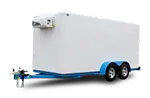


If you’re shopping for a trailer in the Indianapolis metro and you’ve been clicking through limited big-box inventory or searching private listings for something without an uncertain history, there is a broader selection roughly 55 road miles southwest of downtown Indianapolis. Spencer Trailers sits on State Road 46 in Spencer, Indiana, and gives buyers the opportunity to compare open, enclosed, dump, equipment, gooseneck, and utility trailers from multiple manufacturers at one dealership.
The trip takes you beyond the Indianapolis sprawl and into Owen County. The practical advantage is not simply the rural location. It is being able to inspect actual trailers, compare construction and installed options, discuss the intended load with knowledgeable staff, and receive an itemized price for the complete unit instead of trying to make a major purchase from photographs and incomplete specifications.
Why Indianapolis Buyers Make the Trip
Indy-area buyers typically show up at Spencer Trailers for one of three reasons: they could not find the right size or configuration locally, they wanted to compare the total purchase price from another dealer, or someone they trust recommended the dealership. All three are legitimate reasons to make the drive, especially when the trailer will be used regularly for work, equipment transport, recreation, or deliveries.
The inventory runs across multiple brands. Spencer Trailers carries Diamond C, Liberty, Delco, Darkhorse Cargo, H&H, Legend, United, and Wells Cargo, plus Zimmerman and Martin truck beds. That lineup lets you compare trailers with different frame designs, axle packages, deck heights, ramp systems, empty weights, warranties, and price points in one place. For example, you can inspect a Diamond C LPX low-profile equipment trailer next to an H&H steel equipment trailer and evaluate the actual units rather than relying only on broad online descriptions.
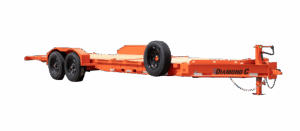
For context, a 20-foot Diamond C LPX is available in several configurations rather than one universal 14,000-lb package. Current LPX offerings range from approximately 15,500 to 24,000 lbs GVWR, depending on axle package and configuration. A 15,500-lb LPX commonly uses two 7,000-lb Lippert axles, while higher-rated versions may use dual 8,000-lb axles, dual 10,000-lb axles, or three 7,000-lb axles. Current equipment can include a 15,000-lb two-speed drop-leg jack, an appropriately rated 2-5/16-inch coupler, electric brakes, and available loading systems such as MAX Ramps or the X-Ramp. Diamond C protects the steel through its DM Difference Maker multi-stage coating process. An H&H Industrial Equipment trailer in a similar length is commonly offered at 14,000 or 16,000 lbs GVWR with an 82-inch deck, tandem 7,000- or 8,000-lb axle packages, and spring-assisted equipment ramps. These trailers may occupy a similar amount of driveway space, but their frames, deck heights, empty weights, loading systems, ratings, and intended duty cycles are not interchangeable. Seeing both in person makes it easier to choose the trailer that actually fits the work.
What to Decide Before You Go
Showing up with a rough idea of what you need saves time. You do not need to know the exact model code, but you should understand your normal load, the heaviest load you reasonably expect to carry, and the limits of the vehicle that will tow it.
- What are you hauling? Equipment, vehicles, lumber, landscaping machines, motorcycles, livestock, tools, and packaged cargo all push you toward different trailer types. A Wells Cargo enclosed cargo trailer can protect tools, motorcycles, displays, and finished products from weather and casual access. An open utility or equipment trailer is often easier to load from the side and may be more practical for raw materials, tractors, skid steers, compact excavators, and machines that do not need an enclosed body. A dump trailer is built for loose material, but the floor, side height, hoist design, rear gate, and payload still need to match the material being carried.
- How heavy is the load? Do not compare trailers only by axle rating. GVWR is the maximum permitted loaded weight of the trailer, while usable cargo capacity is generally the trailer’s GVWR minus its actual empty weight and installed options. Your tow vehicle must also remain within its maximum trailer rating, gross combined weight rating, receiver or gooseneck rating, hitch rating, axle ratings, tire ratings, and available payload after accounting for passengers, tools, fuel, and tongue or pin weight. A Liberty LU3K single-axle utility trailer may use one 3,500-lb axle while being rated at 2,990 lbs GVWR. A Liberty LU7K tandem-axle utility is rated at 7,000 lbs GVWR and uses two 3,500-lb axles with brakes. A Diamond C LPX with two 7,000-lb Lippert axles begins in a substantially heavier equipment-trailer category.
- Open or enclosed? Enclosed trailers such as the Darkhorse Cargo line or United cargo trailers add security, weather protection, wall space, and the ability to organize tools or merchandise inside. They also have more surface area for crosswinds and can weigh significantly more than an open trailer of comparable length. Open trailers generally cost less for a comparable load rating, are easier to inspect, and provide better access for irregular loads. Measure the height and width of anything that must pass through an enclosed trailer’s rear or side door; the advertised exterior width is not the same as the clear door opening.
- How long does the trailer need to be? Single-axle utility trailers are commonly offered from about 8 to 14 feet, while tandem utilities often extend from 14 to 20 feet. Equipment trailers commonly run from approximately 14 to 30 feet, and gooseneck flatbeds can be longer. Measure the complete machine, including buckets, mower decks, attachments, bumpers, or overhanging material. Also consider weight distribution, tie-down locations, ramp angle, turning clearance, storage space, and whether the combination can be maneuvered safely at your job sites and home.
The staff at Spencer Trailers will ask many of these same questions. Bringing the year, make, model, engine, drivetrain, tow package, hitch type, and door-jamb payload information for your tow vehicle will make the conversation more productive. For equipment, bring the machine’s operating weight with its normal bucket, attachment, fuel, fluids, and accessories rather than relying on the lightest published base weight.
The Selection You’ll Actually Find on the Lot
Spencer Trailers keeps a live inventory page that is worth checking before the drive. Availability changes as trailers are sold or delivered, but the lot can include everything from 2,990-lb single-axle utility and enclosed trailers to tandem utilities, car haulers, equipment trailers, dumps, deckovers, tilt trailers, and heavy-duty gooseneck flatbeds. Delco dump trailers are a common option for contractors and property owners, with the manufacturer’s broader dump lineup covering configurations from approximately 7,000 to 22,990 lbs GVWR. Legend offers all-aluminum enclosed cargo models for buyers who value lower empty weight and resistance to red rust, although the actual payload and towing behavior must still be checked on the individual trailer’s certification label.
Diamond C gives heavier-equipment buyers several distinct choices. The LPX is a low-profile extreme-duty equipment trailer with current GVWR packages from approximately 15,500 to 24,000 lbs. The LPT heavy-duty telescopic dump and HDT hydraulically dampened tilt equipment trailer are offered in approximately the same 15,500- to 24,000-lb range, depending on configuration. The FMAX is Diamond C’s Flatbed Max gooseneck line, with model and axle packages ranging from approximately 15,500 to 40,000 lbs GVWR. Diamond C was founded in 1985 and builds its trailers in Mount Pleasant, Texas. Its current premium FMAX, HDT, LPT, LPX, WDT, and DEC lines use Lippert axles as standard equipment, with the axle count, capacity, brakes, suspension, tires, and wheel package determined by the specific configuration. Always use the certification label, purchase documents, and factory specifications for the actual trailer rather than assuming that every unit in a product family has the same rating.
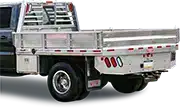
If a specific unit is listed online and you want to inspect or purchase it, call ahead at (812) 829-0226 and provide the stock number. Walk-ins are welcome, but popular sizes and configurations can sell without much warning. On the truck-bed side, Zimmerman and Martin beds are application-specific rather than universal. Bring the truck’s year, make, model, cab style, bed length, chassis type, cab-to-axle measurement when applicable, fuel and DEF fill locations, camera and sensor information, and hitch requirements. If you have been pricing aluminum or steel flatbeds in Indianapolis, comparing complete installed specifications is worth the trip because lighting, toolboxes, skirts, headache racks, hitch equipment, sensors, and installation work can materially change the final price.
Indiana Registration: What You Need to Know
For an Indiana dealer purchase, ask exactly which title and registration steps the dealership will complete and which documents you must submit yourself. Indiana allows several title and registration transactions through a BMV branch or myBMV, but eligibility depends on the transaction. New owners generally have 45 days to complete the required title and registration work without late penalties, so do not leave the paperwork sitting until the temporary permit is about to expire.
- Manufacturer’s Certificate of Origin (MCO) or Title: A new trailer normally comes with a Manufacturer’s Certificate of Origin, while a previously titled trailer requires an assigned title. The purchase packet should also identify the trailer by VIN, year, make, model, purchase price, and date of sale. Verify that the VIN on the paperwork matches the certification label attached to the trailer before leaving the dealership. Depending on how the sale is processed, the dealer may submit some or all of the title and registration documents on your behalf.
- Sales tax: Indiana’s state sales tax rate is 7%. An Indiana dealer generally collects the tax as part of the sale and provides the appropriate sales-tax documentation. Tax treatment can differ for qualifying exemptions or transactions involving another state, so the bill of sale should clearly show the selling price, taxable charges, tax collected, trade allowance when applicable, and any exemption documentation. A normal Indiana dealer purchase should not be planned around paying the entire sales tax later at the BMV.
- Weight-based registration fee: Indiana trailer registration is divided into weight classes. Under the BMV’s 2026 base fee schedule, trailers at 3,000 lbs or less and trailers at 9,000 lbs or less fall into lower flat-fee classes, while higher declared-weight classes increase through brackets of 12,000, 16,000, 22,000, and more than 22,000 lbs. Title charges, infrastructure fees, plate charges, local taxes, late penalties, and other transaction-specific fees can apply in addition to the base registration amount. Higher-weight or business-use trailers may also be handled through Indiana’s commercial vehicle registration system based on declared weight and use; a trailer does not suddenly become commercial-registration property solely because it crosses 26,000 lbs.
- Insurance and towing compliance: Do not assume that the trailer, cargo, tools, or equipment are fully insured merely because the tow vehicle has an auto policy. Liability coverage may extend differently from collision, comprehensive, theft, cargo, or business-use coverage, and a lender may require physical-damage insurance on a financed trailer. Indiana also requires adequate brakes on a trailer operated on a highway at a gross weight of at least 3,000 lbs, including a system controllable from the towing vehicle and an automatic breakaway function where required. For commercial operation, a Class A CDL generally applies when the combination has a GCWR or actual gross combination weight of 26,001 lbs or more and the towed unit has a GVWR or actual gross weight greater than 10,000 lbs. A trailer rated above 10,000 lbs does not, by itself, create that Class A threshold when the entire combination remains below 26,001 lbs.
If you are buying a trailer for business use, speak with your tax professional before placing it in service. A qualifying trailer used more than 50% for business may be eligible for a Section 179 deduction, subject to the election, annual limits, taxable-income limits, ownership structure, and other requirements. Federal law also restored 100% bonus depreciation for eligible qualified property acquired and placed in service after January 19, 2025. Section 179 and bonus depreciation are not automatic promises that every buyer can deduct the full purchase price. The date placed in service, percentage of qualified business use, financing, entity ownership, and the type of property all matter.
The BMV’s online services can handle some eligible new-registration transactions when the title information and sale date meet the portal’s requirements. Otherwise, use a BMV branch or other authorized location. Bring the documents specified for your transaction, which may include the MCO or assigned title, dealer paperwork, sales-tax form, identification, and payment. A branch may complete the transaction during the visit, but the permanent plate, title, or other documents may be mailed afterward. Confirm temporary-permit expiration dates and do not tow with expired or incomplete registration documents.
Financing and Delivery Options
Not everyone wants to finance a trailer, but financing can be practical for an enclosed trailer, dump trailer, heavy equipment trailer, truck bed, or gooseneck that needs to begin earning revenue immediately. Spencer Trailers works with financing providers that serve trailer buyers. Approval, annual percentage rate, down payment, loan term, minimum financed amount, and documentation requirements depend on the lender, applicant, trailer, and whether the purchase is personal or commercial. An advertised trailer price does not establish a guaranteed monthly payment. Ask for an itemized out-the-door figure that separates the trailer, factory options, dealer-installed equipment, freight or destination charges, sales tax, title and registration charges, document fees, warranties, and any financed add-ons before comparing loans.
Delivery or shipping quotes are available for Indianapolis-area buyers and customers farther away. If you do not yet have a properly rated tow vehicle, brake controller, receiver, ball mount, weight-distribution system, or gooseneck hitch, arranging delivery may be safer than attempting the first trip with an incomplete setup. Provide the trailer’s stock number and the exact destination when requesting a quote. Delivery availability, route, timing, unloading requirements, and fees depend on the trailer’s dimensions and weight, the destination, and the equipment needed to transport it.
A Few Things Worth Comparing
| Trailer Type | Common Use Case | Typical GVWR Range |
|---|---|---|
| H&H Steel Equipment or Utility | Landscaping, compact equipment, tractors, general cargo | Approximately 9,900 to 16,000 lbs in common heavy-duty rail-side and industrial equipment lines |
| Diamond C LPX Equipment | Skid steers, mini excavators, tractors, heavy equipment | Approximately 15,500 to 24,000 lbs |
| Darkhorse Cargo Enclosed | Tools, motorcycles, mobile workspaces, product delivery | Approximately 2,990 to 9,990 lbs in common single- and tandem-axle configurations |
| Delco Dump Trailer | Mulch, gravel, soil, roofing material, demolition debris | Approximately 7,000 to 22,990 lbs across the dump lineup |
| Legend Tandem Enclosed Cargo | Long-distance hauling, motorcycles, tools, corrosion-sensitive applications | Approximately 7,000 to 9,990 lbs in common tandem configurations |
These ranges are not exhaustive, and GVWR is not the same as payload. Configurations vary by length, axle count, axle capacity, suspension, tires, wheels, brakes, frame, deck material, ramp system, wall and roof construction, and installed accessories. Two trailers with the same GVWR can have noticeably different empty weights and usable cargo capacities. The certification label and current factory documentation for the individual trailer control, and the lowest-rated component in the towing combination can limit what you may safely carry even when the trailer itself has a higher rating.
Making the Drive Worth It
The honest pitch for Indianapolis buyers is this: you are exchanging part of a day for the ability to inspect real inventory, compare multiple manufacturers, verify loading and towing details, and talk with a dealership that works with trailers every day. That trade makes sense for anyone buying a trailer they expect to use for years. It is especially valuable when differences in deck height, ramp angle, empty weight, tie-down placement, brake equipment, hoist design, or truck compatibility matter more than the lowest advertised price.
Spencer Trailers is at 291 West State Hwy 46, Spencer IN 47460. From downtown Indianapolis, the road trip is roughly 55 miles and commonly takes about 70 to 90 minutes, depending on the starting point, traffic, construction, and route. Buyers coming from the south side often travel toward Martinsville on I-69 and continue toward Spencer by State Road 67 and U.S. 231, with the final approach depending on current navigation conditions. From Martinsville, allow roughly 25 to 35 minutes. Buyers coming from the north side of Indianapolis should budget additional time for crossing the metro area.
Check the current inventory before you leave, call (812) 829-0226 with the stock number if you are interested in a specific unit, or send a message describing the equipment, cargo, or vehicle you need to haul. Include the approximate loaded weight, dimensions, tow vehicle, hitch type, preferred trailer length, and whether you need ramps, a tilt deck, an enclosed body, a dump hoist, or delivery. It is a more reliable way to begin the purchase than repeatedly refreshing private listings and hoping that the next trailer has the right capacity, documentation, and condition.


