





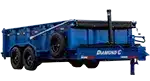

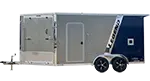
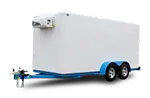
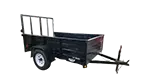

Your trailer breaks down on a Saturday morning. You’ve got a load of equipment, a job site waiting, and suddenly you’re hunting for someone who understands trailer wheel ends, electric brakes, suspension hardware, and axle identification. That’s when most people realize they never vetted a trailer service shop before they needed one.
Finding dependable trailer service near Spencer, IN takes a little homework. Owen County has good automotive and equipment-repair businesses, but working on pickup trucks does not automatically make a shop qualified to diagnose a loaded utility, equipment, dump, gooseneck, or enclosed trailer. Before you leave your rig somewhere, find out whether the shop has the tools, parts connections, facility capacity, and trailer-specific experience to complete the repair safely.
What a Real Trailer Service Shop Should Handle
Not every automotive shop is properly equipped for trailer work. Trailers have separate braking and breakaway systems, axle-specific wheel-end components, multiple suspension designs, specialized electrical wiring, and frame geometry that must remain square and correctly aligned. A shop worth your time should be comfortable with all of the following and should be willing to identify the exact components on your trailer before recommending parts.
Wheel Bearings
Wheel-bearing and hub problems are among the most common preventable causes of trailer trouble. A quality shop should treat bearing inspection and lubrication as scheduled maintenance rather than waiting for a bearing to overheat, damage the spindle, or allow the hub and wheel to separate. Proper service includes removing the hub, cleaning and inspecting the bearing cones and cups, examining the spindle, checking the hub or drum, installing the correct replacement seal, setting bearing end play correctly, and using a grease that is compatible with what is already in the hub.
Light- and medium-duty trailers commonly use 3,500 lb, 5,200 lb, 6,000 lb, or 7,000 lb axles, but axle capacity alone does not guarantee a particular bearing, seal, brake, hub, or spindle combination. A tandem trailer rated around 7,000 lb may use two 3,500 lb axles, while heavier equipment and dump trailers may use tandem 7,000 lb axles or larger wheel-end systems. A competent shop should ask for the trailer VIN, axle manufacturer, axle serial tag, brake size, hub pattern, and any readable bearing or seal numbers. Guessing a bearing kit from the trailer’s advertised GVWR is not a reliable parts-identification method.
Electric Brakes and Brake Controllers
Indiana Code 9-19-3-3 requires a trailer or semitrailer operating on a highway at a gross weight of at least 3,000 pounds to have brakes adequate to control, stop, and hold the trailer. The brakes must be capable of being applied by the driver from the towing vehicle’s cab and must apply automatically if the trailer accidentally breaks away. Indiana’s related new-vehicle brake requirements generally call for service brakes on all wheels when the trailer is subject to the brake requirement. Electric drum brakes remain common on utility, cargo, equipment, and dump trailers, while surge-hydraulic systems are common in some marine applications and electric-over-hydraulic drum or disc brakes may be used on heavier or specially equipped trailers.
Ask whether the shop can test controller output, voltage at the brakes, total circuit amperage, individual magnet draw, wiring resistance, grounds, brake adjustment, the breakaway switch, and the breakaway battery. Lippert’s published chart for many electric brake systems uses approximately 3.0 amps per magnet when fully energized, or about 12 amps for a four-brake tandem system, but the technician should verify the correct specification for the exact brake assembly and test voltage rather than applying one number universally. The shop should also be able to measure drum and armature-surface wear and determine whether machining is permitted within the manufacturer’s limits or whether the hub-and-drum assembly must be replaced. Current Diamond C configurations use Lippert axles, and some 2026 configurations also use Lippert electric-drum ABS, so the shop should identify whether it is servicing conventional electric brakes, ABS-equipped electric brakes, or an electric-over-hydraulic system before ordering components.
Axle Work
Bent axle beams, damaged spindles, broken leaf springs, worn shackle links, loose U-bolts, deteriorated bushings, and worn equalizers are normal trailer-repair territory. A real trailer shop should be able to inspect axle alignment, camber, toe, spring condition, hanger spacing, tire-wear patterns, and the relationship between the axles and the coupler or gooseneck. It should also know when an axle assembly needs replacement instead of attempting an unsupported heat-straightening or welding repair. Torsion axles require a different diagnostic approach because the rubber suspension elements are contained inside the axle tube and many internal failures are addressed by replacing the axle rather than rebuilding it in the shop.
Current Diamond C trailers use Lippert axles, while the suspension design varies by model and selected equipment. A trailer may have double-eye springs, slipper springs, Slipper Roller suspension, torsion axles, heavy-duty adjustable suspension, or an air-ride arrangement. Fastener torque is not one-size-fits-all: it changes with axle capacity, U-bolt diameter, wheel stud size, suspension type, and hardware design. A professional technician should identify the exact system and consult the current Lippert, suspension-manufacturer, or trailer-manufacturer specification. Looking up the correct value is a green flag; guessing because someone has worked on a similar-looking trailer is not.
Welding and Frame Repair
Cracked welds, damaged cross-members, broken tongue gussets, bent coupler mounts, and torn suspension hangers are structural repairs. They should be evaluated by a qualified structural welder who has experience with loaded trailer frames, not merely automotive sheet metal or decorative fabrication. Some current Diamond C engineered-beam and engineered-channel designs use steel rated at 50 ksi minimum or Grade 50 material. Weld location, filler metal, preparation, heat input, penetration, and the sequence used to control distortion all matter when repairing higher-strength structural steel.
Ask whether the shop will inspect the full damaged area, check the trailer for misalignment, and follow the trailer or component manufacturer’s repair guidance. Welding directly on an axle tube, spindle, suspension component, or engineered frame section should not be performed without an approved procedure. The repair should also include proper surface preparation and corrosion protection. On a Diamond C trailer, any area disturbed by grinding or welding should be protected in a way that is compatible with the trailer’s DM Difference Maker multi-stage coating system rather than leaving bare steel exposed after the structural work is finished.
How to Vet a Local Shop Before You Commit
Word of mouth still works. Talk to farmers, contractors, excavators, landscapers, equipment operators, and hotshot drivers in Owen County who pull trailers regularly. Ask what kind of trailer was repaired, how heavily it was used, whether the final bill matched the approved work, and whether the repair held up after the trailer went back into service. A shop that is excellent at installing lights may not be the right shop for an axle-alignment or structural-frame problem.
Beyond that, a few practical tests:
- Call with a specific question. Ask something like: “Can you diagnose weak braking on a tandem-axle trailer with 5,200 lb axles?” A knowledgeable shop may not quote the job instantly, but it should ask useful follow-up questions about the axle tag, brake size, controller, symptoms, VIN, wiring, and whether the brakes are manual-adjusting or self-adjusting. A confident guess without identifying the components is less reassuring than a careful request for the right information.
- Ask about parts sourcing. Shops that work with trailer manufacturers, axle suppliers, and trailer-specific parts distributors are more likely to obtain the correct bearings, seals, brake assemblies, suspension hardware, and electrical components. Ask whether they match parts by axle serial number or component number and what warranty applies to the replacement parts and labor.
- Look at what’s in the lot. Regularly seeing utility, dump, equipment, gooseneck, and enclosed trailers being serviced is a positive sign. Also look at the facility itself. The shop needs enough level space, lifting and support equipment, wheel-end tools, electrical test equipment, and door clearance to work on your trailer safely. A heavy gooseneck or loaded dump trailer should not be supported with equipment intended only for passenger vehicles.
- Get the scope in writing. Reputable shops document the complaint, inspection charge, proposed parts, estimated labor, authorization limit, and any work that requires additional approval. Structural damage, worn components discovered after disassembly, and unavailable parts can change a repair, but the shop should contact you before expanding the scope rather than presenting an unexplained bill at pickup.
What to Expect on Common Service Intervals
The correct maintenance schedule is the one published for your trailer, axle, brakes, suspension, and wheel-end system. For standard-duty, grease-lubricated utility-trailer axles, an annual or 12,000-mile wheel-bearing inspection and repack is a common benchmark. Diamond C’s published maintenance guidance also calls for checking lug nuts and applicable suspension hardware around the first 50 miles on a newly purchased trailer. Under normal on-highway use, its general schedule calls for brake operation and breakaway-system checks before every use, manual brake adjustment around three months or 3,000 miles where applicable, magnet and controller inspection around six months or 6,000 miles, and inspection of linings, hubs, drums, wiring, seals, and wheel bearings at approximately 12 months or 12,000 miles. Severe service, frequent loading, rough roads, water exposure, long storage, and commercial use can require shorter intervals.
Brake magnets and shoes do not have a dependable universal replacement mileage. Their service life changes with trailer weight, controller gain, terrain, stop frequency, brake adjustment, wiring voltage, contamination, and whether new linings and magnets were correctly burnished. Replace components according to measured wear, current draw, drum condition, contamination, and the manufacturer’s limits rather than an assumed mileage number. Leaf springs, equalizers, shackles, bushings, wet bolts, U-bolts, and hangers should be inspected whenever there is uneven tire wear, dog-tracking, a leaning trailer, clunking, a shifted axle, or a change in ride height. Even a small spring-pack center bolt or worn bushing can allow movement that damages tires, hangers, and adjacent suspension parts.
Many trailers are mechanically simpler than the tow vehicles pulling them, but that does not make them maintenance-free. Current heavy-duty trailers may include ABS, electric-over-hydraulic brakes, oil-bath hubs, hydraulic jacks, dump hoists, air suspension, batteries, chargers, and wireless controls. A hot hub, grease on a brake drum, cracked spring, loose wheel, damaged breakaway cable, brake warning, leaking hydraulic line, or visibly shifted axle should be treated as a stop-and-inspect condition rather than something to watch until the next scheduled service.
Spencer Trailers: Parts and Service for Owen County Owners
At Spencer Trailers, located at 291 West State Hwy 46 in Spencer, IN, we keep a working selection of common trailer parts and can source additional components for the brands we sell and support, including Diamond C, Liberty, H&H, Wells Cargo, and United trailers. If you bought your trailer here or are operating one of those brands, call or text us at (812) 829-0226 before driving to a general repair shop that may not have the correct component information or supplier access. Our currently listed service hours are Monday through Friday, 8:30 a.m. to 5 p.m., so call ahead to confirm scheduling and parts availability.
We can often identify or source bearings, seals, brake assemblies, coupler hardware, suspension parts, jacks, lights, plugs, and wiring components faster than a general automotive counter because trailer parts are part of our regular business. For the most accurate match, have the trailer VIN, axle tag, photographs, dimensions, and any visible part numbers ready when you call. Current Diamond C trailers use Lippert axles, but parts still vary by axle capacity, brake size, suspension, hub pattern, and model configuration. If a repair is outside our in-house capability, we will tell you plainly and help point you toward an appropriate local resource rather than guessing at a structural or safety-critical repair.
We also carry Darkhorse Cargo enclosed trailers, Legend enclosed and utility trailers, and Delco dump, utility, gooseneck, and other work-trailer configurations. Enclosed trailers add door, ramp, roof, wall, and interior wiring concerns, while dump trailers add hydraulic cylinders, pumps, batteries, chargers, hoses, reservoirs, hinges, and hoist geometry. Those systems need different diagnostic skills than a basic open utility trailer. Check our current inventory to see what we have in stock, or reach out directly if you have a parts or service question.
A Quick Checklist Before Choosing a Shop
| What to Ask | Green Flag | Red Flag |
|---|---|---|
| Do you work on electric trailer brakes? | Can test controller output, voltage, amperage, grounds, adjustment, breakaway operation, and ABS when equipped | Vague answer, or plans to replace parts without electrical testing |
| What axle brands do you service? | Recognizes Lippert on current Diamond C trailers and verifies every axle by its tag or serial number | Assumes the trailer brand, GVWR, or wheel pattern identifies every part |
| Can you weld trailer frames? | Uses a qualified structural welder, checks alignment, and follows manufacturer repair guidance | “Our guy can weld anything” without discussing steel, location, distortion, or load |
| How do you source trailer parts? | Trailer-specific distributor, axle supplier, manufacturer, or authorized dealer with part-number verification | General auto parts store only, or chooses parts because they look close |
| Will you write up a work order? | Documents diagnosis, estimate, authorization, parts, labor, and warranty before proceeding | Verbal only, with no approval limit or explanation of added work |
Don’t Wait for a Breakdown to Start Looking
The time to find a good trailer shop is not when a bearing overheats on State Road 46 at 7 a.m. Build that contact list now. Ask around at feed stores, farms, equipment dealerships, construction sites, landscaping companies, and local towing businesses. Record the trailer VIN, axle serial numbers, brake size, tire information, and common part numbers before an emergency. Keep Spencer Trailers in your phone as a first call for parts, component identification, and direction during business hours.
Have a service question about your trailer or want to know whether we stock or can source a specific part? Contact us here or call or text (812) 829-0226. Give us the trailer VIN and component details when possible, and we’ll give you a straight answer about availability, service capability, and the safest next step.


