












You’re standing at the dealer lot, eyeing two trailers that appear to do the same job on paper. One is lighter, brighter, and more expensive. The other costs less today, carries more steel, and has a reputation for taking abuse. The right choice is not decided by appearance or material alone. It comes down to the complete trailer: certified GVWR, actual empty weight, payload, frame design, axle and tire ratings, floor construction, loading method, tow-vehicle limits, maintenance, and the kind of work you expect it to do.
This is the aluminum vs. steel question, and it comes up every week here at Spencer Trailers. There is no universal winner, but there are plenty of misleading comparisons. A premium aluminum cargo trailer should not be compared with a basic steel cargo trailer solely by length, and a steel equipment trailer such as a Diamond C LPX is not a direct substitute for an aluminum enclosed trailer. Let’s compare complete, properly matched trailers and look at the costs that continue after the purchase.
Weight: The Number That Changes Everything
Aluminum is much less dense than steel, so an aluminum design can reduce empty trailer weight. That does not mean every aluminum trailer is hundreds of pounds lighter than every steel trailer of the same advertised size. Aluminum has lower stiffness than steel, so a properly engineered aluminum frame often uses larger or thicker structural sections. Floors, ramps, roof height, wall spacing, cabinets, spare tires, axle packages, batteries, winches, and other options can erase part of the theoretical weight advantage. The only reliable comparison is the actual empty weight of two similarly equipped trailers, preferably from the manufacturer’s build sheet or a certified scale.
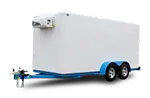
Consider the current Legend Thunder Series 7×16 aluminum enclosed cargo trailer. It is a 7,000-lb-GVWR tandem-axle model with two 3,500-lb torsion axles and electric brakes on both axles. Its structural specification includes a 2-inch-by-4-inch aluminum perimeter tube frame and 2-inch-by-3-inch aluminum crossmembers on 24-inch centers, while the standard floor is 3/4-inch engineered wood. Legend’s steel-framed Cyclone trailer is also available in the nominal 7×16 size with a standard 7,000-lb GVWR, and a 9,990-lb package is available with upgraded running gear and frame requirements. Those are useful comparisons because the size and intended use are similar, but options still have to be matched before comparing empty weight or price.
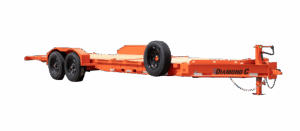
For open equipment work, the same rule applies. A Diamond C LPX equipment trailer is a steel, extreme-duty equipment hauler with current GVWR packages from 15,500 to 24,000 lbs. The standard running gear is two 7,000-lb Lippert axles, with heavier axle packages available by configuration. That is a different class of trailer from a 7,000-lb enclosed cargo trailer, so comparing the two by material or purchase price would be meaningless. Payload is calculated from the trailer’s rated capacity and actual empty weight, but your legal and safe load may be lower because of axle, tire, coupler, hitch, truck GVWR, rear-axle, tongue-weight, or gross-combination limits.
This is especially important with half-ton trucks and SUVs. The advertised tow rating is only one limit; available truck payload and receiver-hitch capacity can become the controlling numbers once passengers, tools, cargo, and tongue weight are added. A lighter trailer can help with acceleration, grades, braking demand, and stop-and-go fuel use, although aerodynamic drag and towing speed often dominate highway fuel economy with a tall enclosed trailer. Indiana also requires brakes on trailers over 3,000 lbs GVWR. For commercial operation, the general Class A CDL threshold is a combination rating of 26,001 lbs or more when the towed trailer is rated over 10,000 lbs, subject to applicable exemptions. A trailer rating over 10,000 lbs by itself does not automatically create that Class A threshold.
Corrosion: The Slow Cost Owners Underestimate
Bare carbon steel can rust when moisture and oxygen reach it, especially after a coating is chipped or scratched. Aluminum does not develop red iron-oxide rust, but it is not immune to corrosion. It naturally forms a thin oxide layer that normally protects the underlying metal, yet road salt, trapped moisture, dissimilar-metal contact, harsh cleaners, and neglected joints can still cause pitting, crevice corrosion, or galvanic corrosion. “Rust-resistant” is a fair advantage for aluminum. “Maintenance-free” is not.
A well-built and well-maintained steel trailer can last for decades. Diamond C Trailers protects its steel trailers with the DM Difference Maker multi-stage powder-coating system. The process includes steel-shot blasting, a five-stage wash and chemical pretreatment, force drying, a zinc-epoxy primer powder coat, a durable top coat, and controlled curing. That is substantially more than spraying color over mill scale, but even a premium coating should be inspected. Rock chips, chain damage, worn ramp edges, exposed fastener holes, and scraped undersides should be cleaned and touched up before corrosion spreads beneath the finish.
Aluminum construction reduces the amount of painted structural steel that needs that attention, but an aluminum trailer still contains components that require care. Axles, brake hardware, couplers, jacks, safety chains, wheels, hinges, and fasteners may be steel or another metal. Quality manufacturers use compatible fasteners, coatings, sealants, isolators, and drainage details to manage dissimilar-metal contact, but owners still need to rinse away winter salt and inspect joints. On boat and powersports trailers, freshwater rinsing and attention to electrical grounds and fastener interfaces are especially important.
If your trailer lives outside year-round in Indiana and sees winter roads, aluminum’s corrosion resistance can reduce cosmetic and structural maintenance over a long ownership period. Steel can still be the better value when it starts with thorough surface preparation and a durable coating, is washed after salt exposure, drains correctly, and receives prompt touch-up. Storage under cover helps both materials. The realistic comparison is not “aluminum never corrodes” versus “steel quickly rusts out.” It is how much inspection, cleaning, coating repair, and corrosion risk each design creates in your actual environment.
Price: What You Pay Now vs. What You Pay Later
Steel usually costs less upfront when the trailers are genuinely comparable, but category matters. The manufacturer currently lists the Diamond C LPX with a base MSRP in the low five figures before options, freight, taxes, title, registration, and dealer charges. It is also a 15,500-to-24,000-lb-GVWR equipment trailer built for machinery, not an enclosed cargo box. Comparing its price with a lightweight aluminum cargo or utility trailer does not tell you whether aluminum or steel is more expensive. Compare the same trailer type, usable dimensions, GVWR, payload, axle and tire package, brakes, floor, ramps, roof height, doors, warranty, and included options.
A more useful comparison is a Legend 7×16 aluminum enclosed trailer with a 7,000-lb GVWR against a steel-framed 7×16 enclosed trailer with the same 7,000-lb GVWR and similar equipment. If the steel trailer is configured at 9,990 lbs, it is no longer an identical comparison because the axle, tire, frame, brake, and payload package has changed. Even model dimensions need attention: a manufacturer may include the V-nose in the advertised length while another may quote only the rectangular box. Request a written build sheet rather than assuming two “7×16” trailers contain the same material, interior space, or standard equipment.
The real cost comparison has to include:
- Fuel and tow-vehicle impact: lower empty weight can help in stop-and-go use and on grades, but speed, aerodynamics, route, load, and driver behavior determine the actual savings.
- Maintenance and downtime: steel may need coating touch-up and rust repair, while aluminum may need specialized structural repair; both still need tires, bearings, brakes, wiring, floors, doors, ramps, and suspension service.
- Resale value: material matters, but brand, condition, configuration, records, local demand, title status, and current new-trailer pricing can matter just as much.
On purchase price alone, steel often wins. Over a long, high-mileage ownership cycle, aluminum can close part of the gap through lower empty weight, less coating maintenance, and strong used-market demand, but that outcome is not guaranteed. Compare complete out-the-door quotes and estimate the work the trailer will actually perform. Business buyers should also discuss depreciation with a qualified tax professional. Federal law restored 100% bonus depreciation for qualifying property placed in service after January 19, 2025, but that is a timing rule for an eligible tax deduction, not a discount on the trailer and not a reason to buy the wrong material.
Resale Value: Condition and Specification Matter Most
Quality aluminum trailers often retain a strong percentage of their original value because buyers like the lower corrosion exposure and clean appearance of an unpainted structure. A well-kept aluminum trailer can still look presentable after years outdoors, but buyers should inspect it for cracked welds, distortion, loose fasteners, galvanic corrosion, damaged flooring, and prior structural repairs. Surface appearance alone does not reveal whether a trailer has been overloaded, repaired correctly, or maintained properly.
A used Diamond C steel flatbed should not be assigned a fixed depreciation percentage. Premium steel trailers with desirable GVWR packages, Lippert running gear, useful loading systems, good tires and brakes, straight frames, clean titles, and intact DM coating can command strong prices. A neglected trailer of either material can lose value quickly. Market conditions also move: new-trailer incentives, freight costs, steel and aluminum prices, seasonality, and local demand can change the spread between original price and resale price.
Fleet buyers and rental companies do not all choose the same material. A high-mileage cargo, livestock, or recreational fleet may value aluminum’s lower empty weight and corrosion resistance. A construction or rental fleet may prefer steel because purchase cost is lower, structural repair resources are widely available, and workers are likely to subject the deck and frame to concentrated loads. The best resale strategy is to buy the specification the next owner will want, avoid overloading, document maintenance, repair damage correctly, and keep the trailer clean.
Repair: Steel Is Easier to Source, Aluminum Needs Specialized Work
Steel generally has the advantage in repair availability. More fabrication and welding shops are equipped to cut, form, and weld common steel sections, and replacement steel is easy to source. That does not mean any field weld is acceptable. Cracks near spring hangers, couplers, tongues, hoists, tilt pivots, engineered beams, or highly stressed crossmembers should be evaluated by a qualified trailer repair facility and repaired according to manufacturer guidance. Adding an unapproved gusset or applying excessive heat can move stress into another part of the frame.
Structural aluminum repair requires clean material, correct filler metal and welding procedure, careful heat control, and a technician experienced with aluminum trailer structures. Welding changes the properties of heat-treated aluminum around the joint, so the repair must restore the intended load path rather than simply cover a crack. Rural repair availability may be more limited, and labor can be higher, but the actual cost depends on damage, access, material, finish work, and whether a component should be replaced instead of welded.
Aluminum does not automatically mean fewer repairs. Both trailer types use wear components such as tires, bearings, brakes, breakaway batteries, wiring, couplers, jacks, hinges, latches, suspension parts, and seals. Many aluminum enclosed trailers also use engineered-wood floors and interior wall panels as standard equipment; the current Legend Thunder is one example, although aluminum flooring is available as an option. Those floors still need protection from water intrusion, chemicals, overloaded point contact, and tracked equipment.
The practical comparison is straightforward: steel usually gives you a larger repair network and simpler material sourcing, while aluminum gives you less painted structural metal to maintain but requires the right specialist when structural work is needed. Before buying, ask who can perform warranty and collision repairs, how far away that facility is, whether common replacement parts are stocked, and what the manufacturer permits. Downtime can cost a working owner more than the repair invoice.
Which Trailer Type Is Actually Better for What?
| Use Case | Better Choice | Why |
|---|---|---|
| Long-haul livestock or cargo | Often aluminum | Lower empty weight and corrosion resistance can improve usable payload and long-term appearance, provided the trailer is properly engineered for the load. |
| Construction site flatbed (heavy drops) | Often steel | Steel designs commonly provide high stiffness, durable decks, and broad field-repair support, but concentrated-load capacity must still be verified. |
| Weekend enclosed cargo | Either | Low annual mileage reduces potential fuel savings, so storage, budget, floor plan, GVWR, and build quality may matter more than frame material. |
| Landscaping or rental fleet | Usually steel; aluminum can fit | Steel favors lower acquisition cost and repair access; aluminum can help where corrosion, towing weight, and frequent road use are the larger costs. |
| Boat or recreational trailer | Often aluminum | Frequent moisture exposure favors aluminum, although salt, steel hardware, brakes, bearings, wiring, and galvanic interfaces still require maintenance. |
| Heavy equipment transport | Usually steel | High-capacity equipment, tilt, deck-over, dump, and gooseneck designs are widely available in steel; select by payload, deck rating, brakes, axles, tires, and tow-vehicle capacity. |
What Spencer Trailers Stocks
We carry both materials. On the steel side, Diamond C is our flagship premium line. Diamond C has built trailers in Mt. Pleasant, Texas, since 1985. Its current range starts with utility trailers such as the 7,000-lb-GVWR GTU, which uses dual 3,500-lb axles and a 4-inch channel frame, and scales through LPX equipment trailers, HDT hydraulically dampened tilt trailers, LPT telescopic dump trailers, DEC deck-over equipment trailers, and FMAX gooseneck flatbeds. Current premium Diamond C lines use Lippert axles as standard. Depending on model and package, the heavy-duty range extends from approximately 15,500 lbs GVWR to 40,000 lbs GVWR.
On the aluminum side, Legend Manufacturing is a major line for enclosed cargo and open utility trailers. The Thunder tandem-axle enclosed lineup is currently rated at 7,000 lbs GVWR and uses all-aluminum structural framing with a one-piece aluminum roof, while retaining serviceable running gear and a standard engineered-wood floor. We also carry Wells Cargo, which offers both conventional enclosed trailers and aluminum models, plus H&H, whose lineup includes steel dump and utility trailers as well as aluminum utility models. Liberty, Delco, Darkhorse Cargo, and other stocked brands give customers additional choices across utility, car-hauler, equipment, dump, and enclosed categories. Exact brands, materials, sizes, and configurations on the lot change with incoming and sold inventory.
If you want to see current availability, browse our full inventory here. When comparable steel and aluminum trailers are available, look at them side by side and ask for the build sheets. Compare actual empty weight, GVWR, calculated payload, axle and tire ratings, brake equipment, coupler, frame and crossmember construction, floor material, ramp or door capacity, warranty, included options, and complete out-the-door price. That comparison is far more useful than choosing by shine, color, or a generic claim that one metal is always stronger.
The Honest Bottom Line
Steel is not an inferior material, and aluminum is not an automatic upgrade. Steel makes sense when the trailer will see concentrated loads, job-site abuse, simple local repairs, and a purchase budget that must be controlled. Aluminum makes sense when reducing empty weight, limiting coating maintenance, resisting road-salt exposure, and preserving long-term appearance are worth a higher initial price. Either material can fail if the frame is poorly designed, the trailer is overloaded, the load is not distributed or secured correctly, or maintenance is ignored.
The mistake most buyers make is comparing purchase price or advertised size alone. Start with what you are hauling, its real working weight, how it loads, where the weight sits, how many miles you tow, whether the trailer sleeps indoors or outside, and how long you plan to own it. Then verify the tow vehicle’s payload, receiver or gooseneck rating, rear-axle rating, tire ratings, GVWR, and GCWR. Finally, compare trailers with matching capacity and equipment. That process usually makes the aluminum-versus-steel answer much clearer.
Not sure which direction fits your situation? Call or stop by Spencer Trailers at 291 West State Hwy 46 in Spencer, Indiana. Tell us what you are hauling, the tow vehicle you are using, how often you travel, and where the trailer will be stored. We can narrow the choice quickly and show you where the meaningful differences are. Call or text (812) 829-0226.
And if you are curious about comparable trailers that have moved through our dealership, check our recently sold listings. They are useful for reviewing prior configurations, model years, options, and advertised pricing when shown, but they should not be treated as a guaranteed record of the final transaction price or as a formal appraisal of your trailer.


