









What Makes a Dealer-of-the-Year Trailer Dealership
You can buy a trailer from a lot of places: big-box equipment dealers, online auctions, private sellers, and even the person down the road with three used trailers parked in a field. But when a brake fault appears, a wheel bearing runs hot, a hydraulic system stops lifting, or a coupler needs attention, the question you will wish you had asked before signing anything is: did I buy from a dealer who actually stands behind what they sell?
Buyers who get that question right tend to use a simple filter: what qualities separate an exceptional trailer dealership from a business that merely has trailers sitting on a lot? Awards may recognize sales performance, service, partnership, and customer satisfaction, but the practices behind those awards are what matter to the person using the trailer. The answer becomes especially important when the trailer is part of your livelihood and downtime costs more than the repair itself.
1. Real Selection Across Real Use Cases
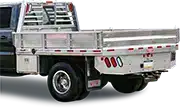
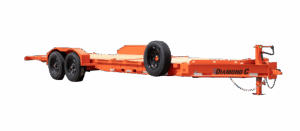
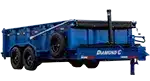
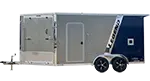
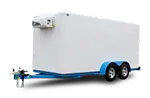
A dealer worth your time carries enough variety to match a specific job, not just a general price range. That means flatbeds, equipment trailers, tilt trailers, enclosed cargo trailers, dump trailers, car haulers, utility trailers, mobile refrigeration units, and truck beds in one place. It also means representing established manufacturers across multiple market segments, including brands such as Diamond C, H&H, Liberty, Legend, Delco, Darkhorse Cargo, United Trailers, Wells Cargo, Polar King Mobile, and Zimmerman and Martin truck beds. Inventory and manufacturer availability change, but the dealership should offer enough breadth to make a meaningful comparison.
Why does brand variety matter? Because trailers with similar advertised capacities may be very different underneath. For example, the current Diamond C LPX equipment-trailer line ranges from 15,500 to 24,000 lb. GVWR, starts with two 7,000 lb. Lippert axles, and offers heavier axle packages and Engineered Beam Technology on qualifying higher-GVWR configurations. That is a different product from an entry-level equipment trailer built to compete primarily on price. Frame design, cross-member spacing, suspension, brake equipment, coupler rating, tire capacity, floor construction, loading system, and corrosion protection can all differ. Diamond C also uses its multi-stage DM Difference Maker coating system rather than treating the finish as an afterthought. A dealer that stocks only one narrow product line cannot provide the same side-by-side comparison.
Real selection means depth within categories too. If you need a nominal 6×12 enclosed cargo trailer, a quality dealer should help you compare single- and tandem-axle configurations, GVWR, payload, interior height, rear ramp doors versus barn doors, side-door sizes, roof and wall construction, floor thickness, tie-down provisions, lighting, ventilation, and brake equipment. You should be choosing a configuration that fits your cargo and tow vehicle instead of settling for whatever happened to arrive on the lot last month.
2. Transparent, Fair Pricing
Fair pricing does not necessarily mean the lowest advertised number. It means you know what you are paying for and why. A good dealer can explain why two similar-looking trailers may be separated by several thousand dollars without making vague gestures toward “quality.” They should be able to point to differences such as 3,500 lb. axles versus 5,200 lb. or heavier axles, electric drum brakes versus another approved brake package, frame and cross-member construction, coupler and jack ratings, tire load capacity, suspension type, ramp design, floor species and thickness, sealed wiring, LED lighting, and the manufacturer’s coating process. On Diamond C’s premium lines, that discussion should correctly identify Lippert as the standard axle supplier.
Dealers who cannot explain the construction differences in their own inventory are usually selling on price alone. That may work for a disposable commodity, but a trailer is a working vehicle exposed to payload, vibration, rain, salt, potholes, heat, and repeated loading cycles. The money saved at purchase can disappear quickly through premature tire wear, damaged deck boards, brake problems, failed electrical connections, preventable bearing damage, or lost working time. The meaningful comparison is total value over the trailer’s service life, not merely the amount printed in the largest type on an advertisement.
The other half of fair pricing is consistency. There should be no bait-and-switch on an advertised unit, no unexplained mandatory add-ons, and no surprise paperwork charge introduced at the last line of the contract. A transparent purchase agreement identifies the trailer price, installed options, taxes, title and registration costs, financing charges, trade allowance, and documentation-preparation fee before you sign. Under Indiana dealer guidance effective July 1, 2026, documentation-preparation fees at or below $261.72 fall within the state’s stated enforcement threshold, and the fee must be included in the advertised price. Buyers should also understand that newly acquired, unregistered vehicles must generally be registered within Indiana’s 45-day window. A responsible dealer explains these details instead of leaving the customer to discover them later.
3. A Service Department That Actually Works
This is one of the clearest differences between a serious dealership and a sales-only lot. Almost anyone can complete a trailer sale. Far fewer dealers maintain a functioning service department with technicians and parts support for electrical diagnosis, brake inspection and adjustment, bearing and hub service, suspension repairs, axle work, hydraulic troubleshooting, coupler and jack replacement, deck repairs, and appropriate structural or weld repairs.
Ask practical questions before you buy. If the brake controller in your tow vehicle reports that the trailer is disconnected, can the shop test the connector, grounds, junction box, breakaway system, wiring, brake magnets, and hubs instead of guessing? If a coupler on a Wells Cargo or United enclosed trailer needs replacement, can the dealer identify a properly rated component and install it according to the manufacturer’s requirements? If a 7,000 lb. Lippert axle on a Diamond C equipment trailer needs inspection or replacement after a demanding season, does the shop understand bearing setup, fastener torque, suspension alignment, brake components, component identification, and the manufacturer’s warranty-approval process?
A dealership with real service capability is invested in the long-term relationship. It wants you back for maintenance, parts, repair work, and eventually another trailer. That incentive changes how customers are treated from the first conversation. Warranty knowledge matters too. Diamond C’s Warranty 2.0 for 2026 and later models includes six-year structural coverage and two-year comprehensive coverage, subject to the written terms and exclusions. Warranty repairs still need to follow the manufacturer’s claim and preapproval procedures, so a knowledgeable dealer can be as valuable during the claim as it was during the sale.
4. Staff Who Know the Product Line Cold
| What a good dealer knows | Why it matters to you |
|---|---|
| GVWR, empty weight, payload, and load placement on a specific model | Helps prevent overloading, component damage, unsafe handling, and weight-related violations |
| Tow rating, GCWR, payload, receiver rating, and tongue or pin-weight limits for your tow vehicle | Keeps the complete truck-and-trailer combination within its manufacturer ratings |
| Current axle, brake, ramp, hoist, tire, and suspension options | Lets you compare available configurations, costs, compatibility, and production lead times |
| Warranty support, replacement-parts availability, and resale factors | Protects the trailer’s long-term usefulness and helps preserve its value |
| Indiana brake rules and the licensing rules that apply to the complete combination | Helps you select compliant equipment and understand when additional licensing may be required |
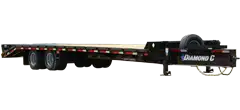
Product knowledge is not just a nice extra. A qualified salesperson should know that the current Diamond C FMAX207 is a 15,500 lb. GVWR single-wheel tandem-axle gooseneck, the FMAX210 is rated at 25,000 lb. GVWR, and the FMAX216 is offered at 25,900 or 30,000 lb. GVWR with an available 40,000 lb. package on qualifying configurations. Those numbers still do not prove that a particular excavator fits. Payload must be calculated from the exact trailer’s GVWR and actual empty weight, including installed options, while also checking axle, tire, deck, concentrated-load, securement, and tow-vehicle limits. A dealer who recommends a trailer based only on the machine’s advertised weight is skipping essential parts of the calculation.
The staff should also understand that a trailer over 10,000 lb. GVWR does not automatically require a Class A CDL by itself. For commercial operation, the federal Class A threshold generally involves a combination with a GCWR or actual gross combination weight of at least 26,001 lb. and a towed unit with a GVWR or actual gross weight over 10,000 lb., subject to applicable exemptions and state-specific circumstances. In Indiana, trailers over 3,000 lb. GVWR require brakes. The best dealers know these distinctions, explain where their role ends, and encourage customers with unusual commercial, farm, interstate, or licensing situations to confirm the rules that apply to their operation.
The best dealerships hire people who understand how trailers are loaded, secured, towed, maintained, and repaired, not people who have merely memorized a price sheet. That firsthand understanding becomes obvious when you start asking about loading angle, attachment weight, rear-axle payload, tongue weight, tire capacity, ramp support, hydraulic operation, or how a trailer will behave on rough county roads.
5. Community Roots and Long-Term Accountability
Family-run dealerships in small communities operate under a different kind of accountability than an anonymous online seller. Their customers are also their neighbors, local business owners, contractors, farmers, property managers, and families. They see the same people at the hardware store, county events, local restaurants, and school activities. That visibility does not guarantee perfect service, but it makes reputation difficult to hide from and gives the dealership a strong reason to resolve problems fairly.
A dealer that has operated in the same community for years has a track record you can investigate. Ask farmers, contractors, landscapers, equipment operators, and recreational haulers where they bought their trailers, whether the specifications were explained accurately, how the dealer handled service after the sale, and whether they would buy there again. Word of mouth travels quickly in both directions, especially in rural communities. A long history combined with repeat customers and referrals is more meaningful than a handful of polished advertisements.
Community knowledge also appears in practical recommendations. A local dealer understands the hills, narrow roads, gravel lanes, winter salt, farm entrances, construction sites, and typical equipment used throughout southern Indiana. It knows that a trailer used for weekly commercial hauling needs a different margin of capacity and service support than one used twice a year for household projects. That local perspective helps the dealer stock useful configurations rather than relying entirely on a generic national catalog.
6. Honest Guidance on What You Actually Need
A top dealer will sometimes tell you not to buy the larger or more expensive trailer. Suppose your skid steer has a published operating weight of about 4,400 lb. The bucket, forks, fuel, attachments, chains, binders, and other cargo may push the real load considerably higher. A properly configured bumper-pull equipment trailer may still handle the job, but only after the dealer verifies the exact trailer payload, deck dimensions, loading system, tire and axle ratings, tongue weight, hitch rating, truck payload, and tow rating. Automatically pushing that customer into a 25,000 lb. FMAX gooseneck without evaluating the complete use case may add unnecessary purchase cost, maintenance, weight, and tow-vehicle requirements.
The reverse matters just as much. A 7,000 lb. GVWR Diamond C GTU is a tandem-axle utility trailer with two 3,500 lb. Lippert brake axles, but its usable payload is less than 7,000 lb. because the trailer’s own empty weight counts against GVWR. It cannot carry 8,500 lb. of cargo simply because the load physically fits between the rails. Overloading increases stopping distance, stresses the frame, suspension, hubs, tires, coupler, and tow vehicle, and can place resulting damage outside warranty coverage. A dealer who ignores those numbers to make the sale is not helping the customer.
The measure of a quality dealership is whether it matches you with the right tool for the actual job, including a reasonable safety and capacity margin, even when that results in a smaller sale. Honest guidance should consider the heaviest realistic load, attachments, load concentration, deck dimensions, loading angle, securement points, towing frequency, road conditions, service needs, and the ratings of every part of the combination. That kind of advice earns repeat business and referrals more effectively than an unnecessary upsell ever will.
A Quick Checklist Before You Buy
- Does the dealer carry multiple manufacturers and trailer categories so you can compare construction, capacity, features, and value rather than choosing from a single line?
- Can the staff explain GVWR, actual trailer weight, payload, axle ratings, tire capacity, brakes, ramps, flooring, coating, and frame differences in plain language?
- Is there an on-site service department with access to parts, diagnostic equipment, manufacturer procedures, and post-sale support?
- Are the advertised price, installed options, documentation fee, taxes, title, registration, financing terms, and other charges clearly explained before closing?
- Has the dealership operated locally long enough to have a reputation you can verify through repeat customers, service history, and community references?
- Does the dealer ask about your tow vehicle, hitch, heaviest load, attachments, dimensions, towing frequency, route, and business use before recommending a trailer?
If the answer to most of those questions is yes, you are probably in the right place. If the salesperson cannot explain the numbers, discourages you from checking the VIN-specific specifications, or tries to move directly from your first question to a signature, keep looking.
Come See What That Looks Like in Practice
Spencer Trailers is a family-owned dealership in Spencer, Indiana, serving Owen County, southern Indiana, and customers throughout the Midwest. Our family has been in business locally since 1973, and the trailer business began in August 2001. Spencer Trailers was recognized by Diamond C as its 2025 Dealer of the Year for a single-location dealership and also received a second-place equipment award. We carry or regularly stock products from Diamond C, Liberty, Delco, H&H, Darkhorse Cargo, Legend, United Trailers, Wells Cargo, Polar King Mobile, Zimmerman, Martin, and other supported manufacturers as availability changes. Diamond C has built trailers in Mt. Pleasant, Texas, since 1985, and its premium FMAX, HDT, LPT, LPX, WDT, and DEC lines use Lippert axles as standard equipment. Our service department supports the trailers and components we sell and can evaluate many other makes, subject to the type of repair and parts availability.
Browse our current trailer inventory to see what is on the lot right now. Listings identify the model year, manufacturer, model, dimensions, GVWR, major equipment, stock number, and current asking price when available. Because inventory can change quickly, call or text us at (812) 829-0226 before traveling if you need a specific configuration. You can also stop by at 291 West State Hwy 46 in Spencer and see what a well-stocked, service-backed dealership looks like in person.
What is your biggest frustration with buying or owning a trailer? If you have dealt with confusing specifications, surprise charges, poor parts support, or an unresolved service problem elsewhere, we would genuinely like to hear about it. Customer questions help us improve how we explain products and support owners after the sale. Reach out here or stop in and talk with our team.


