







How Emissions Rules Shape the Trailer Industry
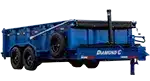
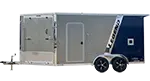
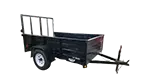
You’re shopping for a new trailer. Maybe it is a Diamond C low-profile equipment trailer, a gooseneck flatbed, or a Wells Cargo enclosed cargo trailer. Emissions regulations probably are not anywhere near the top of your checklist. Even so, environmental rules are already built into many of the decisions surrounding that purchase, from the truck you can realistically use for towing to the cost of the steel, aluminum, paint, powder coating, and other materials used to manufacture the trailer.
Most utility, equipment, dump, flatbed, and enclosed cargo trailers do not have propulsion engines, so they are not directly certified under the EPA tailpipe standards that apply to cars and trucks. Federal greenhouse-gas provisions that once targeted certain highway trailers were also vacated through litigation and are no longer an active trailer-certification program. However, trailers still sit in the middle of a wider regulatory network involving tow-vehicle emissions, fuel-economy requirements, steel and aluminum production, industrial surface coatings, chemical pretreatment, and galvanizing. Specialty equipment with its own engine, such as some transport-refrigeration units, may be regulated separately from the trailer itself. Understanding those distinctions helps buyers make better decisions without assuming that every environmental rule applies directly to the trailer.
Your Tow Vehicle Is the Real Target
Federal emissions rules primarily regulate the vehicles doing the pulling. The details have changed considerably in 2025 and 2026. In February 2026, the EPA finalized the repeal of federal greenhouse-gas emission standards for on-highway light-, medium-, and heavy-duty vehicles. That action did not eliminate the separate standards governing traditional pollutants such as nitrogen oxides, particulate matter, carbon monoxide, and hydrocarbons. Fuel-economy requirements administered by the National Highway Traffic Safety Administration are also separate from EPA tailpipe rules and remain subject to their own rulemaking and revision process.
That matters to trailer buyers for one practical reason: the tow vehicle must be evaluated as a complete, model-specific system. Emissions regulations do not directly assign a truck’s tow rating, and a state motor-vehicle agency does not calculate that rating for you. The vehicle manufacturer establishes the rating based on the truck’s chassis, engine, transmission, cooling system, axle ratio, brakes, tires, suspension, receiver or fifth-wheel hardware, gross vehicle weight rating, gross axle weight ratings, gross combined weight rating, and other tested limitations.
Most current diesel pickups and many medium- and heavy-duty diesel trucks use diesel particulate filters to control soot and selective catalytic reduction systems that use diesel exhaust fluid to reduce nitrogen-oxide emissions. That equipment adds weight, occupies space, requires proper maintenance, and is incorporated into the vehicle’s certified powertrain. It can therefore affect available payload and vehicle packaging. It does not replace the need to check the manufacturer’s towing guide, payload label, axle ratings, hitch rating, or gross combined weight rating.
So when you’re matching a trailer to a truck, verify the actual rating for the specific truck you own rather than relying on a broad claim from an advertisement or online forum. A Diamond C LPX 22-foot low-profile equipment trailer may be ordered at different GVWR levels depending on the model year, axle package, and configuration. The current LPX family generally begins around 14,900 or 15,500 pounds and extends to approximately 24,000 pounds. The certification label on the individual trailer is the controlling source for its GVWR, and the truck, hitch, tires, and towing equipment must be rated for the trailer’s actual loaded weight.
Check the exact model year, cab, bed length, drivetrain, axle ratio, wheel and tire package, tow package, and hitch configuration. Two trucks carrying the same model badge can have substantially different payload and towing limits. Tongue weight or gooseneck pin weight also counts against the truck’s available payload, along with passengers, tools, fuel, aftermarket equipment, and anything else carried in the cab or bed.
Use the truck manufacturer’s towing guide and door-jamb labels for capacity information. Use the Indiana BMV and applicable federal or state agencies for registration, brake, licensing, and commercial-operation requirements. Environmental standards can change, but they should not be confused with the mechanical and legal weight limits assigned to the truck-and-trailer combination.
Steel and Aluminum: Manufacturing Regulations Reach the Frame
Trailers are commonly built with structural steel, aluminum, or a combination of the two. Primary steel production can be emissions-intensive, and steel mills, coke ovens, electric arc furnaces, finishing facilities, and related operations are subject to federal and state air-quality requirements. Energy costs, pollution-control equipment, raw-material availability, recycled content, labor, freight, tariffs, and overall demand can all influence the price of steel delivered to a trailer manufacturer.
This is not merely theoretical, but environmental compliance should not be treated as the sole explanation for every price change. A well-built H&H tilt equipment trailer or a Liberty steel utility trailer may rise or fall in price because of steel indexes, axle and tire costs, transportation expenses, labor, model updates, dealer freight, or changes in standard equipment. Regulatory compliance is one upstream cost among many rather than a separate fee that can normally be identified on the trailer’s invoice.
Aluminum-framed trailers sit in a different supply chain. Aluminum production is highly dependent on electricity, while recycling aluminum generally requires far less energy than producing primary aluminum. Grid composition, energy pricing, environmental requirements, recycled-metal availability, and transportation costs therefore affect aluminum products differently. Wells Cargo offers true aluminum-frame products such as the Wells Cargo Wagon SS aluminum cargo trailer, while other Wells Cargo families use steel structural frames with aluminum or aluminum-composite exterior panels. The material used for the exterior skin should not be assumed to be the material used for the chassis.
A 7×16 Darkhorse Cargo steel-frame enclosed trailer and a similarly sized aluminum-frame cargo trailer can differ significantly in price and empty weight, but there is no dependable industry-wide dollar amount for that difference. Axle capacity, interior height, wall construction, roof design, rear-door style, flooring, interior lining, tie-down equipment, wheels, tires, freight, and optional accessories can outweigh the frame-material difference. Buyers should compare actual specifications and empty weights rather than relying on a fixed steel-versus-aluminum price estimate.
Coatings, Paints, and Galvanizing
This is where environmental regulations can touch trailer manufacturing most directly: surface preparation and finishing. A durable coating begins before the visible topcoat is applied. Steel may be blasted, cleaned, washed, chemically pretreated, dried, primed, coated, and cured. Each stage can involve air-quality, worker-safety, wastewater, chemical-storage, or waste-disposal requirements.
Industrial primers and liquid coatings can contain volatile organic compounds and hazardous air pollutants. The exact limits and permitting obligations depend on the facility, coating type, production volume, jurisdiction, and applicable federal or state rules. Manufacturers may respond with compliant high-solids coatings, waterborne products, powder coating, improved application equipment, enclosed processes, capture systems, or other controls. Powder coating generally avoids much of the solvent content associated with traditional liquid paint, but the complete operation still includes blasting dust, pretreatment chemicals, curing ovens, energy use, and regulated waste streams. Finish quality ultimately depends on surface preparation, film thickness, coverage, curing, and inspection rather than the word “powder” alone.
Hot-dip galvanizing is another corrosion-control option used on certain utility, marine, agricultural, and specialty trailers or trailer components. A hot-dip-galvanized utility or marine trailer is typically cleaned, pickled, fluxed, and immersed in molten zinc so the coating bonds metallurgically to the steel. Galvanizing facilities must manage fumes, acids, rinse water, zinc-bearing residues, chemical storage, and worker exposure. The price premium reflects zinc, energy, coating weight, handling, freight, production volume, and compliance costs together.
From a buyer’s standpoint, the practical takeaway is that the finish is more than an aesthetic choice. A multi-stage powder-coated frame, a conventional painted frame, an aluminum frame, and a hot-dip-galvanized frame have different corrosion behavior and repair requirements. Indiana road salt, moisture, gravel impacts, fertilizer, landscaping chemicals, and trapped debris can damage any finish. Galvanized and aluminum components still require inspection, and chips in paint or powder coating should be cleaned and repaired before corrosion spreads beneath the surrounding film.
What Buyers Should Actually Verify
It is still useful to discuss specific legal thresholds, but buyers should distinguish a finalized rule from a proposal, delayed requirement, court decision, or manufacturer announcement. Federal vehicle-emissions policy changed substantially during 2025 and 2026, and additional revisions remain possible. California requirements are also affected by waiver decisions and ongoing litigation. The correct answer can depend on the vehicle’s model year, certification label, fuel type, state of operation, commercial use, and effective date of the rule.
Instead, here’s a practical checklist for buyers who want to stay on the right side of all of it:
- Confirm your truck’s actual tow rating for its model year, cab, bed, drivetrain, axle ratio, tow package, and hitch. Also check payload, rear-axle capacity, tire ratings, receiver or gooseneck ratings, and gross combined weight rating. Do not treat the highest rating advertised for an entire truck line as the rating of your individual truck.
- Ask about the trailer’s finish system before you buy. Determine whether the structural frame is painted, powder-coated, galvanized, or aluminum, and do not confuse an aluminum exterior skin with an aluminum chassis. Ask how damaged coating should be repaired and inspect seams, crossmembers, suspension mounting areas, the tongue or gooseneck, and the underside regularly in Indiana’s wet, salty freeze-thaw conditions.
- Check GVWR against your registration and operating requirements. Indiana requires brakes on trailers over the 3,000-pound threshold, and the braking system must be capable of controlling, stopping, and holding the trailer, with an automatic breakaway function where required by law. A newly acquired vehicle or trailer generally must be titled and registered within Indiana’s 45-day penalty-free window. Trailer registration fees vary by declared gross weight. For CDL purposes in a commercial motor-vehicle context, a Class A threshold is generally reached when the combination is rated at 26,001 pounds or more and the towed unit is rated over 10,000 pounds. A trailer exceeding 10,000 pounds does not, by itself, create a federal Class A CDL requirement when the combination remains below 26,001 pounds, although other commercial rules may still apply.
- Ask your dealer about current specifications and lead times. Model equipment, axle packages, standard features, freight charges, and production schedules can change. Review the build sheet and certification label for the individual trailer instead of assuming that every unit sharing a model family has the same GVWR, empty weight, ramps, tires, brakes, or finish package.
How This Plays Out on the Lot
At Spencer Trailers, we carry brands that approach frame design, material selection, finishing, and equipment packages differently. Those differences affect empty weight, payload capacity, corrosion maintenance, loading convenience, service needs, and price. The goal is not to declare one construction method universally better, but to match the trailer to the work, tow vehicle, storage conditions, and maintenance habits of the buyer.
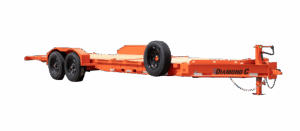
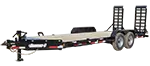
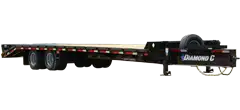
Diamond C has built trailers in Mt. Pleasant, Texas, since 1985. Its current DM Difference Maker finish is a multi-stage powder-coating process that includes steel preparation, washing, drying, primer, topcoat, and controlled curing. Diamond C’s premium FMAX, HDT, LPT, LPX, WDT, and DEC families use Lippert axles as standard equipment, with axle count and capacity varying by model and option package. The FMAX Flatbed Max gooseneck family includes configurations from approximately 15,500 pounds through 40,000 pounds GVWR. LPX equipment trailers and HDT hydraulically dampened tilt trailers generally cover approximately 14,900 or 15,500 pounds through 24,000 pounds, depending on the exact build. Loading systems may include MAX Ramps, XDR Ramps, or an X-Ramp where offered. The certification label and current factory build sheet remain the final authority for each trailer.
Delco Trailers builds trailers in Paris, Texas, including utility, equipment, car-hauler, gooseneck, and dump configurations. Its current U8 and U9 tandem-axle utility families are available in 7,000-pound GVWR configurations using two 3,500-pound axles and 4-inch channel main-frame and tongue construction. Deck width, length, gate, suspension, tire, and option packages vary by model. Delco also uses a multi-step powder-coating process that includes blasting, washing, drying, zinc-rich primer, topcoat, and curing. Those 7,000-pound utility configurations can be a practical fit for landscapers and contractors who need more capacity and braking performance than a light single-axle trailer, provided the load stays within the trailer’s payload and axle limits.
Wells Cargo enclosed trailers should be evaluated by series rather than described as though every model uses the same frame material. FastTrac and Road Force cargo trailers use steel structural frames with aluminum or aluminum-composite exterior material, while models such as the Wagon SS use aluminum-frame construction. Interior lining, floor construction, tie-down systems, E-track, wall-mounted track, ramp doors, side doors, and other cargo-control features may be standard on one configuration and optional on another. An aluminum exterior panel does not eliminate the need to inspect the steel chassis beneath it, and a true aluminum-frame trailer still requires inspection for fastener condition, galvanic corrosion, cracked welds, floor damage, and water intrusion.
Knowing which material, frame rating, axle package, brake system, ramp arrangement, and finish fits your use case is part of what we help you figure out. Browse our current inventory to see what’s actually on the lot, including the listed GVWR, dimensions, axle configuration, features, and available equipment for each unit. Because inventory and factory specifications change, confirm the certification label and final build sheet before purchasing.
A Quick Word on California and “CARB Effect”
If you’ve heard the phrase “CARB standards,” it refers to regulations developed by the California Air Resources Board. Under the federal Clean Air Act, California has historically been able to seek waivers allowing certain vehicle-emissions standards that are more stringent than federal requirements, and other states may adopt qualifying California standards. Because California is a large vehicle market, manufacturers have often considered those rules when designing engines, aftertreatment systems, certification packages, and national product platforms. That market influence is commonly described as the “CARB effect.”
The current situation is more complicated than simply saying that every truck sold nationally is built to California rules. Federal actions during 2025 disapproved several California vehicle-emissions waivers, California challenged those actions, and additional waiver and regulatory questions continued into 2026. Manufacturers may still share hardware across federal and California-certified vehicles, but the certification category, calibration, label, and legal requirements can differ. An Indiana buyer should not assume that a truck is California-certified merely because the same model is sold nationwide.
This does not mean you need to study California law to buy an ordinary trailer in Spencer, Indiana. It does mean the truck and trailer industries are nationally interconnected, so regulatory uncertainty in one major market can affect engineering plans, supplier contracts, model availability, and production costs elsewhere. Buyers who will operate a diesel truck commercially in California should verify the current California in-use truck and reporting requirements for that vehicle. Those requirements generally concern the powered tow vehicle or auxiliary engine rather than an ordinary non-powered equipment, flatbed, utility, dump, or enclosed trailer.
The Practical Bottom Line
Regulations usually do not show up as a separate line item on your invoice, but their effects can be embedded in the truck’s certified powertrain, the mill that produced the steel or aluminum, the chemicals used to prepare the frame, and the process used to coat or galvanize it. They are one part of the final cost, not the only explanation for it.
For most buyers in Owen County and the surrounding area, the day-to-day impact is manageable. Match the trailer to the truck’s actual tow, payload, axle, tire, hitch, and gross combined weight limits. Read the individual trailer’s GVWR and GAWR labels. Ask what the structural frame is made from, how it is coated, and how coating damage should be repaired. Confirm Indiana’s brake and registration requirements, including the 45-day registration window, and evaluate CDL thresholds using the complete commercial combination rather than the trailer alone. Those steps address the practical issues far better than relying on a general claim that a trailer or truck is simply “compliant.”
Got questions about matching a specific trailer to your truck, or want to talk through the difference between a powder-coated steel, galvanized, and aluminum-frame option for your application? Reach out to us at Spencer Trailers or stop in at 291 West State Hwy 46 in Spencer. We’re at (812) 829-0226. And if you want to see what’s moved through here and what buyers in this area are actually choosing, the recently sold page gives you a real-world picture of local demand and trailer configurations.

