












People do not drive two hours on a Tuesday for an average buying experience. They make that trip after checking nearby dealers, finding limited inventory, receiving incomplete answers, or realizing that the trailer being offered is not properly matched to the work they need to do. That is the situation many customers describe when they arrive at 291 West State Hwy 46 in Spencer, Indiana. After comparing the selection, specifications, and pricing in person, plenty of them say the same thing: they wish they had started here.
So what draws buyers from Indianapolis, Bloomington, Terre Haute, and communities well beyond Owen County? The answer is not one feature or one trailer brand. It is the combination of broad inventory, clearly listed specifications, practical buying guidance, multiple price points, and a local team that remains available after the paperwork is complete. Spencer Trailers is family-owned and operated, the family has been in business in Spencer since 1973, and the trailer operation has been serving customers since 2001. The longer explanation for why buyers make the drive is below.
The Inventory Depth Makes a Real Difference
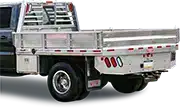
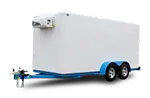
Plenty of dealers sell trailers. Fewer maintain enough variety for a buyer to compare different widths, lengths, GVWR packages, loading systems, pull types, construction styles, and manufacturers during the same visit. At Spencer Trailers, the inventory spans utility trailers, equipment trailers, tilt trailers, dump trailers, car haulers, cargo and enclosed trailers, bumper-pull and gooseneck flatbeds, deck-over trailers, mobile refrigerator and freezer trailers, used trailers, and Zimmerman truck beds. Other truck-bed makes and specialty units may appear as inventory changes.
That range matters because hauling needs rarely fit one universal template. A landscaping company may need an 83-inch-wide, 7,000-lb-GVWR tandem-axle utility trailer with a rear gate, treated wood decking, and electric brakes. A grading contractor may need a low-profile equipment trailer with a 15,500-lb or higher GVWR, heavy-duty ramps, and enough payload for a skid steer and attachments. A commercial hauler may be comparing a Diamond C FMAX gooseneck flatbed in a 25,000-lb, 25,900-lb, 30,000-lb, or heavier configuration. Those are fundamentally different trailers, and the correct choice depends on more than deck length alone.
Inventory depth also lets buyers compare the factors that determine whether a trailer will work after it leaves the lot. Those factors include the trailer’s empty weight, usable payload, deck width, deck height, axle and suspension package, brake type, tire rating, coupler or gooseneck configuration, ramp system, tie-down provisions, jack capacity, floor material, and compatibility with the tow vehicle. Two trailers with similar outside dimensions can have very different capacities and loading characteristics.
Current and regularly stocked brands include Diamond C, Baseline Trailers by Diamond C, Liberty, Delco, H&H, Darkhorse Cargo, Legend, United, Wells Cargo, and Polar King Mobile, along with Zimmerman truck beds. Availability changes as units are sold, delivered, or placed on order, but the benefit remains the same: buyers can compare multiple manufacturers and construction approaches instead of being limited to whichever single line a smaller dealer represents. Browse the live stock at our full inventory page.
Diamond C and Liberty: Two Brands Worth the Trip Alone
If you have spent time shopping for steel work trailers, you have probably encountered Diamond C. The company was founded in 1985 and builds its trailers in Mount Pleasant, Texas. Diamond C is known for offering everything from lighter utility and equipment trailers to heavy-duty dump trailers and FMAX gooseneck flatbeds. The equipment and tilt lineup covers GVWR ratings from approximately 7,000 lb through 24,000 lb, while the FMAX family extends from the 15,500-lb FMAX207 to configurations capable of reaching 40,000 lb GVWR.
Diamond C’s premium trailer families, including FMAX, HDT, LPT, LPX, WDT, and DEC, use Lippert axles as their standard axle brand. Axle capacity varies by model and selected GVWR package. Depending on the trailer, configurations may include tandem 7,000-lb, 8,000-lb, 10,000-lb, or 12,000-lb axles, triple-axle packages, dual-wheel arrangements, and other heavy-commercial setups. The trailer’s certified GVWR remains the controlling rating; buyers should not calculate legal capacity simply by adding the axle ratings together.
The Diamond C LPX low-profile equipment trailer is a clear example of the brand’s heavy-duty approach. The current bumper-pull LPX is available in lengths from 16 to 30 feet, with bed widths generally ranging from 80 to 82 inches and GVWR packages from 15,500 to 24,000 lb. It normally starts with two 7,000-lb Lippert axles, with heavier packages available depending on the selected model and configuration. Its low deck height reduces the loading angle compared with a taller deck-over design, while ramp choices such as MAX Ramps or heavy-duty flip-knee ramps can be selected around the equipment being hauled.
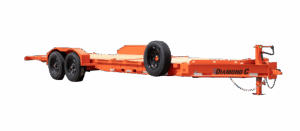
Diamond C’s HDT provides a different loading solution through a hydraulically dampened tilt deck. Buyers can choose full-tilt or split-deck arrangements on applicable lengths, allowing a stationary front section for attachments or cargo while the rear portion tilts for loading. The FMAX gooseneck flatbed family uses Diamond C’s engineered-beam frame and is available in multiple single-wheel, super-single, dual-wheel, and triple-axle configurations. Across these product lines, Diamond C applies its DM Difference Maker multi-stage coating system rather than treating the finish as an afterthought.
Liberty Trailers serves buyers who need straightforward commercial utility at a more accessible price point. A current Liberty LU tandem-axle utility trailer, for example, is available at 83 inches wide with lengths commonly ranging from 14 to 20 feet. The 7,000-lb-GVWR LU uses two 3,500-lb electric-brake axles, a 4-inch channel frame, treated pine decking, an adjustable 2-5/16-inch coupler, and a rear mesh gate. Liberty also offers single-axle utilities, car haulers, equipment haulers, dump trailers, and flatbeds for customers who do not require the heavier specifications or customization available in a premium Diamond C build.
That does not make one brand automatically right and the other wrong. It means the buyer can compare how much trailer is actually needed. A crew hauling mowers and landscaping tools may be well served by a 7,000-lb utility trailer. A contractor transporting a compact excavator may need an LPX, HDT, DEC, or another heavy equipment model with substantially more payload, heavier tires, and a loading system designed for tracked machinery. Having Diamond C, Liberty, Delco, H&H, and other brands represented on the same lot makes those tradeoffs easier to see in person.
Pricing That’s Straight and Honest
One of the most useful parts of shopping at Spencer Trailers is that many available units are listed online with an actual selling price and detailed specifications. That gives buyers a realistic starting point before making the drive. It also makes it easier to compare the cost of different GVWR packages, lengths, ramps, hydraulic systems, flooring materials, tarps, spare tires, and other options without treating every quote as a negotiation exercise.
Straight pricing does not mean every transaction has only one number. The advertised trailer price is separate from applicable sales tax, title and registration charges, financing costs, delivery, optional equipment, and any clearly disclosed payment-specific fee. Some inventory listings, for example, disclose a convenience fee for credit-card payments. The best comparison is therefore an itemized, out-the-door quote based on the trailer, payment method, registration situation, and accessories the buyer actually chooses.
It also does not mean every trailer is intended to be the cheapest alternative in its category. A heavier frame, larger axle package, premium suspension, higher-rated tires, hydraulic loading or dumping equipment, upgraded flooring, additional tie-downs, better storage, a tarp system, or a longer manufacturer warranty can materially change the price. When two trailers look similar from across the lot, their empty weights, payload capacities, brake systems, ramp designs, and structural specifications may explain a substantial difference in cost.
As a current-market reference, basic steel single-axle utilities may be listed in the upper-$2,000 to mid-$3,000 range, depending on width, length, GVWR, manufacturer, and included equipment. Tandem-axle 7,000-lb utility trailers commonly move into the mid-$4,000 range and above. Heavy-duty Diamond C equipment trailers can extend from the low teens into the upper teens or beyond, while 25,900-lb FMAX goosenecks with hydraulic dovetails and other commercial options can reach well into the $30,000 range. These are examples rather than permanent price guarantees, so the live listing and final written quote should control.
Central Indiana Location: A Hub, Not a Detour
Spencer occupies a practical position for buyers throughout central and southern Indiana. From central Indianapolis, the trip is generally around an hour and ten minutes, depending on the starting point, traffic, construction, and weather. Bloomington is roughly 25 to 30 minutes away. Terre Haute is commonly about 50 minutes west, while Martinsville is approximately 30 minutes to the northeast. Bedford, Columbus, Vincennes, and the surrounding rural counties are also within a reasonable regional drive.
The dealership sits directly on State Road 46 at 291 West State Hwy 46, making it accessible without navigating an industrial park or a large urban dealership district. For customers who have found closer dealers short on the required size or GVWR, an extra half hour on the road can be more efficient than visiting several smaller lots that carry only a few high-turn models.
The location also works well for buyers arriving with a tow vehicle. They can discuss the truck’s receiver, gooseneck hitch, payload rating, gross combined weight rating, brake controller, electrical connection, and tire capacity while looking at the trailer itself. That is more useful than choosing a trailer from photographs and discovering later that the truck, hitch, or intended load creates a limiting factor.
Many customers who travel to Spencer have already reviewed inventory online and narrowed the search to a few units. That preparation helps, but it does not lock anyone into the first model they selected. Seeing an 82-inch low-profile equipment trailer beside a 102-inch deck-over, or comparing ramps with a hydraulically dampened tilt deck, can change the decision quickly. The trip becomes a working comparison rather than a visit built around one trailer that may or may not be correct.
Service After the Sale Is Part of the Deal
Trailer ownership does not end when the unit leaves the lot. Bearings and hubs require inspection and lubrication according to the applicable maintenance schedule. Electric drum brakes may require initial burnishing, adjustment, and periodic service. Tires must be maintained at the pressure printed for the tire and inspected for age, damage, and uneven wear. Breakaway batteries, lights, plugs, grounds, couplers, jacks, hydraulic systems, safety chains, suspension components, and fasteners all need regular attention.
A bearing that runs unusually hot, a brake that does not apply correctly, intermittent lighting, abnormal tire wear, excessive coupler movement, or a hydraulic system that behaves inconsistently should not be dismissed as ordinary wear. Those symptoms need to be inspected before they become roadside failures. Calling (812) 829-0226 connects the buyer with the Spencer Trailers team, which can help determine whether the next step is routine maintenance, an in-house service appointment, a replacement component, or a manufacturer warranty process.
Warranty coverage must be evaluated by the trailer’s model year, manufacturer, purchase date, component, and written warranty terms. Axles, tires, batteries, couplers, hydraulic parts, and other installed components may carry separate manufacturer coverage or specific claim procedures. Diamond C identifies its Warranty 2.0 coverage for 2026-and-later trailers, including structural and comprehensive coverage periods, but the written warranty supplied with the exact trailer should always be reviewed instead of relying on a general sales description.
Parts familiarity also matters. Selling utility, dump, tilt, equipment, enclosed, gooseneck, refrigerated, and truck-bed products exposes the team to a broad range of hubs, brake components, wiring systems, jacks, couplers, hydraulic equipment, doors, ramps, tarp systems, and tie-down hardware. Not every part fits every trailer, so the VIN, model, axle tag, component number, and photographs may be needed before the correct replacement can be identified.
A Quick Comparison: What You’re Actually Weighing
| Factor | Typical Big-Box or Urban Dealer | Spencer Trailers |
|---|---|---|
| Brand variety | May concentrate on one manufacturer or a limited product mix | Multiple steel and aluminum trailer brands, enclosed cargo, mobile refrigeration, and truck beds |
| Inventory depth | Stock may be concentrated in the highest-turn sizes and GVWR packages | Hundreds of trailers and truck beds in stock or on order across utility, dump, equipment, tilt, gooseneck, cargo, and specialty categories |
| Pricing transparency | Advertised pricing and the final out-the-door figure may require separate comparison | Published prices on many live listings, detailed unit specifications, and itemized quotes available from the team |
| Post-sale contact | Service and warranty questions may be routed through a central system | Local call or text contact, a weekday service department, and assistance identifying the correct service or warranty path |
| Drive time from Indianapolis | Depends on the dealer’s location and metropolitan traffic | Approximately 65-75 minutes from central Indianapolis under typical conditions |
Before You Drive, Here’s What to Do
The best use of the trip begins with a review of what is currently available. Trailer inventory changes continuously, and a unit shown this week may be sold, pending, or moved before the following month. Check the current inventory before leaving so the trip is based on live stock rather than an older search result, cached advertisement, or previously sold trailer.
If you have specific requirements, a brief call or text to (812) 829-0226 can confirm whether the trailer is physically available, whether a deposit or sale is pending, and which specifications apply to that individual VIN. Ask about the listed price, year, exact model, deck dimensions, empty weight, GVWR, calculated payload, axle package, brake configuration, tire rating, ramp or tilt system, coupler size, jack, floor, spare tire, tarp, battery, and included options. Model families can be configured several ways, so a model name by itself is not a complete specification.
Bring accurate information about the load as well. The team needs the machine’s operating weight, attachments, fuel, tools, pallets, materials, or other cargo that will be on the trailer. Payload is not the same as GVWR. A trailer’s usable payload is determined by subtracting its actual empty weight from its certified GVWR, and added accessories reduce the remaining capacity. The load must also be positioned so axle, tire, coupler, hitch, and tow-vehicle ratings are not exceeded.
The truck is part of the calculation. Know its door-jamb payload rating, receiver or gooseneck rating, maximum trailer rating, gross combined weight rating, axle ratings, and whether it has a functioning brake controller. A gooseneck can improve stability and weight distribution for larger trailers, but it does not override the truck manufacturer’s ratings. A properly matched bumper-pull may be the better choice for lighter work, while heavier equipment and commercial loads may require a gooseneck, a higher-capacity truck, or both.
Indiana generally requires brakes on trailers with a gross weight rating above 3,000 lb, so buyers moving into tandem-axle utility, equipment, dump, and gooseneck categories should confirm the truck’s brake-controller setup before pickup. A trailer over 10,000 lb does not by itself create a federal Class A CDL requirement. The common Class A threshold is a combination GCWR of 26,001 lb or more when the towed unit has a GVWR over 10,000 lb. Commercial use, interstate operation, vehicle configuration, and exemptions can affect the final answer, so drivers should verify their own licensing and operating obligations before putting the combination to work.
Indiana buyers should also complete title and registration requirements promptly. The state’s penalty-free period is 45 days, but waiting until the end of that window can create avoidable problems if documentation needs correction. Confirm which title, registration, tax, and plate steps are handled through the dealership and which actions remain the buyer’s responsibility.
And if you are not sure what you need yet, that is fine. A useful conversation starts with what you haul, the heaviest realistic load, how often the trailer will be used, how far it will travel, where it will be loaded, and what truck will pull it. Those answers usually narrow the options faster than comparing model names or axle counts without context.
What Are You Hauling?
That question is the real starting point. Not simply, “What is your budget?” and not only, “Which trailer have you been viewing online?” What are you moving, what does it weigh in working condition, how will it be loaded, and what must the trailer do during a successful day? The answer determines whether you need a utility gate, removable ramps, MAX Ramps, an X-Ramp, a tilt deck, a deck-over floor, a dump body, a hydraulic dovetail, or a conventional flatbed.
It also determines the required deck length and width, payload margin, tie-down locations, hitch style, brake system, tire capacity, and tow vehicle. A 7,000-lb utility trailer may be an excellent fit for mowers and compact equipment while being entirely unsuitable for a skid steer that consumes nearly all of its rated capacity. Likewise, a 24,000-lb equipment trailer is unnecessary if the load, truck, access conditions, and annual usage point toward a smaller and more economical configuration.
When you have those details ready, the rest of the buying process moves much faster. Reach out here or call or text (812) 829-0226 and explain what you are hauling, what you are towing with, and which features matter most. Spencer Trailers is located at 291 West State Hwy 46, Spencer, IN 47460. Come prepared to compare specifications, capacities, and loading systems. Leave with a trailer that is properly matched to the job instead of one that merely happened to be closest to home.


